
Op-Ed
BuildingGreen, Inc., will be participating actively in the U.S. Green Building Council’s Greenbuild Expo and Conference in Atlanta this November. Both Nadav Malin and Alex Wilson will be presenting conference sessions, and Nadav will be part of a special preconference workshop on environmentally preferable products. Also, BuildingGreen will... Read more
News Brief
In July 2005 the Illinois Commerce Commission adopted Governor Rod Blagojevich’s sustainable energy plan, including a renewable portfolio standard (RPS) requiring the state’s electric utilities to meet 2% of their electricity needs with renewable sources by the end of 2006. The requirement will increase by 1% each year until it reaches 8% in... Read more
News Brief
ASTM International has published the
Standard Guide for the General Principles of Sustainability Relative to Building (E2432). “It is expected that the Guide will be referenced and used by federal, state, and local governments, architects, and others seeking to solidify and/or justify the tripartite—environmental, economic, and social—... Read more
News Brief
Oregon Governor Ted Kulongoski signed a bill in September 2005 that expands tax credits for solar energy systems. The bill, which takes effect November 4 and expires in 2016, allows for tax credits of $3.00 per watt of installed solar electric output capacity. The credit is capped at half the cost of the installed system, up to $6,000.... Read more
Feature
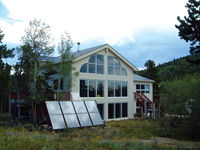
Despite the buzz about zero-energy buildings, just what zero-energy means and how to achieve it remain confusing at best. This article sorts out the confusion and sheds light on some of the stumbling blocks along the path to zero-energy.
Zero-energy has become a buzzword of the green building movement, used in advertising slogans, conference presentations, and technical papers. Despite the excitement over the phrase, however, we lack a common understanding of just what zero-energy means. And despite proclaimed achievability, few if any buildings can demonstrate that they in... Read more
News Brief

Product Review
News Brief
King County, Washington, home to Seattle, is encouraging builders and developers to incorporate green strategies into their projects. Administered by the King County Department of Development and Environmental Services and the Department of Natural Resources and Parks, the new incentives include assistance during the permit review process,... Read more
News Analysis
Sharper Image Corp. has paid Consumers Union (CU), publisher of Consumer Reports, $525,000 to cover attorneys fees and other costs, ending a lawsuit against the nonprofit organization. Sharper Image sued CU for product disparagement after Consumer Reports described Sharper Image’s Ionic Breeze® Quadra air cleaner as ineffective in its October... Read more
News Brief
The U.S. electric power grid reached a new record for power demand during the week ending July 23, 2005, according to a press release from the Edison Electric Institute (EEI), the association of U.S. shareholder-owned electric companies, international affiliates, and industry associates worldwide. Overtaking the previous record, set in August... Read more
News Brief
New labels demarcating “FSC Pure,” “FSC Mixed Sources,” and “FSC Recycled” products (see
EBN Vol. 14, No. 2) took effect for all FSC certificate holders on July 1, 2005. The labels are available in several languages to serve different markets. For more information, visit www.fsc.org or e-mail trademark@fsc.org.
News Brief
“The study indicates there is no threshold for the adverse consequences of children’s exposure to lead,” says Bruce Lanphear, M.D., director of the Children’s Environmental Health Center at Cincinnati Children’s Hospital Medical Center and lead author of a study on the effects of lead on children. Published in the July 2005 issue of... Read more
News Analysis
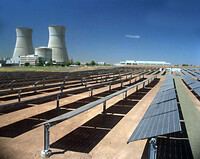
In an online editorial, EBN Executive Editor Alex Wilson calls the new Energy Policy Act a "colossal failure."
[read more]
On August 8, President George Bush signed into law the Energy Policy Act of 2005, the first national energy plan in more than a decade. “I’m confident that one day Americans will look... Read moreNews Brief
Through the new Massachusetts Green Communities™ initiative, MassHousing and the Massachusetts Technology Collaborative (MTC) are working with the nonprofit Enterprise Foundation to build 1,000 green affordable homes throughout the state. The Enterprise Foundation will provide up to $75 million in private equity to developers, from the sale of... Read more
News Brief
The U.S. Green Building Council (USGBC) has announced a call for projects to pilot-test the LEED® for New Construction Application Guide for Retail, developed to tailor LEED credit language to retail projects and to define alternative compliance paths in some areas. The LEED for Retail Committee is seeking 25 to 50 retail projects—preferably... Read more
News Analysis
News Brief
The U.S. joined Australia, China, India, Japan, and South Korea in signing the Asia-Pacific Partnership for Clean Development and Climate in July 2005, with the goal of “taking action on climate change in a broad, pro-growth context,” according to a White House fact sheet. Together, the signatory countries represent about half of the world’s... Read more
Product Review

News Brief
August 22, 2005, marks the first day of classes for the new American College of the Building Arts. In 1998 the School of Building Arts opened in Charleston, South Carolina, hoping to reverse a steady decline in the availability of craftsmanship training. Since the South Carolina commission on higher education licensed the school as a college in... Read more
News Brief
The City of Bellingham, Washington, is requiring all publicly funded new and renovated buildings larger than 5,000 ft2 (470 m2) to meet LEED® Silver certification from the U.S. Green Building Council. Bellingham joins the state of Washington, which became the first state to have a legislated requirement for LEED certification, also Silver, in... Read more


