×

Error message

  • The specified file temporary://fileWDyCKn could not be copied, because the destination directory is not properly configured. This may be caused by a problem with file or directory permissions. More information is available in the system log.
  • The specified file temporary://fileH6PGZi could not be copied, because the destination directory is not properly configured. This may be caused by a problem with file or directory permissions. More information is available in the system log.
  • The specified file temporary://fileUvLq3B could not be copied, because the destination directory is not properly configured. This may be caused by a problem with file or directory permissions. More information is available in the system log.
  • The specified file temporary://fileSZPJZJ could not be copied, because the destination directory is not properly configured. This may be caused by a problem with file or directory permissions. More information is available in the system log.
  • The specified file temporary://filet2eUkm could not be copied, because the destination directory is not properly configured. This may be caused by a problem with file or directory permissions. More information is available in the system log.

News Brief

Got Light Scoops? New Design Guide for the Latest in Daylighting

Light scoops can outperform conventional skylights, but more factors go into their design. A new guide is here to help.

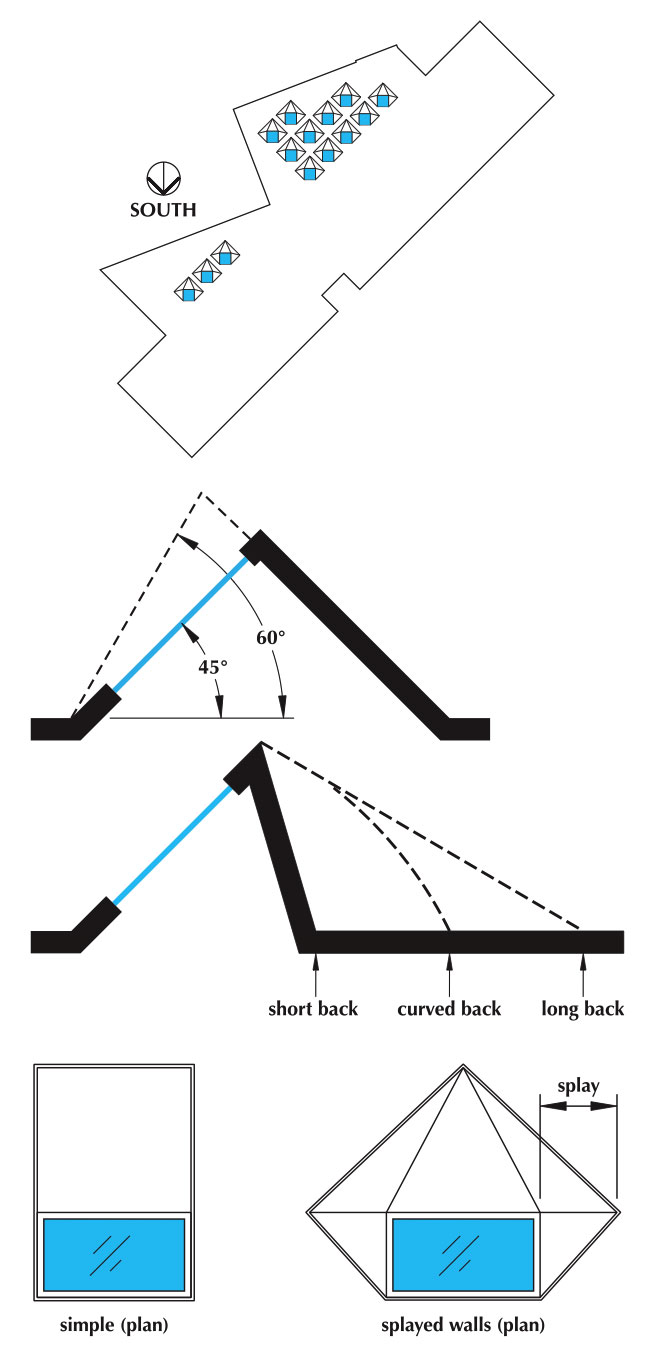
Light Scoop Design Diagrams

The direction, angle, and back profile all determine the degree of illuminance. Long backs and splayed walls can create more balanced light profiles.

Credit: The Lighting Research Center
The Lighting Research Center (LRC) at Rensselaer Polytechnic Institute recently released a design guide for light scoops—skylights that provide more strategic light through daily and seasonal fluctuations than conventional skylights do.

Particularly effective in cloudy and overcast climates, light scoops face south and are angled at either 45 or 60 degrees in order to receive light from the zenith (the brightest part of the sky) during the winter, and more indirect light during the summer. According to the guide, in a recent project where 14 light scoops were installed at the Welch Allyn corporate headquarters in Skaneateles, New York, almost 90% of occupants were highly satisfied with the results.

Light Scoops: A Design Guide—available as a free download (PDF) on the LRC website—offers guidance on determining the angle, glazing area, dimensions, glass specifications, and color finishes to meet target light levels. Modeling software can be used to compare different features, but the guide cautions that simulations should take into account a variety of weather conditions.

The resource simplifies light scoop design as evidence builds for daylighting’s energy and health benefits.


Published September 30, 2013

Pearson, C. (2013, September 30). Got Light Scoops? New Design Guide for the Latest in Daylighting. Retrieved from https://www.buildinggreen.com/newsbrief/got-light-scoops-new-design-guide-latest-daylighting


Add new comment

To post a comment, you need to register for a BuildingGreen Basic membership (free) or login to your existing profile.