Fannie Mae Achieves First LEED Data Center

News Brief

Fannie Mae Achieves First LEED Data Center

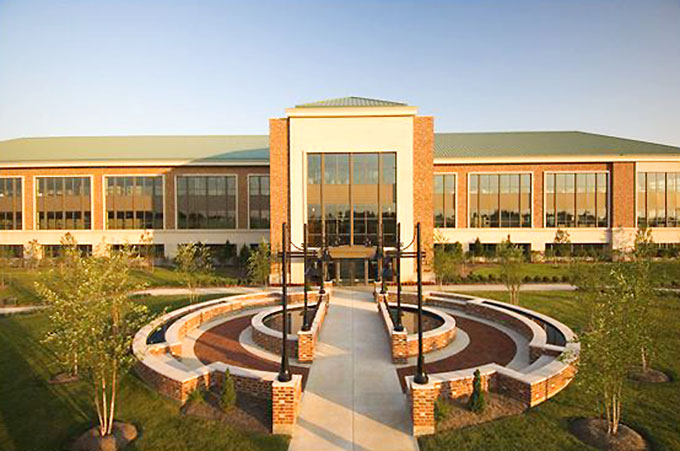
Fannie Mae’s 247,000 ft2 (22,900 m2) Urbana Technology Center in Urbana, Maryland, designed by Gensler, is the first data center to earn LEED Certification. “By forging the way for green data centers, Fannie Mae and Gensler have pioneered a new building type for sustainability,” says Max Zahniser, LEED for New Construction certification manager at the U.S. Green Building Council.

Published December 31, 1969

(2005, September 1). Fannie Mae Achieves First LEED Data Center. Retrieved from https://www.buildinggreen.com/departments/newsbrief

Add new comment

To post a comment, you need to register for a BuildingGreen Basic membership (free) or login to your existing profile.

USGBC Releases Pilot Retail Application Guide

News Brief

USGBC Releases Pilot Retail Application Guide

The U.S. Green Building Council (USGBC) has announced a call for projects to pilot-test the LEED® for New Construction Application Guide for Retail, developed to tailor LEED credit language to retail projects and to define alternative compliance paths in some areas. The LEED for Retail Committee is seeking 25 to 50 retail projects—preferably representing a diverse range of retail sectors, locations, sizes, and project delivery strategies—to participate in the pilot program over the next six to eight months. For more information, visit www.usgbc.com or e-mail Brendan Owens at bowens@usgbc.org.

Published December 31, 1969

(2005, September 1). USGBC Releases Pilot Retail Application Guide. Retrieved from https://www.buildinggreen.com/departments/newsbrief

Add new comment

To post a comment, you need to register for a BuildingGreen Basic membership (free) or login to your existing profile.

USGBC Launches LEED for Homes Pilot

News Brief

USGBC Launches LEED for Homes Pilot

The U.S. Green Building Council (USGBC) launched its year-long pilot LEED® for Homes (LEED-H) rating system in early August 2005. During the pilot phase, regional program providers will select pilot projects and verify that they meet the rating system’s requirements. Homebuilders interested in participating in the pilot can submit an application either directly to a program provider or online at www.usgbc.org/leed/homes. LEED-H includes up to four points for the use of environmentally preferable products; to achieve these points, builders can use products with specified attributes or those listed in BuildingGreen’s GreenSpec® Directory. See EBN Vol. 14, No. 7 for more information about LEED-H, including a list of regional providers. More information about GreenSpec is at www.BuildingGreen.com.

Published December 31, 1969

(2005, September 1). USGBC Launches LEED for Homes Pilot. Retrieved from https://www.buildinggreen.com/departments/newsbrief

Add new comment

To post a comment, you need to register for a BuildingGreen Basic membership (free) or login to your existing profile.

Study Finds No Safe Level of Lead

News Brief

Study Finds No Safe Level of Lead

“The study indicates there is no threshold for the adverse consequences of children’s exposure to lead,” says Bruce Lanphear, M.D., director of the Children’s Environmental Health Center at Cincinnati Children’s Hospital Medical Center and lead author of a study on the effects of lead on children. Published in the July 2005 issue of Environmental Health Perspectives, the study found evidence of intellectual impairments at levels well below the threshold of 10 micrograms per deciliter of blood set by the federal Centers for Disease Control for children five years old and younger. The study also found that impairments from lower levels of exposure are proportionally greater than impairments from higher levels. The complete study is online at ehp.niehs.nih.gov.

Published December 31, 1969

(2005, September 1). Study Finds No Safe Level of Lead. Retrieved from https://www.buildinggreen.com/departments/newsbrief

Add new comment

To post a comment, you need to register for a BuildingGreen Basic membership (free) or login to your existing profile.

Brass Plumbing Fixtures Leaching Lead

News Brief

Brass Plumbing Fixtures Leaching Lead

The protocol for testing the amount of lead that leaches into water from fixtures, valves, and other plumbing components is inadequate, according to a research team from Virginia Tech and the U.S. Environmental Protection Agency. The 1986 Safe Drinking Water Act, amended in 1996, bans new devices containing pure lead pipe, leaded solders, and brass with more than 8% lead content. Brass products containing 7.99% lead may be labeled lead-free, but all brass products containing lead must pass the Section 8 standard from the American National Standards Institute and National Sanitation Foundation. Various water conditions, including acidity, amount of dissolved carbon, and amount of chemical additives, dramatically alter the amount of lead that leaches from plumbing fixtures, rendering the Section 8 test unsuitable, according to the researchers. “It’s analogous to an automobile crash test using a wall of pillows,” said Virginia Tech’s Marc Edwards, one of the study leaders. Using Section 8 standards, the team found even a solid-lead fixture to be in compliance. The study was published in the August 4, 2005, issue of the

Journal of the American Water Works Association, online at www.awwa.org.

Published December 31, 1969

(2005, September 1). Brass Plumbing Fixtures Leaching Lead. Retrieved from https://www.buildinggreen.com/departments/newsbrief

Add new comment

To post a comment, you need to register for a BuildingGreen Basic membership (free) or login to your existing profile.

Power Demand Reaches Record High

News Brief

Power Demand Reaches Record High

The U.S. electric power grid reached a new record for power demand during the week ending July 23, 2005, according to a press release from the Edison Electric Institute (EEI), the association of U.S. shareholder-owned electric companies, international affiliates, and industry associates worldwide. Overtaking the previous record, set in August 2002, by more than 5%, the new record is 95,259 gigawatt hours in one week. EEI is online at www.eei.org. 


Published December 31, 1969

(2005, September 1). Power Demand Reaches Record High. Retrieved from https://www.buildinggreen.com/departments/newsbrief

Add new comment

To post a comment, you need to register for a BuildingGreen Basic membership (free) or login to your existing profile.

Dense Development Saves Energy

News Brief

Dense Development Saves Energy

The average urban household in the U.S. uses 320 million Btus (338,000 MJ) of energy each year, compared to 440 million Btus (464,000 MJ) for the average suburban household, according to John Holtzclaw of the Sierra Club and Jennifer Henry of the U.S. Green Building Council. The pair’s findings, presented during the Congress for the New Urbanism conference, were published in the June 2005 issue of

New Urban News. “New Urbanism is the magic that can bring about a substantial reduction in the driving that we do,” says Holtzclaw. Just increasing the housing density from three to six units per acre (7 to 15 units per hectare) saves more energy per household than Energy Star®, according to the article.


Published December 31, 1969

(2005, September 1). Dense Development Saves Energy. Retrieved from https://www.buildinggreen.com/departments/newsbrief


Add new comment

To post a comment, you need to register for a BuildingGreen Basic membership (free) or login to your existing profile.

SCE and Stirling Plan for World's Largest Solar Facility

News Brief

SCE and Stirling Plan for World's Largest Solar Facility

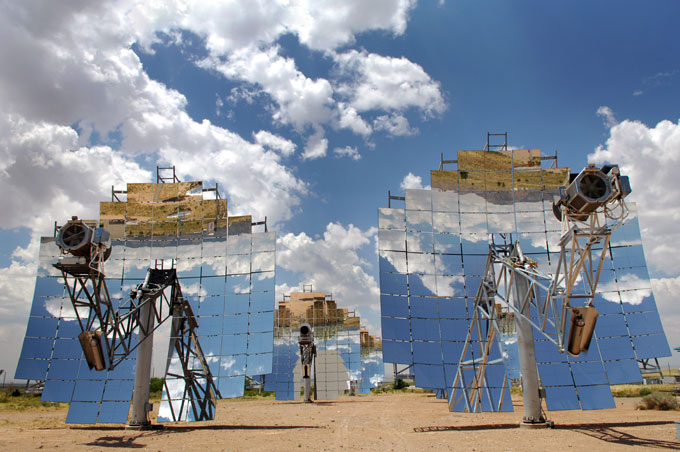
Southern California Edison and Stirling Energy Systems have announced a 20-year power-purchase agreement that could lead to the construction of a solar facility capable of producing more electricity than all other U.S. solar projects combined, according to SCS parent company Edison International. The agreement, subject to approval from the California Public Utilities Commission, calls for the construction of a 500 megawatt (MW) solar project on 4,500 acres (1,820 ha) 70 miles (112 km) northeast of Los Angeles. The project, which includes an option to expand to 850 MW, is anticipated to be the first major commercial application of Stirling dish technology, which converts solar thermal energy to electricity by using an array of mirrors to focus the sun’s rays on the receiver end of a Stirling engine. More information is online at www.edison.com.

Published December 31, 1969

(2005, September 1). SCE and Stirling Plan for World's Largest Solar Facility. Retrieved from https://www.buildinggreen.com/departments/newsbrief
Add new comment

To post a comment, you need to register for a BuildingGreen Basic membership (free) or login to your existing profile.

U.S. Joins Six-Nation Climate Pact

News Brief

U.S. Joins Six-Nation Climate Pact

The U.S. joined Australia, China, India, Japan, and South Korea in signing the Asia-Pacific Partnership for Clean Development and Climate in July 2005, with the goal of “taking action on climate change in a broad, pro-growth context,” according to a White House fact sheet. Together, the signatory countries represent about half of the world’s population and about half of its greenhouse gas emissions, which contribute to global climate change. While few specifics, such as targets, timelines, or funding sources, have been made public, more details should emerge following a November 2005 meeting in Australia.


Published December 31, 1969

(2005, September 1). U.S. Joins Six-Nation Climate Pact. Retrieved from https://www.buildinggreen.com/departments/newsbrief

Add new comment

To post a comment, you need to register for a BuildingGreen Basic membership (free) or login to your existing profile.

Environmental Ills Visible from Space

News Brief

Environmental Ills Visible from Space

Eileen Collins, commander of the August 2005 space shuttle mission, drew attention to Earth’s environment during a conversation from space with Japanese Prime Minister Junichiro Koizumi and other Japanese officials. “Sometimes you can see how there is erosion, and you can see how there is deforestation. It’s very widespread in some parts of the world,” said Collins. “We would like to see, from the astronauts’ point of view, people take good care of the Earth and replace the resources that have been used.” Collins also described her view of Earth’s atmosphere: “The atmosphere almost looks like an eggshell on an egg, it’s so very thin. We know that we don’t have much air; we need to protect what we have,” she said.


Published December 31, 1969

(2005, September 1). Environmental Ills Visible from Space. Retrieved from https://www.buildinggreen.com/departments/newsbrief

Add new comment

To post a comment, you need to register for a BuildingGreen Basic membership (free) or login to your existing profile.