Greenguard Introduces Standard for Schools

News Brief

Greenguard Introduces Standard for Schools

The Greenguard™ Environmental Institute, a nonprofit certifier of products with low emissions of volatile organic compounds (VOCs), has created the Greenguard Standard for Children & Schools™, which sets emissions criteria for building materials, furnishings, finishes, and cleaning products to be used in schools and daycare facilities. Recognizing that children have higher inhalation rates per pound of body weight than adults and are more susceptible to chemicals in other ways, the new standard applies a “body burden correction factor of 0.43” to current allowable emission levels and introduces a limit on phthalate emissions, among other adjustments. More information on the new standard is online at www.greenguard.org. For more information on Greenguard, seeEBN Vol. 12, No. 10.

Published December 31, 1969

(2005, November 1). Greenguard Introduces Standard for Schools. Retrieved from https://www.buildinggreen.com/departments/newsbrief

Add new comment

To post a comment, you need to register for a BuildingGreen Basic membership (free) or login to your existing profile.

DuPont and Tate & Lyle Invest in Corn-Based Polymers

News Brief

DuPont and Tate & Lyle Invest in Corn-Based Polymers

DuPont and Tate & Lyle have begun construction on a $100 million plant in Loudon, Tennessee, that will convert corn into 1,3 propanediol (PDO). The product, also known as Bio-PDO™, will replace petroleum-based PDO in the production of Sonora®, DuPont’s newest polymer, used in clothing, carpeting, plastics, and other products. The production of Bio-PDO requires 30 to 40% less energy than the production of petroleum-derived PDO, according to the companies. More information is online at www.dupont.com/sorona/ and at www.tateandlyle.co.uk (click on “media centre” and then “latest news”).

Published December 31, 1969

(2005, November 1). DuPont and Tate & Lyle Invest in Corn-Based Polymers. Retrieved from https://www.buildinggreen.com/departments/newsbrief

Add new comment

To post a comment, you need to register for a BuildingGreen Basic membership (free) or login to your existing profile.

GBI Earns ANSI Accreditation

News Brief

GBI Earns ANSI Accreditation

The American National Standards Institute (ANSI) recognized the nonprofit Green Building Initiative™ (GBI) as an accredited national standards developer in September 2005. Following its accreditation, GBI submitted an application to establish its Green Globes™ commercial buildings rating system as an American National Standard. For more on GBI and Green Globes, visit www.thebgi.com or www.greenglobes.com, or see EBN Vol. 14, No. 3.

Published December 31, 1969

(2005, November 1). GBI Earns ANSI Accreditation. Retrieved from https://www.buildinggreen.com/departments/newsbrief

Add new comment

To post a comment, you need to register for a BuildingGreen Basic membership (free) or login to your existing profile.

Blakely Hall Earns First U.S. Green Globes Certification

News Brief

Blakely Hall Earns First U.S. Green Globes Certification

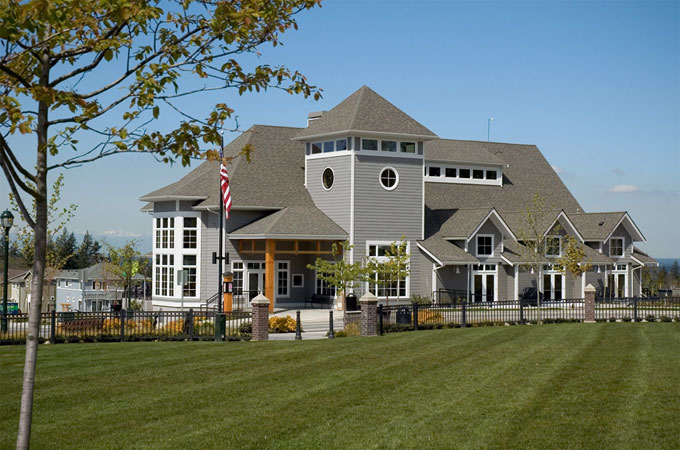
Blakely Hall, a community center and town hall for Issaquah Highlands, a planned community near Seattle, Washington, earned two Globes (out of four possible) in the Green Building Initiative’s Green Globes™ green building performance tool in September 2005, making it the first U.S. building to receive Green Globes certification. The 7,000 ft2 (650 m2) building, which includes offices and public space, also earned a LEED® Silver rating from the U.S. Green Building Council in September. Port Blakely Communities served as developer, and Weber + Thompson served as architect and interior designer. For more information about Green Globes, see

EBN

Vol. 14, No. 3.

Published December 31, 1969

(2005, November 1). Blakely Hall Earns First U.S. Green Globes Certification. Retrieved from https://www.buildinggreen.com/departments/newsbrief

Add new comment

To post a comment, you need to register for a BuildingGreen Basic membership (free) or login to your existing profile.

Artists for Humanity Achieves Platinum

News Brief

Artists for Humanity Achieves Platinum

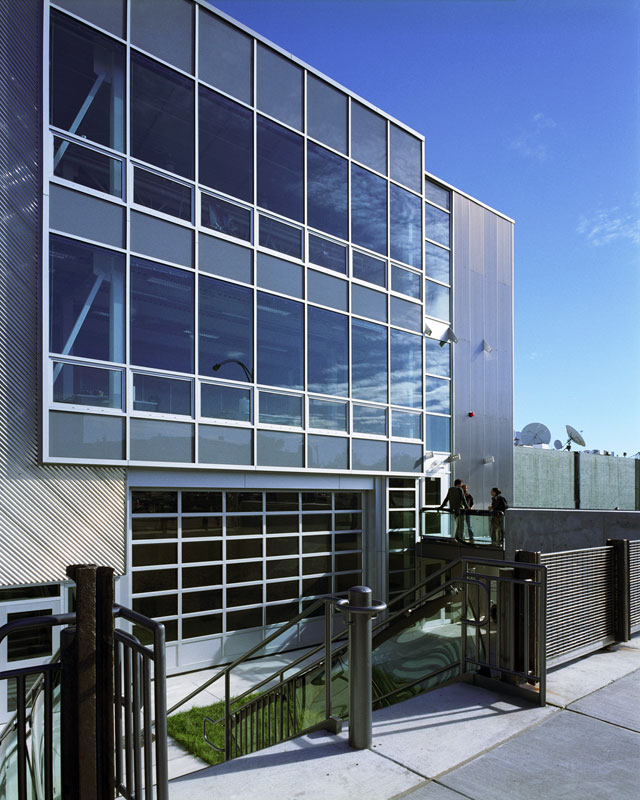
EpiCenter, the Artists for Humanity, Inc., 23,500 ft2 (2,180 m2) headquarters in South Boston, Massachusetts, has achieved 53 points in the U.S. Green Building Council’s LEED® Rating System, earning the project a Platinum rating. Dedicated to “providing programs for youth empowerment through art and entrepreneurship,” the building includes fine art and commercial art studios, a learning laboratory, and 5,000 ft2 (465 m2) of gallery space for student work. With no mechanical cooling, the EpiCenter is expected to use very little energy, and it sports a 49-kilowatt PV array (currently the largest in Boston). A detailed profile of EpiCenter, designed by Arrowstreet, Inc., with green building consultant Mark Kelley from Building Science Engineering, is available in BuildingGreen’s Case Studies Database.


Published December 31, 1969

(2005, November 1). Artists for Humanity Achieves Platinum. Retrieved from https://www.buildinggreen.com/departments/newsbrief

Add new comment

To post a comment, you need to register for a BuildingGreen Basic membership (free) or login to your existing profile.

LEED-NC 2.2 Approved

News Brief

LEED-NC 2.2 Approved

In balloting that closed on October 28, 2005, the membership of the U.S. Green Building Council (USGBC) voted overwhelmingly to approve version 2.2 of USGBC’s flagship LEED® for New Construction (LEED-NC) rating system. While other versions of LEED have been released in the interim, this vote endorses the first substantive update of the NC rating system since version 2.0 was released in May of 2000. (LEED 2.1, containing only administrative changes, was released without member ballot.) LEED-NC 2.2 will be formally released on November 11 at Greenbuild in Atlanta. Projects can be registered under LEED-NC 2.0/2.1 until December 31, after which registrations will be accepted only for 2.2. (Previously registered projects will still be able to apply for certification under the older systems.) A new exam based on LEED-NC 2.2 is expected in July of 2006.

Published December 31, 1969

(2005, November 1). LEED-NC 2.2 Approved. Retrieved from https://www.buildinggreen.com/departments/newsbrief

Add new comment

To post a comment, you need to register for a BuildingGreen Basic membership (free) or login to your existing profile.

New York City Passes Green Building Bill

News Brief

New York City Passes Green Building Bill

New York City Mayor Michael Bloomberg has signed into law a bill establishing green building standards for certain capital projects. The law, Int. 324-A, requires most new and renovated City buildings that cost more than $2 million to “be built according to green building standards that are as stringent as LEED,” according to an Office of Communications press release. Schools and hospitals must meet LEED Certified or equivalent, and all other city projects must meet LEED Silver or equivalent. “Our hope is that our investment in green buildings will be returned many times over through energy savings and environmental, community, and health benefits,” said Bloomberg upon signing the bill. The law takes effect January 1, 2007.

Published December 31, 1969

(2005, November 1). New York City Passes Green Building Bill. Retrieved from https://www.buildinggreen.com/departments/newsbrief

Add new comment

To post a comment, you need to register for a BuildingGreen Basic membership (free) or login to your existing profile.

California Enacts New Building Efficiency Standards

News Brief

California Enacts New Building Efficiency Standards

California’s updated Title 24 building efficiency standards, approved by the California Energy Commission in late 2003 (see

EBN

Vol. 13, No. 1), took effect on October 1, 2005. The strengthened standards include a range of changes for both residential and nonresidential buildings. Mandatory changes involve indoor and outdoor lighting and, for residences, checks for leaky ducts when new central furnaces or air conditioners are installed. It also mandates “time-dependent valuation” of energy for all buildings, favoring peak energy-saving measures over off-peak measures. A complete description of the changes is online at www.energy.ca.gov/title24/2005standards/.

Published December 31, 1969

(2005, November 1). California Enacts New Building Efficiency Standards. Retrieved from https://www.buildinggreen.com/departments/newsbrief

Add new comment

To post a comment, you need to register for a BuildingGreen Basic membership (free) or login to your existing profile.

California Commits $2 to Efficiency

News Brief

California Commits $2 to Efficiency

In what it describes as the most ambitious energy conservation campaign in U.S. history, the California Public Utilities Commission in September 2005 authorized $2 billion in funding over the next three years for energy efficiency and conservation. The program’s provisions include financing strategies, online energy audits, and consumer rebates for Energy Star® appliances. The program also provides $230 million each year (a 36% increase) for the Governor’s Green Building Initiative, with the goal of reducing the energy use of government buildings by 20%. “What this plan does is help us meet our growing needs, first and foremost, with the cleanest, most cost-effective energy of all—greater efficiency,” says Susan Kennedy, the commissioner leading the efficiency proceeding. Details are at www.cpuc.ca.gov.

Published December 31, 1969

(2005, November 1). California Commits $2 to Efficiency. Retrieved from https://www.buildinggreen.com/departments/newsbrief

Add new comment

To post a comment, you need to register for a BuildingGreen Basic membership (free) or login to your existing profile.

All Potlatch Forestland Achieves FSC Certification

News Brief

All Potlatch Forestland Achieves FSC Certification

As of September 1, 2005, all of Potlatch Corporation’s 1.5 million acres (600,00 ha) of forestland, located in Idaho, Arkansas, Oregon, and Minnesota, has earned certification according to Forest Stewardship Council (FSC) standards. The certification of 319,000 acres (130,000 ha) in Minnesota, along with chain-of-custody certification of a Potlatch sawmill in Bemidji, Minnesota, completed the company’s forestland certification quest, which began with 667,000 acres in Idaho in 2004. For more information on Potlatch and FSC certification, see

EBN

Vol. 12, No. 4;

Vol. 13, No. 5; and

Vol. 14, No. 6. The company is online at www.potlatchcorp.com.

Published December 31, 1969

(2005, October 1). All Potlatch Forestland Achieves FSC Certification. Retrieved from https://www.buildinggreen.com/departments/newsbrief

Add new comment

To post a comment, you need to register for a BuildingGreen Basic membership (free) or login to your existing profile.