Championing the
Changemakers
BuildingGreen champions the changemakers in sustainable design and building, with trusted insight, unparalleled education, and communities that are transforming the industry.
Log in to your profile

Image: Piranka

News Brief
News Analysis
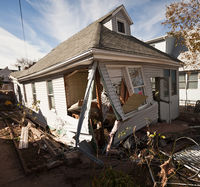
Despite another historic year of extreme weather, most insurance companies still aren't facing climate risks.
The U.S. insurance industry remains in denial about global climate change, according to a new report from the advocacy group Ceres. Because the insurance industry is crucial to the overall U.S. economy, the report argues, it is increasingly important for insurers to plan for their future viability—and for regulators to ensure that... Read more
News Brief
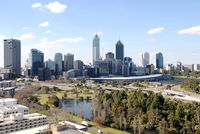
The results of a decade-long study bear out the common-sense idea that walkable, mixed-use neighborhoods with recreational destinations encourage residents to walk more.
The study, beginning in 2003, surveyed more than 1,400 people who planned to move into new developments in Perth, Western Australia. Respondents self-reported their... Read more
Blog Post
I love many things about Kansas—from the tall-grass prairies in the Flint Hills where I’ve hiked through rolling hills overlooking grazing bison to the dramatic... Read more
Product Review

Product Review
It turns out there is solid science behind these products, but their benefits don’t really have much to do with smog and outdoor air quality. Many building owners will find the self-cleaning properties of these products are what... Read more
Explainer
With the right technology, a grid-connected solar-electric system can still provide electricity during power outages.
Many people assume that an onsite renewable-energy system will give you power during a utility outage. That’s not necessarily the case.
The vast majority of PV systems today are grid-connected. If the grid goes down, these systems not only leave houses dark at night but also won’t deliver electricity when the sun is shining. This is in... Read more
Feature
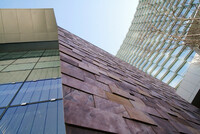
Stone is natural and durable, emits no VOCs, requires almost no maintenance, and provides a connection to the earth and our history.
Stone was one of our first building materials. It has been used to construct everything from humble dwellings to our most iconic structures. As a building material, stone requires virtually no manufacturing and is so durable that stone structures built thousands of years ago are still used today—characteristics few contemporary “green... Read more
News Analysis
According to the study, 90 by 50, buildings are responsible for 75% of the city’s CO2 emissions, with transportation producing another 21%. Based on modeling eight major types of residential and commercial buildings... Read more
Blog Post
What do you do if you’re a builder and your client (that would be me) hands you a material that no one’s ever heard of, let alone... Read more
News Analysis

News Analysis
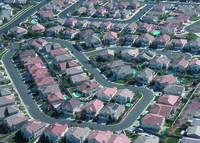
Traditional zoning codes have created low-density sprawl, which has resulted in habitat loss, high fuel use for transportation, and other issues.
Now the U.S. Green Building Council (USGBC) and the Land Use Law... Read more
News Brief
Although many conventional cleaning products contain VOCs and other airborne hazards known to cause respiratory problems and other illnesses, this is the first time medical research has directly linked cleaning jobs with asthma risk. Occupations already known to... Read more
News Analysis
The U.S. Department of Energy’s National Renewable Energy Laboratory (NREL) will soon complete its new high-performance computing (HPC) data center and Energy Systems Integration Facility (ESIF) offices and laboratories in Golden,... Read more
News Analysis
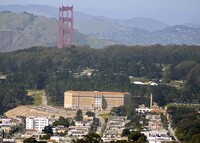
The historic San Francisco redevelopment is the first to earn LEED for Neighborhood Development certification since the rating system was formally launched.
The Presidio, a former army base and an urban national park site located at the base of the Golden Gate Bridge in San Francisco, is home to the world’s first community certified under LEED for Neighborhood Development (LEED-ND 2009) since LEED-ND left its pilot phase, as recognized by the U.S. Green Building Council (USGBC). The Public... Read more
News Brief
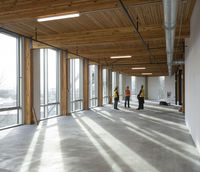
Seattle’s Bullitt Center has become the first commercial building in the U.S. to achieve project certification from the Forest Stewardship Council (FSC). The certification verifies that 100% of the wood in the core... Read more
Blog Post

Why we chose cork exterior insulation for our net-zero-energy house
Among the innovative—some might say weird—products we’re trying out at our Dummerston, Vermont farmhouse, none is more unusual than the expanded cork insulation we’re currently installing as a layer of exterior rigid insulation. As I mentioned in a blog last summer, cork insulation has a great story behind it.
Cork? You’ve... Read moreNews Analysis
The connection between sustainable school buildings and student performance can be difficult to quantify—but the idea that children learn more readily when they can see, hear, and breathe clearly isn’t exactly controversial.... Read more
News Brief
News Brief