
Championing the
Changemakers
BuildingGreen champions the changemakers in sustainable design and building, with trusted insight, unparalleled education, and communities that are transforming the industry.
Log in to your profile

Image: Piranka

News Brief
Feist, who founded the Passivhaus Institut in Germany in 1996 and is its current director, says the award “... Read more
Blog Post
This post is the second in a series on the federal government’s use of green building certifications. Coming soon: The Hidden Beltway Lobbyists Who Shape Green Building Policy.
The U.S. Treasury Building, completed in 1869, is the oldest building... Read moreBlog Post
Bruce Brownell, of Adirondack Alternate Energy, has been creating low-energy, largely passive-solar-heated, resilient... Read more
News Analysis
Canadian nonprofit... Read more
News Brief

The database does not provide information on toxicity, but it may be a powerful... Read more
Blog Post
This post is the first in a series on the federal government’s use of green building certifications. Part 2: Sustainable Federal Buildings: What's the Law?
This shows the first few megabytes of the Unified Facilities Criteria... Read moreProduct Review
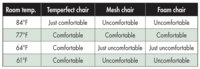
Industry guidelines like ASHRAE Standard 55-2010 say offices should be comfortable for 80% of their occupants. What about the other 20%? or those who work late or on weekends?
Heating or cooling an entire office is wasteful, and space heaters use a lot of energy. Some offices create “personal microclimates” by giving individual occupants... Read more
News Brief
In the face of worsening water shortages, Mexico City’s 20 million residents currently depend on water pumped in from elsewhere and on the region’s shallow... Read more
News Brief
Researchers from Chalmers University of Technology and Gothenburg University, who presented their findings at the ARCH12 conference on medical architecture in November 2012, proposed that aggression results from stressors such as crowding and noise. These stressors can be mitigated by key design elements, including private rooms, moveable... Read more
News Brief
Journal of Geophysical Research: Atmospheres.
Led by the International Global Atmospheric Chemistry Project, the authors of “Bounding the role of black carbon in the climate system:... Read more
News Brief

In the report, published in Nature Communications, scientists estimate that cats, especially strays and feral cats, kill 1.4–3.7 billion birds and 6.9–20.7 billion mammals in the U.S. every year, numbers that are two to four times previous estimates and higher than for any other human threat, including poisoning or collisions with automobiles... Read more
News Brief
Attorney Shari Shapiro points out on the Green Building Law blog that every state provided a governor’s letter stating its intent to comply with ARRA Section 410, linking State Energy Program (SEP) funding to adoption and enforcement of the 2009 International Energy Conservation Code (IECC) for residential buildings and ANSI/ASHRAE/IESNA... Read more
News Brief
Product Review

News Brief
State Assembly Member Nancy Skinner introduced Bill AB 127 in January, saying that California recognizes the... Read more
News Brief
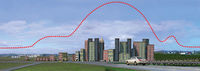
Nature Climate Change.
The authors of “Energy consumption and the unexplained winter warming over northern Asia and North America” demonstrate by computer... Read more
News Brief
EBN Aug. 2012).
The ordinance will apply to... Read more
News Brief
The U.S. Environmental Protection Agency (EPA) has released its annual Toxics Release Inventory (TRI), concluding that toxic airborne emissions... Read more
News Analysis
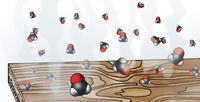
LEED Interpretation #10250 allows for the use of urea in combination with melamine formaldehyde (MF) as long as products meet California's ultra-low-emitting formaldehyde (ULEF) resin standards.
By Brent Ehrlich
Composite wood products made with added urea formaldehyde (UF) are one of the few products that LEED has consistently banned under its longstanding IEQc4.4: Low-Emitting Materials credit. However, LEED Interpretation #10250, issued January 1, 2013 (revised April 1, 2013), and applicable to all LEED projects, now allows... Read more


