
Championing the
Changemakers
BuildingGreen champions the changemakers in sustainable design and building, with trusted insight, unparalleled education, and communities that are transforming the industry.
Log in to your profile

Image: Piranka

News Brief
Product Review
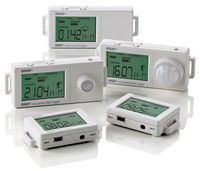
Founded in 1981, Onset has 120 employees in its solar-powered manufacturing facility on Cape Cod and has shipped more than 2 million data loggers to customers worldwide. The product name, HOBO, came from the founder’s interest in all things railroad-related, according to Evan Lubofsky, the director of marketing for the company, and it refers... Read more
News Brief

After two years of public comment and review, the FTC has released a revised version of its “Guides for the Use of Environmental Marketing Claims.”
After two years of public comment and review, the Federal Trade Commission (FTC) has released a revised version of its “Guides for the Use of Environmental Marketing Claims.” Also known as the “Green Guides,” the publication outlines what the FTC may find to be deceptive marketing; the revised version includes updates and new sections on carbon... Read more
News Analysis
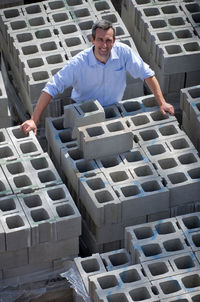
New rules standardize how we calculate the carbon footprint and other impacts of concrete.
“When it comes to building products, reducing the carbon footprint from concrete is one of the most significant actions that the building sector can take,” says Ed Mazria, founder and CEO of Architecture 2030. While there are many ways to reduce that footprint, without clear rules defining how to measure the impacts, it’s tricky to track... Read more
Explainer
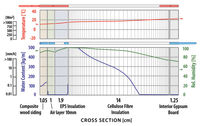
WUFI software helps predict and prevent moisture problems based on site, climate, building materials, mechanical systems, and more.
“Do I need a vapor barrier?” It’s a perennial question, but there’s no simple answer: heat and moisture interact with each other and with building assemblies in complicated ways, so the first thing you need is a vapor profile of the building assembly. This means looking at the vapor permeance of each material and ensuring it can dry should... Read more
News Analysis
A new building standard applies wellness research to increase the focus on health in homes, hotels, and commercial buildings.
When you think of “healthy buildings,” indoor air quality and toxic chemicals may be the first things that come to mind, but WELL will take a holistic view, incorporating several alternative-health concepts with the idea of promoting psychological and emotional well-being as well as physical health.
Delos worked with the... Read more
Feature
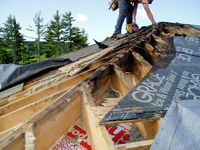
Any four walls and a roof make an enclosure, but for efficiency, comfort, and durability, those elements have to be meticulously designed and installed.
For children, the delicate, fern-like patterns left by Jack Frost on the inside of a windowpane can be magical. But for the owners of a brand new commercial building in the Midwestern U.S., they were more like a nightmare.
“There were 71 punched window openings, all of which had condensation on the inside that turned to frost... Read more
News Brief
A new study shows that retrofits to old windows can provide nearly the same savings with far lower initial costs.
“Saving Windows, Saving Money: Evaluating the Energy Performance of Window Retrofit and Replacement,” from Preservation Green Lab and other groups, compared retrofit options to replacement windows and typical existing single... Read more
Blog Post
Fly ash, a by-product of coal combustion, is considered “post-... Read more
Blog Post
We love to talk about retrofits and building reuse around here, but the flying saucer of... Read more
Blog Post
We have a sort-of love-hate relationship with our pellet stove. My wife leans more toward the latter, while I see the... Read more
Blog Post
Biking cross-country from San Francisco to Boston with a friend in 2010, I saw few... Read more
Blog Post
GreenSpec and EBN have reviewed a number of LED... Read more
Blog Post
It turns out you can get pretty darn dense even without building mile-high... Read more
Blog Post
I’ve been heating primarily with wood since I bought our house 31 years ago, though there were a few... Read more
Blog Post
Malcolm Lewis, Ph.D., the founder of Constructive Technologies Group, a member of the EBN Advisory Board, and long a quiet leader in the green building movement, died on October 13th of bladder... Read more
Blog Post
Lloyd Alter returns this week with more... Read more
Blog Post

How China is affecting the world’s photovoltaic industry
When China dives into a technology, it does so in a big way. Nowhere is this more the case than in photovoltaic (PV) panel manufacturing, where dramatic growth... Read more
Blog Post
Photo Credit: International Living Future Institute
... Read more
Blog Post
Some people look forward to the Oscars, but for us it’s green building awards season... Read more


