
Championing the
Changemakers
BuildingGreen champions the changemakers in sustainable design and building, with trusted insight, unparalleled education, and communities that are transforming the industry.
Log in to your profile

Image: Piranka

News Brief
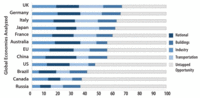
The “International Energy Efficiency Scorecard” looked at 12 nations representing 78% of global GDP, 63% of global energy consumption, and... Read more
News Brief
News Brief
Product Review
News Brief
Landscape and Urban Planning by researchers from the University of Vermont... Read more
News Brief
Explainer
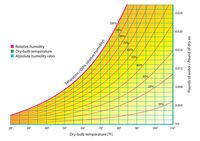
In high-performance buildings, we have to manage energy and moisture with equal intensity. The psychrometric chart shows us how.
In high-performance buildings, we have to manage energy and moisture with equal intensity. The psychrometric chart helps us understand how they are linked and gives us key data points for managing moisture. Using just the vertical temperature lines, the horizontal humidity lines, and the curved relative humidity lines, we can do two... Read more
Feature

As building owners comply with new laws to report energy use, the data may change the industry-and the act of reporting it already has.
Laws mandating energy use disclosure are gaining steam in the U.S. as more cities and states seek to leverage these transparency requirements to drive energy savings and job creation. Instead of heavy-handed requirements that existing buildings get system upgrades or improve operations, local governments are attracted to policies with... Read more
News Brief
The dire 2007 predictions of the U.N. Intergovernmental Panel on Climate Change (IPCC) painted a picture that was “a bit too rosy,” according to John Reilly, Ph.D., of the Massachusetts Institute of Technology (MIT), one of the authors of a new study suggesting that climate change is happening more rapidly than predicted.
It takes seven... Read more
Product Review
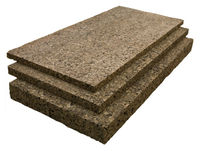
Amorim expanded cork board is a 100% natural, rapidly renewable rigid insulation that offers a green alternative to polystyrene and polyiso.
Cork is natural, it sequesters carbon, and it is produced through a sustainable silviculture process with a 2,000-year tradition. The material regenerates itself and can be harvested every nine years. It insulates well, absorbs sound, and is durable in use but ultimately biodegradable.
In building applications, cork is best known as a... Read more
News Brief
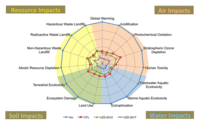
Life-cycle assessment shows LED lamps slightly outperform compact fluorescent lamps (CFLs) on environmental impacts related to their manufacturing, transport, and use. The U.S. Department of Energy (DOE) has released the second of three reports in its “Life-Cycle Assessment of Energy and Environmental Impacts of LED Lighting Products,” which... Read more
Blog Post
Over the years, the GreenSpec team has looked at a... Read more
Blog Post
Illustration: Tristan Roberts
“Anyone else finding a trend of clients wanting LEED-certifiable projects but not wanting to commit to certification? I have three projects just this week toying with going this route.”
That was the opening salvo in a recent email discussion I was involved in among a group of architects. With the... Read more
Blog Post
I’ve done a lot of digging into window options in... Read more
Blog Post
SPOILER ALERT: If you haven’t yet taken the GreenSpec toxic chemical quiz, head over and do it now—yes, before you read the answers.
Find out how you didFind out below how well you... Read more
Blog Post
A few days ago I got yet another press release about a new efficiency record with LED lighting. These are almost commonplace as we ride... Read more
Op-Ed
Toxicity, the ability of a substance to poison living things, is no simple thing to define or measure. A chemical can be toxic to one species but not another: think of goats blithely eating poison ivy. A chemical may be harmful to eat but not to touch. Unlike with poison ivy, you can brush past the deadly belladonna plant without risk: you... Read more
News Analysis
PACE programs (“PACE” stands for “property assessed clean energy”) are authorized by states and run by local governments, which finance major improvements such as deep energy retrofits or renewable energy systems. The funds are... Read more
Blog Post
I have never owned an air conditioner, and I don’t have any immediate plans to change that. But if... Read more


