

 TRENDING IN STANTEC’S REGIONS
Based on current projects, pursuits, and ongoing thought leadership, the following are hot topics across the Stantec Buildings group.
Read on to stay up to date with evolving skills and expertise not only in your own BC but also those in your wider network of Stantec colleagues—and earn free CEUs as a bonus.
Also see our other featured topics: Material Health and Resilient Design .
 Canada Mountain
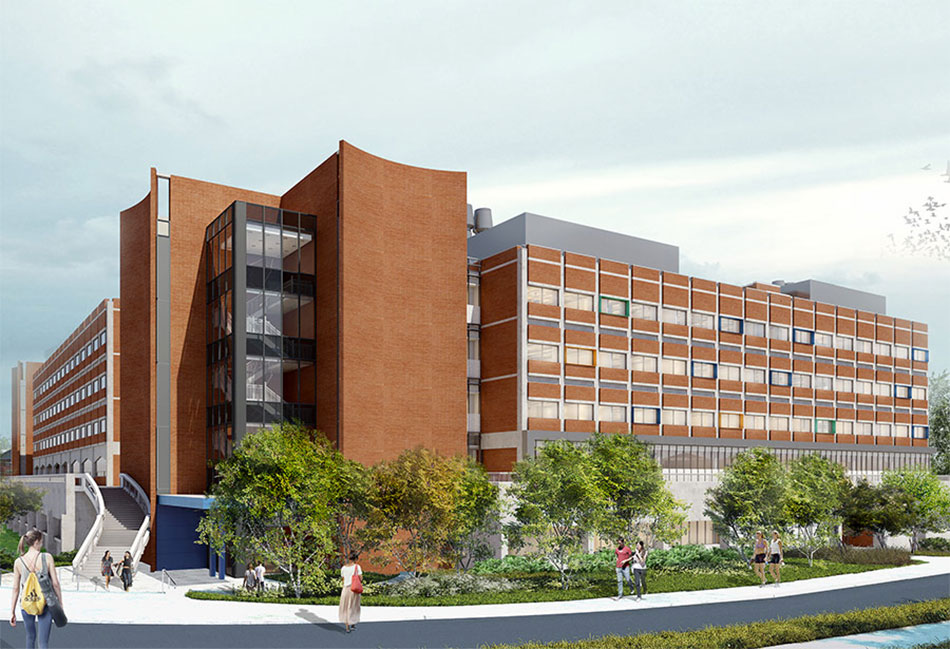
Built in the 1970s, this 280,000 ft2 university building is currently receiving a new exterior skin and improved insulation. Preliminary air infiltration testing of the modifications indicates an astounding improvement of 99.7%. [From Mind the Gaps: Making Existing Buildings More Airtight]
Image: Goody ClancyThe building envelope protects us from the elements, enables comfort, and ultimately allows us to be at home in our houses, to be productive at the office, to learn in school, or to heal in the hospital.
A building envelope, also commonly called a “building enclosure,” should:
- support comfort
- manage moisture
- not poison us or the planet
- allow us to breathe clean air
When possible, it should do all this while using resources effectively—durably, energy-efficiently, and with low embodied impacts.
- Building Enclosure Commissioning: Ensuring Durable and Energy-Efficient Buildings
- What Is Building Science Anyway?
- Thermal Bridging
- Mind the Gaps: Making Existing Buildings More AirtightAIA · GBCI · ILFI
- When Passive House Goes BigAIA · GBCI · ILFI
- Cladding: More Than Just a Pretty FaçadeAIA · GBCI · ILFI
- Rethinking the All-Glass Building
- Fundamentals of High Performance Building AssembliesAIA · GBCI · ILFI
- The BuildingGreen Guide to InsulationAIA · GBCI · ILFI
 US West
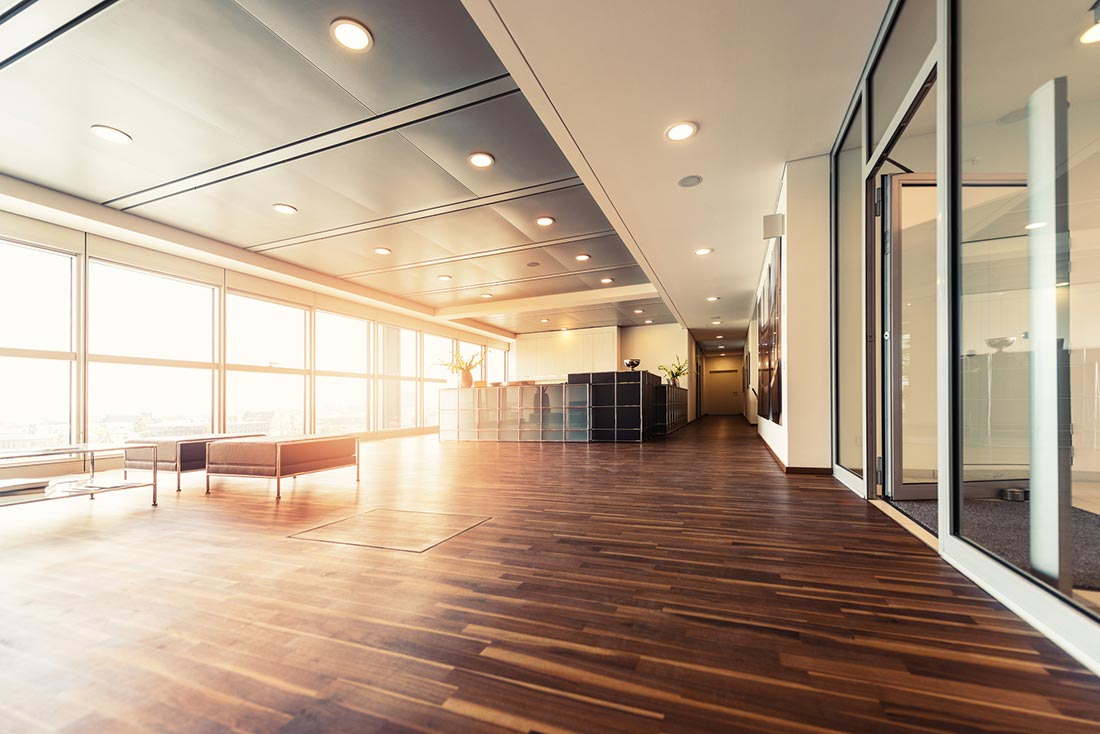
Harvesting daylight is a popular way to save energy and promote productivity. But getting it wrong is all too easy—and can have the opposite effects.
Daylight connects us with the outdoors, provides an essential nutrient, and makes our interior spaces glow with natural beauty. Exposure to bright daylight, even indoors, has been shown to relieve sleep disorders and may contribute to general health and well-being, decreasing absenteeism at both work and school.
Yet daylighting can go awry, resulting in glare, overheating, and loss of productivity. These resources shed light on the benefits of daylighting as well as strategies for doing it right.
- In-House Daylight Modeling: Three Firms Share How They Do ItAIA · GBCI · ILFI
 US Northeast
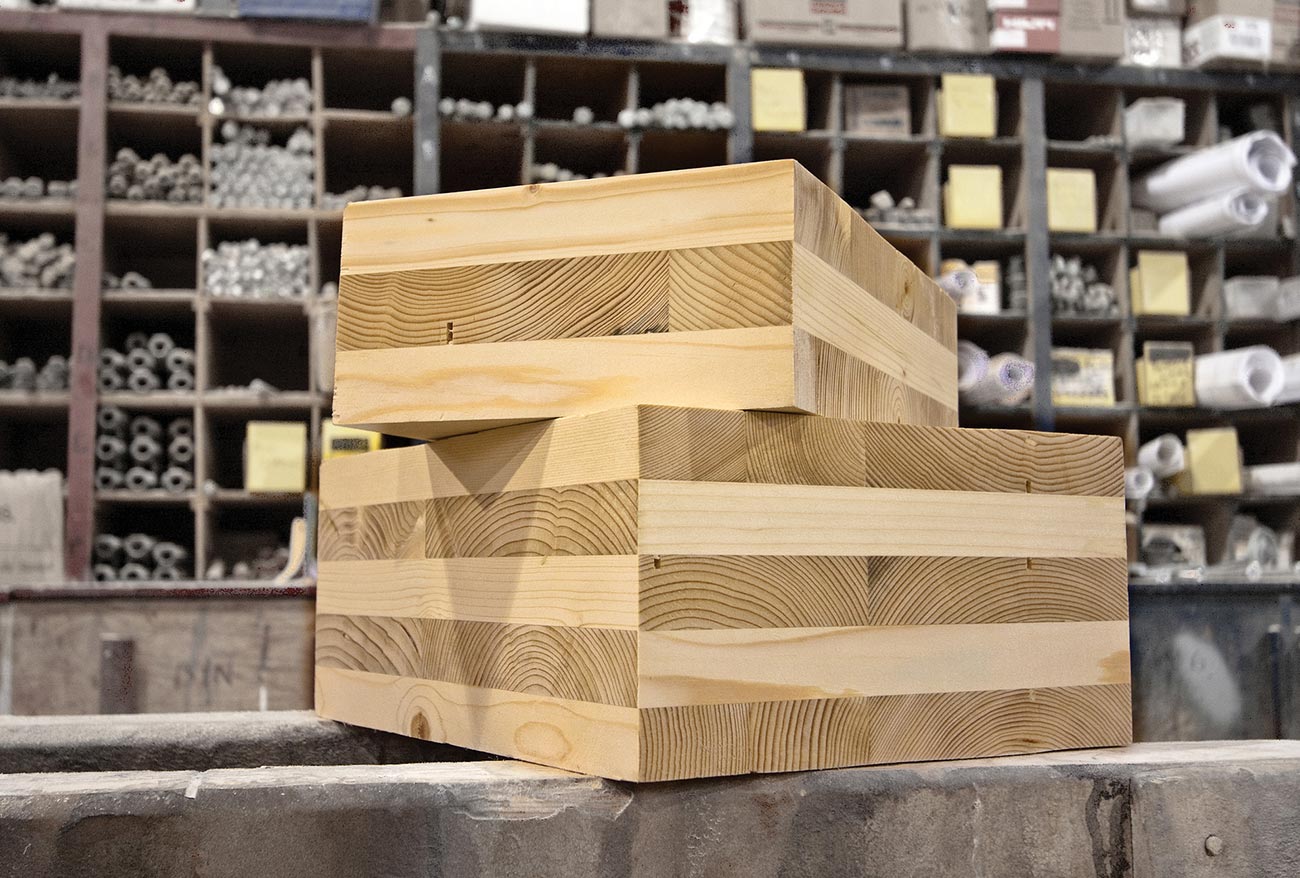
Cross-laminated timber is a structural panel made by gluing layers of softwood boards one on top of the next at right angles to each other. The resulting panels can be used for structural applications.
Photo: Oregon Forest Resources Institute. License: CC BY 2.0.Materials really do matter to the health of occupants and the environment, but finding out what is in a product—and why—is not easy.
Products also have to perform as intended, so there are often tradeoffs between performance and the most sustainable materials.
Here you will find articles on:
- the least hazardous, most environmentally sustainable materials used in products
- environmental product declarations that can reveal the life-cycle impacts of materials
- standards and third-party certifications that provide important VOC criteria and other health and performance metrics
- chemicals of concern in building materials
You’ll also learn how what makes a product green can differ from product category to product category, and why multi-attribute vetting is critical no matter what product or material you’re selecting or specifying.
- The Great Eight: High-Impact Material Choices for Green BuildingAIA · GBCI · ILFI
- Engineering a Wood RevolutionAIA · GBCI · ILFI
- EPDs Are the Future of the Building Industry, Whether You Like It or NotAIA · GBCI · ILFI
- The 12 Product Rules
- Building Product Disclosure & Optimization (BPDO) Cheat Sheet
- HPD Quick-Start Guide: 5 Easy Steps
- EPD Quick-Start Guide: 5 Easy Steps
- Deep Material Vetting (That Won’t Chew Through Your Design Budget)AIA · GBCI · ILFI
- Materials Transparency & LEEDAIA · GBCI
 US Central
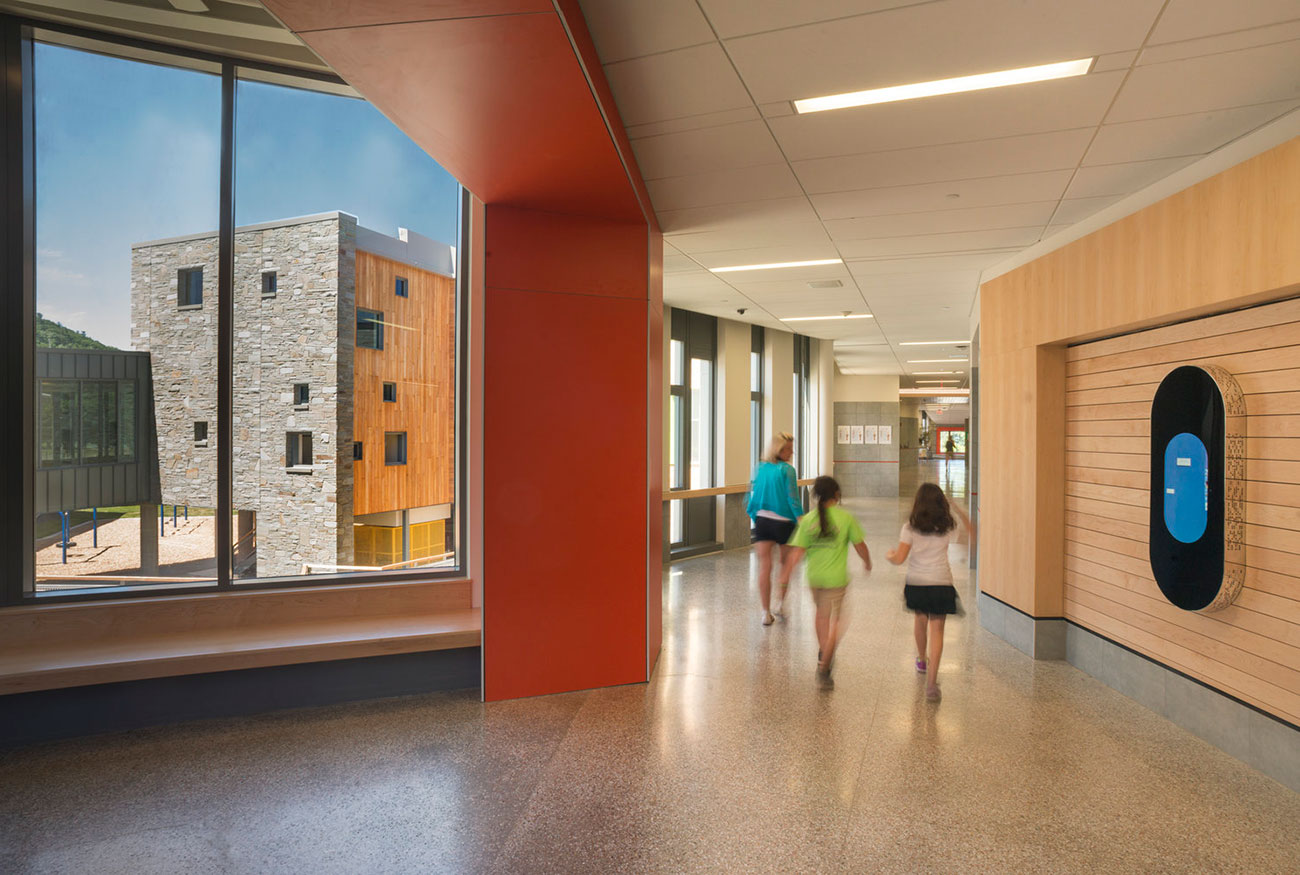
The energy dashboard at this elementary school uses custom-designed software that includes age-appropriate games related to the school’s curriculum. [From Why Schools Are Embracing Net-Zero Energy]
Photo: John Griebsch PhotographySchools can be a great testing ground for pushing new boundaries.
Typically lacking in intensive energy loads, and operating on a short calendar, they are relatively approachable candidates for net-zero-energy goals.
School officials and parents alike may also be receptive to upgrades associated with less-toxic materials or better indoor air quality for the sake of the young minds that will spend so much time there. For these reasons and more, school projects sometimes provide the best case studies for what’s on the horizon for other building types.
 Canada Prairies
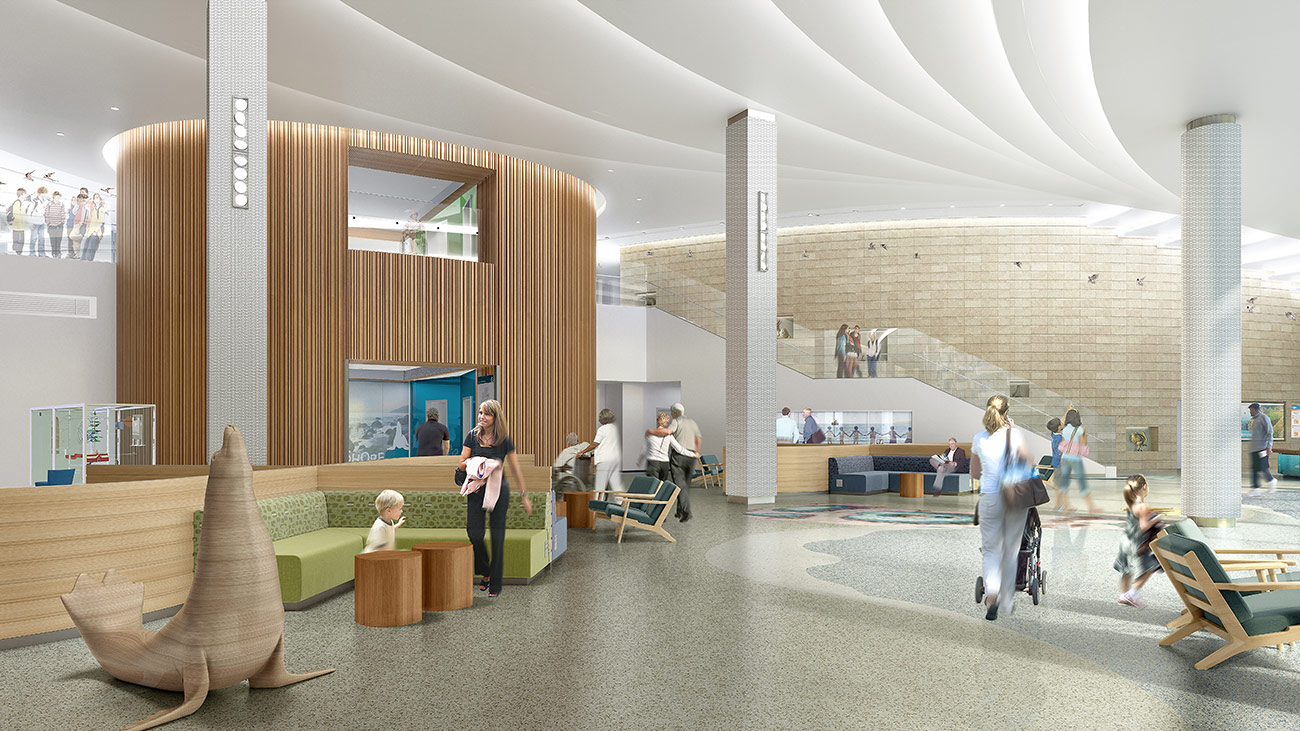
The design spec for this children‘s hospital was clear about what qualified as an equivalent product for substitutions. [From Protect Your Spec: 14 Strategies]
Image: Perkins+Will/HGA.The WELL Building Standard, from the International Well Buildings Institute (IWBI), is closely modeled on LEED but is focused exclusively on occupant health (which is just one of numerous factors in LEED).
As with LEED, each category includes prerequisites (or “preconditions”) and credits (“optimizations”). WELL buildings can be certified to three levels: Silver, Gold, and Platinum.
Fitwel is different. There are no prerequisites, only optional credits. To achieve the lowest level of certification (one star out of three), projects need to achieve 90 points out of 144 possible. Although no specific criteria are required for certification, the program is based on an elaborate weighting system that incentivizes the highest-impact criteria based on peer-reviewed science.
- Programming Buildings for Health: WELL, Fitwel, and BeyondAIA · GBCI · ILFI
- Protect Your Spec: 14 StrategiesAIA · GBCI · ILFI
 Sustainability News
The energy used traveling to and from an average office building—its transportation energy intensity—can be greater than the energy used to run it.
Vacuum-insulated glass offers outstanding performance with an airless space just ¼ mm thick. It’s finally coming to windows but already here for cooler doors.
Buildings must be LEED certified and can choose among net-zero energy, water, waste, or carbon.
 Get Your Credentials
Prepare with confidence for LEED and WELL exams with BuildingGreen’s study guides and practice tests.
Click on a title to learn more and purchase.