

The current Stantec/BuildingGreen featured topic is Resilient Design. Read on to learn the essentials, and then dive deep to earn CEUS.
Also see the Material Health featured topic, and also a survey of topics trending in Stantec’s regions.
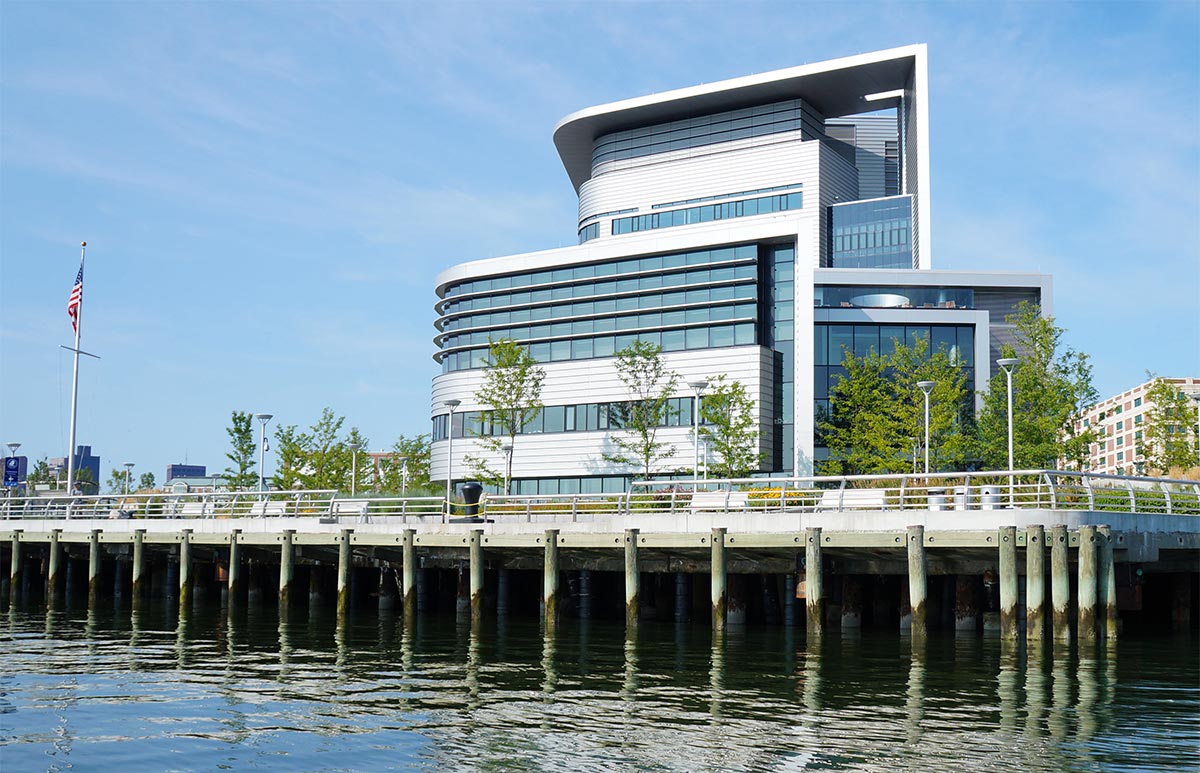 Photo: Spaulding Rehabilitation Center in Charlestown, Massachusetts.
Resilience is the capacity to adapt to changing conditions and to maintain or regain functionality and vitality in the face of stress or disturbance. It is the capacity to bounce back after a disturbance or interruption.
Begin with the 10 Resilient Design Principles, outlined below by Alex Wilson, founder of BuildingGreen and the Resilient Design Institute.
Go deeperFor a detailed introduction, read The Four Core Issues to Tackle for Resilient Design (And the Programs that Can Help).
Source: Resilient Design Institute
Strategies to address resilience apply at scales of individual buildings, communities, and larger regional and ecosystem scales; they also apply at different time scales—from immediate to long-term.
These include potable water, sanitation, energy, livable conditions (temperature and humidity), lighting, safe air, occupant health, and food; these should be equitably distributed.
More diverse communities, ecosystems, economies, and social systems are better able to respond to interruptions or change, making them inherently more resilient. While sometimes in conflict with efficiency and green building priorities, redundant systems for such needs as electricity, water, and transportation, improve resilience.
Passive or manual-override systems are more resilient than complex solutions that can break down and require ongoing maintenance. Flexible solutions are able to adapt to changing conditions both in the short- and long-term.
Strategies that increase durability enhance resilience. Durability involves not only building practices, but also building design (beautiful buildings will be maintained and last longer), infrastructure, and ecosystems.
Reliance on abundant local resources, such as solar energy, annually replenished groundwater, and local food provides greater resilience than dependence on nonrenewable resources or resources from far away.
Adaptation to a changing climate with higher temperatures, more intense storms, sea level rise, flooding, drought, and wildfire is a growing necessity, while non-climate-related natural disasters, such as earthquakes and solar flares, and anthropogenic actions like terrorism and cyberterrorism, also call for resilient design. Responding to change is an opportunity for a wide range of system improvements.
Natural systems have evolved to achieve resilience; we can enhance resilience by relying on and applying lessons from nature. Strategies that protect the natural environment enhance resilience for all living systems
Strong, culturally diverse communities in which people know, respect, and care for each other will fare better during times of stress or disturbance. Social aspects of resilience can be as important as physical responses.
Recognize that incremental steps can be taken and that total resilience in the face of all situations is not possible. Implement what is feasible in the short term and work to achieve greater resilience in stages.
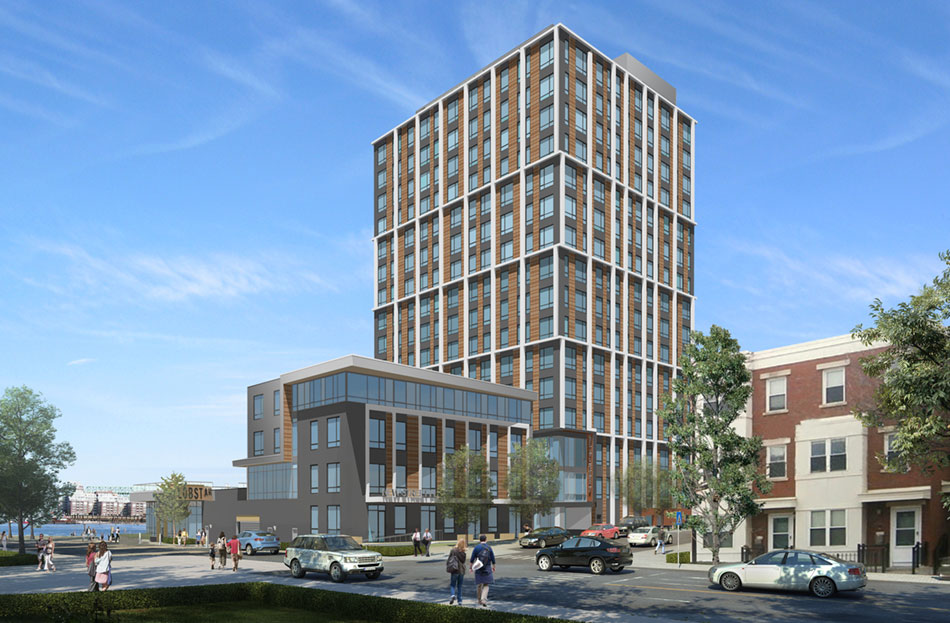
6 New Street, completed in 2016, obtained an insurance quote ten times lower than that of a comparable conventional building because of the site-specific resilience features it incorporates.
Image: StantecThink you’re designing a 100-year building? Not if a 100-year storm destroys it next year. In this section, you will:
- gather lessons learned from case studies of the very first resilient design projects
- understand how your green building expertise already overlaps with resilience
- find out how to assess the region-specific risks your project faces as a result of climate change
Once you complete your own resilience assessment, you can develop strategies to design for building “hardening,” food security, passive survivability, and program flexibility to accommodate community support functions.
- The Four Core Issues to Tackle for Resilient Design (And the Programs That Can Help)AIA · GBCI · ILFI
- Resilient Design—Smarter Building for a Turbulent FutureAIA · GBCI · ILFI
- Resilient Design: 7 Lessons from Early AdoptersAIA · GBCI · ILFI
- Focus on Resilient HousingAIA · GBCI · ILFI
- Design for Adaptation: Living in a Climate-Changing WorldAIA · GBCI
- Introducing the Resilient Design Institute
- Bouncing Forward From Disasters
- The New York City Buildings Resiliency Task Force Presents Recommendations
- Mitigating Disasters: Invest Now, Spend Less Later
- Improving Resilience in Affordable Housing
- Checking for Resilience in Multifamily Housing
- Insurers Ill-Prepared for Climate Change, Survey Finds
- AIA Prioritizes Resilient Design, Product Transparency
- Building Industry Helps Disaster Victims Recover
- Resilient Tiny House Shelters for the Homeless
- Resilient Design and the Standard of Care
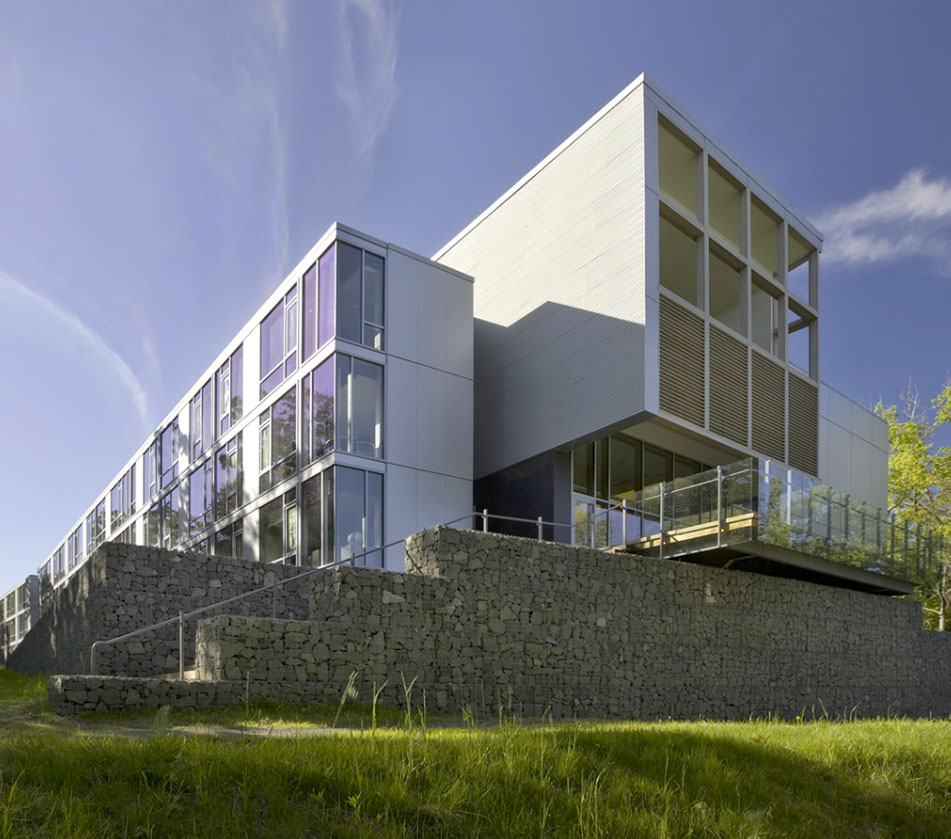
The Gary C. Comer Geochemistry Building at Columbia University features natural ventilation in its office wing; Payette designers took advantage of natural shading from existing trees to keep the building cooler.
Photo © Peter Vanderwarker“Passive survivability” is a building’s ability to maintain critical life-support conditions if services such as power, heating fuel, or water are lost. While passive survivability features can be incorporated into virtually any building, these features are most important for buildings that are lived in or likely to be used as emergency shelters:
- houses
- apartment buildings
- schools
- hospitals
- emergency-service buildings
- government buildings
The strategies differ somewhat by building type; the need for a high-performance building envelope, for example, is greater in smaller buildings that are skin-dominated than it is in large, load-dominated buildings. Some strategies for passive survivability can be found by looking back at our building heritage—vernacular designs that were in place before electricity and readily transportable fuels became available.
- Passive Survivability: A New Design Criterion for Buildings
- Standard Effective Temperature: A Metric for Thermal Comfort and Resilience
- How the Sun’s Path Can Inform Design
- Heat Waves and How to Plan for Them
- Is There a Silver Lining in the Clouds of Hurricane Irma?
- Refuge From the Storm
- Designing for Future WeatherAIA · GBCI · ILFI
- Designing Natural Ventilation: Will the Breeze Follow Your Pointy Arrows?AIA · GBCI · ILFI
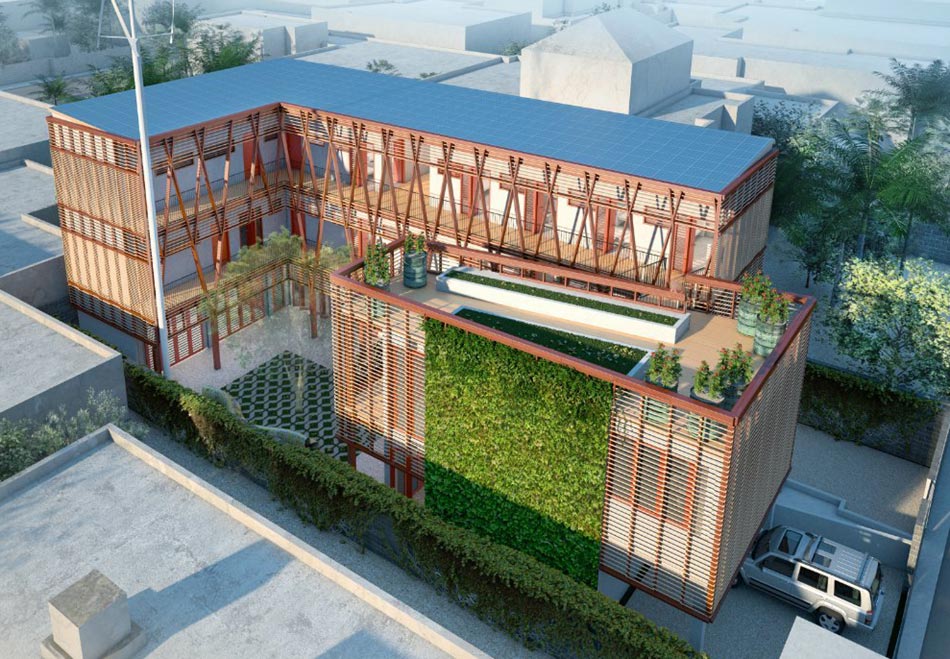
HOK’s design for Project Haiti, an orphanage built by the USGBC in the wake of the devastating 2010 earthquake there, uses resilient design elements—like a structural system made robust by branching elements inspired by nature, as well as rainwater catchment and onsite renewable energy.
Image: HOKExtended utility disruptions are common after big storms and other disasters. Ensuring that a site can meet occupants’ basic needs for energy and water is an essential part of resilient design. These resources help support design for net-zero energy and net-zero water.
Learn about why safety rules about drinking water are so strict, how important it is to think at a community scale for net-zero energy, and approaches to product selection for energy and water needs.
- Net-Zero Water and More: Moving Beyond “Low Flow”AIA · GBCI · ILFI
- The Death and Rebirth of DC PowerAIA · GBCI · ILFI
- The Problem with Net-Zero Buildings (and the Case for Net-Zero Neighborhoods)AIA · GBCI · ILFI
- Waste Water, Want WaterAIA · GBCI
- Design for Adaptation: Living in a Climate-Changing WorldAIA · GBCI
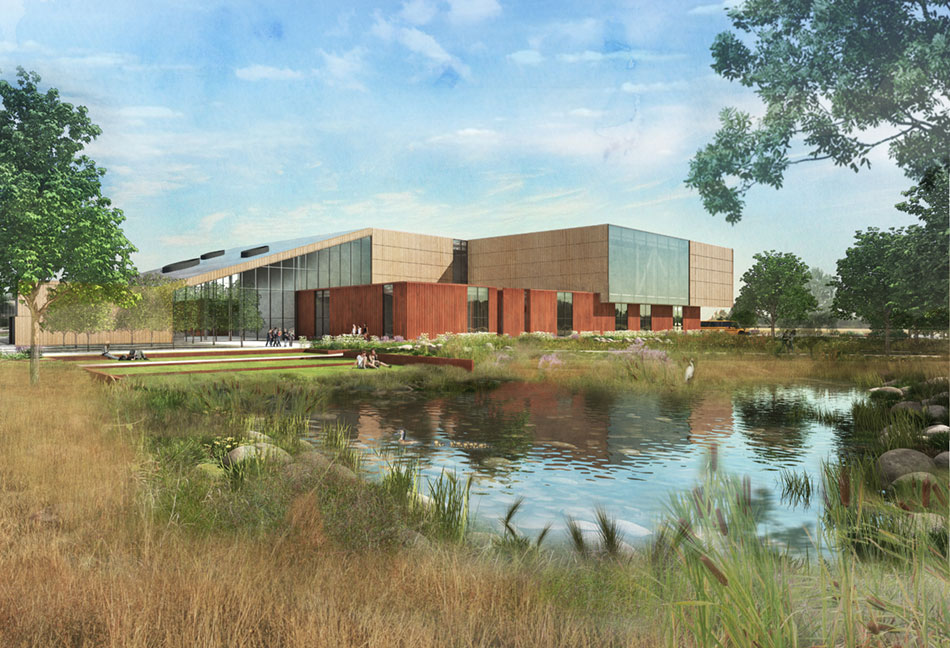
The Bell Museum and Planetarium at the University of Minnesota was designed to handle a 1,000-year rain event.
Image: Perkins+WillThere’s a lot more to floodproofing than sump pumps. First, do you really want to prevent flooding, or do you actually want to let the water in (known as wet floodproofing)? How much do you know about base flood elevations vs. design flood elevations?
These resources will help get you started on one of the most basic resilient design strategies: keeping water from damaging buildings, thus reducing their risk from storms and other flood sources.
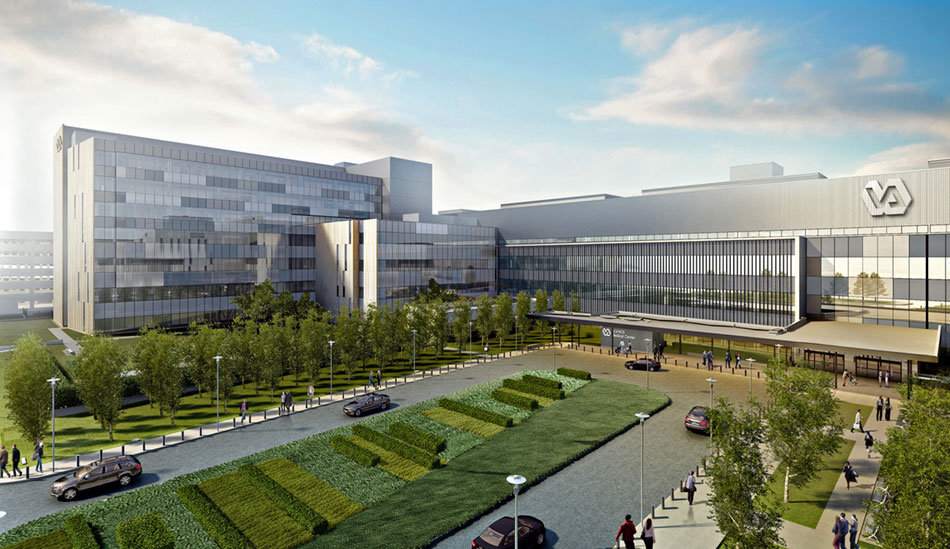
The Southeast Louisiana Veterans Health Care System’s “upside-down” design means that the systems that connect the hospital to the city grid are on the fourth level, well away from flooding.
Image: NBBJThe best approaches to resilient design depend on the dangers a building faces. First, you need to conduct a risk assessment to determine the most likely scenarios. Then the planning begins. These resources can help support that planning, with case studies and project profiles on buildings at risk from floods, ice and snow, fire, heat waves, and more.
- Affordable Housing and Sustainable Design: The Goals Are AlignedAIA · GBCI · ILFI
- Designing for the Next Century’s WeatherAIA · GBCI · ILFI
- ‘Build Higher’: HUD’s Rules After Harvey, Irma, Maria
- Tuning Today’s Building Designs to Tomorrow’s Climate
- A Dramatic Resiliency Plan to Transform New York City: The BIG U Moves Forward
- Resilient by Design: Envisioning a More Resilient San Francisco Bay Area
- Another reason not to build glass towers: They are not resilient
- The Brock Environmental Center: A Pinnacle of Sustainability—and Resilience
- New Public Safety Building in Salt Lake City a Model of Resilience
- How to Make a Hospital Resilient: A Tour of Spaulding Rehab
- The Most Resilient House in North America
- Dream Materials: What Do You Really Want to Build With?AIA · GBCI · ILFI
 New and Noteworthy
What’s up with all the programs encouraged by LEED and WELL? Learn the essentials—plus what’s behind the labels.
The Greenbuild Expo floor had a great selection of innovative new green building products, from green-roof stormwater systems to thin triple-pane windows to rice-straw boards.
Formerly the domain of the operations and maintenance rating system, recertification is now achievable for new construction projects.
 Get Your Credentials
Prepare with confidence for LEED and WELL exams with BuildingGreen’s study guides and practice tests.
Click on a title to learn more and purchase.