Bernie Sanders Rolls Out Ambitious New Energy Plan

April Fools

Bernie Sanders Rolls Out Ambitious New Energy Plan

Sanders promises “common-sense solutions to fossil fuel depletion” via the White House windows and attic.


Presidential hopeful Senator Bernie Sanders (I–Vermont) is amping up his message on energy and climate change in what may be a last-ditch effort to win over voters in remaining primary states, including Wisconsin, New York, and Pennsylvania.

“We will reclaim the White House from the billionaire fossil fuel lobby,” Sanders said today at a rally in Madison, Wisconsin, with “practical, common-sense solutions to energy costs that are going through the roof—literally.“

Button Up 1600 is a 1,600-point plan for air sealing, insulating, and improving thermal comfort in the neoclassical presidential residence at 1600 Pennsylvania Avenue in Washington. Sanders said he would begin implementing the plan immediately after his inauguration in January 2017. Some of the initiatives announced today:

  • Sanders says he will fill gaps in the historic White House building envelope with old copies of The Nation, unwanted delivery menus left on the doorstep of his current D.C. residence, and unsold bound editions of his 2010 filibuster speech. He plans to fill smaller gaps from his basket of old woolens he is “no longer able to darn—unless I want to knit a whole damned sock.”
  • Hazardous icicles and ice dams will be removed, according to the campaign, with Sanders’ signature combination of “Yankee elbow grease and Brooklyn hot air.”
  • The candidate has also promised to “personally install” thousands of roll-down window quilts, which he says he acquired secondhand last Saturday at a dump swap in Waterbury, Vermont. “Most are only slightly stained,” claims Sanders, as a result of flooding that destroyed the Vermont State Office Complex during Tropical Storm Irene in 2011.
  • If the White House residence proves too chilly, Sanders plans to install a deluxe pellet stove with the 200-pound hopper extension. He said, “I don’t like having to wear a winter hat inside the house; it makes my hair all staticky.”

BuildingGreen caught up with the senator at the Agway in Brattleboro, Vermont, where Sanders was ordering seed potatoes he intends to plant in old five-gallon paint buckets on the balcony outside the Oval Office next year. “We live in the richest country in the history of the world,” Sanders told BuildingGreen, “yet we continue to do nothing about the acceleration of climate change. That will not continue in a Sanders White House.”

Sanders added, “No bank is too big to fail, and no building is too big to caulk.”

Add new comment

To post a comment, you need to register for a BuildingGreen Basic membership (free) or login to your existing profile.

Satan Endorses Jill Stein, Green Party Candidate

April Fools

Satan Endorses Jill Stein, Green Party Candidate

With the news that February broke global temperature records, the Prince of Darkness “can hold back no longer.”


Satan, Overlord of the Underworld, came out in favor of Green Party presidential candidate Jill Stein, M.D., at a press conference in Death Valley, California, this morning. This is a historic event, commentators say, as it represents the first time the Great Deceiver has had any overt involvement in the American political process.

“This is purely a business decision,” intoned the fallen angel, citing recent news he’d read online about record-breaking February temperatures. “Hell and Hell alone is the gold standard for what’s hot. We’ve been running some numbers down here, and make no mistake: I have no intention of ceding our position as a competitive force in the global marketplace. Not. On. My. Watch.”

Although she reported feeling “somewhat flattered” that The Gentleman Downstairs “has so much faith in my ability to stop climate change,” Stein said she was ambivalent about the endorsement overall. “Certainly we have some things in common. For example, we are both all about justice for the 99%,” Stein told BuildingGreen in a phone interview. “But I really have to wonder if Mr. Beezlebub realizes that, as President of the United States, I will also be working to end poverty, war, and systemic racism.”

BuildingGreen reached Senator James Inhofe (R–Oklahoma) by email to ask for comments on Lord Lucifer’s endorsement of Stein. “They don’t call him the Prince of Lies for nothing,” Inhofe wrote in reply. “I wonder how much the Climate Science Cabal is paying this guy to give credence to their hoax!”


Add new comment

To post a comment, you need to register for a BuildingGreen Basic membership (free) or login to your existing profile.

Resilient Design Is a Big Load of Crap

April Fools

Resilient Design Is a Big Load of Crap

Why are you taking survival advice from a bunch of pencil jockeys? It’s time to start listening to the pros.

When I first heard about resilient design, I thought, “Now here’s something I can get behind.” I can’t go into a building anymore without noticing about a hundred different vulnerabilities, so I was glad to hear people were finally talking about this stuff.

But then I started reading their standards and proposals, and it was the biggest pile of baloney I ever saw.  Pages and pages about “coastal zones” and “microgrids with islanding capability” and nothing about how not to get your ass blown off by freedom-hating sons of bitches who waltz right in through the energy-saving front doors.

Have you ever been to a resilient design conference? I have, and I wouldn’t trust these guys to survive a church picnic, much less a full-scale assault from heavily armed Yugoslavian rebels. While these resiliency “experts” are arguing about the maximum acceptable relative humidity during an extended power failure, I’m wondering how they plan to keep nerve gas out of the ductwork and liquid anthrax out of the soap dispensers.

I mean, I get where they’re coming from—I’m all for the whole “ounce of prevention” thing. But their ounce of prevention is about sewer backflow preventers, while mine is about monitoring the loading dock for innocuous-looking cargo vans packed full of C-4. 

And don’t get me started on “passive survivability”… what a joke! You know what I call passive survivors? Hostages.

To be fair, there’s a lot to be said for waiting out a siege, which is basically what these guys are talking about, but you can’t live for two weeks without power if you’re already dead. I think we can work together here, though. Let the NPR crowd figure out the sewer stuff, and I’ll provide the real survival advice.

I’ve had a lot of time to think about what I’d want if I was trapped in a building with an elite team of ex-KGB, so I can tell you what a resilient design standard with some cojones would look like. Here’s the bare minimum of what you’d need:

  • A blast-proof dumbwaiter, where you can just chuck a suitcase explosive instead of calling in the bomb squad. It should be big enough that you could shove a tranqed 200-pound suicide bomber into it, vest and all.
  • First aid stations on every corner of every floor, plus one on top of all the elevator cars. I’m thinking the kind of kits they send to Iraq, with skin staplers, antivenom, that powder for stopping up gunshot wounds, etc. Oh, and Bactine. Lots of Bactine.
  • Bulletproof ducts and ceiling panels. If I had a nickel for every time someone shot at me while I was crawling through a duct, I’d have a whole lotta nickels. Do they make those DuctSox things out of Kevlar?
  • Some kind of, I dunno, bat signal on the roof you can use to alert the police. With cell phones nowadays everyone assumes they’ll be able to call for help, but I know a guy in Chinatown who can jam all the phones in a two-block radius, and then you’re just on the roof making smoke signals. Does anyone still use semaphore? I gotta learn that.

Anyway, I’m asking the resilient design leaders out there to put down your quiche for a minute and listen up. Everyone from my ex-wife to my ex-boss will tell you I’m an a**hole, but we’re all on the same team and I definitely know my sh*t.  Together we can put together a resilient standard that doesn’t have security holes you could drive an armored truck through.

Did I mention Bactine? Oh, and a winch. You can never be too prepared. 

For more information:

McClane Resiliency Consulting

http://diehard.wikia.com


Add new comment

To post a comment, you need to register for a BuildingGreen Basic membership (free) or login to your existing profile.

New Level of LEED Certification Could Increase Market Uptake

April Fools

New Level of LEED Certification Could Increase Market Uptake

It’s a win-win for winners, says Rick Fedrizzi, of the LEED Effort certification—an answer to concerns about v4’s excessive rigor.

First it delayed mandatory registration under LEED version 4 (LEED v4). Now the U.S. Green Building Council (USGBC) has announced a new program that should further appease concerns about what some have called the “excessive rigor” of the new rating system. The program, which effectively adds a fifth level of certification below LEED Certified, called Effort, will go into effect this fall when the option to register projects under LEED 2009 expires.

No more point chasing

The LEED Effort Plaque will “finally answer the market’s loud-and-clear demand for ‘LEED-equivalent’ buildings, without any need to actually achieve LEED equivalence,” enthused Tarquinia Sal, AIA, project manager of a LEED Effort pilot project—a new corporate headquarters for the American Coalition for Clean Coal Electricity (ACCCE). “We had been almost afraid to bring up LEED with the owner. But with Effort, we were actually really excited to talk about it. We even convinced them to try for net-clean energy, and they are producing all their own energy right there on the site.”

“A lot of people are deeply concerned about their ability to ‘sell’ owners on the more stringent energy, IAQ [indoor air quality], and material requirements of v4,” concedes Scot Horst, chief product officer at USGBC. “This is our message to you: we have heard you badmouthing us for the last five years. And although your persistent, entitled, and short-sighted demand for a watered-down standard makes us very, very, very sad, we still like you.”

How to get certified

Although designed to integrate with other levels of LEED certification, the LEED Effort add-on is “a little bit its own animal,” according to Horst.

BuildingGreen spoke with Peter Crowe, LEED consultant for ZüperMällZ, developer of a Dallas mega-mall that is piloting the LEED Effort program. Crowe highlighted a variety of features he said his team has “really appreciated” so far:

  • There are only two prerequisites for certification: registering as a LEED project and completing that project. “The rest is optional,” emphasized Crowe.
  • “Exemplary Performance” (EP) is available to project teams in a variety of categories, Crowe said, and the mall’s projected EP achievements will be noted on the plaque itself. For example, in the “Documentation Is Success!” category, teams can earn EP for submittals in excess of 1 terabyte (may include project photos). “Or,” Crowe adds, “less than 1 terabyte if you feel like you really got super close to meeting your goals.”
  • Program participants will have access to the LEED Dynamic Plaque, which tracks building performance in real time, but metrics are based on “how hard you try to actually measure stuff,” according to Sal.

A few early hiccups

There are still some kinks to work out, both Sal and Crowe related to BuildingGreen.

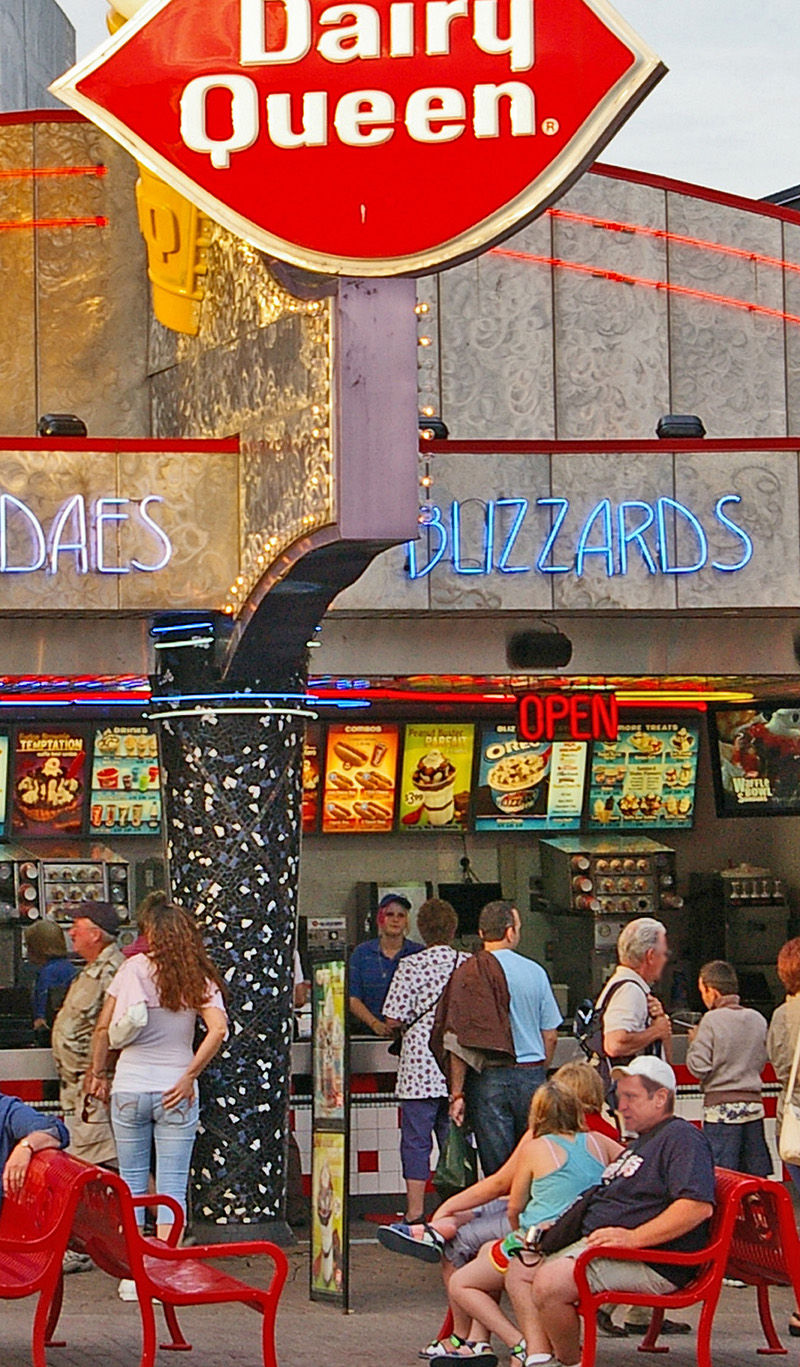
Crowe criticized what he called “a really narrow range of options,” for example, when his team was offered the choice of either lunch at Hardee’s or a trip to the Dairy Queen with USGBC founder and CEO Rick Fedrizzi. “I really felt that Chuck E. Cheese should have been at least mentioned,” Crowe opined. “Also, wouldn’t it be cool if little mini-plaque pendants on ribbons could be handed out to the whole project team at the event? I’m still disappointed that nothing like that came up, but we’re working with USGBC on that for next time.”

Sal had other critiques. As soon as a project is registered, for example, the team has the ability to connect with a LEED reviewer. Although she said customer service was “definitely on the upswing,” Sal felt this part of the program could use some improvement.

“When someone offers me handholding, I’m not expecting that to be figurative,” she said. “It would be nice, for my next project, to have the option of an actual reviewer to hold my actual hand.” She added that it would be “ideal” if the reviewer could do this “while literally bending over backwards.”

GBI to sue?

Although reaction to the LEED Effort program was generally positive among architects and green building consultants that BuildingGreen polled, not everyone is satisfied with the move.

The Green Building Initiative (GBI), developer of the rival certification system Green Globes, says it plans to file an antitrust complaint with the U.S. Federal Trade Commission. A GBI spokesperson told BuildingGreen the board is also considering a lawsuit for trademark infringement based on USGBC’s use of the term “LEED Equivalent” in its marketing of the LEED Effort program—a phrase the spokesperson says Green Globes laid claim to “under common law” as early as 2004.

Add new comment

To post a comment, you need to register for a BuildingGreen Basic membership (free) or login to your existing profile.

Groundbreaking Hazard Screening Tool Broadens Life-Cycle Scope

April Fools

Groundbreaking Hazard Screening Tool Broadens Life-Cycle Scope

BuildingGreen’s new Full Circle Fuchsia List uses a cradle-to-beyond-the-grave assessment to eliminate all hazardous materials from the built environment.

Building on the pioneering work of Perkins+Will’s Precautionary List, Cradle to Cradle’s Banned List, and the Living Building Challenge’s Red List, BuildingGreen has finally released its definitive Full Circle Fuchsia List to help assess potentially hazardous materials in building products today, into the future, and beyond.

Developed by a multi-disciplinary team of green building professionals, engineers, software developers, chemists, microbiologists, holistic astrologers, and others, the Full Circle Fuchsia List is based on the precautionary principle and provides a clear list of all possible contaminants used throughout every material’s entire cradle-to-beyond-the-grave life cycle.

“Zero tolerance”

Frustrated by the slow pace of change in getting hazardous materials out of our building products and keeping them out forever, Brent Ehrlich, BuildingGreen’s products and materials specialist and a board-certified soothsayer, said, “Our Full Circle List covers all hazardous materials and has a zero-tolerance policy, so you won’t need to worry about regrettable substitutions, unknown plasticizers, and other problematic chemicals in your buildings or in their decaying remains.”

This thoroughness is possible because the Fuchsia List accesses every available and not-yet-available government and regulatory list worldwide to determine all of the chemical hazards during molecule formation, raw material extraction, manufacturing, transportation, installation, use, disposal, and material degradation into the cosmos from whence it came; and includes hazardous airborne pollutants, carcinogens, asthmagens, obesogens, skin sensitizers, volatile organic compounds (VOCs), semivolatile organic compounds (SVOCs), persistent organic pollutants, persistent bioaccumulative toxic chemicals, endocrine disruptors, chemicals of high concern, greenhouse gases, ozone-depleting chemicals, heavy metals, pesticides, herbicides, reproductive and developmental toxicants, aquatic toxicants, neurotoxicants, and certain shades of blue, which—according to astrologers—will be deemed hazardous on June 16, 2024.

Due to the Fuchsia List’s size and complexity, BuildingGreen uses supercomputers at a secret government complex to generate each material’s list. To determine if a chemical is forbidden, users simply type in the chemical’s CAS number, or a product’s list of materials, and a full assessment of all ingredients—including pre- and post-product atomic structures and percentage of dark matter—is generated. (Note: Material assessments using cradle-to-beyond-the-grave methodology have nothing to do with zombies, mostly. For more on this, see the 2012 article “Material Assessment: Planning for Resilience and NOT a Zombie Apocalypse. Seriously, Stop Asking about Zombies!” and the 2014 update “GreenScreen Reverses Course, Adds Zombie Potential to List Translator.”)

Verification, commissioning, and competition?

To determine whether or not the Fuchsia List is functioning as intended, BuildingGreen uses local tarot card readers, numerologists, fortunetellers, and other third-party-certified second-sight seers to provide third-party verification of materials. A team of third-eye-seeing mystics will provide commissioning by performing readings of building auras, with certificates valid in perpetuity.

Not to be outdone, the American Chemistry Council (ACC) released its much-anticipated Gray List of chemicals. Though its list is based on forthcoming updates to the Toxic Substances Control Act, the Gray List is currently blank. “It’s all about end use,” the industry group said in a statement. “Our list is much, much, much easier to use. Clearly, asbestos and other so-called ‘hazardous’ materials aren’t hazardous if you don’t breathe them in. I mean, who does that, anyway!?” A mob of ACC representatives claimed that government regulation would be more effective than a voluntary ban, before inexplicably repeating the words “brains” and “risk assessment” over and over.

ACC representatives could not be reached for comment, as the few remaining non-zombie members were having their skulls analyzed at a Koch Industries-sponsored Phrenology Summit focused on defunding the U.S. Environmental Protection Agency.


 

Add new comment

To post a comment, you need to register for a BuildingGreen Basic membership (free) or login to your existing profile.

BuildingGreen Unveils Rhino and Revit Plug-ins

April Fools

BuildingGreen Unveils Rhino and Revit Plug-ins

Ready to play with Ladybug, Hummingbird, and Honeybee, these plug-ins offer unexpected sustainability benefits.

BuildingGreen has announced a line of Rhino and Revit plug-ins to encourage sustainable design. The software tools are available for download after the conclusion of beta testing on April 1, 2016.

Cockroach

Want to add resilience to your Revit model but aren’t sure where to start?

Activate Cockroach to “crawl” the model and flag low-lying mechanical equipment, air-barrier discontinuities, and corners that rely too heavily on electric lighting. Then watch Cockroach scurry as you add daylight and correct other vulnerabilities. No other tool offers the power of a Cockroach infestation!

Woolly Bear

Like the caterpillar whose colored bands predict the severity of the coming winter, Woolly Bear is a set of Caterpillar components that tell you how many more inches of continuous rigid mineral wool insulation you’ll need in order to beat code.

Woolly Bear will add these layers for you, gather the necessary Declare labels to make you feel truly warm inside, and then curl up into a helpless CSV text ball so that you can set it all aside when the contractor objects.

Fruit Fly

Offers automated detection of stale Revit families. Is the curtainwall assembly you’ve used on your last 40 projects lagging behind code? Fruit Fly will silently “swarm” around the bad parameter data, drawing unwanted attention to your desk until you update the model.

Ostrich Bug

Standing desks may be all the rage due to their supposed life-extending benefits, but many occupants still prefer to enjoy their slow march toward death in a seated position.

Just input the age, gender, and recent Netflix selections of your occupant population, and Ostrich’s proprietary algorithms will tell you how many standing workstations you’ll need, with 109% accuracy.

Spittlebug

From Revit to Yelp, Spittlebug offers the ultimate in interoperability.

Based on finishes selected for the project, Spittlebug first sketches the curve on which VOCs will be absorbed into occupants’ bloodstreams. With its JuiceJaws module, it then extracts from this data the daily dose of wheatgrass juice needed to offset those pollutants and keep the project compliant with the WELL Building standard—and it integrates that with the operating schedule of the local juice bar. (Note: Plug-in currently available only in parts of Manhattan, Boulder, and Beverly Hills.)

Dung Beetle

With outputs perfectly calibrated for MakerBot, Dung Beetle produces data rollups of precisely how much sh*t we’re all in if we don’t start hitting our 2030 Commitment goals.

In addition to improved energy performance, offices beta-testing Dung Beetle report finally installing goddamn dedicated outdoor-air ventilation in the 3D printing room.

Stinkbug

We know … you’re tired of being the lone voice pointing out the health concerns of those finishes to the project team. And so are they.

Now, let Stinkbug do the talking! Integrating with Revit via an actual cloud that is custom-fitted for your conference room, Stinkbug translates data from HPDs, Declare labels, and even product websites into an appropriate stench level. Now they’ll be asking you for Red List-free products.

Raid

Has the design team invested a lot of time in a Revit model of the building without even checking the solar orientation?

Watch the model fall to pieces and force a rethink after adding Raid. Raid comes pre-loaded on all BuildingGreen plug-ins and activates itself when needed. One copy is all your office will need to spread the fun!

Add new comment

To post a comment, you need to register for a BuildingGreen Basic membership (free) or login to your existing profile.

Jimmy Hoffa’s Body Turns Up in HPD

April Fools

Jimmy Hoffa’s Body Turns Up in HPD

“You can’t know what’s in your building products if you don’t look,” quips the architect who discovered the corpse.

With project teams paying more attention to the ingredients of building materials through the use of Health Product Declarations (HPDs), some have reported surprise and even shock at the contents—like the presence of carcinogens, reproductive toxicants, and asthmagens in some of their favorite products. Most don’t expect to discover a dead body.

But that’s exactly what happened to Philip Andersen, AIA, while he was scanning the HPDs of a variety of carpet products.

“I was looking for the mercury content from the fly ash in the carpet backing, when all of a sudden, there it was: Jimmy Hoffa’s body,” said Andersen in an email to BuildingGreen. “Turns out HPDs are pretty useless for that whole mercury thing, though.”

This isn’t the first time unusual “residuals” have turned up in HPDs. Last year, a LEED consultant reported a treasure trove of unmatched, mildewed socks that had gone into a washing machine and never been seen again. Just this month, an industrial hygienist unearthed the entire Roanoke Colony.

Add new comment

To post a comment, you need to register for a BuildingGreen Basic membership (free) or login to your existing profile.

Green Globes’ Yudelson to Continue Labors at Mt. Olympus

April Fools

Green Globes’ Yudelson to Continue Labors at Mt. Olympus

Having failed at his recent task of making Green Globes a credible standard, Yudelson still has twelve to complete.


The goddess Hera announced today that green building writer and consultant Jerry Yudelson will be returning to Mount Olympus to “have another go” at completing the first of twelve tasks she has set for him in penance for alleged slights against the Greek pantheon.

Yudelson first drew the gods’ wrath with his book Dry Run: Preventing the Next Urban Water Crisis, in which he failed to adulate Poseidon, Master of the Seas. He was later heard comparing LEED and its rules unfavorably to “fatwas” and “holy writ” in interviews with the media (see LEED Fellow Yudelson to Lead Rival Green Globes).

“I felt left out,” the cow-eyed goddess admitted. “No one creates absurd hurdles better than the Greeks.”

In an exclusive interview with BuildingGreen, Hera’s brother and husband, Zeus, said the gods were aiming to prove exactly that by assigning twelve labors to Yudelson. Zeus was chagrined, he said, when the very first task backfired. “Clearly we need to start smaller and work our way up. Trying to make Green Globes actually green is no job for mere mortals” (see Yudelson Steps Down from Green Globes).

Yudelson denies divine claims that he failed at his first labor, but he said he’s still looking forward to “making task number two the best it can be.”

Hera’s plans for Yudelson are not yet “carved in stone,” she says. But “I have a few juicy ones in my back pocket.” Presumably alluding to the wretched state of U.S. infrastructure (see Failing Water Infrastructure Drains Economy, Report Warns), Hera said she “may or may not be working on a plan for Jerry to rebuild a whooooooole bunch of bridges.”

Add new comment

To post a comment, you need to register for a BuildingGreen Basic membership (free) or login to your existing profile.

A Concrete Phoenix Rises: Meet the Brutalist Tiny House

April Fools

A Concrete Phoenix Rises: Meet the Brutalist Tiny House

Two great movements—from the past and present—come together in a towable 45,000 lb. package.

It’s been a tough decade for fans of Brutalist architecture. Every few months another concrete masterpiece is demolished, and proponents of the 20th century’s most reviled style feel helpless to protect landmark structures by Paul Rudolph, John M. Johansen, and others.

However, a new company—supported by a Kickstarter campaign—is bringing Brutalism back in an unexpected new form: a compact, towable tiny house.

A match made in Tumblr

BrütaLife is the brainchild of architect Zach Liebowitz of Minneapolis, Minnesota, who traced his inspiration to social media. “Pinterest is all tiny houses, and then Tumblr is always some 1960s civic center on the brink of demolition. One day I put two and two together, and I thought, ‘People love this stuff—why the hell not?’”

Liebowitz spent months visiting both tiny houses and iconic Brutalist structures, crafting a common language between the two seemingly incompatible styles. His goal was to unite tiny houses’ affordability and appealing coziness with the Brutalist architecture’s “hulking lyricism.”    

“If tiny houses have a fault, it’s that they’re too small for long-term occupant comfort,” said Liebowitz. But by evoking Brutalism’s large spaces, even a 128-square-foot interior can convey “a soaring sense of dehumanizing alienation.”

Don’t call it a bunker

Named for famed architect Marcel Breuer, BrütaLife’s introductory “Marcel” model unites classic Brutalist elements with a tiny 22' x 8' footprint. The 14" concrete shell reveals the texture of the wooden planks used as casting forms, and raised stucco around the doorway and brise-soleil window elements recreates the omnipresent risk of scrapes and abrasions from Brutalist masterpieces of the past.

Michelle Kaufmann, AIA, founder of Michelle Kaufmann Studio and author of the book Prefab Green, praised the design for doing “exactly what the Brutalists did half a century ago, rejecting the overly ornate forms of the prior generation.” She said, “Zach has basically given a big concrete middle finger to everyone’s twee tiny houses with wooden shutters and shingled roofs—and it’s high time.”

Get in on the ground floor

Liebowitz launched a Kickstarter campaign to raise $750,000 to manufacture, sell, and distribute BrütaLife’s unique entry into the crowded tiny house field. The backer levels include:

  • $50 and above—Assortment of laptop stickers, including the BrütaLife logo and tagline, “If this house is a-rockin’, you’d better call the U.S. Geological Survey” 
  • $100 and above —A BrütaLife reinforced-concrete case for your iPhone 6 or Samsung Galaxy
  • $500 and above—Plans for the introductory “Marcel” tiny house, including a special backers-only sheaf of artisanal rebar
  • $1,500 and above (limited to 10 backers)—One of the original steel concrete forms used to construct the 1965 J. Edgar Hoover FBI Building in Washington, D.C. custom branded with the BrütaLife logo and the “Don’t Tread on Me” flag
  • $5,000 (limited to 450,000 backers)—A shipping container full of rubble from the demolished Morris A. Mechanic Theater in Baltimore
  • $25,000 and above—The “Marcel” tiny house (envelope only, delivery extra)
  • $50,000 and above—The “Marcel” tiny house (envelope only, delivery included—includes bike rack!)

Future-proof design

Resilient Design Institute president (and BuildingGreen founder) Alex Wilson was among the first to back the Kickstarter campaign. “Zach really got it right with this,” he told BuildingGreen. “We often talk about really beautiful and well-loved buildings being more durable and resilient—because they’re cared for.” BrütaLife is demonstrating another form of resilience, suggests Wilson: “These buildings will be here for generations because you simply can’t demolish them.”

Architect Lloyd Alter of Treehugger.com has already placed his order and is making plans to tour North America in an 18-wheel commercial truck, tiny house in tow. “For years I’ve fought to protect our endangered Brutalist heritage, and it’s time to put my money where my mouth is,” said Alter. “I want to see these architectural masterworks with my own eyes, and this seems like the perfect way to do it.”

Looking forward to phase two

Thanks to the early buzz, BrütaLife’s Kickstarter campaign is already off to a robust start, and Liebowitz has begun designing the next models. He told BuildingGreen that phase two will include:

Add new comment

To post a comment, you need to register for a BuildingGreen Basic membership (free) or login to your existing profile.

Bewitching Designs Snag Coveted Resilience Awards

April Fools

Bewitching Designs Snag Coveted Resilience Awards

Self-propulsion wins the night at this year’s Rizzies, but a controversy brews. 

After weeks of rumor and speculation, Baba Yaga’s Dancing Hut took home resilient design’s highest honor—Most Resilient Building in the World 2015—last night at a black-fly gala in Vermont’s Northeast Kingdom. The nonprofit Resilient Design Institute (RDI) offers the Alex Wilson Resilient Design Awards annually for the highest achievements in this emerging area of architecture.


“The hut is resilient to fire, flood, high winds, terrorist attacks—you name it,” remarked Wilson at the ceremony while presenting the award to renowned Ukrainian architect and powerful magical being Baba Yaga, FAIA, principal at BY+OB. “It literally just walks or runs away.”

Thanks to its powerful talons, the hut also has remarkable self-defense capabilities in the event of a direct assay on its exterior. Concluded Wilson, “There’s no doubt in my mind that uncanny chicken legs are the future of architecture.”

Knotten Kansas Inni-Moore received an Honorable Mention for its Dorothy House technology, which allows the home to be swept into the eye of a storm and safely transported away from dangerously high winds. Members of the jury also praised the design for its “desaturated color palette” and “bold assimilation of the Prairie Farmhouse vernacular.”

The night was not without controversy. An anonymous source inside RDI revealed to BuildingGreen that Berlin-based firm Grimm Architecture was originally slated to receive special recognition for food security. Its süßesHaus design, constructed of 100% edible, rapidly renewable materials, boasts a full 20 days of nourishment for up to 16 children. But the award was tabled due to the high-profile murder trial of brother-and-sister duo Hansel and Gretel Krume.

Add new comment

To post a comment, you need to register for a BuildingGreen Basic membership (free) or login to your existing profile.