Groups Pledge to Find Common Carbon Metrics

News Brief

Groups Pledge to Find Common Carbon Metrics

The U.S. Green Building Council, BRE Global, the U.K. Green Building Council, and Green Building Council Australia have signed a memorandum of understanding to develop common carbon metrics among their various building rating systems (LEED in the U.S., BREEAM in the U.K., and Green Star in Australia). Representatives from each of the rating systems will form a working group to develop standard measurements of emissions of carbon dioxide equivalents from new buildings.

In 2008, the U.K. Green Building Council released a report entitled “Definition of Zero Carbon” in an effort to define such metrics; the U.K. requires that all houses built after 2016 be carbon neutral.

Published December 31, 1969

(2009, March 26). Groups Pledge to Find Common Carbon Metrics. Retrieved from https://www.buildinggreen.com/departments/newsbrief

Add new comment

To post a comment, you need to register for a BuildingGreen Basic membership (free) or login to your existing profile.

Green Roof Professional Accreditation to Launch in June

News Brief

Green Roof Professional Accreditation to Launch in June

Green Roofs for Healthy Cities has announced that the first exam for its Green Roof Professional accreditation program will take place on June 5, 2009, at the group’s annual conference in Atlanta. The exam, which costs $395, will subsequently be available in Toronto, Seattle, Chicago, and New York in the fall of 2009. The exam will test participants on material covered in the group’s four training courses on the design and installation of green roofs. The exam is aimed at experienced vegetated-roof professionals and roofing contractors, architects, and landscape architects who are looking to expand their practices.

More information is available at www.greenroofs.org.

Published December 31, 1969

(2009, March 26). Green Roof Professional Accreditation to Launch in June. Retrieved from https://www.buildinggreen.com/departments/newsbrief

Add new comment

To post a comment, you need to register for a BuildingGreen Basic membership (free) or login to your existing profile.

USGBC Puts Scot Horst in Charge of LEED

News Brief

USGBC Puts Scot Horst in Charge of LEED

Having chaired the LEED Steering Committee for several years, Scot Horst of 7group is joining the U.S. Green Building Council (USGBC) full-time as the senior vice president of LEED. In his new position, Horst will continue overseeing the development of the various LEED rating systems and coordinating those efforts with education and certification programs. Committing himself full-time to LEED makes sense, said Horst, because “advancing the whole-systems thinking [LEED] requires is a mission I am passionate about.” In addition to stepping down from 7group, Horst has resigned as a director and officer of the Athena Institute International.


Published December 31, 1969

(2009, March 26). USGBC Puts Scot Horst in Charge of LEED. Retrieved from https://www.buildinggreen.com/departments/newsbrief

Add new comment

To post a comment, you need to register for a BuildingGreen Basic membership (free) or login to your existing profile.

Retrofitting Professionals Get an Industry Association

News Brief

Retrofitting Professionals Get an Industry Association

Individuals and companies who audit and retrofit homes for greater energy efficiency now have a trade association, Efficiency First. The group hopes to encourage the home retrofit industry through its support of national standards, legislation, incentives, financing, and training. Among the inaugural members are the Building Performance Institute and Affordable Comfort, Inc., both respected industry groups.

Efficiency First offers several levels of membership, from $25 for an individual and $100 for a business to $1,000 for a supporting member. The launch of Efficiency First comes just after a federal economic stimulus bill set aside $5 billion for building retrofits, and as more emphasis is being placed on creating and maintaining “green collar” jobs. More information is available at www.efficiencyfirst.org.

Published December 31, 1969

(2009, March 26). Retrofitting Professionals Get an Industry Association. Retrieved from https://www.buildinggreen.com/departments/newsbrief

Add new comment

To post a comment, you need to register for a BuildingGreen Basic membership (free) or login to your existing profile.

Additional Certification Programs Approved for LEED Flooring Credit

News Brief

Additional Certification Programs Approved for LEED Flooring Credit

LEED 2009 codifies a broadening of what had been a credit for “carpet systems” to a credit for “flooring systems.” The credit, which originally recognized the indoor air quality benefits of using Green Label-certified carpet, was broadened in October 2006 to include resilient and hard-surface flooring materials certified through the FloorScore program (see

EBN Dec. 2006).

In LEED 2009, the credit refers to “flooring systems” and expands the certification options to any program that is consistent with the California Department of Health Services standard on which FloorScore is based. Among these added certification options is Greenguard Children & Schools. Precedent suggests that these additional certification programs will be allowed as compliance paths in older versions of LEED as well, although a ruling to this effect has not been released.

Published December 31, 1969

(2009, February 26). Additional Certification Programs Approved for LEED Flooring Credit. Retrieved from https://www.buildinggreen.com/departments/newsbrief

Add new comment

To post a comment, you need to register for a BuildingGreen Basic membership (free) or login to your existing profile.

Energy Retrofits Cost-Effective, Says DOE Study

News Brief

Energy Retrofits Cost-Effective, Says DOE Study

Whitestone Research recently released the results of a study commissioned by the U.S. Department of Energy (DOE) evaluating the cost-effectiveness of retrofitting an older building to meet the requirements of the 2007 Energy Independence and Security Act, which mandates that federal buildings reduce their energy consumption 30% by 2015 (calculated from a 2003 baseline).

The study, a lifecycle cost analysis of two retrofit options proposed for a research library at DOE’s Pacific Northwest National Laboratory, found that the more costly retrofit not only exceeded the 30% energy reduction but was also 16% more cost-effective over a 40-year period than the less expensive option and 12% more cost-effective than making no changes to the building. The study also found that up to 75% of the mandated energy savings could be achieved through modifications to the building’s mechanical system, though such results could not necessarily be replicated in every case.

Published December 31, 1969

(2009, February 26). Energy Retrofits Cost-Effective, Says DOE Study. Retrieved from https://www.buildinggreen.com/departments/newsbrief

Add new comment

To post a comment, you need to register for a BuildingGreen Basic membership (free) or login to your existing profile.

Breast Cancer Linked to Light Pollution

News Brief

Breast Cancer Linked to Light Pollution

A recent study published in

Chronobiology International supports the hypothesis of a link between nighttime exposure to light and breast cancer. (This hypothesis originated from studies of shift-workers, which led to the International Agency for Research on Cancer to classify night-shift work as a probable human carcinogen.) Researchers examined nighttime ambient light levels and breast cancer rates in 147 cities and towns in Israel and found that the incidence of breast cancer was 73% higher in the most highly illuminated communities than in the least-lit communities.

Multiple regression analysis was used to screen out demographic variables such as ethnicity and income. While the study did not attempt to explain the correlation between higher light levels and breast cancer, other research has pointed to a cause involving the reduction of melatonin secretion.

Published December 31, 1969

(2009, February 26). Breast Cancer Linked to Light Pollution. Retrieved from https://www.buildinggreen.com/departments/newsbrief

Add new comment

To post a comment, you need to register for a BuildingGreen Basic membership (free) or login to your existing profile.

WaterSense Proposes Half-Gallon Spec for High-Efficiency Urinals

News Brief

WaterSense Proposes Half-Gallon Spec for High-Efficiency Urinals

The U.S. Environmental Protection Agency (EPA) has announced new draft specifications for certifying high-efficiency urinals under its WaterSense label. Launched in 2006, the WaterSense certification and labeling program designates water-efficient products that have been third-party tested to meet EPA standards (see

EBN July 2006).

This proposal—the program’s first aimed at commercial fixtures—would allow urinals using 0.5 gallons (1.9 l) per flush or less to carry the WaterSense label. The standard would represent a 50% improvement over the current federal standard for urinals of 1.0 gallons (3.8 l) per flush, adopted in 1992. However, the proposal falls short of recognizing the numerous high-efficiency flush urinals already on the market using 0.25 gallons (1 l) per flush or less (see

EBN Nov. 2006 for example).

EPA invites comments on the draft specifications until March 9, 2009, offering more information at http://www.epa.gov/watersense/specs/urinal_spec.htm

Published December 31, 1969

(2009, February 26). WaterSense Proposes Half-Gallon Spec for High-Efficiency Urinals. Retrieved from https://www.buildinggreen.com/departments/newsbrief

Add new comment

To post a comment, you need to register for a BuildingGreen Basic membership (free) or login to your existing profile.

Lawsuit Over Failed LEED Certification Settled

News Brief

Lawsuit Over Failed LEED Certification Settled

A recent lawsuit appears to be the first—but probably not the last—involving failed LEED certification. Shaw Development sued contractor Southern Builders for $1.3 million after the $7.5 million Captain’s Galley condominium building in Crisfield, Maryland, failed to achieve LEED Silver certification as required by the contract.

While the claims were settled out of court in 2008, legal observers have taken the Captain’s Galley as a cautionary tale. The standard AIA contract that was used, A101 Owner/Contractor Agreement, did not specify which party would be liable for failure to obtain LEED certification or tax credits. In public comments on the case, several real estate attorneys have noted the inadequacy of form documents for projects that involve green certifications or incentives and have warned contractors to be wary of taking on responsibility for matters, such as third-party certification, that are not entirely within their control.

Published December 31, 1969

(2009, February 26). Lawsuit Over Failed LEED Certification Settled. Retrieved from https://www.buildinggreen.com/departments/newsbrief

Add new comment

To post a comment, you need to register for a BuildingGreen Basic membership (free) or login to your existing profile.

Stimulating Green Building

News Brief

Stimulating Green Building

Of the $787 billion included in the economic stimulus package signed into law by President Obama on February 17, 2009, just under $79 billion will go to renewable energy, energy-efficiency and green transportation projects. “The president’s recovery plan is a down payment on a clean energy transformation of our economy that will help solve global warming, reduce our dependence on oil and create more jobs,” said Anna Aurilio, director of the Washington, D.C., office of the nonprofit organization Environment America.

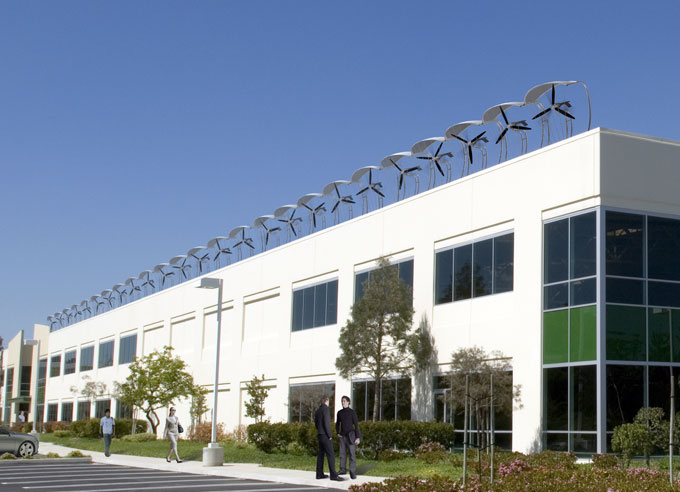
According to Environment America’s analysis, about $33 billion of the money will go to clean and renewable energy projects through a variety of tax credits and federal programs. The renewable energy production and investment tax credit has been changed to allow developers to opt for a grant from the government instead of a tax credit; the caps for several technologies, including small wind turbines, were removed. A $500 million green jobs act will train 70,000 workers in renewable energy and energy-efficiency work, and $2.5 billion will go to research and development in those fields. Other money will go to renewable energy infrastructure and projects on federal land.
Of the $787 billion included in the economic stimulus package signed into law by President Obama on February 17, 2009, just under $79 billion will go to renewable energy, energy-efficiency and green transportation projects. “The president’s recovery plan is a down payment on a clean energy transformation of our economy that will help solve global warming, reduce our dependence on oil and create more jobs,” said Anna Aurilio, director of the Washington, D.C., office of the nonprofit organization Environment America.

According to Environment America’s analysis, about $33 billion of the money will go to clean and renewable energy projects through a variety of tax credits and federal programs. The renewable energy production and investment tax credit has been changed to allow developers to opt for a grant from the government instead of a tax credit; the caps for several technologies, including small wind turbines, were removed. A $500 million green jobs act will train 70,000 workers in renewable energy and energy-efficiency work, and $2.5 billion will go to research and development in those fields. Other money will go to renewable energy infrastructure and projects on federal land.

The bill also extends and reestablishes some energy-efficiency programs for homes and commercial buildings. The Weatherization Assistance Program, cut from the 2009 budget (see EBN Apr. 2008), would gain $5 billion in funding, which Environment America projects would weatherize over a million homes. The U.S. Department of Housing and Urban Development will receive $2.25 billion to upgrade existing affordable housing sponsored by the department. Existing energy-efficiency tax credits have been extended a year, and increased from 10% to 30% of the taxpayer’s cost. A federal green building program will receive $4.5 billion, cut from an original $7 billion, for improvements to facilities owned by the General Services Administration.

Finally, the bill contains several provisions aimed at supporting alternative transportation in the U.S., including $1.3 billion for improvements to the Amtrak rail system and $8 billion for development of high-speed rail systems. Grants supporting electric vehicles and the infrastructure to support them total just under $1 billion.

Although the funding for many of these programs was cut from the original amounts during negotiations in Congress, environmentalists and green building activists are still largely supportive of the bill.


Published December 31, 1969

(2009, February 20). Stimulating Green Building. Retrieved from https://www.buildinggreen.com/departments/newsbrief

Add new comment

To post a comment, you need to register for a BuildingGreen Basic membership (free) or login to your existing profile.