ASTM Gives New Prominence to Sustainability

News Brief

ASTM Gives New Prominence to Sustainability

A new ASTM International committee, formed in October 2008, will provide a central venue for discussing sustainability in the respected standards organization. The high-level main committee will work on standards and guides concerning sustainability—environmental, economic, and social—across the board, acting as a portal for the growing number of industries that turn to ASTM for guidance on the subject.

According to Dru Meadows, AIA, who has chaired the active ASTM subcommittee on sustainability in buildings for ten years, the move will give the topic a more central role in the organization. Until now, said Meadows, the work of her subcommittee has been necessarily limited in scope by its place within the committee structure, and some other areas that relate to buildings have been under the purview of other subcommittees. ASTM’s influence—through the voluntary adoption by industry, government, and organizations of its consensus standards—is likely to give its work on sustainability an influential role in many spheres. ASTM expects to staff the committee by the end of 2008.

Published December 31, 1969

(2008, October 29). ASTM Gives New Prominence to Sustainability. Retrieved from https://www.buildinggreen.com/departments/newsbrief

Add new comment

To post a comment, you need to register for a BuildingGreen Basic membership (free) or login to your existing profile.

Guide to Best Practices in Commissioning Released

News Brief

Guide to Best Practices in Commissioning Released

The Building Commissioning Association (BCA), an international membership group for commissioning professionals, has begun promoting a new resource. “Best Practices in Commissioning Existing Buildings” attempts to define best practices and create a benchmark for quality commissioning. Approved in June 2008 by the BCA board, the guide focuses on ensuring “persistence of good performance” in existing buildings, according to Mark Miller, director of client services at Strategic Building Solutions in Old Saybrook, Connecticut, and chair of the committee that wrote the guide.

Miller introduced the guide to the organization's membership at the October 2008 BCA convention in New York, arguing that the guide should help commissioning professionals meet environmental imperatives, including supporting building owners in making innovative green technologies work properly. The guide draws on numerous resources including the California Commissioning Collaborative guide for existing buildings, the American Society of Heating, Refrigerating, and Air-Conditioning Engineers (ASHRAE) Guideline 0-2005, and input from the Sheet Metal and Air Conditioning Contractors’ National Association (SMACNA). The guide is available on the BCA website at www.bcxa.org.

Published December 31, 1969

(2008, October 29). Guide to Best Practices in Commissioning Released. Retrieved from https://www.buildinggreen.com/departments/newsbrief

Add new comment

To post a comment, you need to register for a BuildingGreen Basic membership (free) or login to your existing profile.

'Delving Deeper' Workshop Series Announced

News Brief

'Delving Deeper' Workshop Series Announced

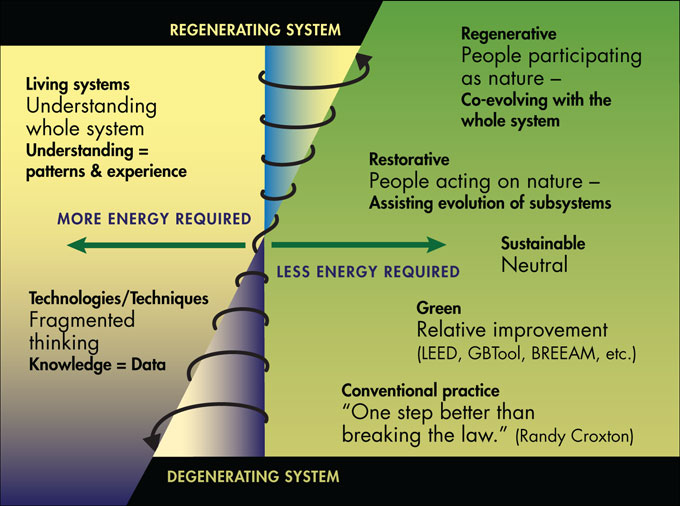
In their consulting practices, green building pioneers Gail Lindsey, FAIA, of Design Harmony, and Bill Reed, AIA, of the Integrated Design Collaborative, seek to transcend technological solutions for buildings and promote positive change based on the inseparability of humans and natural systems. They have announced a program of seminars and retreats for 2009 at which participants can explore the themes of integrative thinking, deeper relationships, living systems, vital patterns, and becoming whole. These themes support the overall vision of learning to “sustain life” in the personal, professional, and community spheres. More information is available at www.delvingdeeper.org.

Published December 31, 1969

(2008, October 29). 'Delving Deeper' Workshop Series Announced. Retrieved from https://www.buildinggreen.com/departments/newsbrief

Add new comment

To post a comment, you need to register for a BuildingGreen Basic membership (free) or login to your existing profile.

Berkeley, California, Finances Solar Installations Through Property Taxes

News Brief

Berkeley, California, Finances Solar Installations Through Property Taxes

In September 2008, officials in Berkeley, California, approved a financing program for solar installations and energy efficiency improvements. The program allows the City to borrow money at favorable rates and use it to finance projects on both commercial and residential buildings. The owners of those buildings will repay the loans over 20 years through an addition to their property taxes. A solar installation costing $28,077, financed in part ($22,569) by the city, with bank fees of $600 and an interest rate of 6.75%, would add about $2,089 a year to the owner’s property taxes ($182 a month) according to the city council. The program went into effect in October 2008.

Published December 31, 1969

(2008, October 29). Berkeley, California, Finances Solar Installations Through Property Taxes. Retrieved from https://www.buildinggreen.com/departments/newsbrief

Add new comment

To post a comment, you need to register for a BuildingGreen Basic membership (free) or login to your existing profile.

New Tool Quantifies Shade Tree Benefits

News Brief

New Tool Quantifies Shade Tree Benefits

A new online tool from the Sacramento Municipal Utility District (SMUD) allows users to calculate the energy and financial benefits of shade trees in most U.S. climates; the tool supports SMUD’s efforts to provide free trees. Homeowners can enter their location, house type, and electricity rates; number of trees, their species, and their age or diameter; and the trees’ position in relation to the house. The system then calculates the amount of shading those trees provide in summer and winter and offers projected energy savings for the current tree and for a mature tree in both kilowatt-hours and dollars. The tool also projects the carbon dioxide sequestration provided by the tree as well as reductions in electricity demand generated by new trees planted by homeowners.

Although SMUD also offers assistance for photovoltaic and solar hot water installation, the tool does not take into account the potentially negative consequences of shading of these systems. More information is available at www.smud.org/en/residential/trees/pages/index.aspx.

Published December 31, 1969

(2008, October 29). New Tool Quantifies Shade Tree Benefits. Retrieved from https://www.buildinggreen.com/departments/newsbrief

Add new comment

To post a comment, you need to register for a BuildingGreen Basic membership (free) or login to your existing profile.

Suspended Ceilings Save Energy, Says Industry Study

News Brief

Suspended Ceilings Save Energy, Says Industry Study

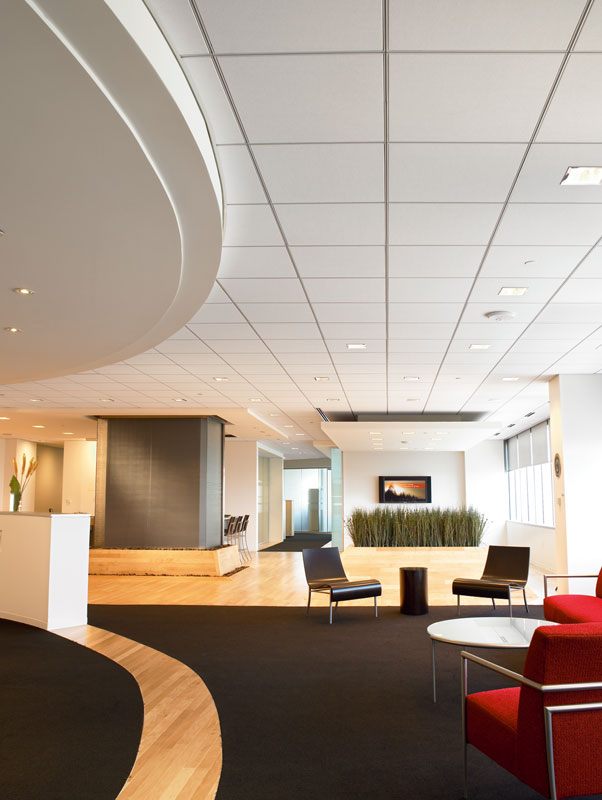
A study commissioned by the Ceilings & Interior Systems Construction Association (CISCA) found that spaces with suspended ceilings can use less energy for heating and cooling than those with open plenums. Barry Donaldson Associates, an architecture firm, conducted the study, which used computer simulations of two building types—a grocery store and an office building—in five U.S. cities, four in cooling climates and one in a heating climate. Installing suspended ceilings in these buildings would add 4%–22% to construction costs, but the simulation found energy savings of 9%–17%. The expected payback period for the suspended ceilings was between six months and a year for the office buildings and between three years and four months and six-and-a-half years for the grocery stores. The study found more efficient flow of return air through the plenum above a suspended ceiling than through the ducts used in open plenum spaces, as well as more efficient removal of internally generated heat, especially from lighting. A synopsis of the study is available at www.cisca.org.

Published December 31, 1969

(2008, October 29). Suspended Ceilings Save Energy, Says Industry Study. Retrieved from https://www.buildinggreen.com/departments/newsbrief

Add new comment

To post a comment, you need to register for a BuildingGreen Basic membership (free) or login to your existing profile.

Public Energy Benchmarking Causes Embarrassment in U.K.

News Brief

Public Energy Benchmarking Causes Embarrassment in U.K.

An October 2, 2008, story in the

Guardian publicized poor energy ratings from government-authorized assessors for several high-profile public buildings in the U.K., one day after a law took effect that requires public buildings over 1,000 m2 (11,000 ft2) to display their energy and carbon usage. The Palace of Westminster and the Bank of England both scored a “G” on the A-to-G scale. Several new and supposedly efficient buildings also fared poorly, including the Foster + Partners-designed London City Hall, which earned an “E.” The average for the 3,200 buildings assessed was “D,” and less than 1% achieved an “A” rating. Building performance expert Bill Bordass applauds the public scrutiny but cautions that these scores reflect, in part, weaknesses in the rating system itself. “The system was introduced hastily, and the technique, the benchmarks, and the assessor skills all need to evolve,” he told

EBN. In particular, Bordass noted, the benchmarking system makes it difficult to adjust a building’s score based on special factors such as energy-intensive activities, high occupant density, or long operating hours. Bordass predicted that building managers would respond to their poor scores both by tuning up their performance and by taking steps to properly document the reasons that they use more energy. “We really need to let the system evolve for a year or two” before reading too much into the scores, he suggested.


Published December 31, 1969

(2008, October 29). Public Energy Benchmarking Causes Embarrassment in U.K.. Retrieved from https://www.buildinggreen.com/departments/newsbrief

Add new comment

To post a comment, you need to register for a BuildingGreen Basic membership (free) or login to your existing profile.

Bailout Bill Extends Green Building Tax Benefits

News Brief

Bailout Bill Extends Green Building Tax Benefits

The $700-billion “bailout” bill passed in October includes the Energy Improvement and Extension Act of 2008, which extends to several tax benefits for green buildings. The bill extends renewable energy tax credits, including the investment credit, which covers 30% of the installed cost of residential and commercial photovoltaic and solar hot water systems. Legislators eliminated the $2,000 cap on the residential credit and extended the applicability of both credits to utilities and taxpayers using the Alternative Minimum Tax.

The bill also extends the production tax credit for wind energy facilities for one year and the credit for geothermal facilities for two years. A new credit, good for two years, covers marine technologies such as wave and tidal energy generation. Finally, the energy-efficient commercial building tax deduction, which allows building owners to deduct up to $1.80 per square foot for energy savings (see

EBN

Vol. 15, No. 9), has been extended through 2013.

Published December 31, 1969

(2008, October 29). Bailout Bill Extends Green Building Tax Benefits. Retrieved from https://www.buildinggreen.com/departments/newsbrief

Add new comment

To post a comment, you need to register for a BuildingGreen Basic membership (free) or login to your existing profile.

Advisory Issued for Louisiana Pacific Composite Decking

News Brief

Advisory Issued for Louisiana Pacific Composite Decking

Composite board decking and railing made by Louisiana-Pacific at the company’s Meridian, Idaho, plant between January 2005 and November 2007 may show premature deterioration and breakage, according to the company. Owners of the materials, sold under the Veranda,

WeatherBest, and ABTCo brands, should inspect their decks’ condition, stay off them if deterioration is evident, and register with Louisiana-Pacific, which will arrange a third-party inspection and, if necessary, replacement. According to the company, only a small percentage of the production run is defective.

Another company, Fiber Composites, bought the WeatherBest product line in 2007 and says it reformulated the material at that time; decking manufactured under Fiber Composites’ ownership is not part of the product advisory.

Customers should contact Louisiana-Pacific at www.deckingnotice.com or 888-325-1184.

Published December 31, 1969

(2008, September 25). Advisory Issued for Louisiana Pacific Composite Decking. Retrieved from https://www.buildinggreen.com/departments/newsbrief

Add new comment

To post a comment, you need to register for a BuildingGreen Basic membership (free) or login to your existing profile.

Puget Sound Decision Mandates Low-Impact Development

News Brief

Puget Sound Decision Mandates Low-Impact Development

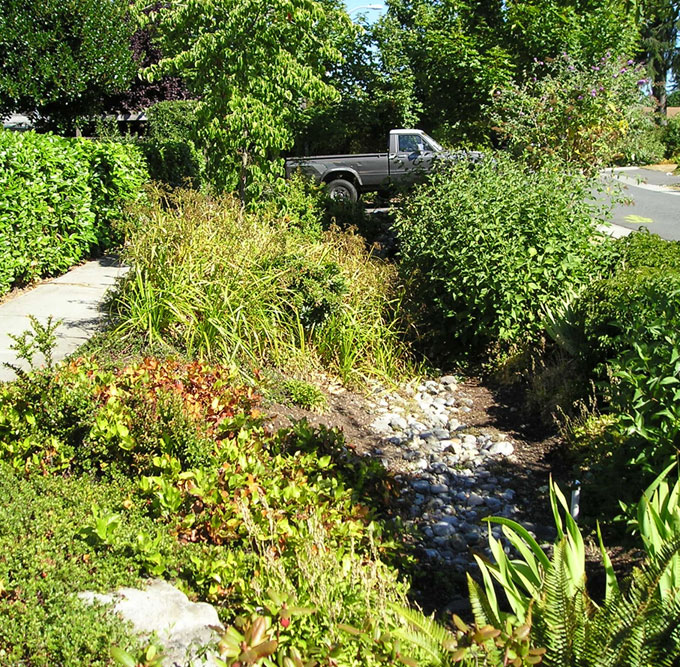
An August 2008 decision by the Washington Pollution Control Hearings Board directs the state’s Department of Ecology to require “low-impact development” (LID) techniques that go beyond end-of-pipe approaches to stormwater management.


A recent study conducted by state agencies and the U.S. Environmental Protection Agency found that stormwater runoff is the leading source of pollution in Puget Sound, carrying herbicides, arsenic, cadmium, phthalates, and oil. The board found that protecting waterways would require stormwater management techniques—such as the use of permeable pavement, narrower streets, vegetated roofs, rain gardens, and open space—that allow water to infiltrate the ground close to where it falls.

Many builders in western Washington support LID, but there has been resistance to requiring it across the board, and some builders complain of delays and added expense in obtaining local permits for LID tactics. LID proponents say that educating local authorities will reduce such problems and that LID can save 25% to 30% in costs for site development, fees, and maintenance.

Published December 31, 1969

(2008, September 25). Puget Sound Decision Mandates Low-Impact Development. Retrieved from https://www.buildinggreen.com/departments/newsbrief

Add new comment

To post a comment, you need to register for a BuildingGreen Basic membership (free) or login to your existing profile.