Kaiser Opens Green Medical Center in Modesto

News Brief

Kaiser Opens Green Medical Center in Modesto

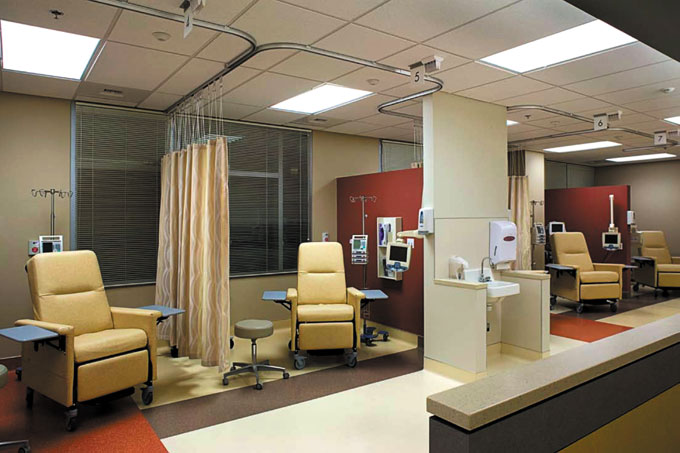
Kaiser Permanente, the healthcare giant, has announced that its Modesto Medical Center, in Modesto, California, will open in October 2008. The project includes the largest installation west of the Mississippi, according to Kaiser; native, drought-tolerant landscaping; reflective roofing; a 50-kilowatt photovoltaic array; and PVC-free carpeting that Collins & Aikman developed at Kaiser’s request.

The green features resulted in significant savings: the permeable paving reduced the need for stormwater drains, saving $290,000, for example, and rebates for energy-related products and strategies saved more than $100,000.

The 670,000-ft2 (36,000-m2) facility—which includes an office wing and a 220-bed hospital wing—cost $430 million.

Published December 31, 1969

(2008, September 25). Kaiser Opens Green Medical Center in Modesto. Retrieved from https://www.buildinggreen.com/departments/newsbrief

Add new comment

To post a comment, you need to register for a BuildingGreen Basic membership (free) or login to your existing profile.

Greenhouse Gas Emissions a Factor in California Land-Use Cases

News Brief

Greenhouse Gas Emissions a Factor in California Land-Use Cases

The California Environmental Quality Act (CEQA), passed in 1970, is becoming an important tool in the state’s efforts to regulate greenhouse gas (GHG) emissions by controlling land-use decisions.

In August 2007, Attorney General Jerry Brown successfully sued San Bernardino County under the law for failing to address GHG emissions in its main planning document, even though clear statewide standards for evaluating and reducing GHG emissions were not yet available; a settlement was reached in August 2007. Brown has also threatened to sue Nestlé to stop its construction of a water bottling plant on the McCloud River unless it accounts for its GHG impact, including the emissions attributable to manufacturing and shipping plastic bottles.

Bolstering Brown’s actions, the California legislature exempted certain public projects from legal action for failure to address their GHG consequences, implicitly paving the way for litigation against other public projects and private developments. Approval of a proposed 2,600-unit golf resort in Desert Hot Springs was overturned when the Riverside County Superior Court ruled that the developers had failed to adequately address the project’s climate-change impact, and several similar cases are in the works.

Published December 31, 1969

(2008, September 25). Greenhouse Gas Emissions a Factor in California Land-Use Cases. Retrieved from https://www.buildinggreen.com/departments/newsbrief

Add new comment

To post a comment, you need to register for a BuildingGreen Basic membership (free) or login to your existing profile.

Aon Offers Green Rebuilding Policy

News Brief

Aon Offers Green Rebuilding Policy

Adding to a growing list of such policies, insurance broker Aon Corporation announced in August 2008 that it will add green rebuilding coverage to its global property policy, which covers large properties, with damage limits of up to $1 billion. Covered buildings, whether certified or not prior to damage, will be repaired or replaced to meet the requirements of LEED or a comparable rating system. Aon would cover the costs for upgraded equipment, materials, design and engineering, certification, and recycling of demolition and construction debris.

Any additional cost for the endorsement is negotiated on a case-by-case basis, but is likely to be zero for currently certified buildings and, company representative Rod Taylor said, might not be passed on to the insured party even for non-certified buildings that would need upgrading.

For more information, visit www.aon.com.

Published December 31, 1969

(2008, September 25). Aon Offers Green Rebuilding Policy. Retrieved from https://www.buildinggreen.com/departments/newsbrief

Add new comment

To post a comment, you need to register for a BuildingGreen Basic membership (free) or login to your existing profile.

Canadian LEED Update Close to Balloting

News Brief

Canadian LEED Update Close to Balloting

LEED Canada is being revised in concert with the U.S. 2009 revision to streamline LEED compliance for those who work on both sides of the border. The Canada Green Building Council (CaGBC) has chosen Enermodal Engineering to shepherd the revision process. According to Enermodal president Stephen Carpenter, a new version of LEED will be ready to present to CaGBC’s membership for a vote by the end of September 2008.

CaGBC had identified about 25 technical issues in need of revisiting, but most of those were addressed by the U.S. Green Building Council (USGBC) in its revision process. A few remain, such as the question of whether to allow teams to use the Model National Energy Code for Buildings to establish a baseline for earning energy credits as an alternate compliance path to ASHRAE 90.1. Some changes in LEED Canada could make it more stringent than the U.S. standard, but under the terms of CaGBC’s license with the USGBC, it cannot be weaker.

Once CaGBC members have approved the revision, it will be sent to USGBC for review. More information can be found at www.cagbc.org/initiatives/index.php.

Published December 31, 1969

(2008, September 25). Canadian LEED Update Close to Balloting. Retrieved from https://www.buildinggreen.com/departments/newsbrief

Add new comment

To post a comment, you need to register for a BuildingGreen Basic membership (free) or login to your existing profile.

New Rules Will Reduce Lawnmower Emissions

News Brief

New Rules Will Reduce Lawnmower Emissions

The U.S. Environmental Protection Agency (EPA) has announced more stringent rules for non-road gasoline engines under 25 horsepower (19 kW). By 2011, manufacturers must reduce hydrocarbon and nitrogen oxide emissions from the engines by 35%. The engines, used in machines such as lawnmowers and string trimmers, must also show a 45% reduction in fuel evaporative emissions.

The rule also covers larger engines, such as those powering recreational watercraft, which must show a 70% reduction in hydrocarbon and nitrogen oxide emissions, a 20% reduction in carbon monoxide emissions, and a 70% reduction in evaporative emissions by 2010.

To meet the regulations, manufacturers are likely to equip the affected engines with catalytic converters, which have been required on automobiles since the 1970s. The California Air Resources Board estimates the cost of a walk-behind mower will increase by 18%.

Published December 31, 1969

(2008, September 25). New Rules Will Reduce Lawnmower Emissions. Retrieved from https://www.buildinggreen.com/departments/newsbrief

Add new comment

To post a comment, you need to register for a BuildingGreen Basic membership (free) or login to your existing profile.

Australians Promote Cap-and-Trade System for Building Energy Use

News Brief

Australians Promote Cap-and-Trade System for Building Energy Use

Leaders in the Australian green building sector are promoting a cap-and-trade scheme for building energy efficiency to supplement greenhouse gas trading.

Maria Atkinson, global head of sustainability for property giant Lend Lease, and Che Wall, group director at Lincolne Scott consulting engineers and former head of the World Green Building Council, are behind the plan, which they hope will overcome limitations in current emissions-trading schemes. They hope to create an incentive for achieving dramatic energy savings through fundamental building improvements. They argue that under current emissions cap-and-trade systems only incremental improvements are considered because of the strict rules governing those programs. Even those improvements often fall prey to the split-incentive problem, in which the entity responsible for making the investment is not the party that would reap the savings.

Government agencies in Australia are currently reviewing the proposal, which was presented in September at the Sustainable Buildings 2008 conference in Melbourne. A summary is available online in PDF format at www.BuildingGreen.com/go/cap-and-trade.

Published December 31, 1969

(2008, September 25). Australians Promote Cap-and-Trade System for Building Energy Use. Retrieved from https://www.buildinggreen.com/departments/newsbrief

Add new comment

To post a comment, you need to register for a BuildingGreen Basic membership (free) or login to your existing profile.

Michigan Building First to Earn Double LEED Platinum Certification

News Brief

Michigan Building First to Earn Double LEED Platinum Certification

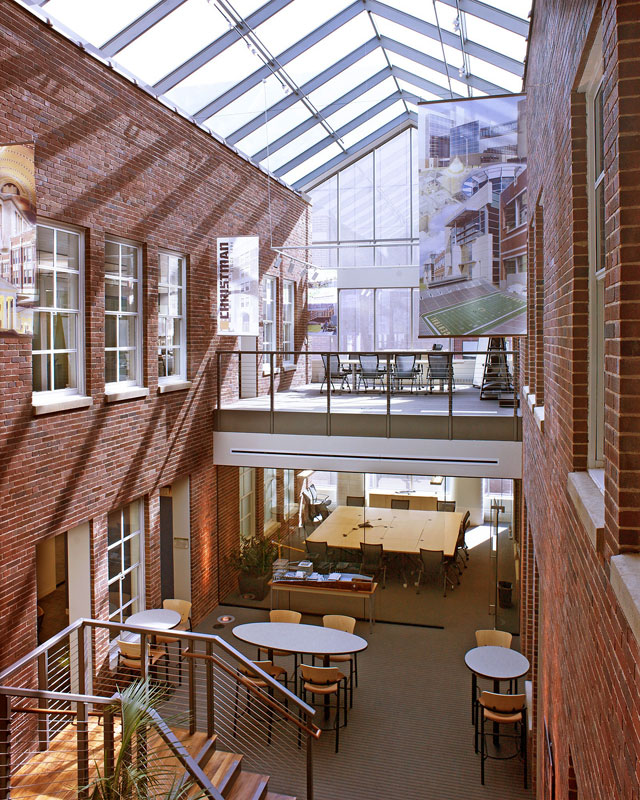
The Christman Company, a development firm based in Lansing, Michigan, has announced that its new headquarters is the first building to earn Platinum ratings in both the LEED for Core and Shell and the LEED for Commercial Interiors rating systems.

The renovation of a historic building in downtown Lansing was designed entirely by SmithGroup and included efficient lighting and mechanical systems, low-flow plumbing fixtures, and materials with low emissions of volatile organic compounds. The building is expected to use 34% less energy than a comparable conventional building. Almost all—92%—of the existing walls, roof, and floors were reused in the renovation, which followed the standards for historic renovation set by the Secretary of the Interior (see

EBN Vol. 16, No. 1).

The Christman Company has developed a green housekeeping program and will commission the building continuously for the first year, then once every five years. More information is available at www.christmanco.com.

Published December 31, 1969

(2008, September 25). Michigan Building First to Earn Double LEED Platinum Certification. Retrieved from https://www.buildinggreen.com/departments/newsbrief

Add new comment

To post a comment, you need to register for a BuildingGreen Basic membership (free) or login to your existing profile.

USGBC Announces Research Grant Recipients

News Brief

USGBC Announces Research Grant Recipients

The U.S. Green Building Council (USGBC) has announced the recipients of grants from its Green Building Research Fund. USGBC committed $2 million to the program, and the fund is generating over $1 million in matching funds and partnerships. Grants ranged from $90,000 to $250,000 and were awarded to 13 research teams.

The recipients of USGBC research funding are:

The U.S. Green Building Council (USGBC) has announced the recipients of grants from its Green Building Research Fund. USGBC committed $2 million to the program, and the fund is generating over $1 million in matching funds and partnerships. Grants ranged from $90,000 to $250,000 and were awarded to 13 research teams.

The recipients of USGBC research funding are:

  • Green roof energy calculator (David Sailor, Ph.D., Portland State University)—Based on energy simulations, this tool will help designers assess the energy implications of green roofs; it will include both a stand-alone program and detailed models for energy modeling programs.
  • Impacts of environmental strategies on outcomes in healthcare facilities (Anjali Joseph, Ph.D., The Center for Health Design)—This project aims to identify and define standard metrics and data collection techniques for comparing the results of environmental strategies in healthcare settings; a searchable database will hold the data as it is collected.
  • Design for reuse primer (Liz Ogbu, Public Architecture)—Working with the Building Materials Reuse Association, Public Architecture will develop a primer with case studies, techniques, and LEED credit opportunities for projects using salvaged and reused materials.
  • Testing the ability of building materials to reduce indoor ozone (Richard Corsi, Ph.D., University of Texas–Austin)—Although many products add to indoor air quality programs, some can reduce chemicals in the air, including ozone. Researchers hope to develop a protocol for testing this ability in common building materials.
  • Controlling mechanical systems in mixed-mode buildings (Gregor Henze, Ph.D., University of Colorado–Boulder)—This project seeks to create a energy-efficient control strategy for switching between natural and mechanical ventilation in mixed-mode buildings.
  • Improving porous paving materials (Yohong Wang, Ph.D., P.E., East Carolina University)—Researchers in this study hope to improve the strength and solar reflectance of porous paving materials as well as increase the recycled content of those materials.
  • Integrated building water management modeling tool (Daniel Yeh, Ph.D., University of South Florida)—This tool would integrate water use tracking with water quality, energy use, and costs to allow facilities managers and designers to make better water decisions.
  • Simulating building occupant and operator behavior (Clinton Andrews, Ph.D., Rutgers Center for Green Building)—Researchers hope to develop a tool based on post-occupancy evaluations and other data that would simulate the behavior of building occupants and operators to help improve building designs.
  • Study of stormwater best management practices (Jim Schuessler, BNIM architects)—This team will collect data on stormwater runoff over 22 months from several locations in Kansas City, Missouri, and use that data to examine current LEED credits and consider future credits.
  • Quantifying the impact of daylight and electric lighting on K-12 students (Mariana Figueiro, Ph.D., Renssalaear Polytechnic Institute)—Researchers will look at the effect of daylit classrooms on circadian rhythms and stress levels in K-12 students.
  • Evaluating green school building attributes and occupant health in New York (Shao Lin, Ph.D., Health Research, Inc., New York State Department of Health)—This team will develop an index of green building attributes in schools in New York State and relate those attributes to the health and performance of students and teachers.
  • Transportation Energy Intensity Index (Peter Haas, Ph.D., Center for Neighborhood Technology)—Researchers hope to develop a transportation energy intensity index based on building location, alternative transportation amenities and incentives, and building type (see EBN Vol. 16 No. 9).
  • Comparing classroom ventilation and student performance (Mark Mendell, Ph.D., Lawrence Berkeley National Laboratory)—Researchers in California will use web-connected carbon dioxide sensors to estimate the daily ventilation rate per person in over 80 classrooms, and compare that data to absentee rates and test scores.

A quarter of the grant money was reserved for research on the impacts of green building on occupants in K-12 schools as part of USGBC’s commitment to the area. This funding comes at a time when the 21st Century High-Performing Public School Facilities Act, passed by the House and being considered by the Senate, promises to provide $20 billion in funding for construction of green schools and renovation of older schools. Proponents of the bill argue that funding green schools will improve the performance of students and teachers and will save the schools money by cutting their fuel budgets and employee absentee rates.

For more information:

U.S. Green Building Council

List of Grant Recipients (Download)

www.usgbc.org/ShowFile.aspx?DocumentID=4698

 

Published December 31, 1969

(2008, September 24). USGBC Announces Research Grant Recipients. Retrieved from https://www.buildinggreen.com/departments/newsbrief

Add new comment

To post a comment, you need to register for a BuildingGreen Basic membership (free) or login to your existing profile.

Green Kitchen Certification Launched

News Brief

Green Kitchen Certification Launched

function pop(URL){

win = window.open(URL, "win", "toolbar=no,location=no,directories=no,status=no,menubar=no,scrollbars=yes,resizable=yes,width=740,height=500");

win.focus();

}

Food Service Warehouse (FSW), an online retailer of commercial kitchen equipment, has announced a green commercial kitchen certification program. The program uses a point system organized into five areas: energy conservation, water conservation, waste reduction, cleaning, and education. Except for the education category, most points are obtained by buying products designated as meeting FSW’s environmental requirements based on third-party testing and certifications.

While it is not necessary to buy anything from FSW to be certified as a Green Commercial Kitchen, the company’s catalog is integrated into the Web-based certification process. Restaurants with certified kitchens will receive table tents, menu inserts, and other promotional items to publicize their certification. For more information, visit www.foodservicewarehouse.com.

Published December 31, 1969

(2008, September 24). Green Kitchen Certification Launched. Retrieved from https://www.buildinggreen.com/departments/newsbrief

Add new comment

To post a comment, you need to register for a BuildingGreen Basic membership (free) or login to your existing profile.

Regional Standards for Air-Conditioners in the Works

News Brief

Regional Standards for Air-Conditioners in the Works

The Energy Independence and Security Act of 2007 directed the U.S. Department of Energy (DOE) to consider drafting new standards for several appliances (see

EBN

Vol. 17, No. 2).

Responding to one of these directives, DOE has announced that it will consider enacting regional efficiency standards for air-conditioners and heat pumps; the agency will also look at standards for energy use in standby mode for these appliances.

DOE is allowed to amend the current national standard and create up to two more stringent, regional standards. Although similar rulemaking proceedings have been delayed by several years in the past, the agency expects to have a final ruling on regional and standby standards by 2011.

More information is available at www1.eere.energy.gov/buildings/appliance_standards/notices_rules.html.

Published December 31, 1969

(2008, August 28). Regional Standards for Air-Conditioners in the Works. Retrieved from https://www.buildinggreen.com/departments/newsbrief

Add new comment

To post a comment, you need to register for a BuildingGreen Basic membership (free) or login to your existing profile.