New Group Certifies Green Building Materials Retailers

News Brief

New Group Certifies Green Building Materials Retailers

The Certified Green Dealer (CGD) program, launched in January 2008, educates and certifies retailers selling green building materials. To become certified, a retailer must have three-quarters of its salespeople watch eight online videos and pass a test on basic green building topics such as mold, insulation, and air-sealing.

According to John Wagner, who develops educational content for the program, more than 4,000 individual users have signed up for certification through 280 retailers that pay a fee to participate. Certified lumberyards are allowed to advertise the certification, and some, Wagner says, offer CGD materials to their contractor customers.

Affiliated with industry magazine LBM Journal, CGD is sponsored by manufacturers, whose logos appear on the program’s materials and whose product information is provided to dealers. According to Wagner, some companies have been rejected as sponsors and others asked to create a “subbrand” to distinguish their green products from their less environmentally friendly products. More information is available at www.certifiedgreendealer.com.

Published December 31, 1969

(2008, August 21). New Group Certifies Green Building Materials Retailers. Retrieved from https://www.buildinggreen.com/departments/newsbrief

Add new comment

To post a comment, you need to register for a BuildingGreen Basic membership (free) or login to your existing profile.

USGBC Names Groups to Perform LEED Certifications

News Brief

USGBC Names Groups to Perform LEED Certifications

In May 2008 the U.S. Green Building Council (USGBC) announced that it would be outsourcing LEED certification to the Green Building Certification Institute (GBCI) and, through GBCI, to independent certification bodies (see EBN Vol. 17, No. 6). USGBC has now named the ten companies that will be certifying LEED buildings beginning in January 2009. The designated certification bodies are:

• ABS Quality Evaluations, Inc. (www.abs-qe.com)

In May 2008 the U.S. Green Building Council (USGBC) announced that it would be outsourcing LEED certification to the Green Building Certification Institute (GBCI) and, through GBCI, to independent certification bodies (see EBN Vol. 17, No. 6). USGBC has now named the ten companies that will be certifying LEED buildings beginning in January 2009. The designated certification bodies are:

• ABS Quality Evaluations, Inc. (www.abs-qe.com)• BSI Management Systems America, Inc. (www.bsi-global.com)• Bureau Veritas United States (www.us.bureauveritas.com)• DNV Certification (www.dnvcert.com)• Intertek Group (www.intertek.com)• KEMA Registered Quality, Inc. (www.kema.com)• Lloyd’s Register Quality Assurance, Inc. (www.lrqa.co.uk)• NSF International Strategic Registrations (www.nsf.org)• SRI Quality System Registrar (www.sri-i.com)

After the changeover, project teams will still submit their LEED applications through the LEED Online website managed by USGBC, but the reviews and ultimate certifications will come from these companies. USGBC has not yet explained how it will determine which companies will certify which projects. If it continues to follow typical International Organization for Standardization (ISO) practices, however, eventually project teams will be able to make that choice.

For more information:

U.S. Green Building Council

www.usgbc.org

Green Building Certification Institute

www.gbci.org


Published December 31, 1969

(2008, July 29). USGBC Names Groups to Perform LEED Certifications. Retrieved from https://www.buildinggreen.com/departments/newsbrief

Add new comment

To post a comment, you need to register for a BuildingGreen Basic membership (free) or login to your existing profile.

Canadian Study Finds Regulations Can Handle Nanotechnology

News Brief

Canadian Study Finds Regulations Can Handle Nanotechnology

In response to a request by government agency Health Canada, the nonprofit Council of Canadian Academies has released a study on the risks of nanomaterials (see EBN Vol. 17, No. 3 for more on nanotechnology). The group found that nanomaterials are too new and unstudied for a full risk assessment, but it believes existing regulatory mechanisms in Canada can be adjusted to account for the new risks that nanomaterials pose to human health and the environment.

To adjust these mechanisms, definitions of nanomaterials would need to be developed, and regulatory “triggers” (actions or materials that bring regulations into play) would need to be reworked. The report recommends a precautionary approach to nanomaterials until a full scientific risk assessment can be performed, similar to the approach Canada has taken with some other materials. The report is online at www.scienceadvice.ca/nanotechnology.html.


Published December 31, 1969

(2008, July 29). Canadian Study Finds Regulations Can Handle Nanotechnology. Retrieved from https://www.buildinggreen.com/departments/newsbrief

Add new comment

To post a comment, you need to register for a BuildingGreen Basic membership (free) or login to your existing profile.

EPA to Study Formaldehyde

News Brief

EPA to Study Formaldehyde

In response to a petition from 25 organizations, led by the Sierra Club, and about 5,000 individuals, the U.S. Environmental Protection Agency (EPA) has announced that it plans to give “advance notice of proposed rulemaking” on formaldehyde in composite wood products in fall 2008. EPA denied the petition’s request to adopt the California Air Resources Board regulations pertaining to hardwood plywood, medium-density fiberboard, and particleboard (see

EBN

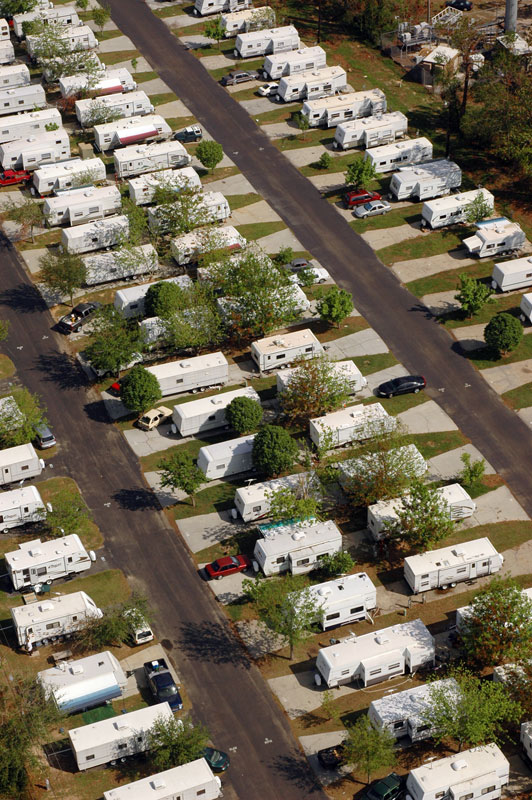
Vol. 16, No. 6). The agency claimed there was insufficient data to assess the risk posed by formaldehyde or to identify the least burdensome means of protecting against that risk. Instead, EPA said it would “initiate a proceeding to investigate whether and what type of regulatory or other action might be appropriate.” Becky Gillette, who heads the Sierra Club formaldehyde campaign, said that the petition was prompted by widespread complaints of nose, eye, and throat irritation among residents of emergency housing trailers used after Hurricane Katrina. No federal standard for exposure to formaldehyde currently exists, and in 2004, EPA abandoned its assessment of the chemical after seven years of research. Given that EPA has 70 ongoing chemical assessments, considers half the 480 chemicals in its IRIS database in need of review, and completed only four assessments in fiscal years 2006–2007, creating a rule to limit formaldehyde exposure could take many years. Gillette said Congress needs to set a deadline for EPA to act, and Senator Barbara Boxer has said that if the EPA assessment process doesn’t improve, Congress will start banning chemicals itself.

Published December 31, 1969

(2008, July 29). EPA to Study Formaldehyde. Retrieved from https://www.buildinggreen.com/departments/newsbrief

Add new comment

To post a comment, you need to register for a BuildingGreen Basic membership (free) or login to your existing profile.

Congressional Caucus Focused on Green Building Legislation

News Brief

Congressional Caucus Focused on Green Building Legislation

Green building has a new voice in Washington: the High-Performance Buildings Congressional Caucus and Coalition. The caucus consists of members of Congress, led by cochairs Russ Carnahan of Missouri and Judy Biggert of Illinois, interested in green building legislative issues; the group hosts briefings and communicates its findings to other members of Congress.

The coalition is made up of several private-sector organizations that support the caucus with research and technical advice as well as event hosting. For its first order of business, the caucus attended a briefing on a report crafted by the National Institute of Building Sciences, among other organizations, in response to requirements laid out in the Energy Policy Act of 2005 (see

EBN

Vol. 14, No. 9). Among other findings, the report recommends that Congress establish metrics and verification methods for buildings’ energy efficiency, occupant productivity, durability, and ability to function after a disaster. More information on the caucus, as well as the full report, is available at www.hpbccc.org.

Published December 31, 1969

(2008, July 29). Congressional Caucus Focused on Green Building Legislation. Retrieved from https://www.buildinggreen.com/departments/newsbrief

Add new comment

To post a comment, you need to register for a BuildingGreen Basic membership (free) or login to your existing profile.

Massachusetts Enacts Far-Reaching Energy Legislation

News Brief

Massachusetts Enacts Far-Reaching Energy Legislation

The Green Communities Act, passed by the Massachusetts Legislature and signed into law on July 2, 2008, promises to “reduce electric bills, promote the development of renewable energy, and stimulate the clean energy industry that is taking root here in the Commonwealth,” according to Governor Deval Patrick.

The act includes a wide range of measures to promote energy conservation and renewable energy development. Among other things, it requires utilities to increase the share of renewables in their energy portfolios by 1% annually—double the current rate—to reach 25% renewable generation by 2030. Utilities will be required to enter into 10- or 15-year contracts with renewable-energy suppliers in order to facilitate suppliers’ acquisition of financing. The act also promotes conservation by tightening the state’s energy code and requiring utilities to invest in cost-effective efficiency measures before meeting growing demand with more generating capacity. The law promotes distributed power generation by increasing the cap for net metering from 60 kW to 2 MW and by allowing utilities to lease photovoltaic arrays to customers.

Published December 31, 1969

(2008, July 29). Massachusetts Enacts Far-Reaching Energy Legislation. Retrieved from https://www.buildinggreen.com/departments/newsbrief

Add new comment

To post a comment, you need to register for a BuildingGreen Basic membership (free) or login to your existing profile.

First Canada Green Building Council Summit a Success

News Brief

First Canada Green Building Council Summit a Success

In June 2008, the Canada Green Building Council (CaGBC) hosted its first national green building summit, Shifting Into the Mainstream, in Toronto. Over 1,200 people attended the event, which included educational sessions and a trade show. The development of LEED Canada 2009, a major reworking of the LEED Canada Rating System, was on the agenda. The organization also announced that Canadian versions of LEED for Homes and LEED for Neighborhood Development should be available by the end of 2009. Finally, CaGBC launched the Green Building Performance Initiative, which will set baselines for energy and water use for several building types. These baselines will later be incorporated into the Green Building Performance System, which will make it easier for building owners to compare their buildings to the baselines and track performance improvement. More information is available at www.cagbc.org.

Published December 31, 1969

(2008, July 29). First Canada Green Building Council Summit a Success. Retrieved from https://www.buildinggreen.com/departments/newsbrief

Add new comment

To post a comment, you need to register for a BuildingGreen Basic membership (free) or login to your existing profile.

San Francisco Allocates $3 Million for PV Incentives

News Brief

San Francisco Allocates $3 Million for PV Incentives

San Francisco officials hope to lead the nation in the installation of rooftop photovoltaic systems by having 10,000 systems in place within a decade. (About 770 systems are currently installed.) The City’s Board of Supervisors has approved $3 million per year for ten years to provide taxable incentive payments to residents and businesses installing new systems on existing buildings.

Residents can receive $3,000–$6,000 for systems of at least 1 kilowatt, with the greater incentives going to those who hire graduates of a City workforce development program to do the installation. Businesses are eligible to receive $1,500 per kilowatt, up to $10,000 per system. The program is intended to leverage state and federal incentives; combined with those programs, the out-of-pocket costs of a three-kilowatt system could drop from $24,000 to $11,000. For more information, visit www.sfwater.org.

Published December 31, 1969

(2008, July 29). San Francisco Allocates $3 Million for PV Incentives. Retrieved from https://www.buildinggreen.com/departments/newsbrief

Add new comment

To post a comment, you need to register for a BuildingGreen Basic membership (free) or login to your existing profile.

"Right to Dry" Protected in Colorado

News Brief

"Right to Dry" Protected in Colorado

While efforts to pass legislation protecting the right to line-dry clothes failed in recent legislative sessions in Vermont, New Hampshire, and Connecticut, a similar law in Colorado passed in April 2008. The law overrides homeowners association prohibitions not only on clotheslines (provided they are retractable), but on wind turbines, shade structures, ventilation fans, evaporative coolers, and efficient outdoor lights. The law permits restrictions of such devices only if the restrictions do not unreasonably impede their use or drive up their cost. The “right to dry” has become a

cause célèbre in many places, as those wishing to line-dry their clothes run up against homeowners association rules and, occasionally, local ordinances. Dryers account for about 6% of residential electricity use in the U.S., equivalent to the electricity generated by burning 30 million tons of coal each year.

Published December 31, 1969

(2008, July 29). "Right to Dry" Protected in Colorado. Retrieved from https://www.buildinggreen.com/departments/newsbrief

Add new comment

To post a comment, you need to register for a BuildingGreen Basic membership (free) or login to your existing profile.

Home Depot Launches CFL Take-Back Program

News Brief

Home Depot Launches CFL Take-Back Program

U.S. sales of compact fluorescent lamps (CFLs) have almost doubled from 2006 to 2007, and the lamps now account for more than 20% of lightbulbs sold. But while compact fluorescent lamps are an big improvement over traditional incandescent bulbs in terms of energy use, recycling of the bulbs—necessary to recapture their mercury content—has been weak. Only about 2% of CFLs are recycled, according to estimates, compared to about 30% of fluorescent tubes in commercial or industrial use. A CFL take-back program announced by Home Depot in July 2008 could improve that rate significantly.

Regulations vary from state to state, and some local recycling programs exist. Some other retailers sponsor ongoing or occasional CFL collections. But as the largest home improvement chain in the U.S., with 1,973 stores and 75% of U.S. households within ten miles of one of them, Home Depot is likely to be the most convenient drop-off point for many CFL users. The Product Stewardship Institute (PSI), which has been developing a plan to improve the handling of fluorescent lamps, praised Home Depot’s launch of the program. PSI, which has helped Ace Hardware stores in several states with take-back programs, considers retailers to be one of the most promising avenues for increasing recycling rates.
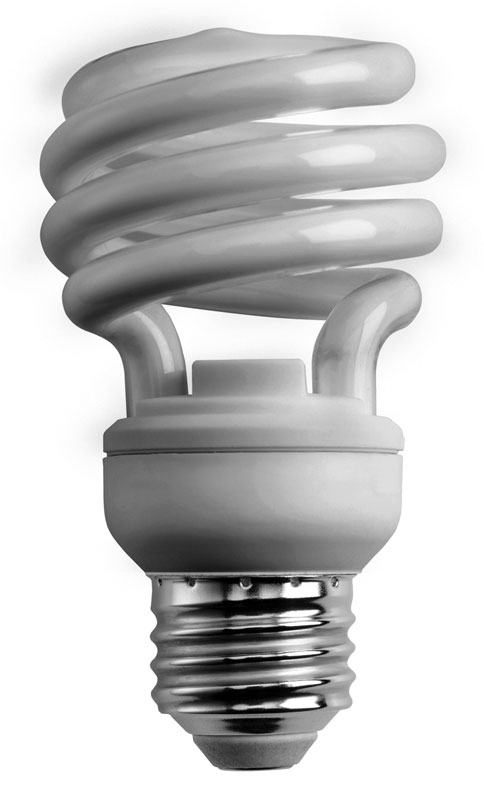
U.S. sales of compact fluorescent lamps (CFLs) have almost doubled from 2006 to 2007, and the lamps now account for more than 20% of lightbulbs sold. But while compact fluorescent lamps are an big improvement over traditional incandescent bulbs in terms of energy use, recycling of the bulbs—necessary to recapture their mercury content—has been weak. Only about 2% of CFLs are recycled, according to estimates, compared to about 30% of fluorescent tubes in commercial or industrial use. A CFL take-back program announced by Home Depot in July 2008 could improve that rate significantly.

Regulations vary from state to state, and some local recycling programs exist. Some other retailers sponsor ongoing or occasional CFL collections. But as the largest home improvement chain in the U.S., with 1,973 stores and 75% of U.S. households within ten miles of one of them, Home Depot is likely to be the most convenient drop-off point for many CFL users. The Product Stewardship Institute (PSI), which has been developing a plan to improve the handling of fluorescent lamps, praised Home Depot’s launch of the program. PSI, which has helped Ace Hardware stores in several states with take-back programs, considers retailers to be one of the most promising avenues for increasing recycling rates.

Life-cycle analysis indicates that even though incandescent bulbs do not contain mercury, they account for much more mercury released into the environment than CFLs due to their greater power consumption and the fact that mercury is emitted when coal is burned to generate electricity. Even so, while each CFL contains just 5 mg of mercury or less, a volume about that of the tip of a ballpoint pen, the mercury in all the Energy Star-rated CFLs sold in 2007 adds up to more than 1,000 kg.

For more information:

Product Stewardship Institute

www.productstewardship.us

Home Depot

corporate.homedepot.com

 

Published December 31, 1969

(2008, July 24). Home Depot Launches CFL Take-Back Program. Retrieved from https://www.buildinggreen.com/departments/newsbrief

Add new comment

To post a comment, you need to register for a BuildingGreen Basic membership (free) or login to your existing profile.