
Championing the
Changemakers
BuildingGreen champions the changemakers in sustainable design and building, with trusted insight, unparalleled education, and communities that are transforming the industry.
Log in to your profile

Image: Piranka

Blog Post
We asked sustainability professionals what message they would put on a billboard. Here’s what we heard.
“If you could put one simple message on a billboard, what would it say?” During the recent BuildingEnergy conference in Boston, BuildingGreen set up a camera at our booth and asked sustainable design and building professionals this question.
Our interviewees ranged from a professor of sustainable design, to a sustainability manager at an... Read more
Blog Post
Humidity sensor recommendations for building professionals and homeowners
Author’s Note: I can’t even start this blog before thanking Lew Harriman of Mason-Grant Consulting. Lew very patiently and gently hammered me into a much better understanding of humidity in air and its measurement. While any errors or lack of clarity regarding humidity and its measurement are mine, much of the insight and many of the resources... Read more
Blog Post
A simple PC-executable file can be used to understand the relationship between stack effect and mechanical ventilation
In 2003, as part of their presentation (“Ventilation Myths and Misconceptions”) at the Affordable Comfort conference, Collin Olson and Paul Francisco debuted a software tool they developed called SEE STACK. (If you want to experiment with the software, you can safely click here to download the virus-free executable file and training manual from... Read more
Blog Post
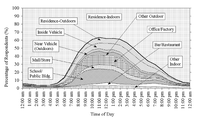
Where the oft-quoted statistic comes from, and what the underlying study says about health in buildings
Given the intense interest in the architectural community on health and wellness inside buildings, and in the related WELL building standard, you’ve probably heard someone tell you recently that we spend 90% of our time indoors. Usually this is followed by some assertion that we need to make our products, materials, and interior spaces... Read more
Blog Post
The easiest way to get a building science puzzle wrong is to “solve” it without all the pieces. Take your time and listen to my wife—just like I do.
Just about every week, I get a call or an email that turns into a building science puzzle. While the problems are varied, how you solve them doesn’t change. First, you understand how heat and moisture move through building assemblies. Second, you follow the advice of your spouse.
My wife of 27 years is a real master at jigsaw puzzles,... Read more
Blog Post
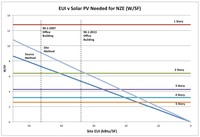
The concept of the net zero energy (NZE) is a mature one, with established technology providing a clear path, especially for low- and mid-rise buildings.
A few years ago, the chances that a new building project would pursue net-zero-energy (NZE) use were pretty slim. But in the last year or so, the concept of NZE has rapidly matured, and more and more projects are using it as a goal. So, what made this possible? And should you be considering NZE for your next project?
To start with, ever... Read more
Blog Post
The WELL Building Standard has stringent transparency and health criteria for products and materials. Here’s how to find what you’ll need for certification.
As a standard that seeks to promote occupant health, WELL requires project teams to use clean and green products to get with the program.
The International WELL Building Institute organized the system by outcomes rather than inputs, so we have categories…er, sorry—concepts like Air, Comfort, and Mind instead of the LEED categories of... Read more
Blog Post
Test your knowledge of insulation, building assemblies, toxic chemicals, radiant barriers, and insulation alternatives.
Think you know everything there is to know about green, high-performance insulation products and practices? Let’s find out! The answer key—and articles to learn more—are at the bottom of the page.
1) BuildingGreen doesn’t recommend radiant barrier products. Why not?
(a) they are not a substitute for conventional insulation... Read more
Blog Post
We took the best PSA tapes from our last round of testing and worked them over on rough OSB and window flanges. One tape worked no matter what.
Flashing tapes are critical to many if not most wall assemblies that are currently being built. Therefore the durability of these pressure-sensitive adhesive (PSA) tapes is critical to the durability of those assemblies. So it may come as a surprise that no one really knows how long they last.
That’s why we’ve been field-testing tapes... Read more
Blog Post

Biomimicry experts explore resilient design from environmental, social, and economic perspectives.
Could imitating nature help us survive climate change?
That was the question asked by Biomimicry 2016: The Road to Resiliency, a March 2016 conference held in Irwindale, California and organized by Verdical... Read more
Blog Post
You and your boss don’t really collaborate. Neither do you and your employee, or you and your supplier.
You might work collaboratively, but ultimately one of you has power and authority over the other. Real, substantive collaboration—getting people to cooperate without power and authority—takes a lot of work, and so you only want to... Read more
Blog Post
Brief provided by Agent Malin. Code name: El Presidente.
The American Institute of Architects Committee on the Environment (COTE) Top Ten awards for 2016 is open for submissions until January 19,... Read more
Blog Post
BuildingGreen’s building science expert shares reflections, hopes, and—as always—practical building advice after receiving two national teaching awards.
By Candace Pearson
Peter Yost lives and breathes by the motto “There’s no hygrothermal free lunch” (a phrase borrowed from his friend and mentor Joe Lstiburek). Any student of Peter has that phrase as fundamentally entrenched in their brain as ’I’ before ‘e’ except after ‘c’.
That’s the... Read more
Blog Post
Hygro refers to water, and thermal refers to heat. In buildings, you really can’t manage heat without also managing moisture. For example, if you increase how much insulation is in a wall, you may also be increasing the risk of moisture and mold problems.
There are four ways that buildings can get wet:
bulk water leaks (rain... Read moreBlog Post
As architects and other design professionals from around the nation gather in Atlanta this week, they will find that the gap between design and sustainable design is narrower than ever. But if you are looking for the greenest talks of them all, look... Read more
Blog Post
Policy wonks have been saying for years that water is THE critical resource on our... Read more
Blog Post
I’m about to start teaching another round of my online course, Resilient Design, at Boston Architectural College (BAC), and this provides an opportunity to reflect on teaching at BAC and, more broadly, the online... Read more
Blog Post

Our recent webcast, Deep Material Vetting That Won’t Chew Through Your Design Budget, included a “homework” assignment: Chris and Scott of Re:Vision Architecture asked... Read more
Blog Post
I’m not a frequent social activist. In fact, I haven’t been to a major rally since my college days. But when my teenage daughter gets excited about something I care about, I'm all in! And she was getting excited by the social media buzz... Read more
Blog Post
Quality installation of the two types of site-manufactured foam insulation is no easier than fiberglass batt and no less important. Here is how to avoid the most common problems.
One of my first research projects when I started at the NAHB Research Center in 1993 was looking into a new insulation: Icynene. We were evaluating its performance as a spray-applied, open-cavity insulation as well as an injection foam in closed cavities. I was enamored: this seemed to be a miracle insulation that installed itself,... Read more


