
Championing the
Changemakers
BuildingGreen champions the changemakers in sustainable design and building, with trusted insight, unparalleled education, and communities that are transforming the industry.
Log in to your profile

Image: Piranka

Op-Ed
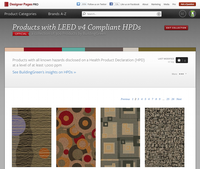
There are several ways you can find Health Product Declarations. Here’s a look at them, including what BuildingGreen offers.
Any product manufacturer can produce a Health Product Declaration (HPD), and they don’t have to go through a third party to do it. So unlike with certifications with central databases identifying compliant products, there is no single source for HPDs. Even if you gather a lot of HPDs, as some designers have done, matching them... Read more
Feature Short
HPD version 1.0’s promise of greater material transparency didn’t always deliver, but version 2.0 should provide accurate reporting.
In an attempt to find healthier materials, the building community has relied on everything from material safety data sheets (which focus primarily on worker safety) to VOC testing results (which only predict certain types of emissions) and product certifications (whose underlying methodology may be difficult to find or understand). Instead of... Read more
Feature

You can’t manage what you don’t measure—especially if you don’t know it exists.
As loyal shoppers at our local food co-op, we’ve gotten used to personal care products with full ingredient disclosure. A Tom’s of Maine toothpaste tube lists “every ingredient, its purpose, and its source.” If you’re not satisfied with that, you can go online and see a lengthy description of each substance, including the... Read more
Feature Short

We answer frequently asked questions on HPDs, which allow manufacturers to disclose product ingredients and hazards.
Update: This article was revised on April 25, 2019, to reflect updates to the HPD standard and reporting format.
What is a Health Product Declaration?A Health Product Declaration (HPD) is a document shared by manufacturers to disclose product ingredients and any health hazards associated with these ingredients.
... Read moreFeature Short

Experts say HPDs probably won’t add professional liability, but do you know the do’s and don’ts for avoiding a suit in the first place?
Once you know what’s in a product, you can’t pretend not to know. And a Health Product Declaration (HPD) not only tells you what’s in something but also leaves a paper trail to prove that you knew, or should have known.
Some groups have found that threatening and predict that HPDs will get manufacturers, architects, and... Read more
Feature Short

An architect, a specifier, and a building owner walk into a bar. Then they talk about how ingredient transparency informs their work.
Are Health Product Declarations (HPDs) relevant to actual building projects?
Yes, but not necessarily in the way you might expect. Some manufacturer groups have expressed a fear that project teams will use HPDs in a ham-handed way, preferring products with fewer perceived hazards while ignoring other performance... Read more
Feature Short

John and Catherine prove that designers can work successfully with HPDs, especially if they have a toxicology consultant to support their multi-faceted selection process.
Editor’s Note: We all know product selection is complicated. Some people compare it to juggling, while others talk about “balancing tradeoffs.”
The first time I heard architect John Amatruda and industrial hygienist Catherine Bobenhausen talking together about how they incorporate HPD information into... Read more
Feature Short
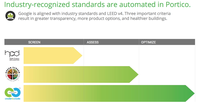
Why do we need Health Product Declarations when we have safety data sheets, Cradle to Cradle, Declare, and other frameworks?
Make up your minds already!
That’s a message many design and construction firms are hearing from building product manufacturers when requesting information about hazardous ingredients.
In addition to the multiple frameworks endorsed by LEED v4—a “manufacturer inventory” that’s... Read more
Op-Ed
HPDs can’t be used in isolation to make decisions about the safety and environmental performance of a product.
Advances in chemistry help to provide a wide variety of high-performance, sustainable building and construction materials at reasonable costs.
From roofing membranes that reflect light to window systems that help better regulate internal building temperatures to caulks and sealants used to keep... Read more
Feature Short

The Portico program turns chemical disclosure into a powerful decision-making tool.
After years of anticipation, Health Product Declarations (HPDs) are finally started to appear in larger numbers. So … what now?
Many building owners and professionals are still pondering how to use the information—but not at Google Real Estate and Workplace Services.
Here, Google employees have... Read more
News Analysis
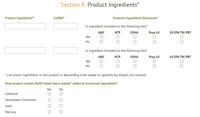
With demand growing for product ingredient reporting through the Health Product Declaration (HPD), the Resilient Floor Covering Institute (RFCI) has introduced a competing format it... Read more
News Brief
CalStar Products, Inc. stopped production of its fly ash brick products on October 1 due to financial difficulties.
CalStar Products, manufacturer of a wide assortment of bricks and pavers made from fly ash, has ceased production after failing to secure financing to keep operations running, according to former CEO Craig Ratchford.
In 2010, CalStar started manufacturing bricks made from type C fly ash, local aggregates... Read more
News Analysis
The Quartz Project opens up Pharos and GaBi intelligence to the public, combining the formats of HPDs and EPDs into one tool.
Designers gather information from a variety of sources in their quest to understand the health and environmental impacts of building materials—but even if they get all the information they want (rare), the data can be difficult to understand in context.
A new database, which is free and open for public... Read more
News Analysis

DOE releases a definition of zero energy buildings that it hopes will be adopted industry-wide.
Zero energy building (ZEB): it is not a new term, but it has been a confusing one.
First there’s the question of whether it is measured by site energy, source energy, cost, or emissions.
Then there is inevitably debate around what area counts as “onsite” for renewable energy... Read more
Explainer
A Danish term for “home” is gaining attention as designers look for ways to foster wellness in buildings.
Designers looking to make green buildings not only respected but also loved have turned in recent years to concepts like biophilia, biomimicry, and beauty.
A new interest in a Danish cultural tradition might have us looking not to the natural environment but inward—at human culture and at what makes us... Read more
Product Review
Bamboo flooring, the rapidly renewable darling of the green building movement, is still sustainable if you are willing to pay for quality.
Ten years ago, bamboo flooring was the definitive green building product. It was—and still is—rapidly renewable, versatile, and naturally strong.
Since then, low-quality bamboo flooring products and poor installation have led to floors cupping, warping, denting, and scratching easily, which has hurt... Read more
News Analysis
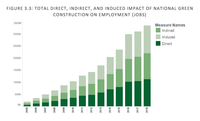
A new report estimates the economic impact of LEED and green construction to date and predicts a trajectory of growth.
The green construction industry will be responsible for 38% of all construction jobs by 2018, according to a report that Booz Allen Hamilton recently prepared for the U.S. Green Building Council (USGBC).
Its forecasts predict huge increases in green construction spending, rising to the tune of $224.4... Read more
Feature

These teams are applying radical life-cycle thinking to entire projects—and redefining what building ownership means in the process.
We don’t normally conceive of buildings as disposable. Yet cultural and economic undercurrents make it all too easy for our buildings to become trash.
The typical service life of a commercial building in North America is less than 50 years—and many structures are lucky to hit the ripe old age of 20.... Read more
News Brief
The U.S. Surgeon General has made walkable communities this year’s nationwide health focus.
Faced with an obesity epidemic and rising pedestrian fatalities, the U.S. Surgeon General recently issued a “call to action” urging designers and other professionals to do whatever is in their power to support walkable communities.
People who are physically active have about a 30% lower risk of early... Read more
News Brief
Basic requirements for labeling and disclosure underlie a proposed ASHRAE standard for building energy labels.
As cities and states begin to require building owners to disclose energy use, government agencies are evaluating the labels and rating systems that facilitate such transparency and wondering which is best.
In response, ASHRAE is proposing a standard that outlines the characteristics of a valid rating... Read more


