
Championing the
Changemakers
BuildingGreen champions the changemakers in sustainable design and building, with trusted insight, unparalleled education, and communities that are transforming the industry.
Log in to your profile

Image: Piranka

Webcast
The design and construction community has been demanding more information transparency on products… and companies are delivering. We found 1,852 Health Product Declarations (HPDs) from 698 brands in a recent search. The Declare label is ramping up quickly, and don’t forget about Cradle to Cradle, and similar trends in Environmental Product... Read more
News Analysis

McLennan will focus on his own practice after a decade as head of the International Living Future Institute.
Stepping down as CEO of International Living Future Institute (ILFI) after ten years of pushing the industry, Jason McLennan is moving on to other pursuits while leaving a legacy of high ideals.
Gradual departureILFI announced today that McLennan will step down as CEO at the end of 2015. The change isn’... Read more
News Analysis

New features in the GBI-01 draft include IAQ testing, risk assessment, and design for disassembly. Comments are open.
The Green Building Initiative (GBI), developer of the Green Globes rating system, has released a draft of its GBI-01 standard for public comment. The standard provides the technical framework for achieving certification under Green Globes for New Construction.
The current version of the standard was... Read more
News Analysis
Version 2.0 of the Health Product Declaration aims to make the rules clearer and the format more attractive for manufacturers.
The Health Product Declaration Collaborative (HPDC) today launched version 2.0 of its Health Product Declaration (HPD) Open Standard. The standard sets the rules for disclosing ingredients on an HPD, which is one of the leading tools for building product transparency.
Along with the standard, HPDC... Read more
News Analysis
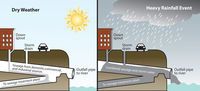
Net-zero water tops the list of obstacles a New York group is tackling. Its goal: to solve the large-scale ecological problems of dense urban areas.
Despite a hot real estate market, loads of innovative architects, and a dense urban environment, New York City isn’t a hotbed of Living Building Challenge (LBC) projects. A scant number have even registered, and none have made it to the performance period. One group trying to change that is the Living Building Collaborative of... Read more
Explainer

A third of the annual energy bill paid by a municipality goes toward water treatment. Here’s why clean water uses so much energy.
100 gallons of potable water—the amount used daily by the average person at home in the U.S.—takes about 1.1 kWh of energy to treat and distribute, according to a 2011 study by researchers at the University of South Florida. That’s a lot more energy than an efficient refrigerator uses in a day.
The study... Read more
Product Review
Sloan’s Hybrid urinal is water efficient and uses a pre-programmed, bi-weekly rinse that minimizes odor and maintenance problems.
It’s no secret that waterless urinals have a dubious reputation for causing odor and maintenance problems, but because of their significant water savings they have been installed in many green buildings—and then replaced at considerable expense in some, including the O’Hare International Airport, California’s EPA headquarters,... Read more
Product Review

The first furniture manufacturer incorporates Myco Board because the mushroom-based product is a sturdier alternative to plywood.
Myco Board, the engineered wood alternative made from mushroom “roots,” has found its first furniture application in the Savor guest chair seat back. Binding approximately 2.3 pounds of corn stalks for each chair back, mushroom tendrils (mycelium) grow for a while on the nutrients of agricultural waste and then are dried under... Read more
Feature

People like a clean flush and a long shower, but water is getting scarcer. Selecting the right building products can meet both needs.
This special water-focused issue of EBN features a downloadable product guide in place of the whole-issue PDF.
People want a hot, luxurious shower or bath. They want a toilet that doesn’t make them think. People want to use the urinal, not smell it. They want the faucet water to wet their hands... Read more
News Brief
Household dust is laden with plasticizers and flame retardants that can trigger fat storage, researchers find.
Children eat approximately 50 mg of dust every day, the equivalent of a low dose of aspirin, according to the U.S. Environmental Protection Agency. New research reveals how that dust could be contributing to unintended fat storage, and potentially obesity.
A study led by Duke University researcher... Read more
News Analysis
Academic performance of minority students shows disproportionate effects from air pollution, according to a study in El Paso.
More than 760,000 trucks pass through El Paso’s two entry points from Mexico each year; it is the highest-ranked city for carbon monoxide levels in Texas and rates eighth in the nation for particulate pollution. Traces of air pollution can be found in the school classroom, affecting minority students disproportionately.
... Read moreWebcast
Key webcast benefits—learn how to:
Use energy studies and simulation to make informed design decisions early on—when you have the biggest opportunities to reduce costs. Understand how and when to apply the different types of energy simulation at the appropriate design stage. Set and achieve energy-use goals for a building. Evaluate passive... Read moreNews Brief
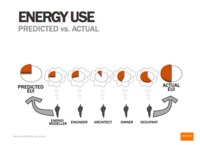
It’s common for energy use to far exceed what models predict. Should outcome-based measures be the new standard?
Energy use is often double what some energy modelers estimated at the start, according to a new report by the National Institute for Building Science (NIBS) and the New Buildings Institute (NBI).
The report outlines some of the reasons for this, including barriers to achieving energy goals:
... Read moreNews Brief
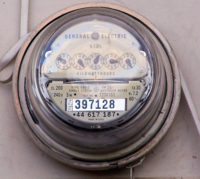
Local Law 88 requires submetering and lighting upgrades for large non-residential buildings.
Building owners in New York City are now required to submeter all tenant spaces and upgrade all lighting as part of the city’s ongoing streak of innovative energy laws.
Enacted in 2009 as part of the Greener, Greater, Buildings Plan (GGBP) signed by former mayor Michael Bloomberg, Local Law 88 requires... Read more
News Brief
The first PCR created for architectural coatings in North America
The American Coatings Association (ACA) has published the first North American product category review (PCR) for architectural coatings. PCRs establish the ground rules for measuring impacts in a life-cycle assessment (LCA). They help ensure that all products in the same category are measured in the same way. Types of coatings... Read more
Op-Ed
Although life-cycle assessment has great promise, in the wrong hands it can be used for greenwashing.
Life-cycle assessment (LCA) and environmental product declarations (EPDs) are touted as comprehensive, objective sustainability assessment and reporting tools—and indeed they have their merits. Among their strengths is that they deal with things that are more or less precisely measureable.
But results... Read more
Op-Ed

Some manufacturers say creating EPDs has improved their products. But they also have important messages for the design community.
It’s relatively easy for advocacy groups to embrace market disruption, but for manufacturers, strong economic forces work against revolutionary rethinking of how building products are made. And even though many sustainability champions within manufacturing firms are pushing for change, there are limits to how quickly these... Read more
News Analysis
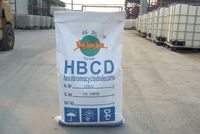
The world’s leading manufacturer of extruded polystyrene will phase out a toxic flame retardant around 2017 and problematic blowing agents by 2020.
Dow Chemical—manufacturer of Styrofoam, the dominant brand of extruded polystyrene (XPS)—is working to clean up this popular foam insulation on two fronts:
replacing the brominated flame retardant HBCD (hexabromocyclododecane) with a less-toxic alternative replacing the high-global-warming-potential hydrofluorocarbon... Read moreOp-Ed

Uptake of life-cycle assessment will produce huge amounts of data that designers can use to reduce whole-building impacts.
Life-cycle assessment (LCA) is a respected analytical technique long used in many industries to measure key environmental performance factors and identify ways to reduce impacts on air, land, and water.
LCA has started to show up in the construction sector, most noticeably in the wave of new... Read more
Op-Ed

Some manufacturers wonder if EPDs are worth the effort. Yes—and the business case is stronger than the marketing case.
The debate in green building circles over the value of environmental product declarations (EPDs) may not be adding to global warming, but it definitely has been heated. Supporters argue EPDs serve as a sustainability benchmark; opponents decry them as lacking substance, especially about material hazards.
... Read more

