
Championing the
Changemakers
BuildingGreen champions the changemakers in sustainable design and building, with trusted insight, unparalleled education, and communities that are transforming the industry.
Log in to your profile

Image: Piranka

Product Review
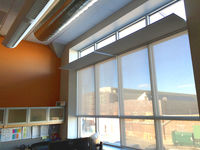
We look at products that improve indoor environmental quality and check in on advances from previous Top 10 winners.
We are used to talking about building products and materials that introduce toxic substances into our buildings, but what about products engineered to keep them out?
At Greenbuild this year, we did look at furniture with low emissions, but we also scoped out products that reduce the carcinogen radon—a... Read more
Feature

You can avoid lower LEED v4 scores and keep costs in check. Here’s how—including the pitfalls you need to watch out for.
With slightly more than 400 building design and construction (BD+C) projects registered after two years, LEED v4 appears to be suffering from a case of risk aversion.
First there are uncertainties about costs. Then there’s reluctance to raise the bar on sustainability in exchange for a lower LEED rating... Read more
Product Review
The Greenbuild 2015 expo featured some exciting innovations, including a DC-powered “net-zero energy zone.”
Greenbuild’s expo floor always has products that save water and energy, use rapidly renewable resources, and improve our indoor air quality. But we’re looking for the standouts that deserve extra recognition.
This year, we’ve selected some innovative solutions to some of our biggest environmental... Read more
Op-Ed
Our Top 10 products are leading toward a more sustainable future. They are not perfect, but let’s not make a desire for perfection the enemy of the good.
Blog Post
Brief provided by Agent Malin. Code name: El Presidente.
The American Institute of Architects Committee on the Environment (COTE) Top Ten awards for 2016 is open for submissions until January 19,... Read more
News Analysis
Reducing VOCs and adding more fresh air resulted in cognitive test scores that were 101% higher in a double-blind study.
Well-ventilated buildings have a secret superpower: they double the thinking abilities of those who step through their doors.
That’s not hyperbole: it’s the findings from a joint study from the Harvard T.H. Chan School of Public Health’s Center for Health and the Global Environment, SUNY Upstate Medical... Read more
Feature
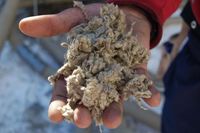
From insulation to flashing tape to cladding, we look at the attributes of the greenest building envelope products.
This special energy-and-moisture-focused issue of EBN features a downloadable product guide in place of the whole-issue PDF.
If the only time you think about insulation choices is when you’re figuring out how to meet code for your design, you’re missing the point.
The building envelope isn’t... Read more
Explainer
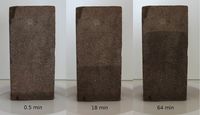
Most people understand that they need drainage—but they forget to plan for the water that flows uphill, and disaster can result.
CEUs are available for reading all the building-envelope product guides and primer. Click here to learn more and take the quiz.
Water moves through buildings in four ways. Capillary movement, or wicking, is special—and not just because the water defies gravity. Capillary movement is... Read more
News Analysis
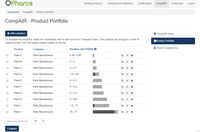
Healthy Building Network’s CompAIR calculator allows you to compare the total VOCs of wet-applied coatings based on coverage and other factors.
Estimating the total amount of VOCs from a wet-applied coating used on a job is difficult, but the Healthy Building Network’s recently released CompAIR VOC calculator should make the process easier. Located on HBN’s Pharos website, CompAIR gives design teams a tool for calculating total VOCs and the ability to compare that... Read more
Product Review
These transformative products replace greenhouse gases, save water, and change how we view HVAC equipment.
Reducing greenhouse gas emissions, conserving energy and water, and seeking durable, safe materials: for 14 years, BuildingGreen has given its Top 10 Green Building Products award to products that transform the design and construction industry by helping solve these and other significant environmental problems.
... Read moreNews Brief

Three new pilot credits encourage resilience in the new reality of climate change.
A suite of three new pilot credits on resilient design was just approved by the U.S. Green Building Council’s LEED Steering Committee, opening them for use by LEED project teams for innovation credits.
Alex Wilson, founder of BuildingGreen, has been working to develop the credits since 2013 through the... Read more
News Analysis
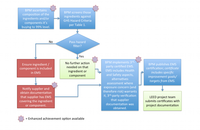
Option 3 of the LEED v4 Material Ingredients credit rewards manufacturers for chemical management up the supply chain.
LEED v4 contained a curious and unprecedented gap when it was published in 2013. Wrangling between chemical transparency advocates and chemical manufacturers had a cascading effect on the rating systems, and one of the credit options in the reference guide came with no guidance, no explanations, no calculations—and thus no... Read more
Explainer
The Health Product Declaration and some other programs ask for GreenScreen benchmarks. What does that actually mean?
The Health Product Declaration (HPD) is a standard way for manufacturers to disclose building product ingredients and associated health hazards. But how do they decide whether something is considered a hazard?
In short, they don’t: the developers of GreenScreen decide.
The... Read more
Op-Ed

The HPD has emerged as the go-to format for building product ingredient disclosure and hazard screening. We don’t need an alternative.
As leaders in our firms in the areas of sustainable design and product selection, we are responsible for guiding our practices into a better understanding of the health issues associated with material choices, and for training our colleagues in the use of new standards and tools.
We are also members of... Read more
Op-Ed
Ingredient inventories and assessment are important. But ultimately, we need to design for an indefinite future.
Our goal at Tarkett is to create products that will enhance the human experience and allow us to live and work in spaces that are made of healthy products.
As we consider that people spend more than 90% of their time indoors, it is important to think about the products with which we surround ourselves... Read more
Op-Ed
There are several ways you can find Health Product Declarations. Here’s a look at them, including what BuildingGreen offers.
Any product manufacturer can produce a Health Product Declaration (HPD), and they don’t have to go through a third party to do it. So unlike with certifications with central databases identifying compliant products, there is no single source for HPDs. Even if you gather a lot of HPDs, as some designers have done, matching them... Read more
Op-Ed
Material transparency can work best as part of existing standards manufacturers already follow.
Over the last few years, building product manufacturers and their supply chains have been under pressure to report full disclosure of environmental and human health impacts through LEED v4 material transparency credits.
There has been a lot of discussion and resistance about these credits by design teams... Read more
Product Review

Tracking materials is standard practice at David Edward, giving the company an edge in a market where transparency is a priority.
David Edward has been practicing product transparency before those industry buzzwords existed. The family-run company’s U.S.-made furniture is often used in offices where sustainability and the health of occupants are priorities, but the company also supplies products for 15 other manufacturers under license, including Allsteel... Read more


