
Championing the
Changemakers
BuildingGreen champions the changemakers in sustainable design and building, with trusted insight, unparalleled education, and communities that are transforming the industry.
Log in to your profile

Image: Piranka

Op-Ed
Throughout the eight years I spent as founding chair of LEED’s Materials & Resources Technical Advisory Group (MR TAG), no single issue consumed as much of our time and attention as... Read more
News Analysis
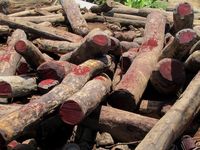
A pilot credit calls attention to illegal logging while also opening LEED to SFI and other certifications.
Many new buildings—including, presumably, many LEED buildings—contain illegally harvested wood. LEED has no requirement for project teams to vet non-certified timber sources when specifying wood products.
A new alternative compliance path (ACP), now available throughout the LEED rating systems as a... Read more
News Brief
Health features may attract tenants or help companies retain talent; now investors will be able to pick real estate portfolios with those advantages.
Behind every tightfisted developer is a frugal investor—and this show-me-the-money crowd wants hard evidence that measures like improving indoor air quality and adding biophilic design elements add value to real estate investments. Luckily, there’s now a new tool to capture information about steps that property companies have... Read more
News Brief
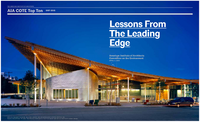
Top Ten Projects reduce energy use by half compared to baselines and are well above the industry average for reporting to the 2030 Commitment.
The American Institute of Architects (AIA) Committee on the Environment (COTE) has been issuing Top Ten Awards for nearly 20 years now, and its winners now number 189. The award is meant to shine a light on each project individually as a model and case study for sustainable design. COTE has discovered, however, that grouped and... Read more
News Brief
The industry-wide environmental product declaration covers cold-formed structural steel, paving the way for potential LEED v4 credits.
The Steel Recycling Institute has released the first industry-wide environmental product declaration (EPD) for U.S and Canadian structural steel building products. The EPD is for Cold-Formed Steel Studs and Track, also known as light steel framing or light-gauge steel framing. This EPD will allow individual companies to compare... Read more
Op-Ed
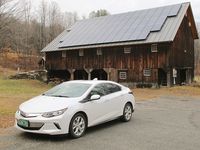
At Leonard Farm, we’ve taken another big step in our quest for net-zero energy and net-zero carbon—but we’re not there yet!
Reducing carbon emissions has become an overarching motivation for us on the home front. My wife, Jerelyn, and I have now been through almost two complete winters in our largely rebuilt, early 1800s home in Dummerston, Vermont. There are some things we would have done differently with the house, but we are totally happy with... Read more
Feature Short
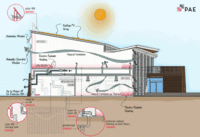
Designing for net-zero energy and carbon in the nation’s coldest climate is not just a physics problem. There’s also the chemistry.
The Rocky Mountain Institute (RMI) Innovation Center is going to be one for the record books.
Naturally ventilated and with a minimal mechanical system, this 15,600 ft2 commercial office in Basalt, Colorado, was tracking a miniscule energy use intensity (EUI) of 17.2 kBtu/ft2 during the harsh winter months after its... Read more
News Analysis
Everyone loved the treated-wood alternative until its high-profile failures. For the next maker of TimberSIL, quality control is job one.
TimberSIL is the nontoxic future of treated wood. We can’t get TimberSIL. We’re getting TimberSIL! TimberSIL doesn’t work. TimberSIL is bankrupt. TimberSIL is coming back?
TimberSIL promises new approach to treated woodTimberSIL, introduced in 2004, uses sodium silicate to protect wood fibers from... Read more
Op-Ed
When you save matters. What you build matters. Here’s why we need to build well and rebuild better.
The Paris climate accord set a new target for global temperature rise: to keep global temperatures from rising above 2°C and thus avoid catastrophic, irreversible climate change. The countries of the world came together and set a more aggressive goal of 1.5°C temperature rise. To meet that goal, emissions need to peak by... Read more
Feature Short

Building operations represent 75% of Boston’s greenhouse gas emissions. Here’s what we can learn from the city’s work on ambitious climate goals.
“There’s no magic formula.”
The words seem to come easily to Carl Spector, commissioner of the environment for the City of Boston. “Everyone understands what we need to do,” he elaborates. “We need to make buildings—both new and existing—more efficient. And we need to start changing our sources of energy.”
... Read moreFeature Short
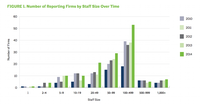
The number of firms committing to 2030 carbon targets has more than doubled, and 8,182 project teams reported in 2014. But what about the carbon?
Ed Mazria, FAIA, issued his 2030 Challenge in 2006 through his organization, Architecture 2030. The goal: design all new construction and major renovation projects for net-zero energy by the year 2030.
Ten years later, we’re making progress, but that goal is far from assured. In fact, just a small fraction of committed... Read more
Feature Short

Renovations, retrofits, and better-informed O&M will determine how quickly the developed world slows its carbon emissions.
“Existing” buildings? As opposed to what?
The design and construction industry has a funny way of drawing a thick, dark line between new and existing buildings. By definition, though, every building starts existing as soon as it’s built. That thick, dark line is more often a fuzzy gray area where all sorts of vital... Read more
Feature
Global warming has legs. Do our commitments to stopping it have teeth?
You can hardly open a browser or newspaper without reading a horrific headline about climate change today. Many of us are despondent about that, but also sick and tired of hearing that buildings are independently responsible for 40% of greenhouse gas (GHG) emissions globally. Not including transportation to and from buildings.... Read more
News Analysis
We can all celebrate 25 years of improvements to insulation, but we still have a wish list of seven better products we’d like to see.
When we first started writing about insulation products here at BuildingGreen, the big environmental concern was the ozone-depletion potential of the chlorofluorocarbon (CFC) blowing agents in polyisocyanurate, spray polyurethane foam, and extruded polystyrene. Those products were pretty bad, and we can celebrate dramatic... Read more
Explainer
Carbon is more deadly than many other toxic substances we fret about. And acidification might be more of a problem than climate change.
Most building professionals are painfully aware of how devastating climate change already is, and how catastrophic it will rapidly become if we fail to zero out our greenhouse gas (GHG) emissions in the next two decades. But possibly irreversible changes are also occurring in the world’s oceans as a result of acidification—a... Read more
Feature Short
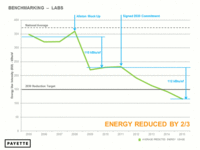
2030 Commitment signatories are making progress on climate goals. Along the way, they’re also finding new ways to save time and money.
Whether it’s The Motorcycle Diaries to The Muppet Movie, everyone knows that when you’re on a road trip, arriving at your destination is secondary. Road trips are mostly about building relationships and radically rethinking how you live your life.
Replace “road trips” with “climate change goals,” and you’ll get a sense... Read more
April Fools
Ready to play with Ladybug, Hummingbird, and Honeybee, these plug-ins offer unexpected sustainability benefits.
April 1, 2016
BuildingGreen has announced a line of Rhino and Revit plug-ins to encourage sustainable design. The software tools are available for download after the conclusion of beta testing on April 1, 2016.
CockroachWant to add resilience to your... Read more
April Fools

BuildingGreen’s new Full Circle Fuchsia List uses a cradle-to-beyond-the-grave assessment to eliminate all hazardous materials from the built environment.
April 1, 2016
Building on the pioneering work of Perkins+Will’s Precautionary List, Cradle to Cradle’s Banned List, and the Living Building Challenge’s Red List, BuildingGreen has finally released its definitive Full Circle Fuchsia List to help assess potentially hazardous... Read more
April Fools

“You can’t know what’s in your building products if you don’t look,” quips the architect who discovered the corpse.
April 1, 2016
With project teams paying more attention to the ingredients of building materials through the use of Health Product Declarations (HPDs), some have reported surprise and even shock at the contents—like the presence of carcinogens, reproductive toxicants, and... Read more
April Fools
It’s a win-win for winners, says Rick Fedrizzi, of the LEED Effort certification—an answer to concerns about v4’s excessive rigor.
First it delayed mandatory registration under LEED version 4 (LEED v4). Now the U.S. Green Building Council (USGBC) has announced a new program that should further appease concerns about what some have called the “excessive rigor” of the new rating system. The program, which effectively adds a fifth level of certification below... Read more


