
Championing the
Changemakers
BuildingGreen champions the changemakers in sustainable design and building, with trusted insight, unparalleled education, and communities that are transforming the industry.
Log in to your profile

Image: Piranka

Product Review
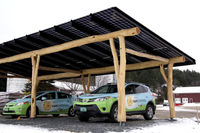
Keep the beauty of round logs, and get more strength from an engineered wood structure, promises Wisconsin-based company WholeTrees.
Round, unmilled timber might seem obsolete, but by using high-tech scanning and modeling, one company is bringing this form back into designers’ repertoires at a cost that can compete with steel. And we’re not just talking for a rustic log cabin aesthetic either: the company’s fast-growing portfolio of projects includes contemporary designs at... Read more
Explainer

Active design is looking less like a luxury and more like a public health imperative.
Fitness blogs and mainstream media have been claiming that “sitting is the new smoking” for years. It sounds like an exaggerated claim and, depending on how you look at it, could imply more than it should: if you are thinking that the obesity epidemic is going to be solved by standing desks, you’re probably mistaken. But it might be time for... Read more
News Brief
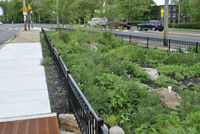
Parks could be the answer for some cities wrestling with drug-related violence, vandalism, and theft.
Urban trees contribute to higher birth weights and lower asthma rates, and now multiple experiments suggest that green spaces might also reduce crime, according to Citylab’s Julian Spector.
The city of Youngstown, Ohio, was struggling with high unemployment rates and economic decline due to deindustrialization, Spector reports. With 31... Read more
Feature
In this age of political revolution and environmental urgency, it’s time to step back and take a look at priorities, challenges, and opportunities
As the Trump administration takes the reins of power this month, the environmental community faces a new reality.
Assuming confirmation, we are looking at:
an Environmental Protection Agency (EPA) Administrator who denies climate change and has been fighting environmental regulations for decades... Read moreProduct Review
BuildingGreen-Approved toilets, urinals, showerheads, and faucets automatically meet CALGreen and LEED v4 water-efficiency standards.
Water scarcity has become one of our biggest environmental concerns. In the southwestern U.S. and California, there is now serious competition for water for agriculture, manufacturing, recreation, and basic human needs.
In response to the growing water shortage, California Green Building Standards Code (CALGreen) was updated in January... Read more
Blog Post
A simple PC-executable file can be used to understand the relationship between stack effect and mechanical ventilation
In 2003, as part of their presentation (“Ventilation Myths and Misconceptions”) at the Affordable Comfort conference, Collin Olson and Paul Francisco debuted a software tool they developed called SEE STACK. (If you want to experiment with the software, you can safely click here to download the virus-free executable file and training manual from... Read more
Blog Post
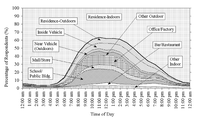
Where the oft-quoted statistic comes from, and what the underlying study says about health in buildings
Given the intense interest in the architectural community on health and wellness inside buildings, and in the related WELL building standard, you’ve probably heard someone tell you recently that we spend 90% of our time indoors. Usually this is followed by some assertion that we need to make our products, materials, and interior spaces... Read more
Case Study
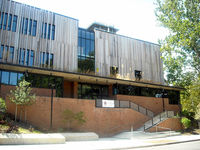
Academic Achievement: A school expansion in our nation's capitol introduces a wetland to a dense urban site.
While studying aerial photographs of the hilltop campus of Sidwell Friends Middle School, the project team recognized the campus also sits atop two watersheds, both of significant ecological value. That insight led to an integrated approach to water management as the centerpiece of a comprehensive appeal to environmental stewardship... Read more
Explainer
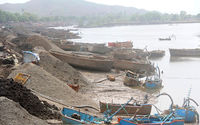
Demand for the basic raw material for glass and concrete is prompting illegal mining that’s leaving beaches and riverbeds bare.
After water and air, sand is the next most-consumed natural resource in the world, according to the United Nations Environment Programme (UNEP). Though a visit to the beach may make this material appear abundant, this resource—used to manufacture nearly everything from plastics to microchips—is actually under serious stress worldwide, and the... Read more
News Brief

Performance data supporting “quality of life” is the focus of USGBC and GBCI’s new for-profit subsidiary, which will work with the LEED Dynamic Plaque.
Editor's note 1/5/17: This article has been updated to reflect a change in Arc's name that was announced subsequent to GBCI's initial announcement.
Green Business Certification Inc. (GBCI), the sister nonprofit to the U.S. Green Building Council (USGBC), recently announced the launch of wholly-owned subsidiary. The new for-profit... Read more
Feature

Integrated pest management (IPM) design strategies can reduce structural damage and unsanitary conditions, and improve our community’s health.
Design professionals imagine their shiny new green buildings as welcoming, comfortable, interesting, energy-efficient, healthy spaces full of light and clean air that will stay that way for years to come. No one wants to think about rats, mice, bedbugs, and cockroaches. Those are problems for old buildings, inner cities, and affordable housing... Read more
Product Review
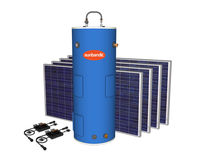
USGBC’s 2016 expo showcased innovative products, including building-integrated ERV and an industry-first PV solar water heater.
This year’s Greenbuild expo had a surprising number of interesting products, so many in fact that we couldn’t fit them all into our first Tour of Cool Products from Greenbuild 2016. Well, we have saved some of the best for last. This month we look at a new solar water heater, super-efficient photovoltaic panels, a new cellular glass insulation... Read more
News Brief

No longer just the USGBC spinoff that supports LEED certification, Green Business Certification, Inc. has a hand in a long and growing list of green certifications.
GBCI started life as the Green Building Certification Institute, a nonprofit sister organization to the U.S. Green Building Council (USGBC). Created in 2008, GBCI’s first responsibility was to administer everything involved in the LEED credentials, from writing exams to defining continuing education requirements.
In 2009 GBCI took over... Read more
News Brief

75% of small particulates in outdoor air pollution come indoors and cause workers to be less productive, putting a $2 billion dent in China’s service sector.
A recent study conducted in two call centers in China found that air pollution significantly hampered worker productivity. Pollution zaps mental processing abilities, the researchers found, causing employees to take longer breaks on bad air quality days.
Dog days in the call centerThe study analyzed data from almost 5,000 employees... Read more
Product Review
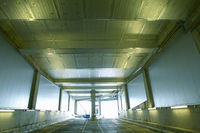
Kingspan has re-introduced this high-R-value, flame-retardant-free rigid foam insulation to North America. It’s made with formaldehyde, but emissions are low.
Back in 1985, when I started what is now BuildingGreen and was working for a construction company part-time (yes, I had to make a living), I remember installing a type of foil-faced foam insulation that was then being promoted as the highest-R-value insulation on the market. It was Koppers’ Exceltherm, which I think was advertised as providing... Read more
News Brief
A report describes how Canada can realize its 2030 carbon emissions targets, while growing the country’s green building industry.
The Vancouver Declaration on Clean Growth and Climate Change requires Canada to meet or exceed its international greenhouse gas (GHG) emission reduction target of 30% below 2005 levels by 2030—but how is still being worked out. A new Canada Green Building Council (CaGBC) report, Building Solutions to Climate Change: How Green Buildings Can Help... Read more
Product Review
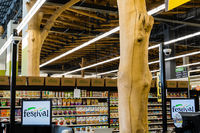
These products from Greenbuild 2016 expo floor save water, use wood in innovative ways, and protect buildings and materials from the elements
The annual Greenbuild Expo is one of the best places to discover exciting product innovations and the 2016 convention in Los Angeles was no exception. We’re going to present in two parts the standouts that we saw. This article will cover water-saving products, drywall, weather barriers, and select wood products. Stay tuned next month when we’ll... Read more
News Brief
A report calls for countries to invest 20% of transportation budgets in infrastructure improvements to promote safety and mitigate climate change
Every year, 1.3 million people die in road accidents, and nearly half of the fatalities are pedestrians, cyclists, and motorcyclists, according to the United Nations Environment Programme (UNEP) report Global Outlook on Walking and Cycling. Deaths are likely to increase in coming years given that the world’s fleet of private cars is expected to... Read more
Explainer
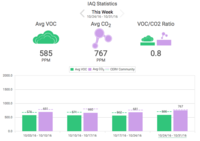
Balancing the need for fresh air with minimizing energy use is difficult. Demand-controlled ventilation is the responsive solution.
People often talk about the “energy penalty” associated with more fresh-air ventilation. Some level of fresh air is needed for human health and comfort, but pulling in and conditioning fresh air negates hard-earned efficiency measures.
Demand-controlled ventilation is a way to reduce that energy penalty by pulling in fresh air only when... Read more
Feature

Human health probably benefits from more fresh air than current ventilation standards require. But pulling in outdoor air can mean pulling in pollution.
If you’re designing an expensive, high-end office tower, you’d better be sure the people inside of it can do their best work. So as Ben Tranel, AIA, principal at Gensler, began working on the Tower at PNC Plaza in Pittsburgh, he thought a lot about air.
“When people are working their hardest, you always hear them say ‘Let’s go out and... Read more


