
Championing the
Changemakers
BuildingGreen champions the changemakers in sustainable design and building, with trusted insight, unparalleled education, and communities that are transforming the industry.
Log in to your profile

Image: Piranka

Feature

Human health probably benefits from more fresh air than current ventilation standards require. But pulling in outdoor air can mean pulling in pollution.
If you’re designing an expensive, high-end office tower, you’d better be sure the people inside of it can do their best work. So as Ben Tranel, AIA, principal at Gensler, began working on the Tower at PNC Plaza in Pittsburgh, he thought a lot about air.
“When people are working their hardest, you always hear them say ‘Let’s go out and... Read more
Webcast
For the past 15 years, BuildingGreen has recognized green building products that significantly improve upon standard “business-as-usual” practices.
These products help transform the industry by conserving energy and water, reducing emissions, and fundamentally changing how we approach our building systems. In this presentation of Top Ten... Read more
Feature Short

Most building certifications encourage low-emitting and low-VOC products, but they all do it differently. Here’s how it all fits together.
CEUs are available for reading the cluster of articles on outcome-based design. Click here to learn more and take the quiz.
A lot of building projects these days are targeting certification in multiple rating systems. You’d think that if these programs were all working toward the same goal—like indoor air quality—they would get the... Read more
Product Review

Our innovative Top 10 product selections reduce stormwater and wastewater, improve efficiency and IAQ, and contain fewer hazardous materials.
For the past 15 years, BuildingGreen has recognized green building products that significantly improve upon standard “business-as-usual” practices. These products help transform the industry by conserving energy and water, reducing emissions, and fundamentally changing how we approach our building systems.
This year’s BuildingGreen... Read more
Explainer

“Section 01350” has come a long way since it acquired its curious nickname. Here’s what it can tell you about indoor air quality—and what it can’t.
CEUs are available for reading the cluster of articles on outcome-based design. Click here to learn more and take the quiz.
You’ve checked the box and specified interior products that are certified as low-emitting. But are you actually protecting building occupants from hazardous VOCs?
Yes!
Okay, maybe. Mostly.
... Read more
News Analysis
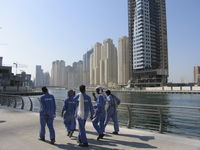
Modern slavery in construction—some of which occurs in the U.S.—is linked to an estimated $34 billion of profit annually.
Construction is one of the primary industries fueling modern slavery, according to a recent report by LexusNexus Business Information Services, a U.K.-based company that provides due diligence services. The report documents human rights violations involving construction workers as well as violations in the building material supply chain.
... Read moreFeature

“Sick building syndrome” was one of the first problems the green building community tried to solve. We’ve come a long way, but we’re not done yet.
Chalk one up for Team Green. Zero-VOC paints and low-emitting commercial carpets and workstations are now mainstream. We won!
Try telling that to the proud owners of green buildings that turn out to have indoor air quality (IAQ) problems.
After the post-construction flush-out, VOC levels sometimes “start to skyrocket,” according... Read more
News Brief

Architecture firms are taking it upon themselves to call for climate change legislation with the new Architects Advocate campaign.
A grassroots campaign started by a small number of Chicago-based architecture firms has quickly caught fire. The group, Architects Advocate for Action on Climate Change, now has 114 architecture firms as signatories and has just gone nationwide.
The goal of the initiative is to make the voice of the architecture community heard by... Read more
Feature Short
The FDA regulates flies in our soup, but no one regulates VOCs in our indoor air. Somehow that’s a designer’s job to figure out.
Every couple years, a revolting list of “food defects” allowed by the U.S. Food and Drug Administration (FDA) hits the Internet, with stats like these:
Allowable rodent filth in apple butter: 4 or more hairs per 100 grams Allowable insects in canned mushrooms: Average of over 20 or more maggots of any size per 100 grams (... Read moreFeature Short

We need the protection that product VOC testing provides, but it’s far from the last word on human health in buildings.
For more than seven years, groups in the U.S. have been struggling to reach consensus on how to measure VOC emissions from products and establish protective VOC limits based on sound science. The standard, which may someday be finished, is called NSF/UL 440.
What’s taking so long?
It turns out that human toxicology and human... Read more
Feature Short

We used to look for coatings, adhesives, and sealants that contained no VOCs. Great for smog prevention, but IAQ and installer health are also important.
What if we told you that the original purpose of reducing volatile organic compounds (VOCs) in wet-applied building products was to prevent smog in cities—not to improve indoor air quality (IAQ)? And that certain hazardous VOCs are “exempt” from being counted because of that? And that “zero VOC” doesn’t come anywhere close to meaning a product... Read more
News Brief
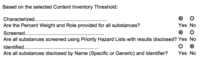
Just in time for LEED v4, a guide for using Health Product Declarations is being released.
Do you know what it means if the checkboxes for “characterized” and “screened” are checked off on a Health Product Declaration (HPD), but the box for “identified” is left blank? (See the answer at the end.)
This and other nuanced questions about how to use HPDs are answered in a new handbook—Project Team User Guide: Using Health Product... Read more
Op-Ed

The green building community must choose its battles carefully. And Standing Rock should be one of those battles.
I can’t believe how hard it is to write this op-ed piece. All I want to say is that building professionals who care about the health of planet and people should actively support the growing movement at Standing Rock—where Native American tribes and their supporters have gathered to stop development of the Dakota Access pipeline.... Read more
Product Review
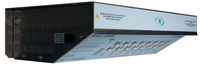
Nextek PhD provides AC-to-DC power at the building scale, integrates renewable energy, and can even save on first costs.
As low-voltage LED lighting becomes the norm in our buildings, a power struggle has begun.
These LEDs—and much of our other commercial equipment—use direct current (DC), while our electricity grid supplies alternating current (AC—see The Death and Rebirth of DC Power). When you consider that onsite renewables also generate DC power,... Read more
Feature Short
Project success is increasingly tied to performance metrics, especially EUI. But that doesn’t always capture what owners are really looking for.
As outcome-based contracts become more popular, there’s more money on the line to meet performance metrics.
But are those metrics fair? And do they reliably measure the outcomes that we really care about?
Energy: The Rise of EUIAs demonstrated by the project examples in Mouth, Meet Money: Case Studies of Outcome-Based Design,... Read more
Op-Ed
Operational energy use is critical, but materials might be an even bigger part of the solution to climate change and other pressing environmental issues.
Here at BuildingGreen, we’ve been covering all aspects of sustainable building design since before LEED and other frameworks even existed. But we’ve always had a soft spot for issues relating to products and materials. In our publications, trainings, and consulting work, we have consistently come back to those issues more often than any other... Read more
Product Review
Accoya, now code-approved for fungus and termite resistance, relies on acetylation as a benign alternative to conventional pressure-treated wood.
Connect occupants with nature: great idea, but who asked for the toxic fallout?
Insect- and rot-resistant boardwalk sleepers, decking, and exterior structural members are commonly needed to provide low-impact access to the outdoors. But there’s really no perfect solution, especially given the need for products that are code-rated for... Read more
Explainer
Clients, designers, and commissioning agents don’t always get what they need out of the OPR. Some teams are trying to change that.
OPR: three letters that can spell the difference between a contented client and a contentious callback.
Building projects are complex, collaborative, and long-lasting, and they have more pitfalls than level ten of Temple Run. The owner’s project requirements document is designed to keep everyone on the same page about the basics from... Read more
News Analysis
A pilot credit to address illegal logging has been criticized by advocacy groups like the Sierra Club. They’ve offered USGBC their own ideas.
Illegal logging is one of our most pressing environmental and social issues. Yet just a few months after the U.S. Green Building Council (USGBC) began addressing it with a new LEED pilot program, several major environmental groups say the effort should be scrapped and reworked.
The Sierra Club, Greenpeace, and other environmental... Read more
Feature
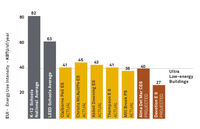
Performance-based incentives are a growing (and positive) trend. They’re not as risky as they sound, but there are some steps you should be taking to prepare.
There’s a dark underside to many of our recent high-performance projects. They’re not actually performing as designed—and owners are starting to notice.
“With all the new energy benchmarking ordinances, more owners are starting to realize that their new buildings are performing worse than their old ones,” says Adam McMillen, P.E., the... Read more


