NYSERDA Green Homes Cash Incentive Program Announced

News Brief

NYSERDA Green Homes Cash Incentive Program Announced

The New York State Energy Research and Development Authority (NYSERDA) has announced new incentives as part of a Green Residential Building Program. NYSERDA will offer $5,125 for a single-family home and up to $13,375 for a larger building—to owners of new or substantially renovated residential and residential mixed-use buildings, with up to 11 units, completed and/or occupied between January 1, 2010 and October 31, 2013. Buildings must use 30% less energy than typical homes; reduce waste and water use; improve indoor air quality; utilize passive solar principles; and use recycled, reclaimed, or rapidly renewable materials from local sources. The measures will be verified with a Silver level or higher certification in the National Green Building Standard, LEED for Homes, or LEED for New Construction. The Green Residential Building Program builds on NYSERDA’s Energy Star Homes program, which has been encouraging a 30% energy use reduction since 2001. For more information visit www.nyserda.org.

Published December 31, 1969

(2010, December 30). NYSERDA Green Homes Cash Incentive Program Announced. Retrieved from https://www.buildinggreen.com/departments/newsbrief

Add new comment

To post a comment, you need to register for a BuildingGreen Basic membership (free) or login to your existing profile.

New Homes Can Now Earn a WaterSense Label

News Brief

New Homes Can Now Earn a WaterSense Label

The first four WaterSense labeled homes in the country were recently built in Roseville, California by KB Home. WaterSense, a partnership program sponsored by the U.S. Environmental Protection Agency, helps consumers reduce their water use and utility bills through water-conscious design. WaterSense-labeled homes aim to use 20% less water than typical new homes by incorporating WaterSense labeled plumbing fixtures, efficient hot water systems, and water-conserving landscape design. Independent inspection and certification ensure water efficiency and performance criteria are met. Homes have previously been built to WaterSense draft standards; these are the first homes labeled under the completed specification. The Roseville homes could save an average of 10,000 gallons of water and $100 in utility costs every year. KB Home is the first national builder to partner with WaterSense; KB Home plans to continue their WaterSense commitment with two more communities, located in Austin, Texas and Orlando, Florida. For more information visit www.epa.gov/watersense.

Published December 31, 1969

(2010, December 30). New Homes Can Now Earn a WaterSense Label. Retrieved from https://www.buildinggreen.com/departments/newsbrief

Add new comment

To post a comment, you need to register for a BuildingGreen Basic membership (free) or login to your existing profile.

LEED for Healthcare Open for Project Registration

News Brief

LEED for Healthcare Open for Project Registration

Seven years in the making and the result of a partnership between the U.S. Green Building Council (USGBC) and the Green Guide for Healthcare (GGHC), LEED for Healthcare passed member ballot with an 87% approval rating in November 2010. The final version of the rating system is quite different from the first public-comment version, which was released in 2007—some of the more innovative credits, such as one calling for views to the outdoors from in-patient units (not just patient rooms) were removed. Two LEED for Healthcare credits were put into LEED’s pilot credit library: one covering the energy efficiency of medical process equipment, and another requiring reduced levels of dioxins and halogenated compounds. But the published rating system retains an integrated design prerequisite—an element no other rating system has. Projects can now register for the rating system through LEED Online, although full LEED Online documentation is not yet available. More information is available at www.usgbc.org/leed/healthcare/.

Published December 31, 1969

(2010, December 30). LEED for Healthcare Open for Project Registration. Retrieved from https://www.buildinggreen.com/departments/newsbrief

Add new comment

To post a comment, you need to register for a BuildingGreen Basic membership (free) or login to your existing profile.

Urban Runoff Bad for Biodiversity in Streams

News Brief

Urban Runoff Bad for Biodiversity in Streams

Scientists have demonstrated that stormwater runoff has a negative impact on the biological diversity of urban streams. Researchers at the National Oceanic & Atmospheric Administration’s Northwest Fisheries Science Center ran experiments to measure the effects of polluted stormwater on the insect population of a creek in the Seattle area. The scientists created test channels (similar to rain gutters) and stocked them with rocks from healthy streams that were colonized with insects. Some channels received unfiltered stormwater (with pollutants), while the others received filtered water. At the end of the 2009 experiment, insect populations in the channels with unfiltered water had dropped by 26%, and species diversity had dwindled. These findings suggest that green building strategies that filter and reduce stormwater runoff, such as bioswales and green roofs, are important to the biological health of urban areas. For more information see www.nwfsc.noaa.gov.

Published December 31, 1969

(2010, December 30). Urban Runoff Bad for Biodiversity in Streams. Retrieved from https://www.buildinggreen.com/departments/newsbrief

Add new comment

To post a comment, you need to register for a BuildingGreen Basic membership (free) or login to your existing profile.

Solar Panels Pay Back Greenhouse Gas Emissions in Four Months

News Brief

Solar Panels Pay Back Greenhouse Gas Emissions in Four Months

The impacts of a rare greenhouse gas—nitrogen trifluoride, or NF3—used to make thin-film photovoltaic panels are offset in under four months by the emissions-free power generation of the panels. This is the finding of a study published in

Environmental Science & Technology. The use of NF3 has come under scrutiny since scientists found atmospheric concentrations of the chemical were higher than expected and growing at 11% a year, according to

Chemical & Engineering News; the chemical is also used in integrated circuit manufacturing. The new research offers hard numbers for one aspect of photovoltaic manufacture—but a complete life-cycle analysis, accounting for all environmental impacts from manufacture to disposal, is still lacking.

Published December 31, 1969

(2010, December 30). Solar Panels Pay Back Greenhouse Gas Emissions in Four Months. Retrieved from https://www.buildinggreen.com/departments/newsbrief

Add new comment

To post a comment, you need to register for a BuildingGreen Basic membership (free) or login to your existing profile.

Studies Show Bisphenol-A Absorbed Through Skin

News Brief

Studies Show Bisphenol-A Absorbed Through Skin

Two recently published studies show that bisphenol-A (BPA), an endocrine-disrupting chemical, can be absorbed through the skin. This means that cashiers and others who regularly handle receipts made with the chemical are at risk for higher exposures than the general public. BPA is used as a color developer in thermal-imaging paper—the type used in many credit card machines and cash registers.

One of the studies looked at the diffusion of BPA through porcine and human skin and found that a significant amount of the chemical made it through the skin. The other study measured levels of BPA in the urine of pregnant women; cashiers had higher concentrations of the chemical than teachers and industrial workers.

These studies add to growing concerns about BPA, which is found in the linings of food cans, plastic bottles, and some building materials. For more, see “Fears Grow With Polycarbonate Chemical Bisphenol-A,” EBN June 2008.

Published December 31, 1969

(2010, December 9). Studies Show Bisphenol-A Absorbed Through Skin. Retrieved from https://www.buildinggreen.com/departments/newsbrief

Add new comment

To post a comment, you need to register for a BuildingGreen Basic membership (free) or login to your existing profile.

High Lead Airborne Lead Levels Persist from Metal Processing

News Brief

High Lead Airborne Lead Levels Persist from Metal Processing

The U.S. Environmental Protection Agency (EPA) has identified 16 areas that have ambient lead levels above those set by the Clean Air Act. These areas, designated “nonattainment areas,” cover parts of counties in 11 states, including areas near Montgomery, Alabama; Dallas, Texas; and Cleveland, Ohio.

In the past, most airborne lead pollution came from emissions from vehicles using leaded gasoline; since lead was removed from gasoline sold in the U.S., most of these emissions come from metal processing, according to the nonprofit Clean Air Trust.

The nonattainment areas must craft plans to lower lead levels, and must meet Clean Air Act standards by December 2015. New industrial facilities planned for the nonattainment areas must also pass additional reviews to ensure that they will not add to ambient lead levels. More information is available at www.epa.gov/leaddesignations/.

Published December 31, 1969

(2010, December 9). High Lead Airborne Lead Levels Persist from Metal Processing. Retrieved from https://www.buildinggreen.com/departments/newsbrief

Add new comment

To post a comment, you need to register for a BuildingGreen Basic membership (free) or login to your existing profile.

IGCC Public Version 2.0 Released

News Brief

IGCC Public Version 2.0 Released

The International Code Council (ICC) released the International Green Construction Code (IGCC) Public Version 2.0 during the U.S. Green Building Council’s November 2010 Greenbuild conference. This revision is a “resource tool for jurisdictions considering adoption or amendment of regulations regarding green construction,” according to ICC’s Richard Weiland. Revisions include a switch from total annual net-energy use to a zero energy performance index; new commissioning requirements for appliances, radon, and documentation; asbestos removal requirements; and land-use regulations. Code change proposals can be submitted at www.iccsafe.org/IGCC/PV2Development until January 3, 2011; the final version will be released in early 2012 (see “ICC Announces Plan for Green Construction Code,” EBN Aug. 2009). IGCC Public Version 2.0 can be downloaded for free at

www.iccsafe.org/igccv2.


Published December 31, 1969

(2010, December 7). IGCC Public Version 2.0 Released. Retrieved from https://www.buildinggreen.com/departments/newsbrief

Add new comment

To post a comment, you need to register for a BuildingGreen Basic membership (free) or login to your existing profile.

Limits on Window-to-Wall Ratios in UAE

News Brief

Limits on Window-to-Wall Ratios in UAE

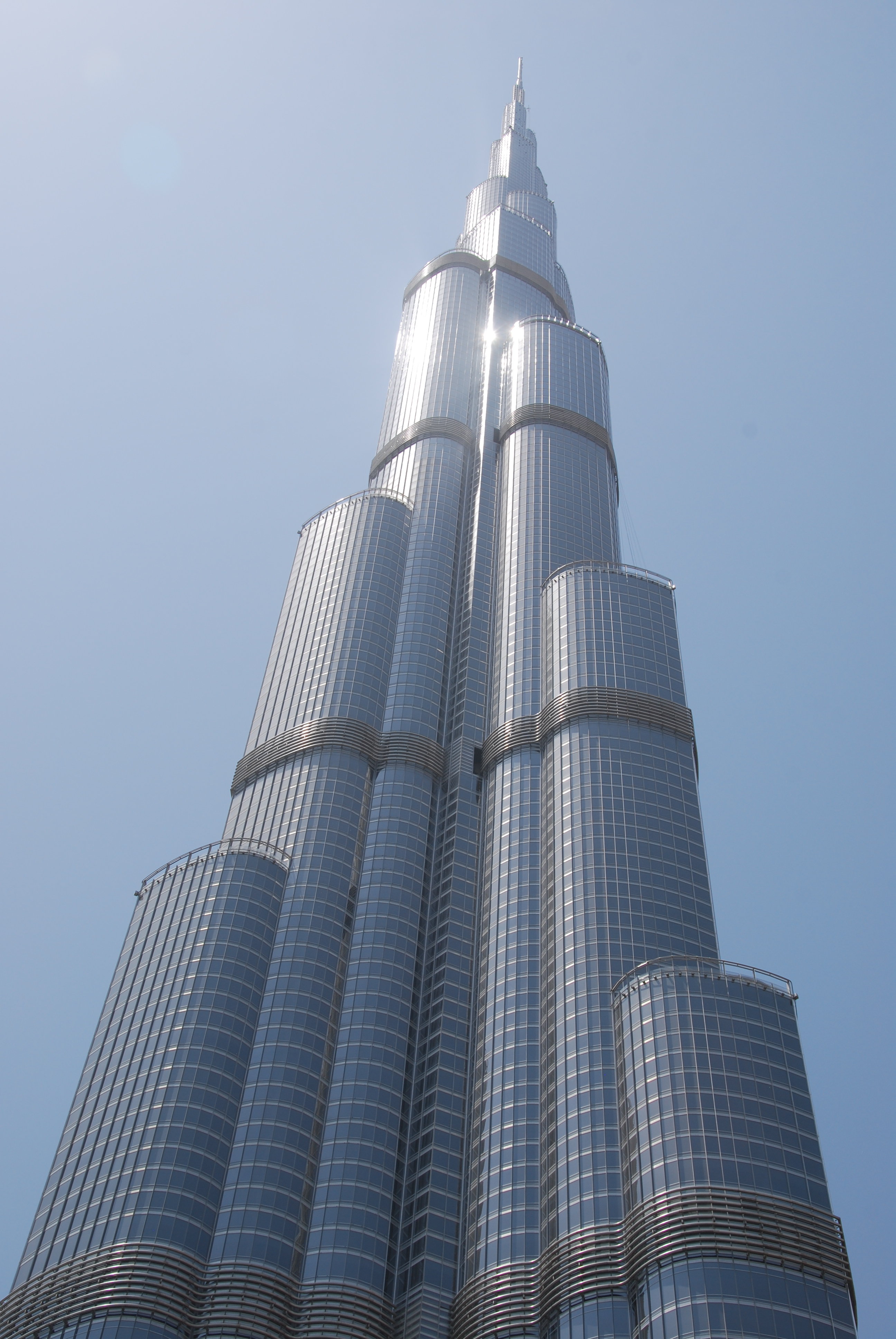
Dubai, in the United Arab Emirates (UAE) has set limits on window-to-wall ratios, potentially halting the proliferation of all-glass buildings in the region. Dubai has set a limit of 60% glazing for buildings, which will go into effect in 2014. Another city, Abu Dhabi, is considering a more stringent limit—30%—but has included a loophole that allows designers to shade glazed facades or put them on the north side of buildings. Under the proposed regulations, designers would have to show that buildings with higher glazing percentages only experience the solar heat gain of a building with 30% glazing.


Published December 31, 1969

(2010, December 6). Limits on Window-to-Wall Ratios in UAE. Retrieved from https://www.buildinggreen.com/departments/newsbrief

Add new comment

To post a comment, you need to register for a BuildingGreen Basic membership (free) or login to your existing profile.

LEED-Certified Space Passes One Billion Square Feet

News Brief

LEED-Certified Space Passes One Billion Square Feet

The U.S. Green Building Council (USGBC) has announced that, as of November 2010, the footprint of LEED-certified commercial space has surpassed one billion square feet. (That’s 100 million square feet of space for each of the 10 years of LEED’s existence.)

According to USGBC, another six billion square feet of projects around the world are registered and working toward certification. “This traction demonstrates the transformation of the way we design, build, and operate buildings,” said Rick Fedrizzi, President, CEO, and founding chair of USGBC.

Not all projects that register with LEED achieve certification, so not all of the six billion square feet in the pipeline will definitely be certified. But the milestone is still a significant one. “The impact of these one billion square feet resonates around the world,” said Peter Templeton, president of the Green Building Certification Institute (which certifies LEED projects).

Published December 31, 1969

(2010, November 18). LEED-Certified Space Passes One Billion Square Feet. Retrieved from https://www.buildinggreen.com/departments/newsbrief


Add new comment

To post a comment, you need to register for a BuildingGreen Basic membership (free) or login to your existing profile.