The Capital Markets Partnership (CMP) is convening a November 12 organizational meeting to continue its work on a National Consensus Sustainable Manufacturing Underwriting Standard, or “Green Value Score.” The meeting will take place at Allianz Global Investors in New York City.
The Draft Standard's Green Value Score identifies increased share value and profitability from sustainable manufacturing for financial incentives including discounted insurance premiums, increased interest rates for business banking, cheaper cost of capital, and higher credit ratings. The goal of the standard is to allow manufacturers and retailers to receive incentives in the capital markets for sustainable product metrics covering their global supply chain and all product stages based on life-cycle assessment. Supporting this work is research documenting that green buildings and certified sustainable products are more profitable, less risky, and preferred by investors.
At the November meeting, the group will set up a national consensus committee, cover the consensus voting process, and review the draft standard, among other agenda items.
The Capital Markets Partnership (CMP) is a nonprofit, nonpartisan coalition of investment banks, investors, governments, countries and NGOs created by Market Transformation to Sustainability (MTS), a nonprofit led by Mike Italiano, a founder of the U.S. Green Building Council. More information is available here.





 A new report published by the World Green Building Council (WGBC) asserts that the building sector presents the biggest opportunity to reduce carbon emissions, construction waste, and energy use worldwide while creating jobs, improving local economies, and producing affordable housing. The report, “Tackling Global Climate Change: Meeting Local Priorities,” illustrates how countries within four major world regions are using green building to fulfill local needs like disaster recovery, affordable housing, job creation, and improving the economy—all while reducing carbon output. According to WGBC, globally building construction uses 32% of the world’s resources and 40% of the world’s energy—generating up to 30% of the world’s greenhouse gas (GHG) emissions. WGBC is developing a “Common Carbon Metric Protocol” to address the vast disparities in global GHG assessment and reporting; this standardization protocol will be useful for countries when developing GHG thresholds. The report can be found at
 External power adaptors—the little black plug-in cubes used for everything from cell phones to laptop computers—will no longer be eligible for Energy Star labels as of December 31, 2010, in part due to the success of the program. In the United States there are around 2.7 billion external power adapters—nine per person, according to the Environmental Protection Agency (EPA) estimates. The Energy Star program started offering certifications for energy-efficient external power adaptors in 2005. Energy Star also specified qualified adapters for use with other Energy Star products. By 2008 around 50% of the external power adapters sold in the U.S. were Energy Star qualified. The Energy Star performance standard was adopted as a federal standard in 2008, prompting Energy Star to stiffen requirements. Estimates in 2009 showed that more than 50% of the market share of external power adapters already met the new Energy Star standard. Among the factors in the decision to remove them from Energy Star were the market penetration of efficient models, and the move to integrate power adaptor requirements into requirements for relevant equipment and appliances. According to the U.S. Environmental Protection Agency, changes to the power adaptors spurred by Energy Star are reducing demand by five billion kilowatt hours (kWh) and one million metric tons of carbon per year. More information is available at
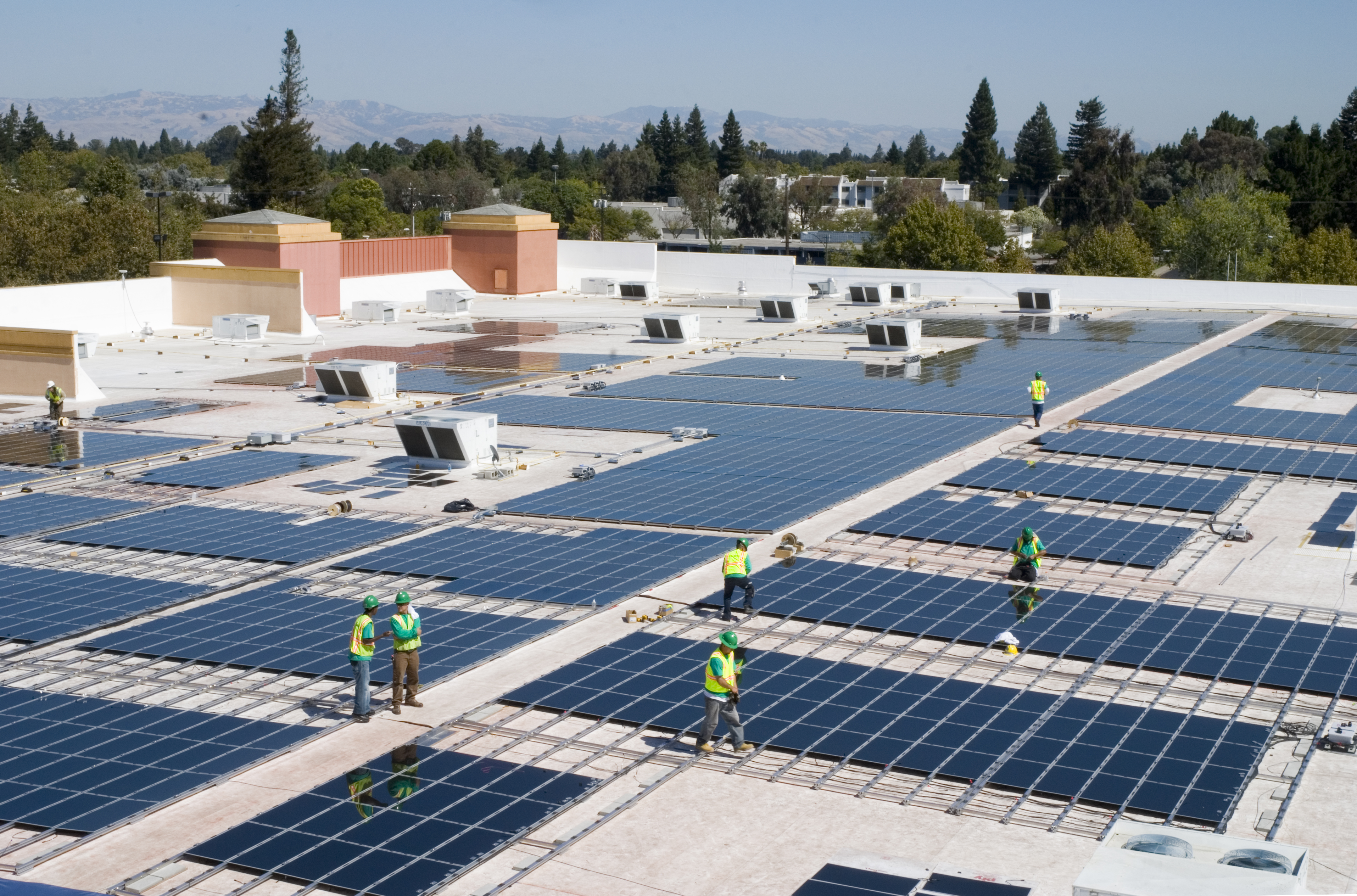 Thin-film is the cheapest type of PV installation per watt, but also less efficient, making them a cost-effective choice for durable installations covering a large area. Wal-Mart’s installations will supply 20%–30% of each location’s energy use, totaling an estimated production of 22.5 million kilowatt hours per year. Wal-Mart will also use more conventional PV technologies where thin-film may not be appropriate. To facilitate this process Wal-Mart hired SolarCity—which will design, install, own, and operate the solar systems. SolarCity is one of the largest solar installation companies in the country offering full service solar installation and management packages. By the close of 2010 Wal-Mart plans to incorporate solar PV systems in stores across eight countries.


Add new comment
To post a comment, you need to register for a BuildingGreen Basic membership (free) or login to your existing profile.