Rechargeable Batteries To Be Diverted from New York Landfills

News Brief

Rechargeable Batteries To Be Diverted from New York Landfills

In an attempt to reduce the number of toxic rechargeable batteries that end up in landfills—3.8 million pounds a year in New York State—the State now requires battery manufacturers, along with retailers, to create free and accessible recycling programs for all batteries sold and disposed of in the state. The new law includes laptop, cell phone, camera, and other electronic rechargeable batteries; it excludes vehicle batteries and non-rechargeable batteries. With oversight from the Department of Environmental Conservation, rechargeable battery manufacturers are now responsible for financing and advertising battery collection and recycling, and reporting program progress. Retailers are required to inform consumers about the program and accept used rechargeable batteries from individuals during business hours. Manufacturers must submit a collection and recycling plan to the State by March 2011, and retailers must begin accepting batteries by July 2011. The program will expand on the existing voluntary Call2Recycle program run by the Rechargeable Battery Recycling Corporation, which takes back batteries across New York State.

Published December 31, 1969

(2011, January 27). Rechargeable Batteries To Be Diverted from New York Landfills. Retrieved from https://www.buildinggreen.com/departments/newsbrief

Add new comment

To post a comment, you need to register for a BuildingGreen Basic membership (free) or login to your existing profile.

Green Building a High Priority for Office Tenants, Says Study

News Brief

Green Building a High Priority for Office Tenants, Says Study

According to a new survey, tenants are strongly influenced by green building initiatives when renting commercial real estate property.The

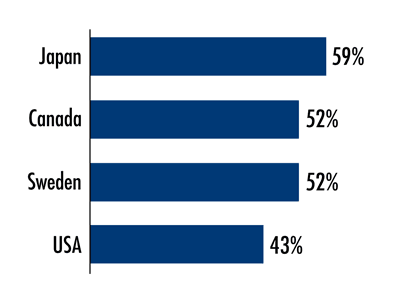
GE Capital Real Estate Survey, conducted during 2010, included more than 2,220 participants—office tenants from the U.S., Canada, France, Germany, Sweden, the U.K., Spain, and Japan. Fifty percent of all participants ranked green building initiatives as a high priority, with higher numbers found in Japan, Canada, and Sweden. The U.S. had the lowest percentage, with 43%. Among the green building priorities included in the survey, the top priority for tenants in most countries was energy efficiency, with waste reduction programs and indoor air quality coming next. In Sweden, the UK, and Spain, green rating certifications are considered a valuable factor, with scores averaging 48%—while only 40% of U.S. tenants ranked certifications as valuable. The survey concludes that commercial office tenants increasingly prefer spaces with sustainability initiatives. See also “Non-Green Office Buildings Sacrifice 8% in Rent Revenues,”

EBN, Nov. 2010. For more information, visit www.gecapitalrealestate.com.

Published December 31, 1969

(2011, January 27). Green Building a High Priority for Office Tenants, Says Study. Retrieved from https://www.buildinggreen.com/departments/newsbrief

Add new comment

To post a comment, you need to register for a BuildingGreen Basic membership (free) or login to your existing profile.

Federal Facilities Required to Have Green Building Manager Training

News Brief

Federal Facilities Required to Have Green Building Manager Training

In December, President Obama signed into law legislation requiring federal building managers and contractors to participate in green building training so they can better manage sustainable government buildings. Under the 2010 Federal Buildings Personnel Training Act, the General Services Administration has 18 months to choose or develop certification courses about building performance measures— including energy management, sustainability, water efficiency, and electrical safety—and hire a contractor to teach the courses. According to the bill, private industry, trade groups, and other stakeholders will inform standards development. The bill, which did not include funding, aims to improve energy savings in federal buildings, thus providing taxpayer savings.

Published December 31, 1969

(2011, January 27). Federal Facilities Required to Have Green Building Manager Training. Retrieved from https://www.buildinggreen.com/departments/newsbrief

Add new comment

To post a comment, you need to register for a BuildingGreen Basic membership (free) or login to your existing profile.

Congress Extends Renewable Energy Grants

News Brief

Congress Extends Renewable Energy Grants

The fight in the December 2010 lame-duck Congress over a massive tax bill got a lot of press coverage, almost all of it focused on tax cuts passed under President George W. Bush. But the bill, now signed into law, also included the Treasury Grant or “1603” program, which provides subsidies for building large and small wind projects, biomass facilities, solar projects, and other energy-producing property. The program effectively extends tax credits for these projects that had been in place since the Energy Act of 2007; instead of credits, however, the new bill provides grants. Aid in this form may be more effective for companies whose cash flow, affected by the recession, will not be helped by tax credits. More information on the 1603 program is available at www.treasury.gov.

Published December 31, 1969

(2011, January 27). Congress Extends Renewable Energy Grants. Retrieved from https://www.buildinggreen.com/departments/newsbrief

Add new comment

To post a comment, you need to register for a BuildingGreen Basic membership (free) or login to your existing profile.

PCBs in Light Fixtures Still Contaminating Schools

News Brief

PCBs in Light Fixtures Still Contaminating Schools

Many schools economize by continuing to use older fluorescent light fixtures, but the U.S. Environmental Protection Agency (EPA) says it’s time to replace them. EPA’s new guidance for schools focuses on pre-1979 fluorescent light fixtures containing hazardous polychlorinated biphenyls (PCBs), which leak hazardous oil and contaminate air when old ballasts begin to leak. These fixtures also create a fire hazard, since PCB-containing ballasts are there to prevent thermal overload. The ballasts have a useful life of 10 to 15 years; beyond that period, older fluorescent fixtures are much more likely to overheat and catch fire while in use. The guidance recommends a complete survey of fluorescent light fixtures in schools, replacement of any fixtures containing PCBs, and safe disposal of fixtures by EPA-approved companies listed on its website. Schools built before 1979 are at the greatest risk, but PCBs may be present even in fixtures manufactured between 1979 and 1998—and in some cases, older fixtures may have been salvaged and used in newer buildings as well. According to EPA, replacing old fixtures with new, efficient ones not only removes a dangerous toxic substance from children’s learning spaces but also pays for itself through energy savings, usually within a seven-year period. More information is available at www.epa.gov/epawaste/hazard/tsd/pcbs/index.htm.


Published December 31, 1969

(2011, January 27). PCBs in Light Fixtures Still Contaminating Schools. Retrieved from https://www.buildinggreen.com/departments/newsbrief

Add new comment

To post a comment, you need to register for a BuildingGreen Basic membership (free) or login to your existing profile.

Light Pollution May Worsen Air Pollution

News Brief

Light Pollution May Worsen Air Pollution

A recent study presented at the American Geophysical Union found that bright city lights exacerbate air pollution by interfering with nightly cleansing chemical reactions. An important chemical, nitrate radical (NO
3 photolysis)—a form of nitrogen oxide only present in darkness—normally breaks down damaging chemicals that create smog. Recent measurements taken over Los Angeles have shown that, like sunlight, city lights suppress the nitrate radical—reducing night cleansing by up to 7% and increasing the following day’s ozone pollution precursor chemicals by up to 5%. (More research is needed to quantify the relative amount of ozone found the next day.) The darker sky over Boulder, Colorado, was used as a control in the research. Researchers found that the nitrate radical is less affected by red light, but unfortunately, red light is not a desirable color for nighttime city lights. The negative effects from light pollution are found above ground level, so light pollution reduction measures, including broader use of “dark sky” lighting that is aimed and shielded downward, should mitigate the effect. The study, “Nighttime photochemistry: nitrate radical destruction by anthropogenic light sources,” is available at adsabs.harvard.edu/.

Published December 31, 1969

(2011, January 27). Light Pollution May Worsen Air Pollution. Retrieved from https://www.buildinggreen.com/departments/newsbrief

Add new comment

To post a comment, you need to register for a BuildingGreen Basic membership (free) or login to your existing profile.

Study Shows Walkable Communities Are Healthier, Happier

News Brief

Study Shows Walkable Communities Are Healthier, Happier

The more activities that are accessible on foot, the happier a community’s residents are, according to the findings from a collection of 700 interviews from 20 New Hampshire neighborhoods. The study, recently published in the journal

Applied Research in Quality of Life, suggests that people living in walkable neighborhoods are often more involved in and trusting of their communities, thus experiencing a higher quality of life. The study found higher “social capital”—a measure of networks, connections, and involvement in a community—in prominently walkable communities. Residents of walkable neighborhoods reported better health—likely due to increased daily walking—and happiness than those in less-walkable areas. Walkable neighborhoods reduce isolation, which has mental health and social benefits, and reliance on fuel-based transportation. The study abstract can be viewed at www.springerlink.com.

Published December 31, 1969

(2011, January 27). Study Shows Walkable Communities Are Healthier, Happier. Retrieved from https://www.buildinggreen.com/departments/newsbrief

Add new comment

To post a comment, you need to register for a BuildingGreen Basic membership (free) or login to your existing profile.

Coal and Wood Combustion Smoke Linked to Lung Cancer

News Brief

Coal and Wood Combustion Smoke Linked to Lung Cancer

By Emily CatacchioA new study published in the journal

Environmental Health Perspectives links poor indoor air quality due to solid-fuel use to increased lung cancer rates. The study was sparked by the International Agency for Research on Cancer’s recent classification of indoor coal smoke emissions as a human carcinogen and wood smoke as a “probable” carcinogen. The study analyzed seven fuel-use epidemiological studies included in the International Lung Cancer Consortium; the studies included a total of 11,640 people from North America, Asia, and Europe. The analysis confirmed an increased risk of lung cancer among solid-fuel users versus non-solid-fuel users across all studies, and suggests that wood smoke should be classified as a carcinogen along with coal smoke. A “lack of epidemiological evidence”—partially rectified through this study—has until now placed wood smoke at the “probable carcinogen” level. The type of stove, quality of ventilation, and other factors influence lung cancer risk associated with solid-fuel use but were not a part of this study. Lung cancer is the most prevalent cancer worldwide, with nearly 1.4 million cases a year. For more information, see ehp03.niehs.nih.gov/home.action.

Published December 31, 1969

(2011, January 27). Coal and Wood Combustion Smoke Linked to Lung Cancer. Retrieved from https://www.buildinggreen.com/departments/newsbrief

Add new comment

To post a comment, you need to register for a BuildingGreen Basic membership (free) or login to your existing profile.

Study Shows Nanoparticles Biomagnifying in Food Chain

News Brief

Study Shows Nanoparticles Biomagnifying in Food Chain

A recent University of California at Santa Barbara study, published in

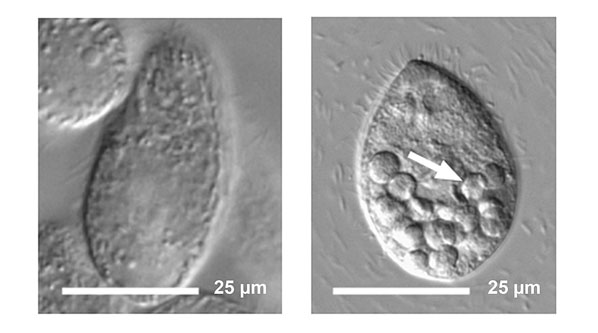
Nature Nanotechnology, found that nanoparticles introduced into a microbial food chain can biomagnify. The latest research, sparked by a previous study showing that nanoparticles can accumulate in certain bacteria, demonstrates how predators of those bacteria are affected by accumulated nanoparticles. Predators in the study suffered toxic effects, including inhibited digestion, from nanoparticle accumulation. The study, partially funded by a U.S. Environmental Protection Agency program supporting graduate research, is the first observation of biomagnification of nanoparticles in an aquatic environment with microscopic organisms—the base of the food chain. Researchers found nanoparticles successfully moved up the microbial food chain with little degradation and increased concentration—indicating that the nanoparticles were biomagnified. Though more research is needed, nanoparticles could potentially travel further up the food chain—particularly in aquatic environments—where they may pose environmental consequences. The study is available at www.nature.com.

Published December 31, 1969

(2011, January 27). Study Shows Nanoparticles Biomagnifying in Food Chain. Retrieved from https://www.buildinggreen.com/departments/newsbrief

Add new comment

To post a comment, you need to register for a BuildingGreen Basic membership (free) or login to your existing profile.

LEDs Exceed California Hazardous Waste Standards

News Brief

LEDs Exceed California Hazardous Waste Standards

After a recent study finding that light-emitting diodes (LEDs) exceed California’s hazardous waste standards, researchers at the University of California’s Davis and Irvine campuses conclude that LEDs should be classified as hazardous waste. The leachability test, whose results were published in

Environmental Science and Technology, looked at 5mm pin-type LEDs, including nine different colors and intensities. Using standard test procedures, the LEDs were pulverized and mixed with replicated landfill acids to determine the type and quantity of metals likely to leach out in a landfill. Only one LED failed by federal standards—low-intensity red LEDs leached 186 mg/L of lead; the limit is 5 mg/L. Eight LEDs failed by California standards, which account for not just lead but also copper, nickel, and silver. Only low-intensity yellow LEDs passed both federal and California standards. Although the research doesn’t point to hazards while the products are in use, the researchers suggest that LEDs be redesigned without toxic materials, and recycling and recovery programs be instituted to keep LEDs out of landfills. For more information, see pubs.acs.org/.

Published December 31, 1969

(2011, January 27). LEDs Exceed California Hazardous Waste Standards. Retrieved from https://www.buildinggreen.com/departments/newsbrief

Add new comment

To post a comment, you need to register for a BuildingGreen Basic membership (free) or login to your existing profile.