New Cancer Concerns with Titanium Dioxide Pigment

News Brief

New Cancer Concerns with Titanium Dioxide Pigment

Current Intelligence Bulletin from the Centers for Disease Control and Prevention’s National Institute for Occupational Safety and Health (NIOSH), titled “Occupational Exposure to Titanium Dioxide,” highlights the new health concerns for titanium dioxide (TiO2). NIOSH now recommends reducing exposure to as little as possible, below the previously recommended exposure limits (of 2.4 mg/m3 for fine particles and 0.3 mg/m3 for ultrafine and nanoscale, as time-weighted average [TWA] concentrations for up to 10 hours per day during a 40-hour work week). NIOSH explains that the carcinogen effects are “primarily related to particle size and surface area,” not to TiO2 itself. Ultrafine particles penetrate further into the lungs and have been linked to persistent inflammation, tissue damage, fibrosis, and lung cancer in rats. The bulletin can be downloaded at www.cdc.gov/niosh/docs/2011-160/.


Published December 31, 1969

(2011, June 1). New Cancer Concerns with Titanium Dioxide Pigment. Retrieved from https://www.buildinggreen.com/departments/newsbrief

Add new comment

To post a comment, you need to register for a BuildingGreen Basic membership (free) or login to your existing profile.

Research Finds Multi-Species, Native Lawns Require Less Maintenance

News Brief

Research Finds Multi-Species, Native Lawns Require Less Maintenance

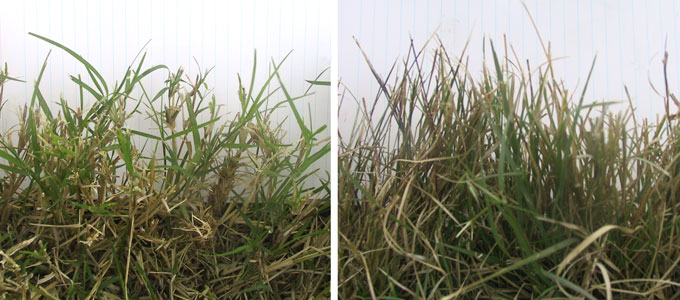
Researchers at the University of Texas–Austin have found that multi-species lawns of native grasses require fewer inputs—such as watering and mowing—than traditional monocultures to maintain a lush, weed-resistant lawn. Researchers, led by Mark Simmons, Ph.D., director of the center’s Ecosystem Design Group, compared one native and one non-native monoculture, and one native and one non-native polyculture using various irrigation, traffic, and mowing regimes. Native lawns needed less mowing and had 30% higher leaf density in spring and 20% in summer (when all grass species thin). Native varieties kept weeds out better than non-native, with 50% lower weed density. Researchers didn’t find a difference when the species were subjected to traffic and irrigation variations. The study, published in the Ecological Engineering journal, focused on turf grasses commonly used in the south; more research is needed to identify regionally appropriate grasses.


Published December 31, 1969

(2011, June 1). Research Finds Multi-Species, Native Lawns Require Less Maintenance. Retrieved from https://www.buildinggreen.com/departments/newsbrief

Add new comment

To post a comment, you need to register for a BuildingGreen Basic membership (free) or login to your existing profile.

AIA Issues Guidance on Contracts for Green Projects

News Brief

AIA Issues Guidance on Contracts for Green Projects

By Paula MeltonThe American Institute of Architects (AIA) has released a free

Guide for Sustainable Projects to help builders, designers, and building owners understand and customize green building contracts. The guide, touted as a “roadmap for working on sustainable projects,” is intended for users of the AIA Contract Documents program who may need to amend or better understand contractual language relating to sustainability. It also covers current trends that have changed the legal landscape for contractors and design teams, such as design-build, construction management, and integrated project delivery. The guide also includes in-depth treatment of a variety of issues that may affect contracts for sustainable building projects, including certification systems, ASHRAE standards, and public works projects and other government contracts, so even if you don’t use AIA Contract Documents, you may want to peruse this guide for tips on minimizing risk. The

Guide for Sustainable Projects is available at www.aia.org/sustainableprojectsguide

Published December 31, 1969

(2011, June 1). AIA Issues Guidance on Contracts for Green Projects. Retrieved from https://www.buildinggreen.com/departments/newsbrief

Add new comment

To post a comment, you need to register for a BuildingGreen Basic membership (free) or login to your existing profile.

Detention Basin Used for Solar Power Space in N.J.

News Brief

Detention Basin Used for Solar Power Space in N.J.

By Emily CatacchioStormwater detention basins reduce stormwater runoff, but they also take up a lot of space. At the Peddie boarding high school in East Windsor Township, New Jersey, ground-mounted solar collectors are being installed in one such basin to make more productive use of it. Peddie previously installed a rooftop photovoltaic (PV) system, which will contribute to the one million kilowatt hours per year the rooftop and basin systems are expected to produce; more than 20% of the school’s energy needs will be met with these systems. The installation was designed to avoid interference with water collection. Peddie opted for a power purchase agreement whereby a renewable energy development company purchased the solar panels and will sell the electricity to the school. The project is expected to be completed in June 2011.

Published December 31, 1969

(2011, June 1). Detention Basin Used for Solar Power Space in N.J.. Retrieved from https://www.buildinggreen.com/departments/newsbrief

Add new comment

To post a comment, you need to register for a BuildingGreen Basic membership (free) or login to your existing profile.

First CHPS-Approved Modular Classroom

News Brief

First CHPS-Approved Modular Classroom

Salinas, California is now home to the first modular classrooms verified by the Collaborative for High Performance Schools (CHPS). Modular classrooms installed in August 2010 at Bolsa Knolls Middle School received CHPS verification for New School Construction in February 2011—only the second California school to achieve CHPS verification. The 5,760 ft2, six-classroom facility was designed and installed in about 60 days using Gen7 modular systems, which are made with high recycled content, low-VOC finishes, and recyclable materials. Post-occupancy, productivity has improved, and absenteeism for both teachers and students has been reduced, according to a Gen7 press release. The classrooms are expected to be 30% more efficient than California Title 24 energy code requirements, thanks to efficient mechanical systems, climate control, acoustic design, and daylight harvesting. CHPS requires third-party verification of its stringent health, comfort, and environmental sustainability requirements. Another California school district, Santa Rita Union, will install similar classrooms in June 2011. For more information, visit www.gen7schools.com.


Published December 31, 1969

(2011, June 1). First CHPS-Approved Modular Classroom. Retrieved from https://www.buildinggreen.com/departments/newsbrief


Add new comment

To post a comment, you need to register for a BuildingGreen Basic membership (free) or login to your existing profile.

Recycled Content in Carpet Pads Brings Hazardous Chemicals

News Brief

Recycled Content in Carpet Pads Brings Hazardous Chemicals

By Paula MeltonChoosing foam carpet pads with recycled content? Sounds good, unless some of that content includes a flame retardant no longer manufactured due to its toxicity and environmental persistence. A recent study by the Stockholm Convention on Persistent Organic Pollutants found concerning levels of pentaBDE and octaBDE (which can affect neurological development and the immune system, respectively) in foam carpet pads with recycled content. Researchers found some amount of one or both chemicals in 88% of pads tested in the U.S., Canada, and Hungary; multi-colored pads were most likely to contain the toxic substances. The flame retardants are released in dust close to the floor, making infants and toddlers particularly vulnerable to exposure, according to a press release about the study. The full report is available at ipen.org.

Published December 31, 1969

(2011, June 1). Recycled Content in Carpet Pads Brings Hazardous Chemicals. Retrieved from https://www.buildinggreen.com/departments/newsbrief
Add new comment

To post a comment, you need to register for a BuildingGreen Basic membership (free) or login to your existing profile.

USGBC Opens Multifamily Design Competition

News Brief

USGBC Opens Multifamily Design Competition

by Paula MeltonThe U.S. Green Building Council (USGBC) is seeking entries through July 1, 2011 for a Multifamily Midrise Design Competition. The contest centers on a historic New Orleans school building that was damaged in a 2008 fire. Entries must follow the LEED for Homes rating system for multifamily midrise buildings, be designed with Autodesk software, and incorporate:

• a gut renovation of the historic school building

• an addition to the building

• 50% residential space

• spaces for commercial use

• community resources and space for provision of community services

• an education plan for building occupants regarding energy and water use

• the ability to achieve LEED Platinum certification

The winner of the competition will be announced at the 2011 Greenbuild conference in Toronto.

For more information

U.S. Green Building Council

www.usgbc.org


Published December 31, 1969

(2011, May 18). USGBC Opens Multifamily Design Competition. Retrieved from https://www.buildinggreen.com/departments/newsbrief

Add new comment

To post a comment, you need to register for a BuildingGreen Basic membership (free) or login to your existing profile.

Battle of the Buildings: Commercial Buildings Compete

News Brief

Battle of the Buildings: Commercial Buildings Compete

function pop(URL){

win = window.open(URL, "win", "toolbar=no,location=no,directories=no,status=no,menubar=no,scrollbars=yes,resizable=yes,width=740,height=500");

win.focus();

}

By Emily CatacchioOn May 2, 2011, the U.S. Environmental Protection Agency (EPA) launched the second Energy Star National Building Competition, titled the “Battle of the Buildings,” for 2011. Across the U.S., 245 buildings will compete to achieve the greatest reductions in energy use and greenhouse gas emissions. Teams from each building will track monthly energy consumption using EPA’s Energy Star Portfolio Manager—an online energy tracking tool (see “Measuring Energy Use in Buildings: Do Our Metrics Really Add Up?” EBN May 2011). Twenty-six building types are represented, including retail, school, hotel, and museum locations; some buildings are more than 100 years old. Twitter and Facebook keep the competitors connected and allow them to share strategies. Competitor profiles and energy saving tips for consumers are available on the competition website. Finalists will be selected in July and required to submit Statements of Energy Performance (SEPs) on utility data. The winner—the building with the largest reduction, by percentage, of weather-normalized EUI (energy use intensity)—will be announced in November.

Published December 31, 1969

(2011, May 11). Battle of the Buildings: Commercial Buildings Compete. Retrieved from https://www.buildinggreen.com/departments/newsbrief

Add new comment

To post a comment, you need to register for a BuildingGreen Basic membership (free) or login to your existing profile.

Heavy Metals Help Superbugs Hatch in Sewage

News Brief

Heavy Metals Help Superbugs Hatch in Sewage

By Paula MeltonCombining heavy metals and excreted antibiotics in wastewater is a formula for breeding antibiotic-resistant “superbugs,” according to a study presented to the American Chemical Society. The scientists found that copper alone, without any antibiotics, increases resistance to ciprofloxacin in bacteria, while zinc amplifies resistance to tetracycline. Tetracycline with no metals caused 44% of bacteria to become resistant, and tetracycline plus zinc caused 68% of bacteria to become resistant. Heavy metals are prevalent in industrial wastewater, and domestic wastewater tends to contain high levels of antibiotics: mixing the two in treatment plants is a common but risky practice, according to the researchers. Previous studies have established that copper could increase antibiotic resistance in microbes living in soil, according to Chemical & Engineering News, but scientists have yet to determine whether the effects of heavy metals are passed on genetically to subsequent generations of microbes.

Published December 31, 1969

(2011, April 29). Heavy Metals Help Superbugs Hatch in Sewage. Retrieved from https://www.buildinggreen.com/departments/newsbrief

Add new comment

To post a comment, you need to register for a BuildingGreen Basic membership (free) or login to your existing profile.

Home Depot Switches 40 Stores to FSC Lumber

News Brief

Home Depot Switches 40 Stores to FSC Lumber

By Paula MeltonHome Depot stores in the San Francisco Bay Area will now stock framing lumber only if it is certified according to Forest Stewardship Council (FSC) standards. Regional FSC-certified suppliers Mendocino Redwood Company and Humboldt Redwood Company are providing plywood, dimensional lumber, fencing, and other Douglas fir and redwood products, which Home Depot says will be sold at no extra cost. FSC certification is region-specific and requires not only environmentally responsible forestry but also adherence to social and economic standards (see "Forest Products Certification: How It Works," EBN May 2011). In addition to sustainable, low-impact harvesting, the two Home Depot suppliers say they actively manage habitat to support dwindling species like Coho salmon and spotted owls.

Published December 31, 1969

(2011, April 29). Home Depot Switches 40 Stores to FSC Lumber. Retrieved from https://www.buildinggreen.com/departments/newsbrief

Add new comment

To post a comment, you need to register for a BuildingGreen Basic membership (free) or login to your existing profile.