New Energy Star Standards for Dishwashers and Furnaces

News Brief

New Energy Star Standards for Dishwashers and Furnaces

By Evan DickThe U.S. Environmental Protection Agency (EPA) has announced revisions to Energy Star requirements for residential dishwashers and furnaces.

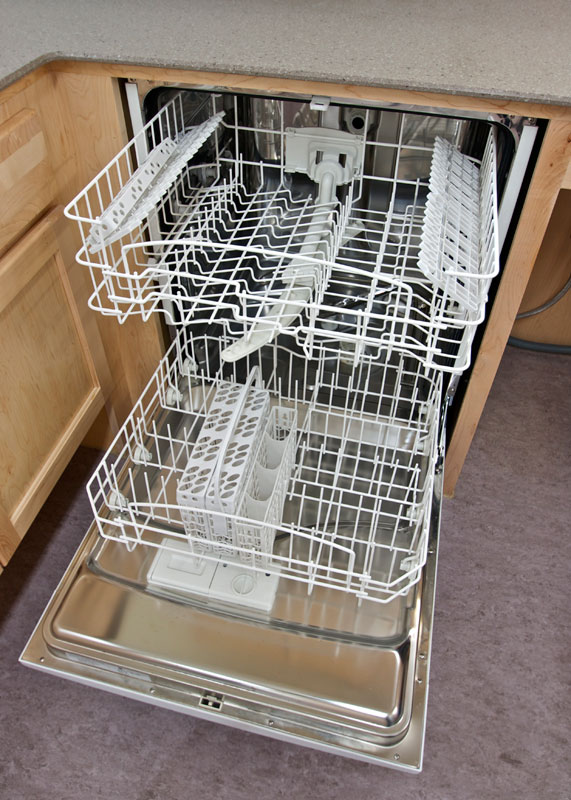
Effective January 20, 2012, Energy Star dishwashers will be 8% more efficient than previous Energy Star models and 10%–30% more efficient than conventional models. Standard Energy Star dishwashers will consume no more than 4.25 gallons per cycle and 295 kWh per year, down from 5.8 gallons per cycle and 324 kWh per year for 2009–2011 Energy Star models.

For furnaces, the rules become effective February 1, 2012 and will be regional for the first time, mirroring the U.S. Department of Energy’s new minimum HVAC efficiency standards announced in July 2011 (see “New HVAC Standards Will Be Regional,”

EBN July 2011).

Energy Star furnaces must now be 12% more efficient than the baseline in the South and 16% more efficient in the North. Energy Star furnaces in the South will have a special label that lists the states in which the certification is valid.

In addition to the introduction of its Most Efficient label (see “Energy Star to Label ‘Most Efficient’ Appliances,”

EBN Aug. 2011), EPA has promised revisions to 20 Energy Star product requirements in 2011.

Published December 31, 1969

(2011, August 30). New Energy Star Standards for Dishwashers and Furnaces. Retrieved from https://www.buildinggreen.com/departments/newsbrief

Add new comment

To post a comment, you need to register for a BuildingGreen Basic membership (free) or login to your existing profile.

Judge Dismisses Gifford Case Against USGBC, LEED

News Brief

Judge Dismisses Gifford Case Against USGBC, LEED

Published December 31, 1969

(2011, August 30). Judge Dismisses Gifford Case Against USGBC, LEED. Retrieved from https://www.buildinggreen.com/departments/newsbrief

Add new comment

To post a comment, you need to register for a BuildingGreen Basic membership (free) or login to your existing profile.

International Passive House Institute Drops U.S. Affiliate

News Brief

International Passive House Institute Drops U.S. Affiliate

Published December 31, 1969

(2011, August 30). International Passive House Institute Drops U.S. Affiliate. Retrieved from https://www.buildinggreen.com/departments/newsbrief

Add new comment

To post a comment, you need to register for a BuildingGreen Basic membership (free) or login to your existing profile.

DOE's Asset Rating Program to Complement Portfolio Manager

News Brief

DOE's Asset Rating Program to Complement Portfolio Manager

We have national efficiency ratings for cars, refrigerators, furnaces, and many other products—but despite the huge contribution of the building sector to energy use and global warming, we have no comparable rating system for entire buildings. The U.S. Department of Energy (DOE) is trying to change that with a program it will start piloting in September 2011.

DOE released a proposal and request for information for what it’s calling the Commercial Building Asset Rating Program on August 8 and will accept comments through September 22. Details are still up for discussion, but the request for information proposes the following:

• The rating will measure the “as-built” efficiency of commercial buildings (not their actual energy use), like the MPG rating for cars. An online tool will allow building owners and managers to receive a score based on information they enter about envelope, mechanical and electrical systems, and other major energy-using equipment in the building. Actual energy use can already be measured and benchmarked through Energy Star Portfolio Manager, which compares similar buildings’ annual use and assigns a percentile score.

• The asset rating will interface with Energy Star Portfolio Manager, so building managers can benchmark their actual energy use against the building’s potential energy efficiency.

• The program will help building operators identify cost-effective upgrades to improve efficiency. Though it will not be a substitute for a comprehensive energy audit, DOE says it will be “a quick, easy, affordable tool based on a national standard.”

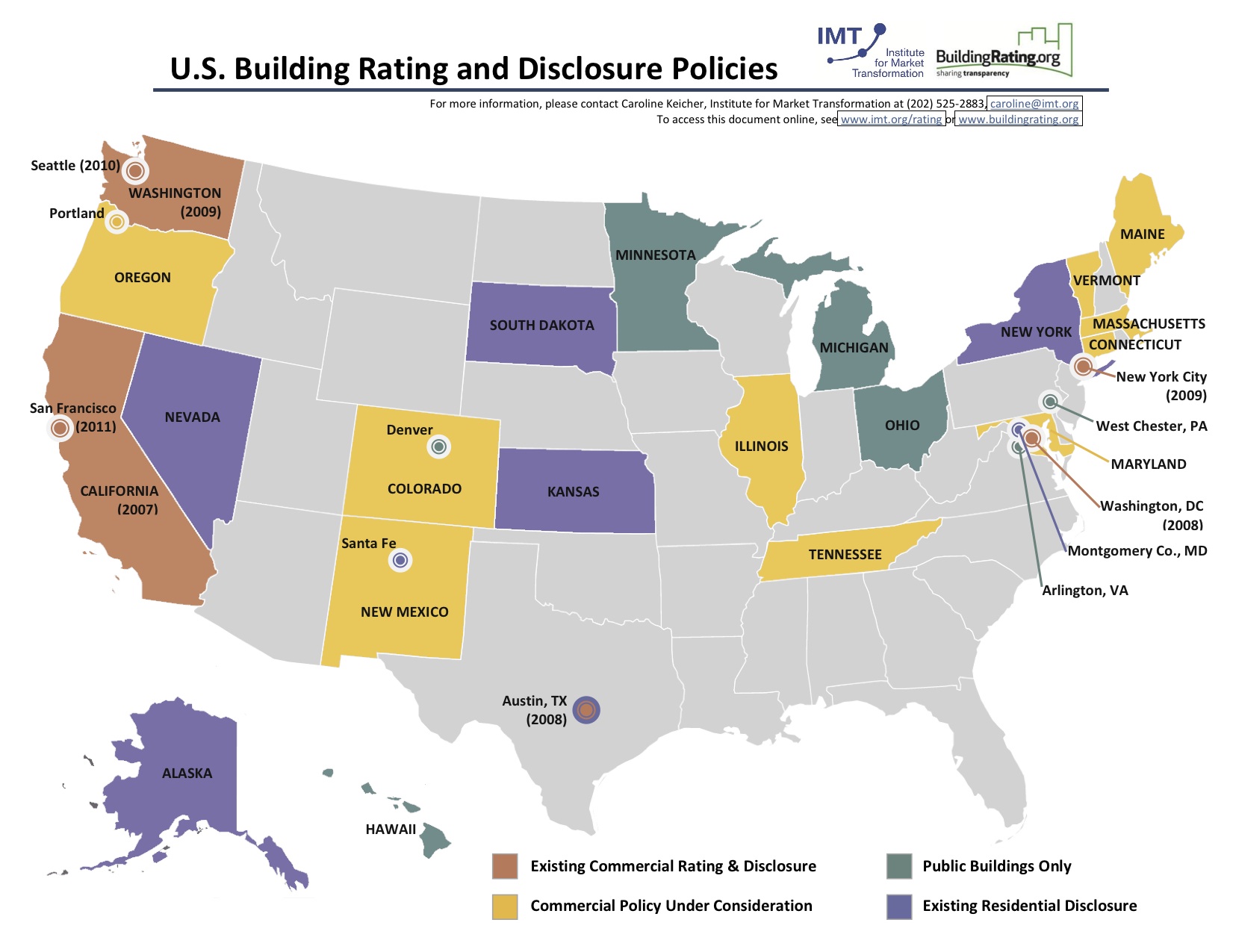
• Like Portfolio Manager, the program will be voluntary. However, with building rating and disclosure policies becoming more common, building operations managers anticipate that local governments will use the program as part of their policies—just as many currently use Portfolio Manager.

• Third-party certification of the asset rating will be optional.

• DOE is considering various ways of reporting asset ratings to potential tenants and other building users, everything from a kBtu/ft2 metric that mirrors MPG to a star-based scale more closely resembling a restaurant or movie rating.

According to Andrew Burr, director of the building rating program at the nonprofit Institute for Market Transformation, some building owners dislike the idea of having their buildings rated exclusively based on their tenants’ behavior. “DOE’s logic in doing this is good,” said Burr, “where you would have an operational rating based on the actual utility bills and you would have an assessment of the structure that’s independent of occupancy and operation.” He added that both are important for future tenants or building owners. “The whole is greater than the sum of its parts,” he said, predicting that full integration with Portfolio Manager would be crucial to the program’s success.

For more information:

Institute for Market TransformationDownload the DOE Request for Information (PDF); the RFI begins in the bottom right corner of page one.


Published December 31, 1969

(2011, August 25). DOE's Asset Rating Program to Complement Portfolio Manager. Retrieved from https://www.buildinggreen.com/departments/newsbrief

Add new comment

To post a comment, you need to register for a BuildingGreen Basic membership (free) or login to your existing profile.

Evergreen Solar Files for Bankruptcy

News Brief

Evergreen Solar Files for Bankruptcy

In a major blow to U.S. solar innovation, Evergreen Solar, creator of low-cost ribbon technology for photovoltaic (PV) cells, has declared Chapter 11 bankruptcy.

Evergreen was the only company using the proprietary ribbon technology, which involves drawing a wire through molten silicon to pull out polycrystalline ribbons; the cells have approximately 13% conversion efficiency—comparable to the efficiency of other polycrystalline technologies but with far less silicon. (See “Crystalline Technology Still Dominates PV Landscape,” EBN July 2011.)

The price of silicon has dropped dramatically since the ribbon technology was created, reducing Evergreen’s advantage. Demand for solar also crashed after the global economic collapse, glutting the market with cheap PV from overseas manufacturers and further damaging Evergreen’s chances. The company, which closed its large manufacturing plant in Devens, Massachusetts in January 2011 and moved its operations to China, will lay off 65 workers from a plant in Michigan.

According to company president Michael El-Hillow, manufacturing and research will continue as the company restructures and attempts to sell its assets.

For more information

Reuters

Reuters.com


Published December 31, 1969

(2011, August 16). Evergreen Solar Files for Bankruptcy. Retrieved from https://www.buildinggreen.com/departments/newsbrief

Add new comment

To post a comment, you need to register for a BuildingGreen Basic membership (free) or login to your existing profile.

Harvard First University to Boast 50 LEED Certifications

News Brief

Harvard First University to Boast 50 LEED Certifications

Graced with four centuries’ worth of historic buildings, the Harvard University campus in Cambridge, Massachusetts may seem an unlikely place to look for cutting-edge sustainable design. In addition to its historic charm, though, Harvard has the highest number of LEED-certified buildings of any college or university—53 and counting, according to a recent announcement from the U.S. Green Building Council (USGBC).

Being in an urban area without room to sprawl “motivates the university to renovate rather than build new,” says Andrea Trimble, manager of green building services at Harvard. She told EBN that just 16 of the 53 projects are certified under LEED for New Construction (LEED-NC)—and that many of those were gut renovations rather than new buildings. More than half are certified under LEED for Commercial Interiors, although only two are certified under LEED for Existing Buildings: Operations & Maintenance (LEED-EBOM), the rating system that tracks ongoing sustainability efforts.

Trimble says the university’s long-term commitment to LEED has far-reaching advantages as an educational tool, both on and off campus. The near-constant need to document materials, products, processes, and lessons learned has not only helped Harvard streamline its green building process over the years, she said, but has also led to the creation of an online brain trust, Green.Harvard.edu, that includes case studies and a free life-cycle costing tool. (The site is currently undergoing renovations of its own, but all these features are available.)

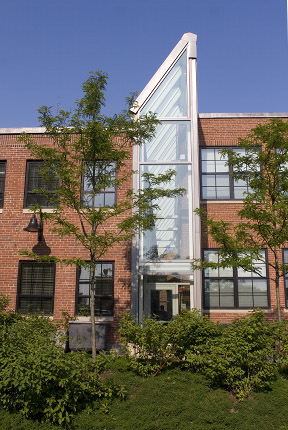
Ten years of green building lessons from Harvard should prove a valuable resource—particularly for anyone interested in greening historic structures and other existing buildings. “One of the primary challenges with historic buildings is the envelope,” Trimble said, explaining that window modifications are particularly difficult. This can sometimes be an opportunity, though: a 2006 renovation of an 1888 factory building, certified Platinum under LEED-NC, returned operable windows to the structure. That building also received added insulation after comprehensive hygrothermal modeling to assess the moisture implications, said Trimble. Some historic masonry buildings cannot be insulated due to moisture issues that could compromise the structure, making Harvard’s requirement of LEED Gold (with its associated energy-efficiency requirements) for all whole-building projects that much more of a challenge.

Despite such difficulties, Harvard, like other colleges and universities, has an advantage that many organizations with lofty sustainability goals probably envy: an engaged community of building occupants who are easy to communicate with and responsive to sustainability goals. The university’s green building standard requires that all stakeholders, including students, participate in design charrettes before a project begins and that all building managers, maintenance staff, and occupants receive training on how to use the building’s green features.

According to a press release, Harvard’s carbon emissions from buildings have dropped 20% since 2006, due in part to building efficiency and the engagement of faculty, staff, and students in activities designed to change behavior.

For more information

Harvard University

www.green.harvard.edu

 

Published December 31, 1969

(2011, August 11). Harvard First University to Boast 50 LEED Certifications. Retrieved from https://www.buildinggreen.com/departments/newsbrief

Add new comment

To post a comment, you need to register for a BuildingGreen Basic membership (free) or login to your existing profile.

Energy Star to Label 'Most Efficient' Appliances

News Brief

Energy Star to Label 'Most Efficient' Appliances

A new pilot program that adds a “Most Efficient” designation to Energy Star labels is expected to help raise the bar more quickly for appliance and equipment efficiency. The program, jointly announced by the U.S. Environmental Protection Agency (EPA) and the U.S. Department of Energy (DOE) in July 2011, identifies top energy-efficiency performers in seven categories: clothes washers, air-source heat pumps, central air conditioners, furnaces, geothermal heat pumps, refrigerator-freezers, and televisions.

Under the Most Efficient program, manufacturers that are in good standing with Energy Star can submit Energy Star-approved products to be considered for the new designation; they will be judged against different criteria in each product category. A refrigerator, for example, must be 30% more efficient than the minimum federal standard to qualify as Most Efficient, rather than the 20% required for an Energy Star rating. According to Kathleen Hogan, deputy assistant secretary for energy efficiency, “About the top 5% of products in each category are qualifying for Most Efficient.”

Because the baseline for selecting Most Efficient products is the pool of Energy Star products, the designation gets tougher to meet as manufacturers introduce more efficient models. Susan Wickwire, acting director of the Climate Protection Partnerships Division, said, “Part of the value of the Most Efficient designation is to bring more efficient products to the market; then you can up the performance requirements.” In a press release, Energy Secretary Steven Chu reiterated this point: “The new Most Efficient designation is the next step toward encouraging new, more energy-efficient products to enter the market, so that consumers will have even more choices when it comes to high-performance, high-efficiency products that will save them energy and money.”

How often “Most Efficient” performance requirements will be increased, and under what mechanism, was not announced, and is worth watching: Energy Star has been notorious for not updating its standards frequently enough at times, leading to product categories where most products on the market qualify.

The Most Efficient listings will be available online and in retail locations, with 15 washers, 18 televisions, and 4 central air conditioners already listed as Energy Star Most Efficient.

For more information

Energy Star Most Efficient criteria

www.energystar.gov/me-criteria

Energy Star Most Efficient Products

www.energystar.gov/mostefficient


Published December 31, 1969

(2011, July 15). Energy Star to Label 'Most Efficient' Appliances. Retrieved from https://www.buildinggreen.com/departments/newsbrief

Add new comment

To post a comment, you need to register for a BuildingGreen Basic membership (free) or login to your existing profile.

USGBC Expands LEED Volume Program to Building Operations

News Brief

USGBC Expands LEED Volume Program to Building Operations

Large property owners and managers are increasingly turning to LEED to certify not only their new buildings but also their operations, through LEED for Existing Buildings: Operations & Maintenance (LEED-EBOM). To meet that need, the U.S. Green Building Council (USGBC) now offers volume LEED-EBOM certification through its LEED Volume Program, introduced in 2010 (see LEED Volume Certification Program Launched). The program streamlines the certification process for larger LEED customers—those seeking certification for 25 or more buildings within three years.

Like the volume program for LEED design and construction, the program for LEED-EBOM focuses on a LEED prototype as the basis for volume certification. Rather than relying on design and construction elements and physical features, though, the prototype uses standardized strategies and quality-control measures for maintenance and management that can be implemented across a variety of dissimilar buildings.

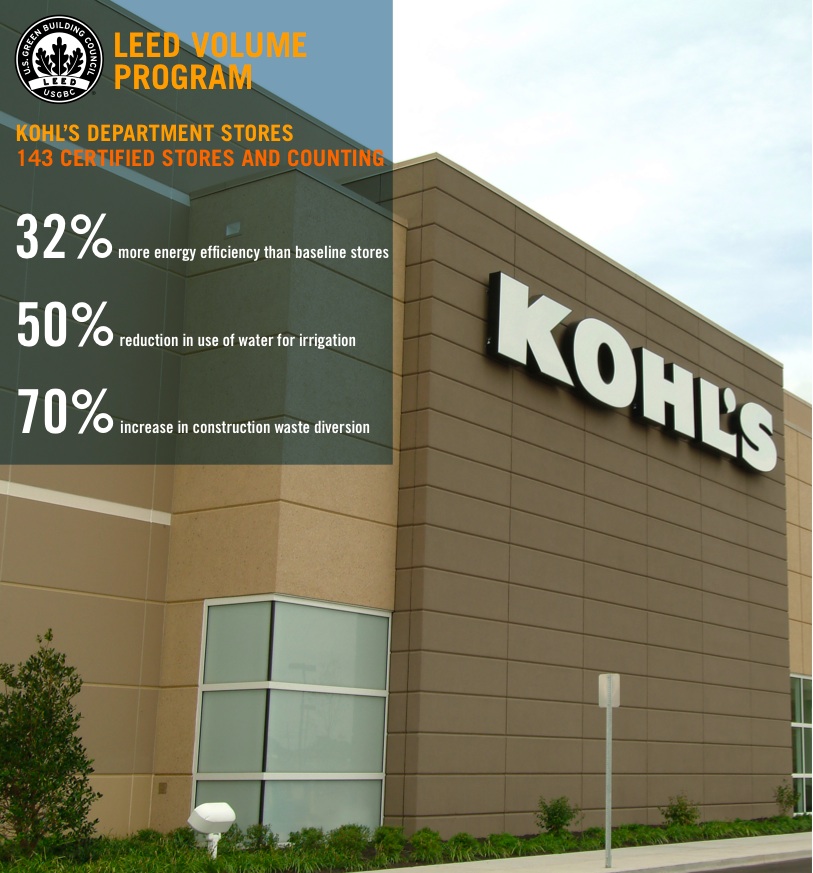
The prototype is designed to target LEED credits that are not site-specific. For example, the retailer Kohl’s has certified 59 stores through the LEED-EBOM volume program and reports increased energy efficiency and reduced indoor and outdoor water use. As with the volume program for design and construction, the program for LEED-EBOM considers technical and managerial uniformity as well as quality control and education plans as key components for certification. There is an audit and penalty structure to make sure that customers meet their commitments to the program.

More information about the LEED Volume Program and the application process is available on the U.S. Green Building Council website.


Published December 31, 1969

(2011, July 6). USGBC Expands LEED Volume Program to Building Operations. Retrieved from https://www.buildinggreen.com/departments/newsbrief

Add new comment

To post a comment, you need to register for a BuildingGreen Basic membership (free) or login to your existing profile.

Internet-Based Lighting Controls Reduce Electricity Use

News Brief

Internet-Based Lighting Controls Reduce Electricity Use

By Evan Dick

New developments in Internet-based controls for electrical systems documented in research for the California Energy Commission (CEC) have given new life to demand-response (DR), and led to the development of a training program to prepare electricians to implement the technologies.

DR is the process of reducing electricity usage in response to a utility signal during peak demand. This reduces the load on the grid—avoiding brownouts and reducing the need for supplemental power generation. DR programs have been difficult to implement because they relied on communication between utilities personnel and facilities management, and many buildings lack centralized lighting controls. The development of an Internet-based interface for automated DR systems has proved effective at eliminating reliance on person-to-person communication.

Researchers also note that in California pilot projects, the pairing of automated DR and wireless lighting controls could be particularly effective at reducing energy consumption. The CEC researchers report that buildings with automated DR were able to reduce peak demand by 10%–14%.

Published December 31, 1969

(2011, July 1). Internet-Based Lighting Controls Reduce Electricity Use. Retrieved from https://www.buildinggreen.com/departments/newsbrief

Add new comment

To post a comment, you need to register for a BuildingGreen Basic membership (free) or login to your existing profile.

NSF 336 Sustainable Fabric Standard Now Final

News Brief

NSF 336 Sustainable Fabric Standard Now Final

By Jennifer Atlee

A new standard for commercial fabrics is now final, creating the newest addition to a growing set of category-specific multi-attribute sustainability standards (see “What’s New in Multi-Attribute Product Certifications,” EBN Dec. 2010).

Modeled after other sustainability standards developed by NSF International, such as the standard behind BIFMA’s Level certification, NSF/ANSI 336: Sustainability Assessment for Commercial Furnishings Fabric is a tiered, multi-attribute standard developed through the ANSI consensus process. The standard, developed in partnership with GreenBlue and the Association for Contract Textiles, can be applied to a variety of fabrics used in public or commercial buildings, including woven, non-woven, bonded, and knitted fabrics used for upholstery, drapery, wall coverings, panel system fabrics, and bedding.

The fabric standard uses a 100-point system, with half of the points relating to composition and covering sourcing and safety of materials. The other half cover manufacture and company performance, with significant attention paid to chemical concerns. While there are international certifications for fabrics, including Oeko-Tex 100, this is the first U.S. sustainability standard for this product category, and it represents significant progress for an industry with significant toxicity concerns due to fabric processing and finishes.

Published December 31, 1969

(2011, July 1). NSF 336 Sustainable Fabric Standard Now Final. Retrieved from https://www.buildinggreen.com/departments/newsbrief

Add new comment

To post a comment, you need to register for a BuildingGreen Basic membership (free) or login to your existing profile.