New Standards for Greenhouse Gas Emissions

News Brief

New Standards for Greenhouse Gas Emissions

In response to growing demand for greenhouse gas (GHG) information across a company’s or product’s value chain, the Greenhouse Gas Protocol (GHGP)—an international accounting framework for GHG standards worldwide—has launched two new standards.

Both provide requirements and guidance for companies and other organizations to prepare and publicly report a GHG emissions inventory. The first, called Scope 3, addresses indirect GHG emissions resulting from value chain activities such as a product’s transportation miles. The second, called the Product Standard, focuses on GHG emissions and removals generated during a specific product’s life cycle (rather than avoided emissions or actions taken to mitigate released emissions).

The new standards are intended to help companies reduce GHG emissions based on the products, goods, or services they design, manufacture, sell, purchase, or use. For more information, see www.ghgprotocol.org.


Published December 31, 1969

(2011, November 29). New Standards for Greenhouse Gas Emissions. Retrieved from https://www.buildinggreen.com/departments/newsbrief

Add new comment

To post a comment, you need to register for a BuildingGreen Basic membership (free) or login to your existing profile.

Study Links Antibiotic Resistance Genes to Wastewater Treatment Facility

News Brief

Study Links Antibiotic Resistance Genes to Wastewater Treatment Facility

Researchers at the University of Minnesota have identified a municipal wastewater treatment plant as a source of antibiotic resistance genes found in the Duluth-Superior Harbor.

Although the plant boasts an advanced treatment step that removes large quantities of bacteria, the researchers typically found quantities of three different genes encoding resistance to tetracycline to be 20 times higher in its wastewater than in nearby surface water. (For comparison, samples taken from the St. Louis River and Lake Superior typically demonstrated quantities below detection.) This discovery confirms the notion that municipal wastewater is on par with agricultural waste as a reservoir of resistant bacteria.

Although the methods by which resistance genes move through the environment are not fully understood, they are generally recognized as emerging environmental contaminants that could theoretically spread to other types of bacteria in the environment, potentially contributing to antimicrobial resistance on a much larger scale.


Published December 31, 1969

(2011, November 29). Study Links Antibiotic Resistance Genes to Wastewater Treatment Facility. Retrieved from https://www.buildinggreen.com/departments/newsbrief

Add new comment

To post a comment, you need to register for a BuildingGreen Basic membership (free) or login to your existing profile.

WaterSense Label Applied to First Landscaping Products

News Brief

WaterSense Label Applied to First Landscaping Products

The WaterSense label will soon apply to its first set of outdoor products, according to the U.S. Environmental Protection Agency (EPA), which administers the WaterSense program. Labeling of landscaping products will begin with the most efficient automatic irrigation control devices.

Rather than working on a timer, eligible devices will monitor local weather data and trigger irrigation only when necessary. EPA estimates that timer-based irrigation systems in homes and commercial buildings waste approximately 110 billion gallons of water and $410 million per year. The first irrigation controllers will start sporting the label in spring 2012.


Published December 31, 1969

(2011, November 29). WaterSense Label Applied to First Landscaping Products. Retrieved from https://www.buildinggreen.com/departments/newsbrief

Add new comment

To post a comment, you need to register for a BuildingGreen Basic membership (free) or login to your existing profile.

Green Chemistry Reporting Now Standardized

News Brief

Green Chemistry Reporting Now Standardized

NSF International and the Green Chemistry Institute have developed a new standard for reporting the effects of chemical manufacturing.

NSF/GCI 355 Greener Chemicals Products and Processes Information Standard is designed to streamline chemical reporting and allow product manufacturers to compare chemicals’ environmental sustainability based on a variety of effects throughout the chemical’s life cycle.

In order to have its reporting certified by NSF International, the chemical manufacturer must report specific data on health, safety, and ecological properties of the chemical and waste, water, and energy used during manufacturing as well as other information about manufacturing processes.

In a press release, Richard Engler, Ph.D., of the U.S. Environmental Protection Agency, said, “This standard is an important tool for helping chemical manufacturers and their customers evaluate chemicals and associated manufacturing processes and make greener choices.”


Published December 31, 1969

(2011, November 29). Green Chemistry Reporting Now Standardized. Retrieved from https://www.buildinggreen.com/departments/newsbrief

Add new comment

To post a comment, you need to register for a BuildingGreen Basic membership (free) or login to your existing profile.

Portfolio Manager to Cross Canadian Border, Learn French

News Brief

Portfolio Manager to Cross Canadian Border, Learn French

The U.S. Environmental Protection Agency (EPA) and Natural Resources Canada (NRCan) have agreed to create a common platform for benchmarking the energy performance of commercial buildings.

The new platform will expand the EPA Energy Star Portfolio Manager tool already widely used throughout the U.S. to include Canadian weather information, emissions factors, and other Canada-specific data. The tool will also use metric units and be available in both English and French.

This international harmonization project is part of the Clean Energy Dialogue, a bilateral effort aimed at reducing greenhouse gas emissions through joint renewable energy research and development and smart-grid deployment.


Published December 31, 1969

(2011, November 29). Portfolio Manager to Cross Canadian Border, Learn French. Retrieved from https://www.buildinggreen.com/departments/newsbrief

Add new comment

To post a comment, you need to register for a BuildingGreen Basic membership (free) or login to your existing profile.

Additional Factors Expand Size of Products' Water "Footprints"

News Brief

Additional Factors Expand Size of Products' Water "Footprints"

As global industries begin to measure and report their water use, they should keep in mind all the water they consume, says the Netherlands nonprofit Water Footprint Network, which has developed a new metric for calculating water footprint.

Typical reporting only measures

blue water, the amount of fresh surface and groundwater consumed, but the organization advocates a more comprehensive calculation that also encompasses

green water footprint and graywater footprint.

Green water is precipitation that is stored in soil and never makes it into groundwater because it is absorbed by plants or evaporates; the green water footprint of an agricultural or forestry product is the amount of rainwater consumed during the production process.

Graywater footprint is the amount of fresh water that would be needed throughout the product’s entire life cycle to dilute polluted water enough to meet ambient water quality standards.

Expanding water footprint calculations to include these two indicators makes them larger than previously considered. The Nature Conservancy, which helps companies measure and reduce their water footprint, is advocating use of the new metric as a global standard. More information is available at www.waterfootprint.org.


Published December 31, 1969

(2011, November 29). Additional Factors Expand Size of Products' Water "Footprints". Retrieved from https://www.buildinggreen.com/departments/newsbrief

Add new comment

To post a comment, you need to register for a BuildingGreen Basic membership (free) or login to your existing profile.

Colorado Wins Bid for GE's Thin-Film Solar Panel Factory

News Brief

Colorado Wins Bid for GE's Thin-Film Solar Panel Factory

General Electric (GE) has announced plans to build a new solar panel factory in Aurora, Colorado, not far from its recently acquired thin-film solar technology company, PrimeStar Solar. The plant will feature cadmium telluride (CdTe) thin-film photovoltaics (PV), originally developed by researchers at the National Renewable Energy Laboratory.

Because CdTe is cheaper and simpler to manufacture than other PV technologies—including copper indium gallium selenide (CIGS) thin film—but tests at lower efficiencies, companies have been vying to break its efficiency records. CdTe modules now hover around 13% efficiency, at last surpassing CIGS.


GE intends to begin production of its CdTe modules in 2012 and have modules commercially available in 2013.



Published December 31, 1969

(2011, November 29). Colorado Wins Bid for GE's Thin-Film Solar Panel Factory. Retrieved from https://www.buildinggreen.com/departments/newsbrief

Add new comment

To post a comment, you need to register for a BuildingGreen Basic membership (free) or login to your existing profile.

New Geothermal Hotspots Identified Throughout Eastern U.S.

News Brief

New Geothermal Hotspots Identified Throughout Eastern U.S.

The eastern two-thirds of the U.S. has greater geothermal potential than some areas in the western portion of the country, claims a new study by Google.org and Southern Methodist University (SMU).

The project estimates that the technical potential for the continental U.S. exceeds 2.9 million megawatts—ten times the capacity of all of the currently operating U.S. coal-fired power plants. Drawing on tens of thousands of new thermal data points, the study takes into account newer technologies and drilling methods and eliminates inaccessible zones such as national parks, large urban areas, and protected lands.


SMU identifies areas of the Appalachians, parts of South Dakota, northern Illinois, the Gulf Coast, and southeastern Colorado as places of “particular geothermal interest.” Conventional U.S. geothermal production has been restricted to tectonically active locations in the western third of the country.


Published December 31, 1969

(2011, November 29). New Geothermal Hotspots Identified Throughout Eastern U.S.. Retrieved from https://www.buildinggreen.com/departments/newsbrief

Add new comment

To post a comment, you need to register for a BuildingGreen Basic membership (free) or login to your existing profile.

Traffic Exhaust May Cause Brain Damage

News Brief

Traffic Exhaust May Cause Brain Damage

Preliminary data from a number of sources suggests a correlation between heavy traffic and cognitive and behavioral health, according to a report in the

Wall Street Journal titled “The Hidden Toll of Traffic Jams.”

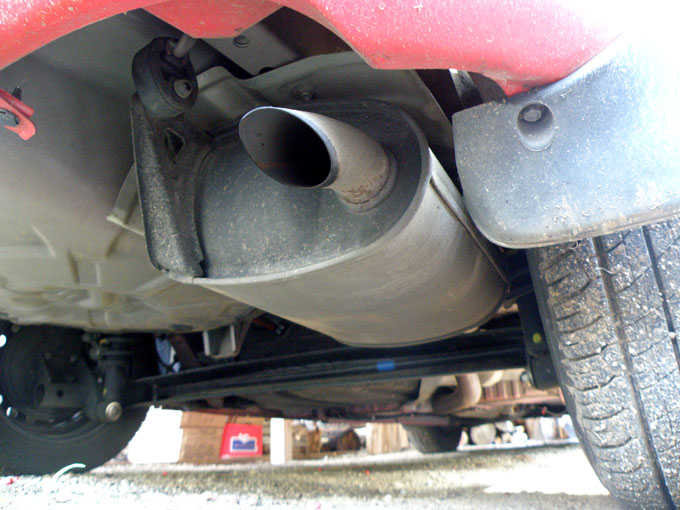
While no causative links have been established, breathing elevated levels of vehicle exhaust has been variously correlated with autism and premature births from prenatal exposure; lower I.Q., depression, anxiety, and attention problems in children; and memory problems and increased risk of Alzheimer’s disease in older people. In one experiment, mice who breathed air piped in from a nearby Los Angeles freeway displayed brain inflammation and alterations in brain chemistry in neurons related to learning and memory.

Scientists studying these links say more research is needed and caution that it can be difficult to isolate the effects of stress and other environmental influences from the effects of vehicle-related pollution.

Published December 31, 1969

(2011, November 29). Traffic Exhaust May Cause Brain Damage. Retrieved from https://www.buildinggreen.com/departments/newsbrief

Add new comment

To post a comment, you need to register for a BuildingGreen Basic membership (free) or login to your existing profile.

"Biggest Loser" in Battle of the Buildings Boasts 63% Reduction

News Brief

"Biggest Loser" in Battle of the Buildings Boasts 63% Reduction

The second Energy Star National Building Competition, titled “Battle of the Buildings,” has released 2011 results, with the top finalist chalking up a 63.2% reduction in energy use.

According to the U.S. Environmental Protection Agency (EPA), sponsor of the contest, the 245 participating teams saved a total of $5.2 million on utility bills during the Battle of the Buildings. The buildings saved 240 million kBtus of energy during the contest year, preventing release of 30,000 metric tons of CO2—comparable to the annual emissions associated with powering 3,600 homes.

The winning building was a parking garage at the University of Central Florida. In addition to reducing energy use intensity in the building, the university saved $34,907 in utility bills simply by replacing 150-watt sodium light fixtures with T-5 fluorescents and 400-watt fixtures with LEDs.


According to EPA, participating in the Battle of the Buildings catalyzed other changes at the university, such as an aggressive after-hours lighting schedule and recommissioning throughout the campus.




Published December 31, 1969

(2011, November 29). "Biggest Loser" in Battle of the Buildings Boasts 63% Reduction. Retrieved from https://www.buildinggreen.com/departments/newsbrief

Add new comment

To post a comment, you need to register for a BuildingGreen Basic membership (free) or login to your existing profile.