Net-Zero Mart? Big-Box Design Guide Offers 50% Energy Savings

News Brief

Net-Zero Mart? Big-Box Design Guide Offers 50% Energy Savings

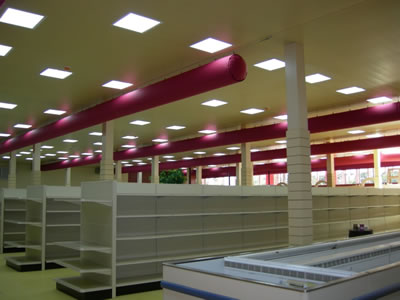
The U.S. Department of Energy (DOE) has released the third in its series of guides for 50% energy reduction in commercial and public buildings toward the goal of net-zero energy use. The “Advanced Energy Design Guide for Medium to Big Box Retail Buildings” is aimed at designers, contractors, and facility managers in the retail sector. Compared to the 2004 building energy code used in much of the country, the new guide is intended to help retail building owners achieve a 50% reduction in energy use in new construction or through deep energy retrofits “without having to resort to detailed calculations or analysis.” Divided into sections addressing numerous aspects of design and renovation—from energy modeling and benchmarking to the specifics of daylighting, plug loads, HVAC, and parking-lot lighting—the guide gives detailed recommendations based on a building’s climate zone and includes case studies and relevant ASHRAE standards for recommended installations. The guide is available for free download at www.ashrae.org.


Published December 31, 1969

(2012, February 2). Net-Zero Mart? Big-Box Design Guide Offers 50% Energy Savings. Retrieved from https://www.buildinggreen.com/departments/newsbrief

Add new comment

To post a comment, you need to register for a BuildingGreen Basic membership (free) or login to your existing profile.

NYC Benchmarks Buildings, Finds Room for Improvement

News Brief

NYC Benchmarks Buildings, Finds Room for Improvement

By Erin WeaverNew York City has released its first report on the energy efficiency of its public buildings. Since 2009, the “Greener Greater Buildings Plan” has measured the energy performance of 2,730 City buildings and compared it to that of similar structures. The “NYC Benchmarking Report” indicates which buildings would benefit most from energy-saving retrofit projects. The City’s libraries already perform 22% more efficiently than the national average, while City offices and public schools rank just a few percentage points above average, and fire and police stations score well below average for buildings of their type. The City has completed 130 retrofit projects, with another 102 under way. When benchmarking began, heating oil use was not metered at many of the City’s buildings, which could raise doubts about the accuracy of the findings. However, says Melissa Wright-Ellis at the Department of Citywide Administrative Services (DCAS), “We at DCAS do coordinate the delivery of that fuel, so we have delivery data [and] entered that in where we have it. I would guess probably 35%–40% [of buildings] had to use that proxy method.” Applying the benchmarking information to everyday building maintenance is expected to reduce the City’s energy use by up to 15%, avoiding the release of 185,000 metric tons of greenhouse gases and saving taxpayers at least $51 million annually. New York is among a handful of cities and states that require energy benchmarking of buildings.

Published December 31, 1969

(2012, February 2). NYC Benchmarks Buildings, Finds Room for Improvement. Retrieved from https://www.buildinggreen.com/departments/newsbrief

Add new comment

To post a comment, you need to register for a BuildingGreen Basic membership (free) or login to your existing profile.

HUD Funds Sustainable Communities

News Brief

HUD Funds Sustainable Communities

The U.S. Department of Housing and Urban Development (HUD) has provided $95.8 million to fund sustainable community planning and economic development throughout the U.S. Twenty-seven communities and organizations will receive the grants, which fall into two categories. Community Challenge grants support upgrades to pedestrian or transit infrastructure as well as local code changes aimed at spurring investments in existing buildings, mixed-use development, or affordable housing. Regional Planning grants focus on larger-scale regional efforts to make integrated improvements to transit infrastructure, land use, and economic development. Recipients include both rural and urban communities and organizations—from the Hopi Tribe in Arizona, which is planning a new community on the Hopi Reservation, to the City of Boston, which will acquire land to build transit stations in low-income neighborhoods along an existing commuter rail line. For more information, see www.hud.gov.


Published December 31, 1969

(2012, February 2). HUD Funds Sustainable Communities. Retrieved from https://www.buildinggreen.com/departments/newsbrief

Add new comment

To post a comment, you need to register for a BuildingGreen Basic membership (free) or login to your existing profile.

EPA Approves Hydrocarbon Refrigerants for Home Appliances

News Brief

EPA Approves Hydrocarbon Refrigerants for Home Appliances

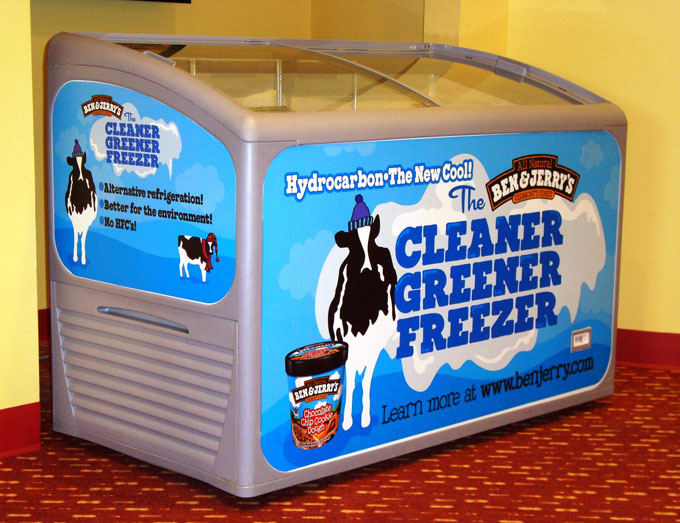
The U.S. Environmental Protection Agency (EPA) has approved three hydrocarbon refrigerants for use in household and small commercial refrigerators and freezers: isobutane, propane, and R-441a (a proprietary, blended hydrocarbon also known as HCR-188C). The three chemicals, often referred to as “natural” refrigerants, are alternatives to the hydrofluorocarbons (HFCs) currently used in virtually all new household refrigerators and freezers in the U.S.

HFCs have effectively replaced ozone-depleting refrigerants phased out in response to the Montreal Protocol—but although they do not deplete ozone, HFCs have high global warming potential (GWP). Low-GWP household refrigerants have been on regulatory ice in the U.S. for years due to concerns about flammability, but isobutane and propane are both widely used in home appliances in Europe, where fire-safety measures for technicians are now well established.

According to EPA, replacing high-GWP refrigerants would reduce greenhouse gas emissions by 600,000 metric tons by 2020, equivalent to emissions associated with the annual electricity use of 75,000 homes. This does not take into account any efficiency gains that the new chemicals may provide; some manufacturers claim dramatic performance improvements from switching to hydro-carbon refrigerants.


Published December 31, 1969

(2012, February 2). EPA Approves Hydrocarbon Refrigerants for Home Appliances. Retrieved from https://www.buildinggreen.com/departments/newsbrief

Add new comment

To post a comment, you need to register for a BuildingGreen Basic membership (free) or login to your existing profile.

Energy Star Pioneer Sam Rashkin to Receive Hanley Award

News Brief

Energy Star Pioneer Sam Rashkin to Receive Hanley Award

The Hanley Award for Vision and Leadership in Sustainable Housing will go this year to Sam Rashkin, chief architect at the U.S. Department of Energy’s Building Technologies Program. Rashkin previously helped found the Energy Star for Homes program, and he served as national director of the program for 15 years. Rashkin is widely recognized as a passionate and influential advocate of high-performance homes.

Rashkin also helped develop LEED for Homes, the National Association of Home Builders’ green building guidelines, and the U.S. Environmental Protection Agency’s WaterSense labeling program.

He is the third person to receive the award, which includes a sizable grant, and which will be presented at the national convention of The American Institute of Architects in May 2012. The prior recipients were Ed Mazria, FAIA, founder of Architecture 2030, and Alex Wilson, founder and executive editor of BuildingGreen, Inc., publisher of EBN.

“Sam has done more than anyone to dramatically improve the energy performance of new homes,” according to Wilson, who served as a judge for this year’s award. “His perseverance and tenacity in generating builder support for Energy Star Homes has been phenomenal. No one is more deserving of this award than Sam.”

The Hanley Foundation, Hanley Wood, and Builder and EcoHome magazines are the award’s sponsors.

For more information:

EcoHome Magazine


Published December 31, 1969

(2012, January 30). Energy Star Pioneer Sam Rashkin to Receive Hanley Award. Retrieved from https://www.buildinggreen.com/departments/newsbrief

Add new comment

To post a comment, you need to register for a BuildingGreen Basic membership (free) or login to your existing profile.

Study-Fabric Ducts Increase HVAC Efficiency

News Brief

Study-Fabric Ducts Increase HVAC Efficiency

Researchers from Iowa State University’s mechanical engineering department have used computer modeling to show that fabric forced-air ducts distribute air 24.5% more efficiently than conventional sheet-metal ducts. Using fluid dynamics simulations, the researchers determined that the fabric ducts diffuse conditioned air more widely in a shorter time, reducing loads on HVAC equipment and saving energy.

Fabric ducts are less expensive and less resource-intensive than metal ducts and can contribute to better indoor environmental quality due to ease of cleaning, but their efficiency at distributing air had not previously been studied. “Ductwork system efficiency tends take a secondary importance to mechanical equipment efficiencies in project specifications,” said Michael Olsen, Ph.D., in a press release.

“We have now provided engineers with the data that will make air distribution more efficient as well.” Simulations took place over 10 months in an 8' x 8' x 8' foot room, but the researchers also did large-scale analyses suggesting that large retail spaces and warehouses could expect similar efficiency gains by using fabric ducts.

Published December 31, 1969

(2012, January 20). Study-Fabric Ducts Increase HVAC Efficiency. Retrieved from https://www.buildinggreen.com/departments/newsbrief

Add new comment

To post a comment, you need to register for a BuildingGreen Basic membership (free) or login to your existing profile.

Large Firms to Expand Green Building Services

News Brief

Large Firms to Expand Green Building Services

Major players in the U.S. green building market are joining forces with the goal of expanding high-performance building services.

The Cadmus Group acquired Constructive Technologies Group (CTG) at the end of 2011, an acquisition that fleshes out a new Building Performance Group within Cadmus led by senior vice president Chris Smith (who was until recently chief operating officer at the U.S. Green Building Council).

Cadmus, founded in 1983 as a contractor for the U.S. Environmental Protection Agency (EPA), has continued to work with government clients and to focus on environmental protection, green building, and energy services while also diversifying into other areas, such as social marketing and policy development.

CTG includes two firms: CTG Energetics and CTG Forensics. CTG Energetics boasts many high-profile government and private-sector clients as well and has played a seminal role in the green building world, helping develop the LEED rating systems and supporting the continued evolution of LEED tools and resources. CTG founder and CEO Malcolm Lewis, Ph.D., P.E., chairs the LEED Technical Committee and was recently among the first LEED Fellows honored by the Green Building Certification Institute. Lewis is also a member of the Environmental Building News advisory board. Adding CTG’s 30 employees in three locations gives Cadmus a workforce of 400. “Combining CTG’s industry-leading building performance practice with the resources and technical breadth of Cadmus will enable us to expand our impact on making the planet a better place,” said Lewis in a press release.

Engineering firm Thornton Tomasetti has also expanded, acquiring green building consulting firm Fore Solutions, which was founded in 2003 to provide LEED consulting, daylighting design, and existing building analysis. Citing plans to focus on the sustainability market and increase green building services, Thornton Tomasetti said the move was part of a company-wide plan to “integrate green objectives across all its practices."

For more information:

The Cadmus Group

 

Published December 31, 1969

(2012, January 5). Large Firms to Expand Green Building Services. Retrieved from https://www.buildinggreen.com/departments/newsbrief

Add new comment

To post a comment, you need to register for a BuildingGreen Basic membership (free) or login to your existing profile.

Survey Shows Majority Aware of Incandescent Phase-Out

News Brief

Survey Shows Majority Aware of Incandescent Phase-Out

Since 2007, when Congress increased light bulb efficiency requirements, effectively phasing out conventional incandescent technology, light bulb manufacturer Sylvania has been conducting an annual consumer survey that gauges awareness of lighting options. Results from the 2011 survey show that for the first time, a majority of Americans (56%) are aware of the phase-out of incandescent bulbs.
About half of those surveyed report that they plan to wait until after the phase-out to switch to more efficient bulbs. Most respondents reported excitement about the phase-out, but about one-third expressed concern. The survey also found that women, young adults, minorities, people with no college degree, and people with lower incomes were less likely to be aware of the phase-out. Understanding around the specifics of the phase-out is also low.

Despite a growing awareness of the phase-out, the report indicates that the eventual disappearance of the incandescent bulb from store shelves in the coming years could come as a surprise to millions of Americans. For full survey results, go to www.sylvania.com/Energy/SocketSurvey.


Published December 31, 1969

(2011, December 27). Survey Shows Majority Aware of Incandescent Phase-Out. Retrieved from https://www.buildinggreen.com/departments/newsbrief

Add new comment

To post a comment, you need to register for a BuildingGreen Basic membership (free) or login to your existing profile.

Battery Companies Fully Charged After Alliance

News Brief

Battery Companies Fully Charged After Alliance

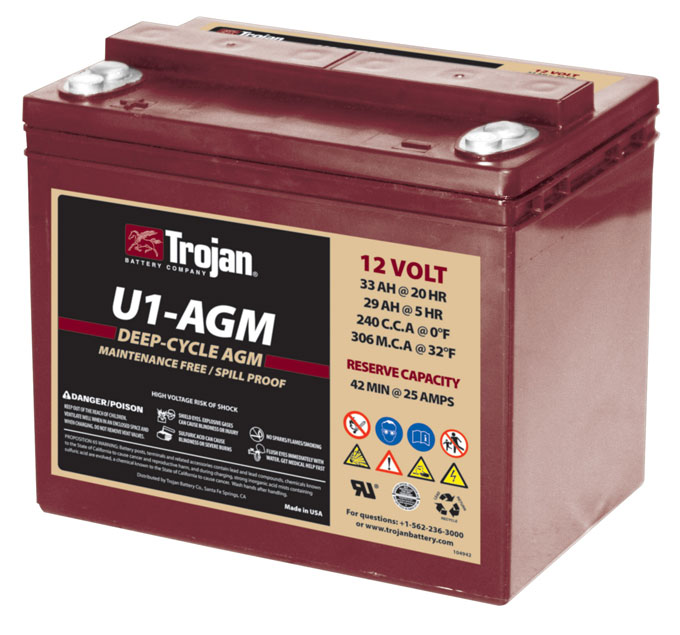
Trojan Battery Company and Palladium Energy have announced a research alliance, promising to bring a new wave of lithium ion-based batteries to the market.


Trojan Battery is among the largest producers of deep-cycle lead acid batteries in the world, and Palladium Energy is well regarded for engineering lithium-based batteries. The companies project that combining Palladium’s lithium ion technology with Trojan’s distribution network may help accelerate the transition to a battery technology that better supports the smart grid by offering longer life and lighter weight for cheaper transportation.


Published December 31, 1969

(2011, December 27). Battery Companies Fully Charged After Alliance. Retrieved from https://www.buildinggreen.com/departments/newsbrief

Add new comment

To post a comment, you need to register for a BuildingGreen Basic membership (free) or login to your existing profile.

Stain-Resistant Chemicals May Contribute to ADHD

News Brief

Stain-Resistant Chemicals May Contribute to ADHD

A report published in Environmental Health Perspectives suggests an association between exposure to perfluorinated compounds (PFCs) and attention deficit/hyperactivity disorder (ADHD) in children ages 5 to 18.

Researchers used serum samples from residents near a chemical plant in the Mid-Ohio Valley region of West Virginia. The plant had been contaminating surface and groundwater sources with PFCs over a 50-year period before a class action lawsuit was filed in 2001 alleging health damages from contamination of drinking water. Part of the settlement included voluntary serum sampling for PFC exposure of residents in contaminated water districts. 69,030 people volunteered, representing 80% of the eligible population.

The researchers call for further research based on possible positive associations between PFCs and ADHD, writing that perfluorohexane sulfonate (PFHxS) particularly warrants further investigation. PFCs are persistent environmental pollutants common in building and consumer products such as carpet and nonstick cookware (see “Carpets with No Added Stain or Dirt Repellents?” EBN April 2011). They have been detected worldwide in both wildlife and humans.


Published December 31, 1969

(2011, December 27). Stain-Resistant Chemicals May Contribute to ADHD. Retrieved from https://www.buildinggreen.com/departments/newsbrief

Add new comment

To post a comment, you need to register for a BuildingGreen Basic membership (free) or login to your existing profile.