The Greening of Meetings: Event Venues Get Sustainable

News Brief

The Greening of Meetings: Event Venues Get Sustainable

With this in mind, evolveEA, the Heinz Endowments, and the David L. Lawrence Convention Center in Pittsburgh conducted a survey of convention centers to better understand how they are addressing the demand for greener venues. Looking at convention centers’ business models, “Event Venue Benchmarking” identifies key market drivers and industry best practices (such as energy benchmarking, monitoring greenhouse gas emissions, and sustainable purchasing), as well as opportunities for improvement.

For example, the waste stream at convention centers can be particularly large, and while all facilities surveyed claimed to recycle to some extent, waste varied by facility from under two to more than eight pounds per visitor. While a given facility recycled a higher percentage of its waste, another produced less waste per visitor to begin with by choices made in purchasing. To learn more, visit www.evolveea.com.


Published December 31, 1969

(2012, February 28). The Greening of Meetings: Event Venues Get Sustainable. Retrieved from https://www.buildinggreen.com/departments/newsbrief

Add new comment

To post a comment, you need to register for a BuildingGreen Basic membership (free) or login to your existing profile.

Wetlands Restoration Failing to Reestablish Pristine Conditions

News Brief

Wetlands Restoration Failing to Reestablish Pristine Conditions

By Erin WeaverA new meta-analysis published in

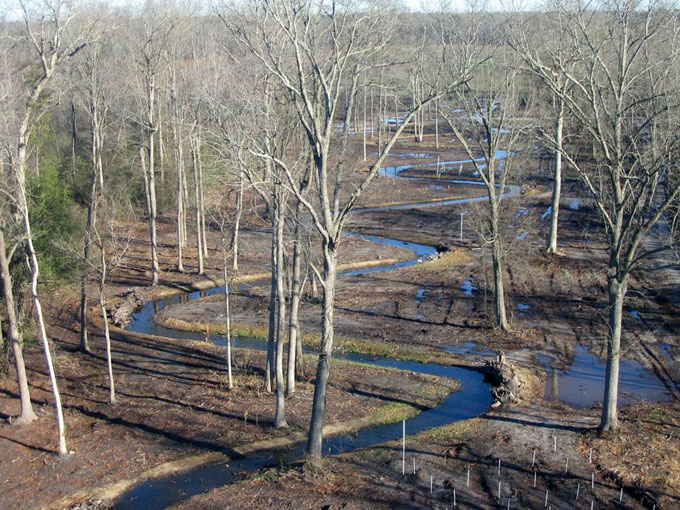
PLoS Biology, “Structural and Functional Loss in Restored Wetland Ecosystems,” reveals the relative ineffectiveness of wetlands restoration over the last century. Data from 621 sites throughout the world show that even 100 years after restoration attempts, wetlands’ biological structure and biogeochemical functions (such as carbon storage in soil) achieved only 74%–77% those of reference sites.

Wetlands larger than 100 contiguous hectares recovered more rapidly, as did those in warmer climates or with more hydrologic exchange from rivers or tidal flows. Return to reference conditions could simply take longer than a century, or the disturbed wetlands may have established alternate states, potentially due in part to climate change.

A June 2010 article in

Wetlands, “The Potential of Integrated Constructed Wetlands (ICWs) to Enhance Macroinvertebrate Diversity in Agricultural Landscapes,” makes an alternative case: chains of ponds used to treat agricultural wastewater in Ireland support a range of wildlife similar to that found in natural wetlands, helping meet EU water body targets of similarity to pristine conditions. Given that wetlands with greater water exchange performed better in the restoration study, a combination of restored and constructed habitats could prove key to maintaining functional wetlands.

Published December 31, 1969

(2012, February 28). Wetlands Restoration Failing to Reestablish Pristine Conditions. Retrieved from https://www.buildinggreen.com/departments/newsbrief

Add new comment

To post a comment, you need to register for a BuildingGreen Basic membership (free) or login to your existing profile.

Bank Deems Multifamily Retrofits a Good Investment

News Brief

Bank Deems Multifamily Retrofits a Good Investment

By Erin WeaverDeutsche Bank has released a report analyzing actual energy savings achieved through multifamily retrofits and encouraging capital investment in energy retrofits of affordable housing in New York City. A collaboration of the Deutsche Bank Americas Foundation and the Living Cities philanthropic organization, “Recognizing the Benefits of Energy Efficiency in Multifamily Underwriting” analyzes energy savings in 231 multifamily housing projects—a total of 21,000 units—that have already undergone energy-efficiency retrofits. The report provides empirical data for lenders to use in evaluating projections for similar buildings.

Across the board, the improvements translated to savings for owners and tenants. “For half the projects examined,” says Ben Hecht of Living Cities in a press release, “savings alone were sufficient to fully support loans for energy-efficiency capital improvements.”

Multifamily retrofit projects have typically relied on public funds because lenders don’t have the tools to confidently predict a building’s savings potential. Living Cities has announced a grant to the New York City Energy Efficiency Corporation to streamline the process of underwriting multifamily retrofits. More on the report and a background briefing document are available here.


Published December 31, 1969

(2012, February 28). Bank Deems Multifamily Retrofits a Good Investment. Retrieved from https://www.buildinggreen.com/departments/newsbrief

Add new comment

To post a comment, you need to register for a BuildingGreen Basic membership (free) or login to your existing profile.

Nanomaterials a Sizable Concern, Says National Academy

News Brief

Nanomaterials a Sizable Concern, Says National Academy

By Erin Weaver

A National Academy of Sciences (NAS) panel of experts has issued a report expressing concern about the health and environmental effects of nanomaterials (see “Is Nano a No-No?”,

EBN Mar. 2008). The report points out that suspected risks are already being ignored, and as the nanotechnology market continues to expand, “today’s exposure scenarios may not resemble those of the future.” The panel calls for in-depth research into nanomaterial release, interactions, and exposure.

The U.S. Environmental Protection Agency, which commissioned the report, has conditionally approved the use of nanosilver in textiles, including clothing; manufacturer HeiQ has four years to provide legally required toxicity data. In reaction to this move, the Natural Resources Defense Council has filed a federal lawsuit to block the use of nanosilver on textiles, alleging that silver is toxic and that nanosilver is even more potent and also penetrates human organs due to its smaller size. The NAS panel will revisit the issue in 2013.


Published December 31, 1969

(2012, February 28). Nanomaterials a Sizable Concern, Says National Academy. Retrieved from https://www.buildinggreen.com/departments/newsbrief

Add new comment

To post a comment, you need to register for a BuildingGreen Basic membership (free) or login to your existing profile.

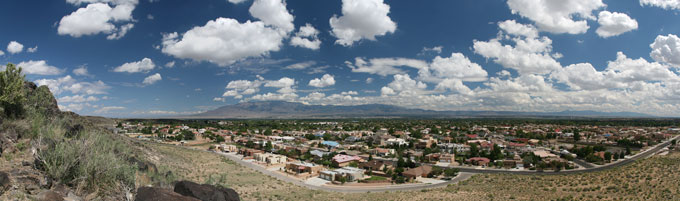
Federal Judge Rules Against Albuquerque Energy Code

News Brief

Federal Judge Rules Against Albuquerque Energy Code

AHRI filed suit in 2008, claiming that while states may establish building codes, the 1975 Energy Policy and Conservation Act (EPCA) gave federal law supremacy over local law when it comes to appliance efficiency. The City argued that the code’s performance-based compliance paths allowed builders to use products not exceeding federal standards, but in 2010 Vazquez found in AHRI’s favor, stating that the code required those builders to make efficiency gains elsewhere—an imposition that violated EPCA.

Vazquez has now ruled that since the City would not have passed the code without the strict compliance paths, the remaining performance paths constitute a partial statute that is no longer enforceable. Nationwide, questions of code preemption are still uncertain: in a similar case last year, a federal judge ruled that the State of Washington could regulate overall building efficiency because the code in question included multiple compliance paths.


Published December 31, 1969

(2012, February 28). Federal Judge Rules Against Albuquerque Energy Code. Retrieved from https://www.buildinggreen.com/departments/newsbrief

Add new comment

To post a comment, you need to register for a BuildingGreen Basic membership (free) or login to your existing profile.

NSF Offers GreenScreen to Promote Safer Chemicals

News Brief

NSF Offers GreenScreen to Promote Safer Chemicals

Time and again we’ve seen hazardous chemicals in building materials replaced with ingredients that we later learn are no better than the originals. In a move that could help change that pattern, well-known standards developer and product certifier NSF International has announced a new chemical evaluation program using the GreenScreen for Safer Chemicals tool.

GreenScreen, developed by Clean Production Action (CPA), provides a method to assess all chemical constituents based on their hazardous properties to help manufacturers move from toxic chemicals to safer alternatives. While some manufacturers have the expertise to use the methodology in-house, most would benefit from third-party expertise for GreenScreen analysis. Prior to NSF’s program launch, ToxServices, a toxicology risk-assessment consulting company, was the only authorized third-party evaluator of the GreenScreen. According to Lauren Heine, consulting co-director of CPA and director of the GreenScreen program, ToxServices “has been invaluable in helping us build the program and to ensure that GreenScreen assessments are thorough and robust.” NSF’s involvement is a sign that GreenScreen is ready to go to scale.

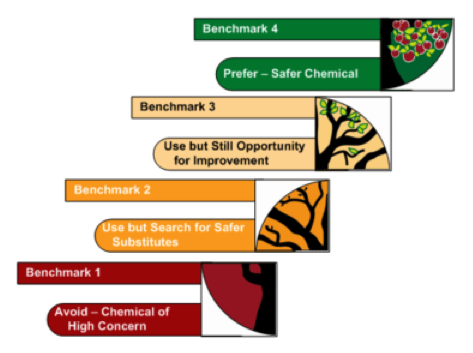
In an industry awash with “red lists”—long lists of hazardous chemicals to avoid—the GreenScreen is unique. Rather than just providing a list of known hazards, GreenScreen methodology assigns each chemical a benchmark from 1–4 based on 18 human and environmental hazard endpoints (such as carcinogenicity, endocrine activity, or reproductive toxicity). The benchmark system provides an easy guide to the degree of hazard, with Benchmark 1 indicating significant concerns and Benchmark 4 indicating a chemical that is demonstrated as safe against the GreenScreen hazard endpoints.

To advance from Benchmark 1 to safer benchmarks, the chemical, along with its known and predicted transformational products, must pass a detailed set of criteria relative to each hazard endpoint. These criteria provide guidelines for evaluating existing studies and for assessing knowledge gaps regarding a chemical’s hazard profile.

Instead of assuming incorrectly that an unlisted chemical is safe, GreenScreen supports analysis to enable confidence that a chemical truly does not exhibit hazardous properties. According to Tom Bruursema, general manger at NSF Sustainability, “The GreenScreen program helps prevent the costly mistake of choosing an alternative chemical that is later found to be hazardous.”

“We see GreenScreen as the most versatile tool out there for hazard assessments,” explained Teresa McGrath, a toxicologist at NSF and a lead champion of the new offering. NSF is joining with CPA on training programs for the industry to support GreenScreen program expansion.

For more information:

Clean Production Action

NSF International

ToxServices

Published December 31, 1969

(2012, February 6). NSF Offers GreenScreen to Promote Safer Chemicals. Retrieved from https://www.buildinggreen.com/departments/newsbrief

Add new comment

To post a comment, you need to register for a BuildingGreen Basic membership (free) or login to your existing profile.

Changing Demographics Could Lead to More Sustainable Communities

News Brief

Changing Demographics Could Lead to More Sustainable Communities

As they enter their 20s and 30s, says the report, members of Generation Y are concerned with “rightsizing”: living in smaller, more affordable spaces in exchange for easier commutes and access to resources. At the same time, their parents (the Baby Boomers) find themselves entering retirement with dwindling savings and downsizing from suburbia to the same compact, walkable communities their children are choosing. These vibrant urban centers may in turn attract companies seeking Generation Y workers, reversing a trend toward remote suburban workplaces designed for long-distance commuters.In addition to choosing more efficient locations, the report claims, developers are learning that energy-saving technology pays for itself and that “ignoring sustainability issues speeds property obsolescence.” Asserting that the continuing global recession marks a turning point in real estate, the report counsels investors to focus on sustainability. Says ULI chairman Peter S. Rummell, “If we are to be successful, the communities we shape now will have to serve the needs of those who follow after us.


Published December 31, 1969

(2012, February 2). Changing Demographics Could Lead to More Sustainable Communities. Retrieved from https://www.buildinggreen.com/departments/newsbrief

Add new comment

To post a comment, you need to register for a BuildingGreen Basic membership (free) or login to your existing profile.

More Sustainable Housing Options Could Bolster Economy

News Brief

More Sustainable Housing Options Could Bolster Economy

By Paula MeltonBloomberg has declared 2011 “the worst year on record for single-family home construction,” but while the outlook for construction generally and single-family housing in particular remains weak, the multifamily market has strengthened as foreclosures and other economic pressures have led many to rent rather than own.According to the U.S. Commerce Department, housing starts rose sharply near the end of the year as permits for multifamily construction increased 25.3% between October and November 2011. Although those numbers fell again in December, the American Institute of Architects (AIA) reported growth in its Architecture Billings Index, with the multifamily sector leading the increase. Housing starts represent construction projects that have just begun, while architecture billings represent construction that is likely to begin in 9 to 12 months—suggesting that multifamily design and construction could sustain the industry through 2012.

Published December 31, 1969

(2012, February 2). More Sustainable Housing Options Could Bolster Economy. Retrieved from https://www.buildinggreen.com/departments/newsbrief

Add new comment

To post a comment, you need to register for a BuildingGreen Basic membership (free) or login to your existing profile.

Failing Water Infrastructure Drains Economy, Report Warns

News Brief

Failing Water Infrastructure Drains Economy, Report Warns

Aging water infrastructure could seriously imperil both public health and the economy if current investment trends continue, according to a new report released by the American Society of Civil Engineers (ASCE).

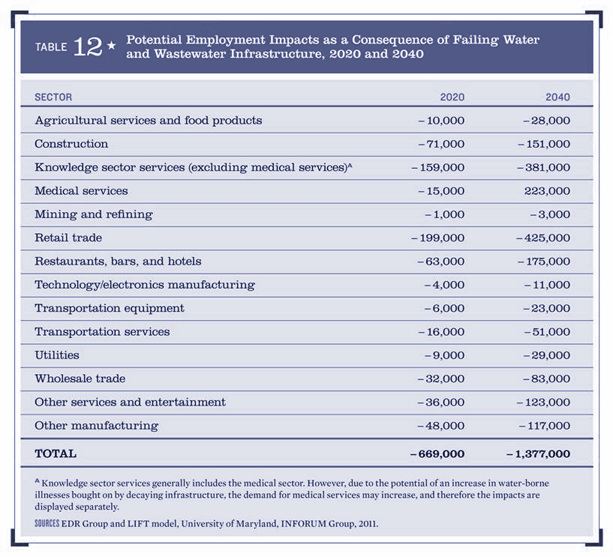
In the second report in its “Failure to Act” series, the group lays out the economic consequences of increasingly unreliable water delivery and wastewater treatment, forecasting the loss of 700,000 jobs by 2020 and $1.4 million jobs by 2040. A GDP loss of $416 billion is predicted between 2011 and 2020. ASCE only foresees one growth industry coming out of the deteriorating water network: “medical services are expected to grow between 2020 and 2040 due to increasing outlays to fight water-borne illnesses.”

While neglecting water infrastructure could have dire consequences, the report concludes that worst-case scenarios can be prevented by increasing investments in water infrastructure, developing more sustainable water delivery and wastewater treatment methods, and changing land use patterns.

To download the full report, visit www.asce.org/failuretoact.

Published December 31, 1969

(2012, February 2). Failing Water Infrastructure Drains Economy, Report Warns. Retrieved from https://www.buildinggreen.com/departments/newsbrief

Add new comment

To post a comment, you need to register for a BuildingGreen Basic membership (free) or login to your existing profile.

Historic Mercury Standards Will Clean Up Power Grid

News Brief

Historic Mercury Standards Will Clean Up Power Grid

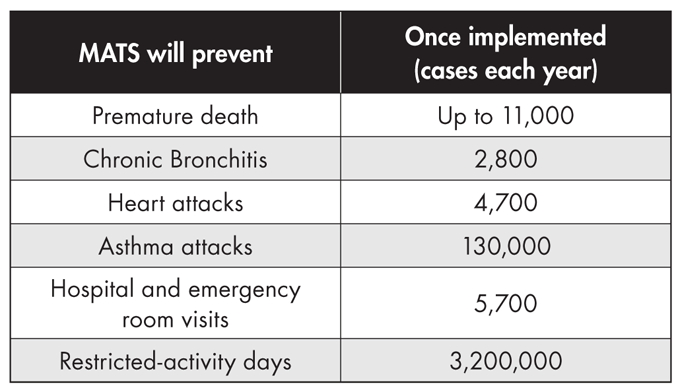
Estimated Health Benefits of Mercury and Air Toxics Standards (MATS)

Source: U.S. Environmental Protection Agency

By Paula MeltonIn a monumental final rule issued near the end of 2011, the U.S. Environmental Protection Agency (EPA) finalized the first federal regulations for curbing mercury emissions and other toxic air pollutants produced by aging coal- and oil-fired power plants. The Mercury and Air Toxics Standards (MATS) will cut mercury emissions from power plants by 90%, acid gas emissions by 88%, and SO2 emissions by 41%, according to the agency. MATS aims to improve public health not only by reducing toxic air pollution but also by decreasing the amount of mercury that settles in waterways and bioaccumulates in fish—a phenomenon that can cause neurological damage in humans when they eat tuna and other predatory species. Utilities have four years to either shut down non-compliant plants or install pollution controls. EPA estimates the new rule will create 46,000 construction jobs and 8,000 utility jobs while raising electricity prices approximately 3%.

Published December 31, 1969

(2012, February 2). Historic Mercury Standards Will Clean Up Power Grid. Retrieved from https://www.buildinggreen.com/departments/newsbrief

Add new comment

To post a comment, you need to register for a BuildingGreen Basic membership (free) or login to your existing profile.