New Standard for Single-Ply Roofing Sustainability

News Brief

New Standard for Single-Ply Roofing Sustainability

NSF International (NSF) has announced the first certification to evaluate the life-cycle sustainability of single-ply roofing membranes for commercial buildings. NSF/ANSI 347, Sustainability Assessment for Single Ply Roofing Membranes, is one of eight NSF sustainability standards for building products and the first to address the building envelope.

Used to provide a waterproofing layer, membranes will be certified as Conformant, Silver, Gold, or Platinum based on four criteria: environmental considerations in product design; reduction of environmental impacts in manufacturing; membrane durability and reparability; and corporate governance. A maximum of eight points are calculated for recycled content, topping out at 16% post-consumer or 32% pre-consumer; points are also awarded for biobased materials and for disclosing and minimizing chemicals of concern. For more information, see www.nsf.org.


Published December 31, 1969

(2012, May 31). New Standard for Single-Ply Roofing Sustainability. Retrieved from https://www.buildinggreen.com/departments/newsbrief

Add new comment

To post a comment, you need to register for a BuildingGreen Basic membership (free) or login to your existing profile.

New Accreditation Could Add a Living Future to Your Name

News Brief

New Accreditation Could Add a Living Future to Your Name

There will be two paths to accreditation, both requiring ILFI membership, a subscription to the organization’s free electronic quarterly, some assigned reading, and a certain number of hours of approved education from a list to be published soon. Current LEED Accredited Professionals must have completed at least 45 hours of approved education in the last five years, and individuals who have already undergone presenter/facilitator training in ILFI’s Living Building Challenge must have completed at least 35 hours of approved education. Accreditation may be renewed every two years. For more information, see www.living-future.org.


Published December 31, 1969

(2012, May 31). New Accreditation Could Add a Living Future to Your Name. Retrieved from https://www.buildinggreen.com/departments/newsbrief

Add new comment

To post a comment, you need to register for a BuildingGreen Basic membership (free) or login to your existing profile.

For Banks, Money Grows on Green Branches

News Brief

For Banks, Money Grows on Green Branches

By Erin WeaverGreen buildings can improve a company’s financial performance beyond the savings provided by operational efficiencies, according to a new study from the University of Notre Dame. “The Relationship Between Corporate Sustainability and Firm Financial Performance” compares business performance at 562 bank branches owned by PNC Financial Services Group, 93 of them LEED-certified under PNC’s Green Branch program. The study looked only at facilities more than three years old, and took into account different facilities’ market demographics.

Between 2008 and 2010, the certified branches averaged 458 more consumer deposit accounts opened annually, with $3 million more in consumer deposit balances per facility. Certified facilities also averaged 25 more consumer loan accounts per year. Overall, sales at certified branches increased $461,300 per employee compared to non-certified branches. The authors suggest that customers may be attracted to a commitment to sustainability and that employees at LEED facilities may have higher job satisfaction and provide better customer service.

PNC’s Green Branch program contributed to development of the LEED Volume Certification Program, intended to streamline certification across a portfolio of similar buildings.

Published December 31, 1969

(2012, May 31). For Banks, Money Grows on Green Branches. Retrieved from https://www.buildinggreen.com/departments/newsbrief

Add new comment

To post a comment, you need to register for a BuildingGreen Basic membership (free) or login to your existing profile.

"Green Squared" Certifies First Three Tile Products

News Brief

"Green Squared" Certifies First Three Tile Products

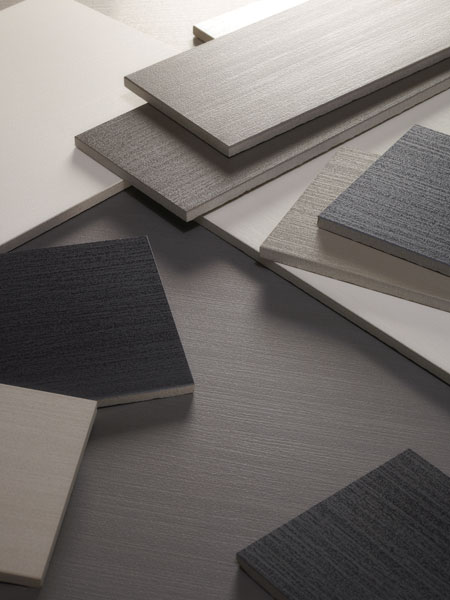
Scientific Certification Systems has announced the first three certifications under Green Squared, the tile flooring industry’s first sustainability standard for tile and installation materials, including ceramic and glass tile, grout, mortar, backer board, underlayment, and waterproof membranes. 

Developed by the Tile Council of North America, the Green Squared standard is based on five categories: a product’s environmental characteristics, innovation, manufacturing process, and end-of-life management, and the manufacturer’s corporate governance. The first three certifications were awarded to tile manufactured by Crossville, Interceramic, and Ironrock. For more information, visit www.greensquaredcertified.com.


Published December 31, 1969

(2012, May 31). "Green Squared" Certifies First Three Tile Products. Retrieved from https://www.buildinggreen.com/departments/newsbrief

Add new comment

To post a comment, you need to register for a BuildingGreen Basic membership (free) or login to your existing profile.

From Superfund to Solar Farm

News Brief

From Superfund to Solar Farm

Increasing demand for renewable energy creates pressure to develop previously open land, but a new initiative points out an abundant source of land ripe for transformation: the nation’s nearly half-million vacant, contaminated sites.

Through “RE-Powering America’s Land,” the U.S. Environmental Protection Agency (EPA) and Department of Energy (DOE) have evaluated more than 11,000 sites—including brownfields, Superfund sites, landfills, and abandoned mines—with potential for solar, wind, biomass, or geothermal projects. The results are available from EPA as mapping tools and fact sheets for municipalities, businesses, and others interested in developing the sites for renewable energy production. Pilot projects are being conducted to determine sites’ most appropriate energy technology, potential generating capacity, and economic feasibility. For more information, see www.epa.gov.


Published December 31, 1969

(2012, May 31). From Superfund to Solar Farm. Retrieved from https://www.buildinggreen.com/departments/newsbrief

Add new comment

To post a comment, you need to register for a BuildingGreen Basic membership (free) or login to your existing profile.

GAO to OSHA: Speed It Up a Little!

News Brief

GAO to OSHA: Speed It Up a Little!

By Erin WeaverThe U.S. General Accountability Office (GAO) has performed an audit of the Occupational Safety and Health Administration (OSHA) concluding that the agency’s cumbersome procedures make it far too slow to act, resulting in insufficient worker protection.

“Workplace Safety and Health: Multiple Challenges Lengthen OSHA’s Standard Setting” says a typical OSHA rule takes nearly eight years to develop, with many taking much longer. For example, a 2006 rule on occupational exposure to hexavalent chromium—used in wood preservation, anti-corrosives, and production of stainless steel—took 12 years to develop; a silica exposure standard has been in the works since 1997.

While OSHA has the authority to issue temporary standards to address urgent hazards, it hasn’t done so since 1983. Among the agency’s hindrances, says the report, are time-consuming visits to multiple work sites and the requirement of “substantial evidence in the record considered as a whole,” while other agencies are merely prohibited from issuing “arbitrary and capricious” rules.

GAO’s recommendations for OSHA include increased coordination with other agencies; statutory rule-making deadlines; standards of review in line with other agencies’; alternatives to site visits, such as surveys; and adoption of a priority-setting process. For more information, see www.gao.gov.

Published December 31, 1969

(2012, May 31). GAO to OSHA: Speed It Up a Little!. Retrieved from https://www.buildinggreen.com/departments/newsbrief

Add new comment

To post a comment, you need to register for a BuildingGreen Basic membership (free) or login to your existing profile.

"Facebook" for Buildings Brings Honesty Inside the Beltway

News Brief

"Facebook" for Buildings Brings Honesty Inside the Beltway

As architects from all over the country descend on Washington, D.C., this week for the American Institute of Architects (AIA) annual convention, the Honest Buildings real estate network is releasing data on more than 15,000 commercial and mixed-use buildings in the D.C. metro area.

The Honest Buildings online platform is intended to help connect building owners, architects, and service providers and to provide transparency and encourage competition for energy-efficient buildings. The data provided includes ownership and management information, a record of renovations and projects, and whether a building is LEED certified or Energy Star rated. Says Pat Sapinsley, AIA, advisor to Honest Buildings, “Information that has historically been disaggregated…can now be associated with that building with one click.”

Washington is the second location on the “Honest Buildings Across America” tour, following the unveiling of information on 250,000 buildings in New York City; the organization will release data on buildings in dozens of U.S. cities throughout the rest of the year.

Based in New York City and Seattle, Honest Buildings has collected data from users and public and proprietary sources on more than 350,000 buildings across the U.S. since its launch less than two months ago. The platform is open to anyone to compare buildings based on various criteria as well as to submit buildings or review them using the site’s seven-star “Honesty Rating” system. For more information, see www.honestbuildings.com.

Published December 31, 1969

(2012, May 16). "Facebook" for Buildings Brings Honesty Inside the Beltway. Retrieved from https://www.buildinggreen.com/departments/newsbrief

Add new comment

To post a comment, you need to register for a BuildingGreen Basic membership (free) or login to your existing profile.

Closing the Loop at Green Mountain College

News Brief

Closing the Loop at Green Mountain College

By Erin WeaverMany recyclable goods end up in landfills for lack of a market for the recycled materials, but this is slowly changing as post-consumer

closed-loop recycling becomes more common.

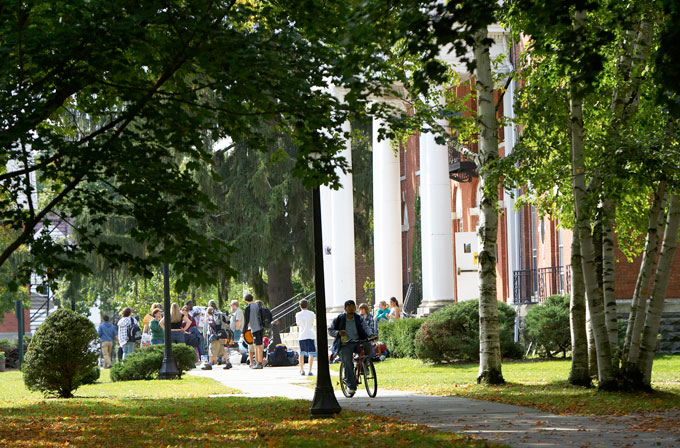
Green Mountain College (GMC) in Poultney, Vermont, is joining Casella Waste Systems’ “Power of Three” closed-loop recycling initiative involving the recycling company, a local paper manufacturer, and the distributor from which GMC already purchases its paper products. All of GMC’s paper, plastic, glass, and metal recyclables will be commingled and shipped about 20 miles to Casella’s facility in Rutland, Vermont; once the material has been mechanically sorted, the baled paper will be shipped about 45 miles and made into 100% recycled paper toiletry products to be delivered back to the college. 

In 2011, GMC became the country’s second climate-neutral campus.

Published December 31, 1969

(2012, April 30). Closing the Loop at Green Mountain College. Retrieved from https://www.buildinggreen.com/departments/newsbrief

Add new comment

To post a comment, you need to register for a BuildingGreen Basic membership (free) or login to your existing profile.

RACE to Give Solar Decathlon a Run for Its Money

News Brief

RACE to Give Solar Decathlon a Run for Its Money

The Rocky Mountain Institute (RMI) and the Denver Housing Authority (DHA) are planning a new student design competition focused on energy efficiency, indoor air quality, and health measures, and emphasizing local, contextual design.

Tentatively named the Residential Affordable Competition for Efficiency (RACE-Home), the new project was inspired by the U.S. Department of Energy’s biennial Solar Decathlon—in which collegiate teams compete in designing solar-powered homes—but is also a response to the Solar Decathlon’s high costs. (In 2011, the contest added an “Affordability” segment to encourage designs with construction costs under $250,000). In addition, while most Solar Decathlon homes remain on display at their home campuses, RACE-Homes would become affordable housing after the exhibition, potentially at Denver urban infill sites.

According to RMI’s James Brew, AIA, students will focus on “efficient, local, contextual design, and partner with professional builders to begin to bridge the design-build gap, as well as ensure the houses [meet] code and local design requirements.”

RMI is currently gauging schools’ interest in the project, which would provide each team with a general contractor and $50,000 in seed funding. RMI intends to launch the competition in September 2012.




Published December 31, 1969

(2012, April 30). RACE to Give Solar Decathlon a Run for Its Money. Retrieved from https://www.buildinggreen.com/departments/newsbrief

Add new comment

To post a comment, you need to register for a BuildingGreen Basic membership (free) or login to your existing profile.

New Rating System "Envisions" Sustainable Infrastructure

News Brief

New Rating System "Envisions" Sustainable Infrastructure

The Institute for Sustainable Infrastructure (ISI) has launched Envision, a framework for evaluating infrastructure projects.

The system takes what ISI calls a holistic view, touching on quality of life, resource allocation, impacts on ecosystems and climate, and issues of risk and leadership. Project owners and design teams can use a self-assessment tool or can submit the project for third-party verification, which includes evaluation of the project during three phases: pre-construction, construction, and operations and maintenance.

Future versions of the rating system, which was developed by ISI in partnership with Harvard University’s Zofnass Program for Sustainable Infrastructure, will also incorporate additional tools for complex or multi-stage projects. More information is available at www.sustainableinfrastructure.org/rating.


Published December 31, 1969

(2012, April 30). New Rating System "Envisions" Sustainable Infrastructure. Retrieved from https://www.buildinggreen.com/departments/newsbrief

Add new comment

To post a comment, you need to register for a BuildingGreen Basic membership (free) or login to your existing profile.