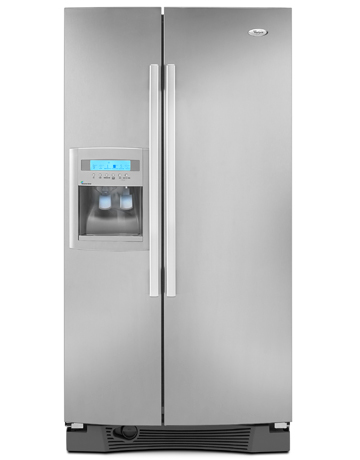
Refrigerators keep our food cold, but foam insulation that boosts their efficiency paradoxically contributes to global warming: the chemicals typically used as blowing agents to make this insulation can have global warming potential (GWP) hundreds of times that of CO2. Whirlpool Corporation will start producing refrigerators that use insulation with reduced climate impact in 2013.
Touting it as “the most environmentally responsible insulation available,” the company announced that Maytag, Amana, Jenn-Air, and KitchenAid brands will all use the newer material.
Whirlpool has partnered with Honeywell, manufacturer of the Solstice liquid blowing agent—a hydrofluoroolefin (HFO) developed specifically to address global warming concerns. Solstice has a GWP between 4.7 and 7.0 (meaning it is 4.7 to 7 times as potent as CO2), which is roughly 99% lower than the HFC-245fa in use today. Like HFC-245fa, it has zero ozone depletion potential. Honeywell and Whirlpool claim the new HFO blowing agent also offers a modest 2% improvement in the insulation’s energy performance.
Like the blowing agents they replace, HFOs break down into chemicals that persist in the environment, including trifluoroacetic acid (TFA). Despite its persistence, TFA is not known to pose a significant toxicity risk in quantities typically found in the environment.
Life-cycle assessment shows LED lamps slightly outperform compact fluorescent lamps (CFLs) on environmental impacts related to their manufacturing, transport, and use. The U.S. Department of Energy (DOE) has released the second of three reports in its “Life-Cycle Assessment of Energy and Environmental Impacts of LED Lighting Products,” which compares the impacts of an incandescent lamp, a CFL, a 2012 Philips EnduraLED, and a hypothetical 2017 LED based on projected improvements in technology.
In the course of 20 million lumen-hours of light service—roughly equivalent to the lifetime output of one Philips EnduraLED, three CFLs, or 22 incandescent lamps—LED lamps perform far better than incandescent lighting and better than CFLs on most measures. While energy consumed in use constitutes the majority of the impact for all of these products, the 2012 LEDs were found to contribute slightly more to landfills due to manufacturing waste and issues with disposal of their large aluminum heat sinks. The authors recommend that DOE work with manufacturers to reduce the size of those heat sinks and explore alternative materials.
Part 3 of the report will examine the impacts of LED disposal.
By Erin WeaverGeneral Electric (GE) had hoped to be the country’s biggest solar equipment manufacturer by 2013, but those plans have been pushed back to at least 2015. Construction on an Aurora, Colorado, factory has been halted while the company focuses on boosting the efficiency of its cadmium-telluride (CdTe) thin-film solar panels from 12.5% to more than 15% to compete with conventional crystalline panels flooding the market from China. The glut of solar panels caused prices to drop by nearly half in 2011, and a number of manufacturers have filed for bankruptcy, including Solyndra, Evergreen, SpectraWatt, and, most recently, Colorado-based Abound.
By Erin WeaverThe city of Sydney, Australia, has increased bike ridership by 82% in just two years as part of its Sustainable Sydney 2030 plans. Two years ago, the city had bicycling rates below the national average, with only 0.8% of work trips made by bike; Sydney 2030 calls for 10% of trips to be by bike in 2030, and this year that number reached 1.4%.
Research showed residents’ likelihood of commuting by bike increased markedly based on the percentage of the commute possible in a dedicated bike lane, so the city has set out to provide 125 miles of bike lanes by 2030, with 34 miles of them separated from traffic. The first six miles of separate lanes, the “backbone” of the network, have been completed; by 2030 the network will include more than 160 Sydney suburbs. Along with separate lanes, the city has offered safety courses, biking maps, and free bike bells. Other infrastructure changes have included decreased speed limits and junction redesigns, leading to decreased accidents among all forms of transportation.
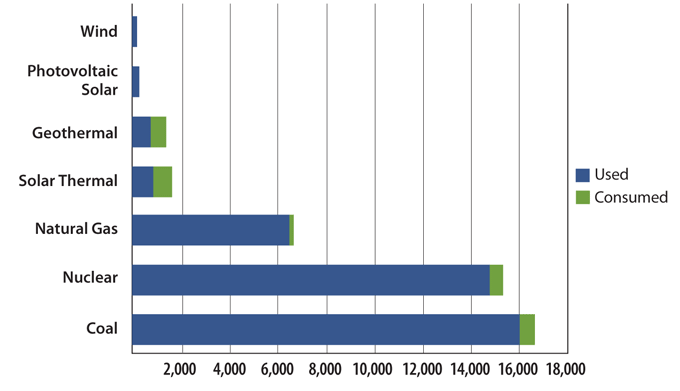
By Erin WeaverThe average U.S. household indirectly requires nearly 40,000 gallons of water per month for the production of its electricity—five times more than its direct residential use. A new report from the River Network, “Burning Our Rivers: The Water Footprint of Electricity,” tallies the massive amounts of water used to produce electricity in the United States at approximately 42 gal/kWh, much of it for cooling purposes in thermoelectric generation in coal or nuclear plants.
More than half of fresh surface water withdrawn goes to electricity production; some is polluted, some is evaporated, and most of it is warmed, altering ecosystems and killing aquatic life. Coal, including mining, is the biggest offender, followed by nuclear power: two nuclear power plants in Georgia, for example, use more water than all the residents of Atlanta, Augusta, and Savannah combined.
Natural gas, which this year generated as much electricity as coal in the U.S., also has a significant water footprint—even though the report does not address hydraulic fracturing (“fracking”) due to lack of data. Hydropower, despite its green reputation, causes about 9 billion gallons a day to evaporate from reservoir surfaces. The authors conclude that, in addition to shifting to virtually zero-water-footprint technologies like wind and solar, modernizing “once-through” cooling systems in existing power plants could save more water than all U.S. residential water conservation programs combined. For more information, see www.rivernetwork.org.
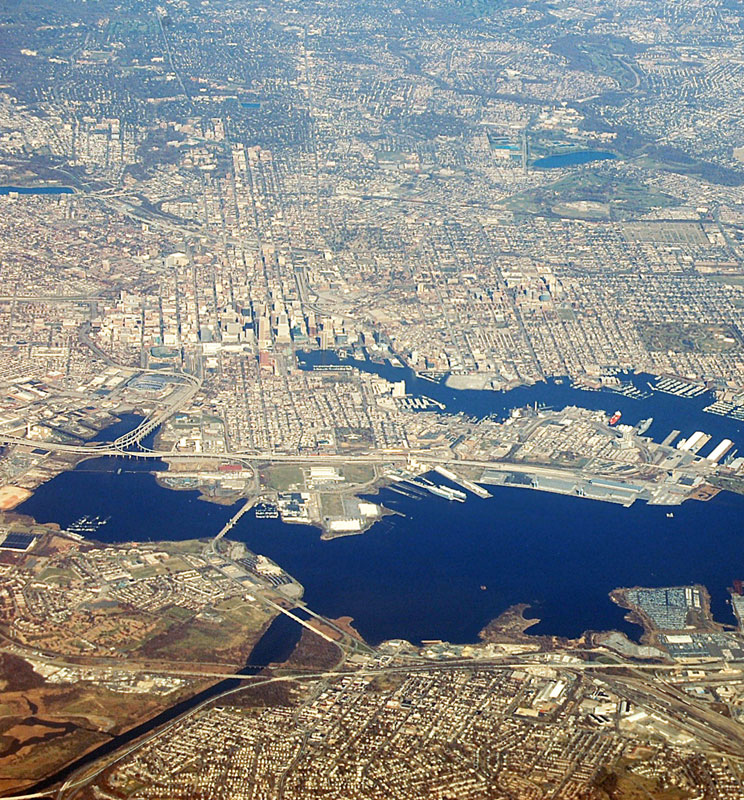
By Erin WeaverA new study suggests a strong correlation between urban tree cover and reduced crime, especially on public lands. “The relationship between tree canopy and crime rates across an urban–rural gradient in the greater Baltimore region,” published in the journal
Landscape and Urban Planning by researchers from the University of Vermont and the U.S. Department of Agriculture Forest Service, looked at the relationship between tree cover (based on aerial photography) and crime rates in the city of Baltimore and Baltimore County, Maryland.
After controlling for population density and socioeconomic factors, the authors found that, on average, a 10% increase in tree canopy corresponded to a 12% decrease in crime, with the relationship most pronounced on public lands such as city parks. In a few isolated patches, the relationship was reversed, especially in an area of Baltimore between industrial and residential properties where, according to the study, the plant life may be attributed to abandoned, overgrown lots rather than maintained trees. The researchers suggest that tree planting could be prioritized as a public safety matter, as the presence of trees can suggest a neighborhood is well cared for and criminal behavior is more likely to be noticed.
U.S. Ranks 9th Out of 12 on Energy Efficiency but Feels Least Guilty
by Erin Weaver
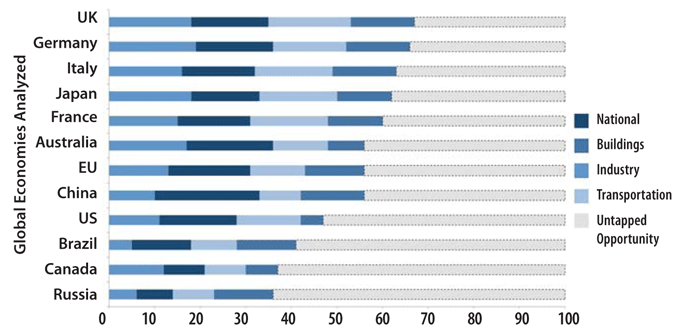
By Erin WeaverThe U.S. scores low on energy efficiency among the world’s largest economies, ranking 9th out of 12 in a new report from the nonprofit American Council for an Energy-Efficient Economy (ACEEE).
The “International Energy Efficiency Scorecard” looked at 12 nations representing 78% of global GDP, 63% of global energy consumption, and 62% of global emissions. Scoring was based on 27 metrics regarding buildings, industry, transportation, and efforts at the national level. The United Kingdom was the top-ranked country in the study, with Germany, Italy, Japan, and France also scoring high marks. The U.K. scored in the top four across all four categories, while the U.S. scored relatively well on building-related metrics but last in transportation measures—and has made “limited or little progress toward greater efficiency at the national level,” according to the report.
The authors point out that the U.S. is wasting money other nations are able to reinvest, and they make a number of recommendations, including national energy-savings targets; adoption of the most stringent building codes; increased funding for public transportation; and higher federal fuel-economy standards.
Many of these nations were also included in a recent report from
National Geographic indicating that people from countries with larger environmental footprints are less likely to feel guilty about their impact. Citizens of India, with the lowest per capita footprint, feel the most environmental guilt, followed by the Chinese, Brazilians, and Russians; Americans, with the highest environmental impacts of the 17 countries surveyed, feel the least guilt.
(2012, July 30). U.S. Ranks 9th Out of 12 on Energy Efficiency but Feels Least Guilty. Retrieved from https://www.buildinggreen.com/departments/newsbrief
New Study Makes Previous Climate Projections Look "Rosy"
by Erin Weaver
The dire 2007 predictions of the U.N. Intergovernmental Panel on Climate Change (IPCC) painted a picture that was “a bit too rosy,” according to John Reilly, Ph.D., of the Massachusetts Institute of Technology (MIT), one of the authors of a new study suggesting that climate change is happening more rapidly than predicted.
It takes seven years to produce an IPCC report, which makes it difficult to accurately assess how rapidly changes are occurring, says the group of researchers from MIT, Penn State, the Marine Biological Institute, and the U.S. Environmental Protection Agency. The 2007 report assumed countries would achieve their pledged reductions in greenhouse gas emissions, but that hasn’t been the case: 2010 emissions exceeded IPCC projections by 10%. The new report forecasts a median global temperature increase of 9°F (6°C) by 2100—instead of IPCC’s predicted increase of 6.3°F (3.5°C)—along with greater sea-level rise, more extreme weather events, and up to three times greater Arctic warming. Even if countries do achieve the promised emissions reductions, say the authors, the global temperature increase will still exceed 7.2°F (5°C) by century’s end.
Since LEED for Homes launched in 2008, more than 20,000 homes have achieved certification; a recent study says one-third of residential construction will be green by 2016.
by Erin Weaver
More than 20,000 U.S. homes have achieved certification through LEED for Homes since the program’s launch in 2008, with nearly four times that number currently registered and working toward certification.
Green building is expected to account for about one-third of the residential market by 2016, according to a recent McGraw-Hill Construction study. Of LEED’s future in the industry, Nate Kredich, vice president of residential market development at the U.S. Green Building Council, says the market is recognizing that “there are green homes, and then there are LEED homes.”
LEED for Homes certifications thus far include a variety of building types, more than half of them affordable housing. Recently certified projects include eight LEED Platinum affordable homes in Florida, two LEED Gold multifamily buildings in Texas, and a LEED Silver home in Saudi Arabia—one of the first LEED for Homes international pilot projects to achieve certification.
The Sustainable Buildings Industry Council (SBIC) has become a council of the National Institute of Building Sciences (NIBS). Founded in 1981 as the Passive Solar Industries Council, SBIC has been a leading advocate of a high-performance, whole-building approach to sustainability. SBIC programs such as the Beyond Green high-performance building awards will continue under NIBS, and SBIC membership and publications will also be maintained. For more information, see www.nibs.org/?page=sbic.




 The city of Sydney, Australia, has increased bike ridership by 82% in just two years as part of its Sustainable Sydney 2030 plans. Two years ago, the city had bicycling rates below the national average, with only 0.8% of work trips made by bike; Sydney 2030 calls for 10% of trips to be by bike in 2030, and this year that number reached 1.4%.
  By Erin WeaverThe average U.S. household indirectly requires nearly 40,000 gallons of water per month for the production of its electricity—five times more than its direct residential use. A new report from the River Network, “Burning Our Rivers: The Water Footprint of Electricity,” tallies the massive amounts of water used to produce electricity in the United States at approximately 42 gal/kWh, much of it for cooling purposes in thermoelectric generation in coal or nuclear plants.
  By Erin WeaverA new study suggests a strong correlation between urban tree cover and reduced crime, especially on public lands. “The relationship between tree canopy and crime rates across an urban–rural gradient in the greater Baltimore region,” published in the journal
  By Erin WeaverThe U.S. scores low on energy efficiency among the world’s largest economies, ranking 9th out of 12 in a new report from the nonprofit American Council for an Energy-Efficient Economy (ACEEE).


Add new comment
To post a comment, you need to register for a BuildingGreen Basic membership (free) or login to your existing profile.