Columbia Campus Plan Scores NYC's First LEED-ND Platinum Certification

News Brief

Columbia Campus Plan Scores NYC's First LEED-ND Platinum Certification

By Erin WeaverColumbia University’s long-term project plan for its 17-acre Manhattanville campus in West Harlem has earned New York City’s first LEED for Neighborhood Development (LEED-ND) Platinum certification; this is also the first LEED Platinum certification awarded to a university campus plan. The LEED-ND pilot program integrates green building with community-scale issues of location, such as accessibility of jobs and services by foot or public transit. Over the next two decades, the Manhattanville campus will become interwoven with the surrounding community, turning the one-time industrial area into a more energy-efficient, pedestrian-friendly environment. “[We] are building a future in our home community [that reflects] both the core values of city life and the fundamental need for a more sustainable society,” says university president Lee C. Bollinger. Among the goals of the design team, led by Renzo Piano, are enhanced connections between West Harlem and the Hudson River waterfront; proximity to public transit; mixed use of space, including academic, residential, retail, and arts; and green open space. The construction process also focuses on reduced noise, low emissions, and recycling of demolition materials. Columbia’s campuses already boast several LEED Gold- and Silver-certified buildings.

Published December 31, 1969

(2012, June 29). Columbia Campus Plan Scores NYC's First LEED-ND Platinum Certification. Retrieved from https://www.buildinggreen.com/departments/newsbrief

Add new comment

To post a comment, you need to register for a BuildingGreen Basic membership (free) or login to your existing profile.

DOE Finalizes HVAC Rule

News Brief

DOE Finalizes HVAC Rule

The U.S. Department of Energy (DOE) is adopting the stricter efficiency standards specified in ASHRAE 90.1–2010 in a new rule affecting heating, air conditioning, and water heating equipment. ”Energy Efficiency Program for Certain Commercial and Industrial Equipment” addresses air conditioners and heat pumps defined as packaged terminal, single package vertical, or variable-refrigerant-flow (VRF); computer room air conditioners; and a variety of boilers, water heaters, and storage tanks. To align DOE testing with industry procedures, the new tests reference ASHRAE 90.1-2010, ANSI, Underwriters Laboratories, and operation manuals from the Air-Conditioning, Heating, and Refrigeration Institute. The rule will take effect in October 2012 for small VRF heat pumps and computer-room air conditioners and in May 2013 for other equipment.


Published December 31, 1969

(2012, June 29). DOE Finalizes HVAC Rule. Retrieved from https://www.buildinggreen.com/departments/newsbrief

Add new comment

To post a comment, you need to register for a BuildingGreen Basic membership (free) or login to your existing profile.

ILFI Shuffles Leadership, Brings in New Faces

News Brief

ILFI Shuffles Leadership, Brings in New Faces

The International Living Future Institute (ILFI) has announced the creation of new leadership positions in a reorganization that gives CEO Jason McLennan time to focus on innovation and reconnect to private-sector building projects.

A new executive director, Richard Graves, will manage day-to-day operations; Graves has served as the U.S. Green Building Council’s senior vice president of community. Mona Lemoine, formerly ILFI Education and Training Director, will be executive director of ILFI subsidiary Cascadia Green Building Council, and Amanda Sturgeon, AIA is being promoted to replace the outgoing Eden Brukman as program director of ILFI’s Living Building Challenge (LBC).

McLennan is creator of the LBC, 2012 winner (and 2010 runner-up) in the Buckminster Fuller Challenge for its influence on socially responsible design. With Graves as executive director, he will now focus on developing new programs, including LBC 3.0, and becoming involved in individual building projects.


Published December 31, 1969

(2012, June 29). ILFI Shuffles Leadership, Brings in New Faces. Retrieved from https://www.buildinggreen.com/departments/newsbrief

Add new comment

To post a comment, you need to register for a BuildingGreen Basic membership (free) or login to your existing profile.

Green Job Training "Skyrocketing" in Higher Ed

News Brief

Green Job Training "Skyrocketing" in Higher Ed

By Erin WeaverThe Association for the Advancement of Sustainability in Higher Education (AASHE) has published its annual review of sustainability efforts at colleges and universities, finding overall increases in green job-training programs, building projects, and energy-related initiatives.

Compiled from the organization’s online newsletter, the “2011 Higher Education Sustainability Review” found nearly 60% of new programs focused on green careers, a 142% increase from 2010. More than half of these programs were started at technical and community colleges to train students in fields that include wind turbine technology and energy audits.

Corresponding to a 32% increase in LEED-certified square footage in the higher education sector, green building projects reported in the newsletter increased from 180 in 2010 to 191 in 2011; efforts to improve energy efficiency and transition to renewable energy also increased. AASHE’s own Sustainability Tracking, Assessment & Rating System (STARS) rated its 100th building in 2011. The federal government has announced a $4 billion program to improve the energy efficiency of college and university buildings; many of these projects are also paid for by “green funds” established through fees and donations.

Published December 31, 1969

(2012, June 29). Green Job Training "Skyrocketing" in Higher Ed. Retrieved from https://www.buildinggreen.com/departments/newsbrief

Add new comment

To post a comment, you need to register for a BuildingGreen Basic membership (free) or login to your existing profile.

Obama Administration Targets Asthma in Low-Income Communities

News Brief

Obama Administration Targets Asthma in Low-Income Communities

The plan will coordinate efforts among agencies involved in health and environmental quality to target services to communities most at risk; to increase understanding of its causes; and to test preventive measures. For example, the plan recommends that federally assisted housing include policies to reduce exposure to secondhand smoke, pests, mold, and other asthma triggers, encouraging state and local governments to do the same. It also recommends coordination between health and housing programs to identify opportunities for asthma management, reduce environmental exposure, and encourage referrals to health services; programs involved could include weatherization and lead remediation efforts. For more information, see www.epa.gov/childrenstaskforce.


Published December 31, 1969

(2012, June 29). Obama Administration Targets Asthma in Low-Income Communities. Retrieved from https://www.buildinggreen.com/departments/newsbrief

Add new comment

To post a comment, you need to register for a BuildingGreen Basic membership (free) or login to your existing profile.

IgCC a "Sign the Game Has Changed," Says AIA

News Brief

IgCC a "Sign the Game Has Changed," Says AIA

The American Institute of Architects (AIA) has produced a guide to help architects implement the International Green Construction Code (IgCC), which was introduced in March 2012 by the International Code Council, and to advocate for adoption of the code in their own jurisdictions.

“The AIA Guide to the IgCC” points out that architects familiar with the code will be sought for their expertise as the code is more widely adopted. The guide gives chapter-by-chapter summaries and commentary on the implications of IgCC provisions for design and practice, saying, “The IgCC…is not itself a game changer but further evidence that the game has changed.”

Encouraging advocacy for code adoption, the guide recalls the initial uncertainty and confusion surrounding the Americans with Disabilities Act (ADA), whose accessibility accommodations have since become second nature. To avoid this confusion regarding the IgCC, says the guide, architects “have to articulate what the IgCC actually requires” and remind officials that “the issue is not more regulation; it is consistent regulation.” For more information, see www.aia.org/igcc.


Published December 31, 1969

(2012, June 29). IgCC a "Sign the Game Has Changed," Says AIA. Retrieved from https://www.buildinggreen.com/departments/newsbrief

Add new comment

To post a comment, you need to register for a BuildingGreen Basic membership (free) or login to your existing profile.

No More Secrets-"Facebook" for Buildings Tells All

News Brief

No More Secrets-"Facebook" for Buildings Tells All

By Erin WeaverIn the latest stop on its “Honest Buildings Across America” tour, Honest Buildings has partnered with the Seattle 2030 District to release comprehensive data on 32,000 of the city’s commercial and mixed-use buildings.

The Honest Buildings online platform is intended to help connect building owners, architects, and service providers and to provide transparency and encourage competition for energy-efficient buildings. The data, collected from users and public and proprietary sources, includes ownership and management information, a record of renovations and projects, and whether a building is LEED-certified or Energy Star-rated. Says Pat Sapinsley, AIA, advisor to Honest Buildings, “Information that has historically been disaggregated…can now be associated with that building with one click.”

Since its launch earlier this year, Honest Buildings has released data on 475,000 buildings across the U.S. In addition to 95,000 buildings in Texas, 30,000 in San Francisco, and 15,000 in the D.C. metro area, the site profiles 250,000 New York City structures, including those subject to the City’s annual benchmarking requirements for City-owned buildings (see “NYC Benchmarks Buildings, Finds Room for Improvement,”

EBN Feb. 2012).

The platform is open to anyone to compare buildings based on various criteria as well as to submit buildings or review them using the site’s seven-star “Honesty Rating” system. For more information, see www.honestbuildings.com.

Published December 31, 1969

(2012, June 29). No More Secrets-"Facebook" for Buildings Tells All. Retrieved from https://www.buildinggreen.com/departments/newsbrief

Add new comment

To post a comment, you need to register for a BuildingGreen Basic membership (free) or login to your existing profile.

Envelope Commissioning How- To from NIBS

News Brief

Envelope Commissioning How- To from NIBS

By Erin WeaverBuilding envelope commissioning (BECx) is gaining momentum as a way for project teams to achieve and verify performance. A new publication from the National Institute of Building Sciences (NIBS)—NIBS Guideline 3-2012—outlines the process of incorporating BECx from project inception through operations and maintenance to ensure that a building’s materials and systems meet expectations regarding air flow, moisture control, durability, and a number of other factors. A revision of a 2005 NIBS guideline, Guideline 3-2012 is intended for use with ASHRAE Guideline 0-2005, which details the commissioning process, and aligns with ASTM E2813,

Standard Practice for Building Enclosure Commissioning.

BECx is one of many topics causing a stir in the public comment period for LEED v4: originally part of the commissioning prerequisite, it was removed in a revision due to concerns about cost and now applies only to the commissioning credit. For more information, see www.nibs.org.

Published December 31, 1969

(2012, June 29). Envelope Commissioning How- To from NIBS. Retrieved from https://www.buildinggreen.com/departments/newsbrief

Add new comment

To post a comment, you need to register for a BuildingGreen Basic membership (free) or login to your existing profile.

Sunny Skies, Net-Zero Cloud

News Brief

Sunny Skies, Net-Zero Cloud

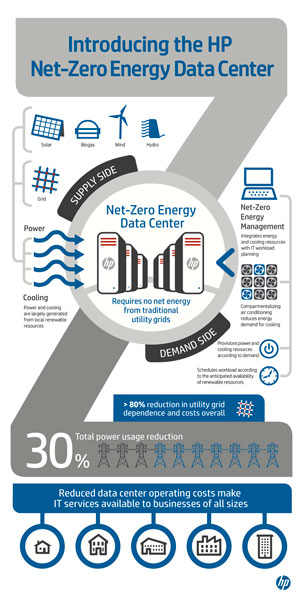
By Erin WeaverWhile centralized, off-site information storage may reduce the impact of some activities, “the cloud” is powered by massive data centers: according to Greenpeace, the cloud’s electricity use is larger than that of most nations. In an effort to address that, Hewlett-Packard has published design guidelines for data centers that can be run on direct current (DC) microgrids (see “A Surge of Popularity for Efficient DC Power,”

EBN May 2011) and grid-tied renewable resources for net-zero power use.

The new guidelines, being tested by the company’s research arm, HP Labs, use workload planning to match supply with demand for a total reduction in power use of 30% and an 80% reduction in grid dependence. At a center with a photovoltaic array, this demand management approach allows non-critical workloads to be scheduled during daylight hours, when solar energy is readily available. For more information, see www.hpl.hp.com.

Published December 31, 1969

(2012, June 29). Sunny Skies, Net-Zero Cloud. Retrieved from https://www.buildinggreen.com/departments/newsbrief

Add new comment

To post a comment, you need to register for a BuildingGreen Basic membership (free) or login to your existing profile.

Prepare for Killer Summer Heat, Says NRDC

News Brief

Prepare for Killer Summer Heat, Says NRDC

The Natural Resources Defense Council (NRDC) has published a review of data predicting dramatic increases in heat-related deaths in the largest U.S. cities by the end of the century, indicating that efforts at resilience could save thousands of lives. “Killer Summer Heat: Projected Death Toll from Rising Temperatures in America Due to Climate Change” analyzes a study published in the Journal of the American Meteorological Society to make its data more accessible.

Based on a “business-as-usual” scenario of continued reliance on fossil fuels with no significant policy interventions, the study predicts a cumulative toll of more than 150,000 heat-related deaths by century’s end—but NRDC points out that those numbers may be conservative as they do not take into account population growth or aging baby boomers swelling the ranks of the heat-susceptible elderly.

Most states experienced record summer temperatures in 2011, but the effects can be most dramatic in cities due to the urban heat-island effect. The study looks at Excessive Heat Event (EHE) days, a combination of high temperatures and other weather factors that vary by region; non-weather factors, including green space, local preventive measures, and resident resilience, influence the health impact of EHE days.

Most cities are expected to see dramatic increases in EHE days and related mortality, but those already experienced in heat management could see better outcomes: Atlanta, GA, with an increase from 5 to 58 EHE days by century’s end, is predicted to see a slight decline in related mortality—but New York City, with a less steep increase in EHE days, is expected to see a more than 30% rise in related mortality. Louisville, KY, is at the highest risk for heat-related mortality by century’s end, with an expected cumulative toll of nearly 19,000 deaths.

For more information:

Natural Resources Defense Council

http://www.nrdc.org/globalwarming/killer-heat/

 

Published December 31, 1969

(2012, June 14). Prepare for Killer Summer Heat, Says NRDC. Retrieved from https://www.buildinggreen.com/departments/newsbrief

Add new comment

To post a comment, you need to register for a BuildingGreen Basic membership (free) or login to your existing profile.