Georgia Outlaws LEED in Latest Battle over FSC

News Brief

Georgia Outlaws LEED in Latest Battle over FSC

Following in Maine’s footsteps, the State of Georgia has effectively banned LEED certification for State building projects.

Governor Nathan Deal’s executive order (PDF), echoing language used by Maine Governor Paul LePage, requires green building standards that equally recognize three forestry standards—the Sustainable Forestry Initiative (SFI), the American Tree Farm System, and the Forest Stewardship Council (FSC). The Governor’s office claims that “recognizing all forest certifications equally will promote sustainable forestry in our state and will help create thousands of jobs while maintaining our strong outdoor heritage.” The ban does not apply to school district building projects but does apply to State-funded colleges and universities.

LEED offers optional certified wood credits only for FSC-certified wood, but incentives are available for locally sourced materials—meaning that even non-certified local wood can be used to attain optional LEED credits.

BuildingGreen’s investigative series on the “wood wars” examines claims and motives behind recent LEED bans.

For more information:

Office of the Governor of Georgia

Published December 31, 1969

(2012, October 2). Georgia Outlaws LEED in Latest Battle over FSC. Retrieved from https://www.buildinggreen.com/departments/newsbrief

Add new comment

To post a comment, you need to register for a BuildingGreen Basic membership (free) or login to your existing profile.

Offices Are Major Source of Flame Retardant Exposure

News Brief

Offices Are Major Source of Flame Retardant Exposure

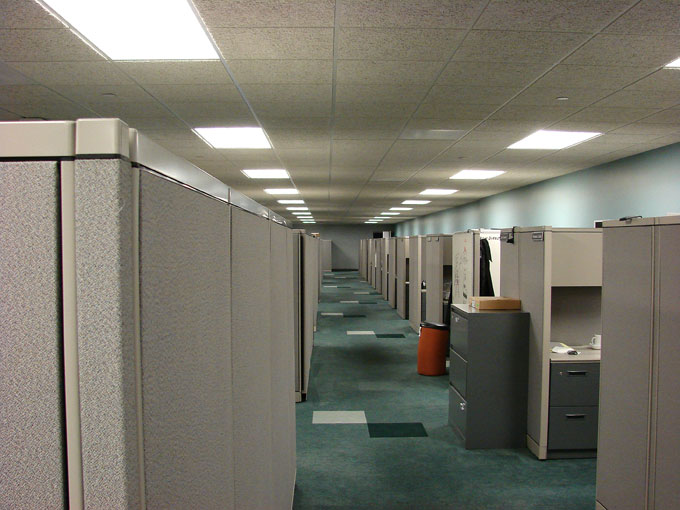
By Erin WeaverOffices can be a significant source of exposure to brominated flame retardants, according to a study in

Environmental Health Perspectives.

The authors of “Exposure to PBDEs in the Office Environment” tested office dust in eight Boston buildings, along with handwipes and blood samples from workers, for polybrominated diphenyl ethers (PBDEs), a group of persistent, bioaccumulative toxic chemicals that have long been used as flame retardants in furniture, carpet, plastics, and electronics. Of its three main forms, pentaBDE and octaBDE are no longer manufactured or used in the U.S., but the authors found components of pentaBDE in the majority of blood samples, while components of these and decaBDE (which is still being phased out) were found in nearly all dust samples and handwipes.

Overall, workers in offices with the highest concentrations of pentaBDE in dust samples had more than twice as much on their hands as those in other offices, but more hand-washing correlated with lower blood concentrations: workers who washed their hands the least had more than three times as much pentaBDE on their hands and three times as much in their blood as those who washed their hands frequently.

Published December 31, 1969

(2012, October 2). Offices Are Major Source of Flame Retardant Exposure. Retrieved from https://www.buildinggreen.com/departments/newsbrief

Add new comment

To post a comment, you need to register for a BuildingGreen Basic membership (free) or login to your existing profile.

Alpen Windows to Focus on Passive House

News Brief

Alpen Windows to Focus on Passive House

In 2008, Serious Materials (later renamed Serious Energy) acquired the pioneering window manufacturer Alpen Energy Group of Boulder, Colorado—whose windows had been recognized as a BuildingGreen Top-10 Green Building Product in 2007. On September 27, 2012, Serious Energy sold back the top-efficiency fiberglass window and architectural glass manufacturing operation to Alpen High Performance Products, LLC (a newly formed company comprised of the original owners of Alpen Windows).

Under Serious Energy ownership, there have been reports from the field of quality control and customer support problems with window products. A return to Alpen provides an opportunity to regain a previously strong reputation for both quality and support.

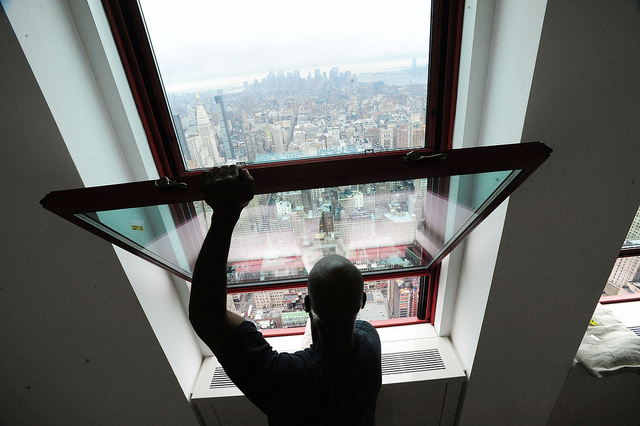
Alpen’s high-performance fiberglass windows offer such features as krypton and argon fills, one or more suspended Heat Mirror films in the sealed insulating glass unit (IGU), and triple sealing and triple weatherstripping for increased airtightness. Alpen’s suspended-film glazing system, under the brand name SeriousGlass, was installed in more than 6,500 existing double-hung windows at the Empire State Building as part of a storied energy upgrade.

Some of the original Alpen team, including Alpen founder Robert Clarke, remained with Serious Energy following the 2008 acquisition, and the spin-off company today is well positioned to maintain leadership in the high-performance windows industry. Along with Clarke, the current team includes CEO Brad Begin, who was also with the original Alpen. Looking ahead, the company plans to be an active player in the Passive House movement. “We are racing toward Passive House certification [of Alpen windows],” Clarke told EBN.

Alpen has been operating continuously since 1981 and has consistently been the U.S. technology leader in energy-efficient windows. The company has announced that its operations and customer service staff will remain intact, as will the working relationship between Alpen and Serious Energy; it will also continue to manufacture its products in Colorado. Serious Energy retains ownership of a vinyl window factory in Pennsylvania.

For more information:

Alpen High Performance Products

 

Published December 31, 1969

(2012, October 1). Alpen Windows to Focus on Passive House. Retrieved from https://www.buildinggreen.com/departments/newsbrief

Add new comment

To post a comment, you need to register for a BuildingGreen Basic membership (free) or login to your existing profile.

New York State Authorizes Property Tax Waivers for LEED Buildings

News Brief

New York State Authorizes Property Tax Waivers for LEED Buildings

By Paula MeltonThe State of New York has authorized municipalities to waive property taxes for green homes and commercial buildings.

Cities and towns adopting the new measure will take LEED-certified properties off their tax rolls for up to six years; tax exemptions will phase out gradually over a seven- to ten-year period, depending on the building’s level of certification, with a LEED Platinum rating earning the largest and longest-lasting waivers. The law also references “substantially equivalent” green building standards, such as Green Globes, but leaves the details for each municipality to determine on its own.

Tax exemptions will be available for construction projects that begin after January 1, 2013, and will apply to both new construction and existing buildings. To qualify, a project’s construction costs must exceed $10,000, and improvements to existing buildings must go beyond “ordinary maintenance or repairs.”

Published December 31, 1969

(2012, August 27). New York State Authorizes Property Tax Waivers for LEED Buildings. Retrieved from https://www.buildinggreen.com/departments/newsbrief

Add new comment

To post a comment, you need to register for a BuildingGreen Basic membership (free) or login to your existing profile.

EPA Funding Supports Green Infrastructure

News Brief

EPA Funding Supports Green Infrastructure

By Erin WeaverThe U.S. Environmental Protection Agency (EPA) has announced 17 communities awarded technical assistance to expand green infrastructure. The communities will receive a combined total of $950,000 through EPA’s “Strategic Agenda to Protect Waters and Build More Livable Communities Through Green Infrastructure.”

The agency will hire experts to help communities improve water quality with techniques that include permeable hardscapes, green roofs, rainwater harvesting, and street design. The 17 communities include small towns and large cities across a range of climate zones, with projects from preservation of healthy waterways to restoration of degraded waters. Atlanta, Georgia, for example, will develop conceptual designs from a pre-existing project, in which residents of an economically depressed area prone to flooding established a “wish list” of infrastructure projects that includes rain-watered community gardens and open green spaces. The 17 communities were chosen from more than 150 respondents to EPA’s call for letters of interest.

Published December 31, 1969

(2012, August 27). EPA Funding Supports Green Infrastructure. Retrieved from https://www.buildinggreen.com/departments/newsbrief

Add new comment

To post a comment, you need to register for a BuildingGreen Basic membership (free) or login to your existing profile.

"Remove and Retrain" to Take a (Plug) Load Off

News Brief

"Remove and Retrain" to Take a (Plug) Load Off

By Erin WeaverWith plug-in devices accounting for 15%–20% of the average office’s energy use, a new guide from the New Buildings Institute (NBI) outlines steps to cut office plug loads by up to 40%. The largest plug loads come from computers, monitors, and peripherals such as speakers; The Plug Loads Best Practices Guide suggests no- and low-cost steps, from inexpensive hardware like timers and advanced power strips to simply making sure devices’ power-saving settings are enabled.

NBI senior project manager Amy Cortese says the guide will “help office managers engage tenants and occupants, [who] can and should play a significant role in managing energy use.” The guide offers five steps for plug load reduction, simplified as “Review, Remove, Replace, Reduce, Retrain,” which sum up the process of eliminating unnecessary devices and making sure office staff know when and how to power down.

The guide is available through NBI’s Advanced Buildings website at www.advancedbuildings.net/plug-loads.

Published December 31, 1969

(2012, August 27). "Remove and Retrain" to Take a (Plug) Load Off. Retrieved from https://www.buildinggreen.com/departments/newsbrief

Add new comment

To post a comment, you need to register for a BuildingGreen Basic membership (free) or login to your existing profile.

Maine Launches First Commercial Tidal Energy Project

News Brief

Maine Launches First Commercial Tidal Energy Project

By Erin WeaverA project in Eastport, Maine, will soon become the first commercial tidal power plant in the U.S. Three of the state’s electric utilities have 20-year contracts with the Ocean Renewable Power Company (ORPC) to purchase electricity generated by the Cobscook Bay project at an inlet of the Bay of Fundy.
ORPC will operate five cross-flow turbines on the floor of Cobscook Bay, where they will generate energy from both ebb and flood tides. The devices will operate safely below passing ships, and according to ORPC, tests indicate that marine life should have no safety issues with their blunt, slow-moving blades. The first turbine will soon begin operation; four additional turbines will be installed over the following year, at which point the project should power up to 100 area homes. ORPC then hopes to expand to nearby locations for an overall capacity of 4 MW powering more than 1,000 homes and businesses.

The U.S. Department of Energy invested $10 million in the project, which has created at least 50 jobs for local workers and manufacturing work around New England: the turbines were made in Rhode Island and the generator in Massachusetts.

Published December 31, 1969

(2012, August 27). Maine Launches First Commercial Tidal Energy Project. Retrieved from https://www.buildinggreen.com/departments/newsbrief

Add new comment

To post a comment, you need to register for a BuildingGreen Basic membership (free) or login to your existing profile.

Fast-Track Solar Development Zones Identified

News Brief

Fast-Track Solar Development Zones Identified

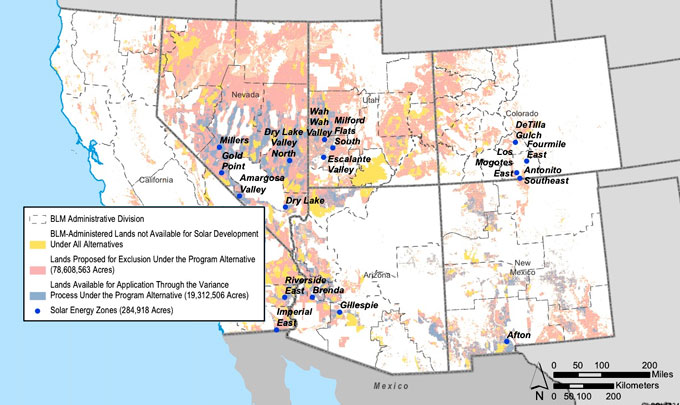
By Erin WeaverThe U.S. Department of the Interior has published a “Solar Programmatic Environmental Impact Statement” identifying 17 prime zones for solar development on public land. The impact statement, two years in the making, evaluates 285,000 acres of public land across the Southwest for solar exposure, proximity to power lines, and impact on environmental and cultural resources. It also establishes a framework for carrying out environmental impact studies for project proposals in the 17 zones, which will be fast-tracked with the goal of bringing online nearly 24 GW of solar power by 2030—enough to power 7 million homes.
The impact statement identifies another 19 million acres of public land suitable for solar development, though projects there will not be similarly expedited, and it rules out development on 78 million acres.

The Obama administration has overseen the first 17 solar installations on public land, for a total capacity of 6 GW.

Published December 31, 1969

(2012, August 27). Fast-Track Solar Development Zones Identified. Retrieved from https://www.buildinggreen.com/departments/newsbrief

Add new comment

To post a comment, you need to register for a BuildingGreen Basic membership (free) or login to your existing profile.

Climate Change May Tear New Ozone Holes

News Brief

Climate Change May Tear New Ozone Holes

By Paula MeltonGlobal warming could unravel the delicate chemical fabric of Earth’s protective ozone layer, according to preliminary research conducted at Harvard University. A projected increase in strong summer storms, which can send water vapor deep into the stratosphere, is behind the newly discovered risk; this “convectively injected” vapor warms the atmosphere, which could cause trapped chlorine to react with and deplete ozone. Unlike the wintertime thinning over the Arctic and Antarctica that threatened the planet in the 1980s, the new ozone holes would form directly over populated areas of the U.S. during the summer, vastly increasing dangerous UV exposure and threatening human health, agriculture, and ecosystems.

Unknowns remain—the effect of climate change on convective injection is not yet understood, and atmospheric chlorine levels have not been measured—but lead researcher James Anderson, Ph.D., told

National Geographic News that if climate change and ozone depletion turn out to be intimately linked, the findings could lead people “to step up and take responsibility for what is actually occurring” because of the direct threat to their health.

For more information, read “Summer Storms to Create New Ozone Holes As Earth Warms?” at news.nationalgeographic.com.

Published December 31, 1969

(2012, August 27). Climate Change May Tear New Ozone Holes. Retrieved from https://www.buildinggreen.com/departments/newsbrief

Add new comment

To post a comment, you need to register for a BuildingGreen Basic membership (free) or login to your existing profile.

Georgia Outlaws LEED in Latest "Wood Wars" Battle

News Brief

Georgia Outlaws LEED in Latest "Wood Wars" Battle

Following in Maine’s footsteps, the State of Georgia has effectively banned LEED certification for State building projects.

Governor Nathan Deal’s executive order, echoing language used by Maine Governor Paul LePage, requires green building standards that equally recognize three forestry standards—the Sustainable Forestry Initiative (SFI), the American Tree Farm System, and the Forest Stewardship Council (FSC). The Governor’s office claims that “recognizing all forest certifications equally will promote sustainable forestry in our state and will help create thousands of jobs while maintaining our strong outdoor heritage.” The ban does not apply to school district building projects but does apply to State-funded colleges and universities.

LEED offers optional certified wood credits only for FSC-certified wood, but incentives are available for locally sourced materials—meaning that even non-certified local wood can be used to attain optional LEED credits.

BuildingGreen’s investigative series on the “wood wars” examines claims and motives behind recent LEED bans.

For more information:

Office of the Governor of Georgia


Published December 31, 1969

(2012, August 20). Georgia Outlaws LEED in Latest "Wood Wars" Battle. Retrieved from https://www.buildinggreen.com/departments/newsbrief

Add new comment

To post a comment, you need to register for a BuildingGreen Basic membership (free) or login to your existing profile.