Report: Real-Time Feedback Encourages Electricity Savings

News Brief

Report: Real-Time Feedback Encourages Electricity Savings

A new report from the American Council for an Energy-Efficient Economy, “Results from Recent Real-Time Feedback Studies,” summarizes the findings of nine large-scale pilot studies testing the effects of real-time feedback on electricity consumption.

To evaluate methods of engaging residential customers in reducing their energy usage, the authors reviewed studies from the U.S., U.K., and Ireland involving in-home displays, online interfaces, and prepayment meters, and found average savings of 3.8%. Pilots including dynamic pricing and real-time information related to peak demand found peak savings up to 11.3%. The largest savings (19.5%) came from Northern Ireland, where existing prepayment meters were replaced with new meters with a real-time display; the authors point out that one-third of Northern Irish households are fuel-poor (spending at least 10% of their income on fuel) and may have welcomed the chance to monitor their electricity use more closely. A few households in several pilots achieved savings of 25%.

The social dynamics involved in engagement are complex (see “Occupant Engagement—Where Design Meets Performance,” EBN Nov. 2011): many households that were offered free in-home displays refused them, while others who were initially engaged lost interest after gaining a sense of their normal energy use. Further research is called for on the persistence of savings achieved in such studies. For more information, see ACEEE.org.


Published December 31, 1969

(2012, March 26). Report: Real-Time Feedback Encourages Electricity Savings. Retrieved from https://www.buildinggreen.com/departments/newsbrief

Add new comment

To post a comment, you need to register for a BuildingGreen Basic membership (free) or login to your existing profile.

PVC Factory Rule Falls Short of Expectations

News Brief

PVC Factory Rule Falls Short of Expectations

The U.S. Environmental Protection Agency (EPA) has released a final rule aimed at reducing toxic emissions from PVC manufacturing facilities. PVC is used in everything from pipes to vinyl siding to latex paint, and its manufacture produces vinyl chloride, a potent human carcinogen that particularly affects children.

In a shift from earlier rules, which regulated only vinyl chloride, the new standard places limits on total emissions of airborne toxic chemicals as well as di-benzo dioxins, furans, and hydrogen chloride. The rule is part of a legal settlement reached with the Sierra Club and local environmental groups, which sued EPA in 2008 for not updating its emissions rules to include these other substances. The final rule will reduce total annual emissions by 238 tons, but an earlier draft would have reduced emissions by 1,570 tons, according to Monique Harden, co-director and attorney at Advocates for Environmental Human Rights, who expressed disappointment with the change.

According to EPA, there are 17 PVC production facilities in the U.S., most of them in Louisiana and Texas, and the number of minorities living within three miles of the plants is 6% higher than the national average.


Published December 31, 1969

(2012, March 26). PVC Factory Rule Falls Short of Expectations. Retrieved from https://www.buildinggreen.com/departments/newsbrief

Add new comment

To post a comment, you need to register for a BuildingGreen Basic membership (free) or login to your existing profile.

First Three Sustainable Sites Projects Certified

News Brief

First Three Sustainable Sites Projects Certified

By Erin WeaverThe Sustainable Sites Initiative (SITES) has certified the first three of 155 pilot projects in its new rating system for the design, construction, and maintenance of sustainable landscapes.

The program was established to provide comprehensive guidelines and performance benchmarks for built landscapes, comparable to the LEED rating systems for buildings. The four-star SITES system focuses on hydrology, soils, vegetation, materials, and human health and well-being, with a total of 250 possible points in specific areas such as brownfield use, native vegetation, and use of recycled materials.

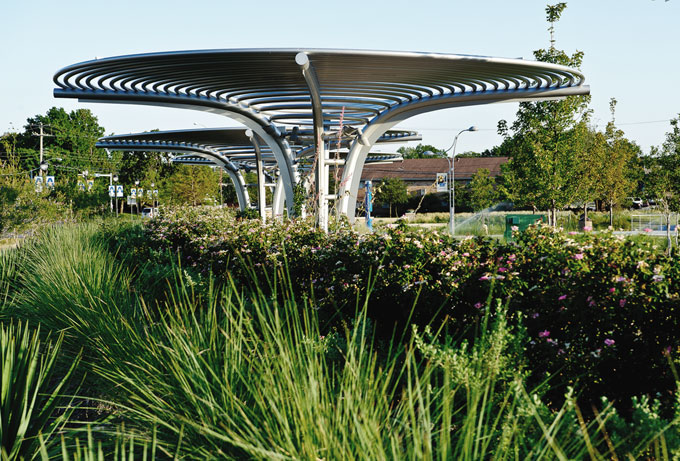
Of the first three SITES projects certified, the Missouri headquarters of Novus International achieved three stars, while a green space at the University of Texas–Arlington and a playground in Memphis, Tennessee, each earned one star. Among the features of the three-star Novus headquarters are stormwater retention basins providing aquatic habitat, a prairie walking trail, and a staff-maintained vegetable garden fed by a windmill-powered well. For more information, see www.sustainablesites.org.

Published December 31, 1969

(2012, March 26). First Three Sustainable Sites Projects Certified. Retrieved from https://www.buildinggreen.com/departments/newsbrief

Add new comment

To post a comment, you need to register for a BuildingGreen Basic membership (free) or login to your existing profile.

Diesel Exhaust Associated with Lung Cancer Deaths

News Brief

Diesel Exhaust Associated with Lung Cancer Deaths

By Paula MeltonLow and moderate exposure to diesel engine exhaust may increase risk of lung cancer, according to research published in the

Journal of the National Cancer Institute.

While past studies have consistently found a correlation, the relationship between exposure levels and cancer risk is not yet understood, in part because it is difficult to isolate the effects of diesel exhaust from those of other factors, such as smoking, weight, and other occupational hazards; the new research attempts to adjust for these. The study focused on a large sample of miners, but researchers claim their results have implications for city dwellers worldwide: cumulative exposure levels in Los Angeles, the Bronx, and many other cities match those of the “low-to-moderate range” for miners—levels associated with a 50% increase in lung cancer risk.

The International Agency for Research on Cancer has classified diesel engine exhaust as a probable human carcinogen since 1989.

Published December 31, 1969

(2012, March 26). Diesel Exhaust Associated with Lung Cancer Deaths. Retrieved from https://www.buildinggreen.com/departments/newsbrief

Add new comment

To post a comment, you need to register for a BuildingGreen Basic membership (free) or login to your existing profile.

FTC Cracks Down on "Seriously" Exaggerated Window Claims

News Brief

FTC Cracks Down on "Seriously" Exaggerated Window Claims

If you’ve ever wondered just what a product guaranteeing “up to 50% savings” will deliver, you have something in common with the U.S. Federal Trade Commission (FTC). FTC has reached a settlement with five manufacturers of replacement windows, part of a larger effort to rein in deceptive claims in environmental marketing.

The companies named in the settlement (Serious Energy, Gorell Enterprises, Long Fence & Home, THV Holdings, and Winchester Industries) were found to have made unsubstantiated claims—for example, that their windows would “cut energy bills in half.” The settlement requires that statements about windows’ energy efficiency be supported by reliable evidence and prohibits “guarantees” that consumers will achieve a certain percentage of savings by replacing their existing windows. When the phrase “up to” is used, the agreement requires evidence that all or nearly all consumers will reach the target specified.

The FTC has also published a fact sheet called “Shopping for New Windows?” to highlight factors involved in replacing windows for energy savings. For more information, visit www.ftc.gov.


Published December 31, 1969

(2012, March 26). FTC Cracks Down on "Seriously" Exaggerated Window Claims. Retrieved from https://www.buildinggreen.com/departments/newsbrief

Add new comment

To post a comment, you need to register for a BuildingGreen Basic membership (free) or login to your existing profile.

Tracking Water Footprints in a Thirsty World

News Brief

Tracking Water Footprints in a Thirsty World

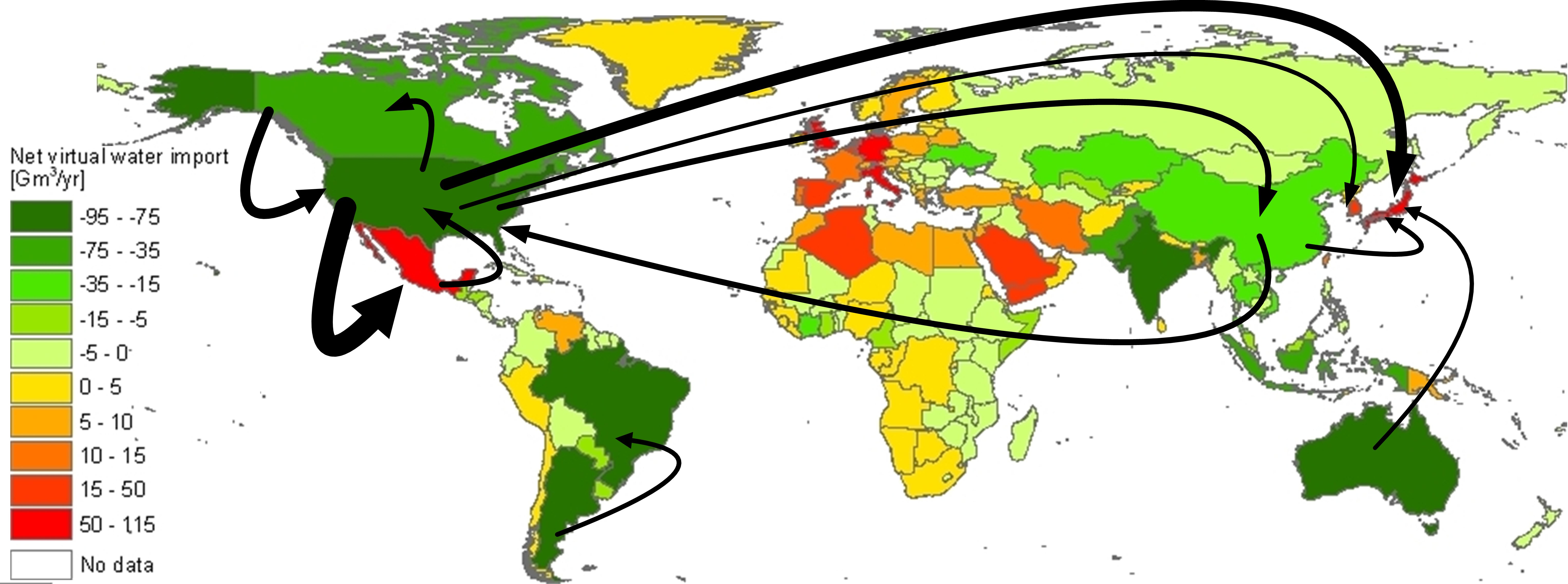
The U.S. is 20% dependent on “virtual” water, a large part of it from China, according to a new study from the University of Twente in the Netherlands.

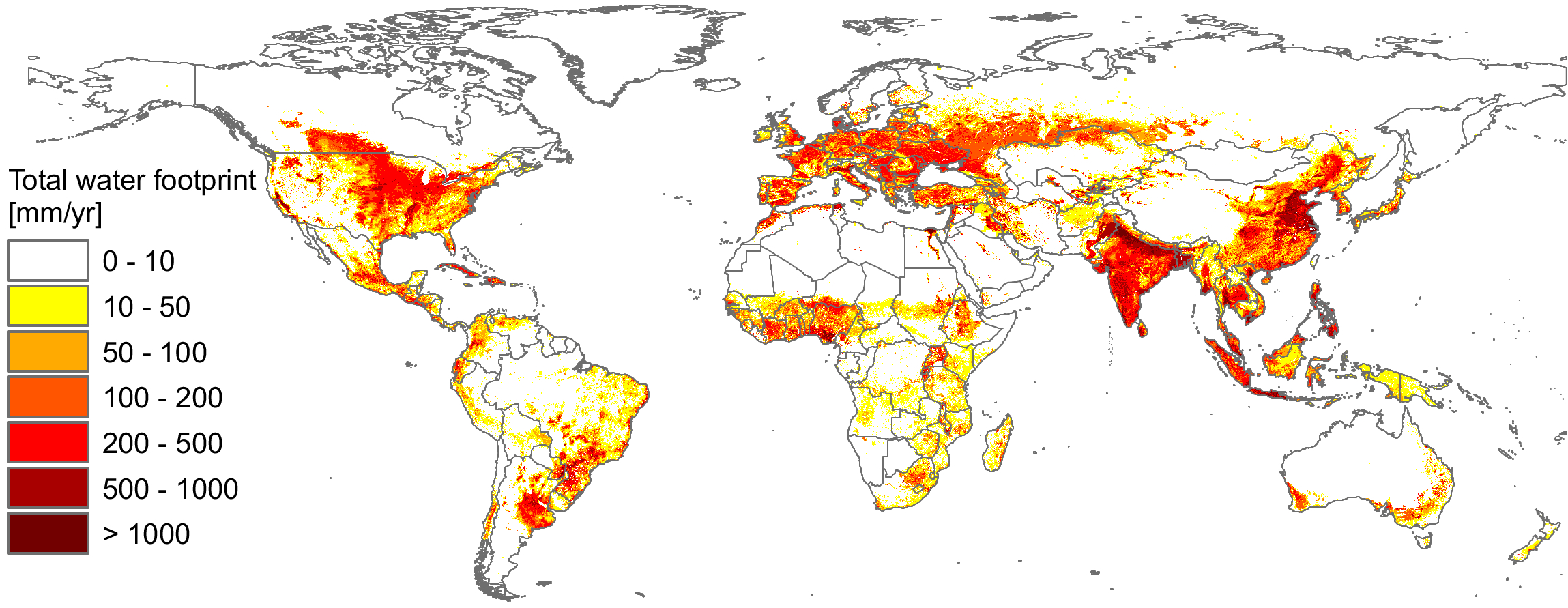
The Water Footprint of Humanity” (PDF) examines global water-use patterns from 1996 to 2005 and calculates countries’ overall and per capita footprints based on the volume of rainwater consumed, groundwater and surface water depleted, and fresh water polluted. Humanity’s water footprint is estimated at 9,087 Gm3/yr, with 92% used in agriculture.

With 5% of the world’s population, the U.S. is the third-largest consumer of fresh water; per capita, U.S. citizens have a water footprint of 2,842 m3/yr—more than double the global average footprint of 1,385 m3/yr (partly because Americans’ beef consumption is 4.5 times the global average). When a crop is grown for export, water used in its production is “virtually” consumed by the importing country.

Virtual water, one-fifth of global water consumption, is largely related to oil crops (particularly cotton) and cereals, and flows highlight countries’ depletion and pollution of water beyond their borders; these “externalized footprints” are important in considering national food security.

For more information, see www.waterfootprint.org.
 

Published December 31, 1969

(2012, March 21). Tracking Water Footprints in a Thirsty World. Retrieved from https://www.buildinggreen.com/departments/newsbrief

Add new comment

To post a comment, you need to register for a BuildingGreen Basic membership (free) or login to your existing profile.

Public Distaste an Obstacle to Direct Wastewater Recycling

News Brief

Public Distaste an Obstacle to Direct Wastewater Recycling

“Toilet to tap” spooks consumers, in spite of evidence that it’s safe.

American municipalities currently discharge 32 billion gallons a day of treated wastewater back into natural sources, from which water is drawn for further treatment prior to use. A new report from the Water Science and Technology Board of the National Academy of Sciences (NAS) concludes that treated wastewater could instead be safely returned directly to the water supply.
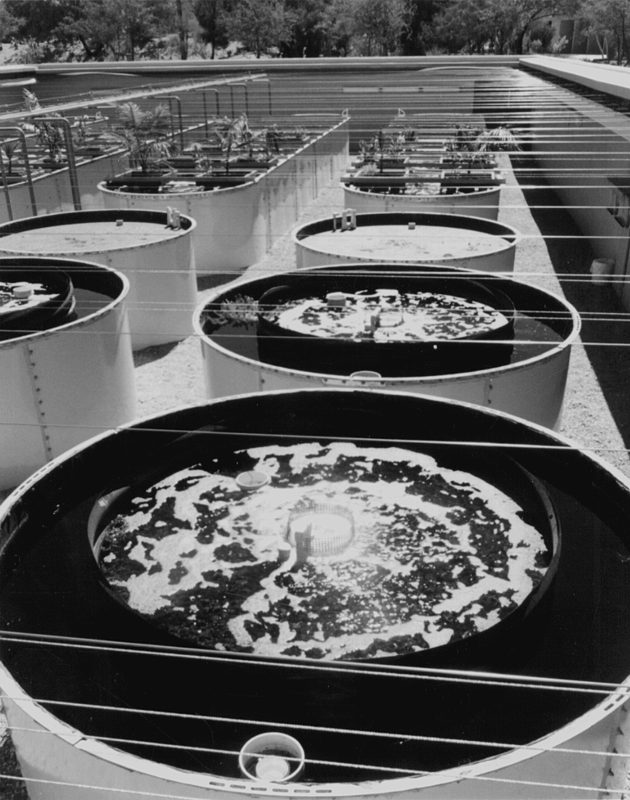
According to the New York Times, recycling for drinking water or landscaping use is already established in areas of Virginia, Texas, and New Mexico and is being considered elsewhere; a ski resort in Arizona even uses it for snowmaking. Still, less than 0.3% of water use in the U.S. currently involves recycled water, with the public remaining skeptical of direct return of treated wastewater to the drinking supply. This, the report suggests, is an outdated fear, as levels of chemicals and pathogens in recycled water are equivalent to those in existing water supplies.


Published December 31, 1969

(2012, February 28). Public Distaste an Obstacle to Direct Wastewater Recycling. Retrieved from https://www.buildinggreen.com/departments/newsbrief

Add new comment

To post a comment, you need to register for a BuildingGreen Basic membership (free) or login to your existing profile.

ULI Greenprint Center to Help Measure Portfolio Energy Performance

News Brief

ULI Greenprint Center to Help Measure Portfolio Energy Performance

By Erin Weaver

The Urban Land Institute (ULI) and the Greenprint Foundation have come together to form the ULI Greenprint Center for Building Performance. Designed to facilitate information exchange throughout the real estate and land-use industries, this collaboration unites ULI’s 30,000 members with the foundation’s goal of reducing building emissions 50% by 2030—the target set by the Intergovernmental Panel on Climate Change for greenhouse gas stabilization. The center will utilize the Greenprint Carbon Index (GCX) for energy benchmarking, enabling members to measure their portfolios’ emissions reductions over time.

Energy use in buildings currently makes up one-third of global energy consumption, creating an urgent need for collaboration and innovation. To that end, says Ronald P. Weidner, founder of the Greenprint Foundation, “the ULI Greenprint Center will lead the global property markets in reducing greenhouse gas emissions in a meaningful and measurable way. More importantly, it can help change the behavior of the population at large.”


Published December 31, 1969

(2012, February 28). ULI Greenprint Center to Help Measure Portfolio Energy Performance. Retrieved from https://www.buildinggreen.com/departments/newsbrief

Add new comment

To post a comment, you need to register for a BuildingGreen Basic membership (free) or login to your existing profile.

Nation's Capital Continues to Shine in LEED Rankings

News Brief

Nation's Capital Continues to Shine in LEED Rankings

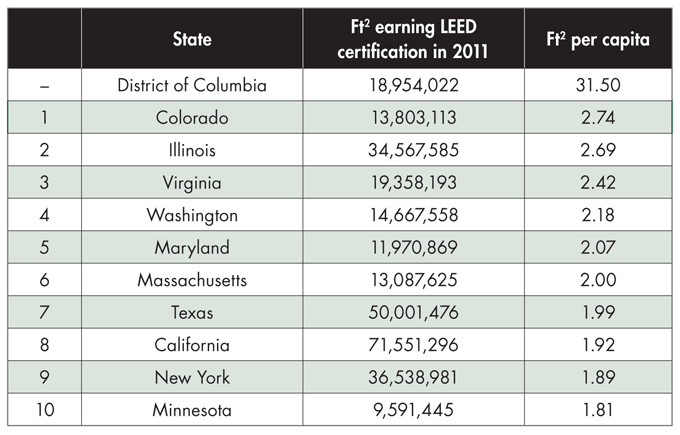
By Erin WeaverNew numbers from the U.S. Green Building Council show LEED-certified projects being completed in different regions and in smaller numbers in 2011 than in 2010. Calculated for each state as square feet of newly certified space per capita, whether new construction or renovations, the numbers place Washington, D.C. solidly at the top again with even higher numbers than last year. Overall, however, certifications are down: Among the top ten states, this year’s highest-ranked scored slightly less per capita than the lowest of last year’s ten.

Published December 31, 1969

(2012, February 28). Nation's Capital Continues to Shine in LEED Rankings. Retrieved from https://www.buildinggreen.com/departments/newsbrief

Add new comment

To post a comment, you need to register for a BuildingGreen Basic membership (free) or login to your existing profile.

Builders Challenge 2 Broadens Scope, Raises Bar in High-Performance Construction

News Brief

Builders Challenge 2 Broadens Scope, Raises Bar in High-Performance Construction

By Erin WeaverThe U.S. Department of Energy’s Building Technologies Program (BTP) is phasing out its 2008 Builders Challenge, to be replaced in April by Builders Challenge 2. The new standards for participation align with the U.S. Environmental Protection Agency’s new Energy Star Version 3, with additional guidelines involving savings, comfort, health, and durability.

Since 2008, the program has produced thousands of high-performance Builders Challenge-labeled homes; the standards will continue to rise, with the goal of 1.3 million net-zero-energy homes across the country by 2030 producing as much energy as they use. With a size adjustment factor that favors smaller homes, the 2012 initiative addresses a broad range of issues, including insulation, water use, indoor air quality, readiness for future solar installations, and disaster resistance. There are two methods of verifying a home as meeting these standards, with different levels of flexibility and modeling required. For more information, see www1.eere.energy.gov/buildings/challenge/.

Published December 31, 1969

(2012, February 28). Builders Challenge 2 Broadens Scope, Raises Bar in High-Performance Construction. Retrieved from https://www.buildinggreen.com/departments/newsbrief

Add new comment

To post a comment, you need to register for a BuildingGreen Basic membership (free) or login to your existing profile.