Walk Score Tool Now Measures Actual Pedestrian Routes

News Brief

Walk Score Tool Now Measures Actual Pedestrian Routes

Walk Score developer Front Seat has addressed a flaw in its scoring system that could help the already-popular program see greater adoption by city planners and others, reports

New Urban News.

Walk Score’s “Street Smart” feature measures distances based on the actual routes available to pedestrians rather than as the crow flies—greatly refining the accuracy of its scores. The Street Smart version also takes into consideration intersection density, link/node ratio (number of streets going into each intersection), and block length. Front Seat says that more than 10,000 websites feature Walk Score data, and the tool has been adopted by planning departments in major cities such as Phoenix and Washington, D.C.

It is also being used by real estate agents to help buyers find homes in walkable neighborhoods. Future plans for Walk Score include refining the system to calculate pedestrian safety and identifying which types of amenities prompt the most pedestrian trips. Visit www.walkscore.com for more information.


Published December 31, 1969

(2011, December 27). Walk Score Tool Now Measures Actual Pedestrian Routes. Retrieved from https://www.buildinggreen.com/departments/newsbrief

Add new comment

To post a comment, you need to register for a BuildingGreen Basic membership (free) or login to your existing profile.

First National Standard for Graywater Systems

News Brief

First National Standard for Graywater Systems

NSF International has published the first American National Standard for water reuse systems. NSF/ANSI 350, Onsite Residential and Commercial Reuse Treatment Systems, will help ensure that systems designed to treat wastewater for non-potable onsite reuse meet water-quality requirements for the reduction of chemical and microbiological contaminants.

The standard applies to any system capable of meeting the requirements without limitations on system design or treatment capacity. The standard comes in part as a response to an awareness of the inefficiencies of aging centralized wastewater treatment systems, according to NSF.


Published December 31, 1969

(2011, December 27). First National Standard for Graywater Systems. Retrieved from https://www.buildinggreen.com/departments/newsbrief

Add new comment

To post a comment, you need to register for a BuildingGreen Basic membership (free) or login to your existing profile.

Solar Modules Power Solar Manufacturing in Nevada

News Brief

Solar Modules Power Solar Manufacturing in Nevada

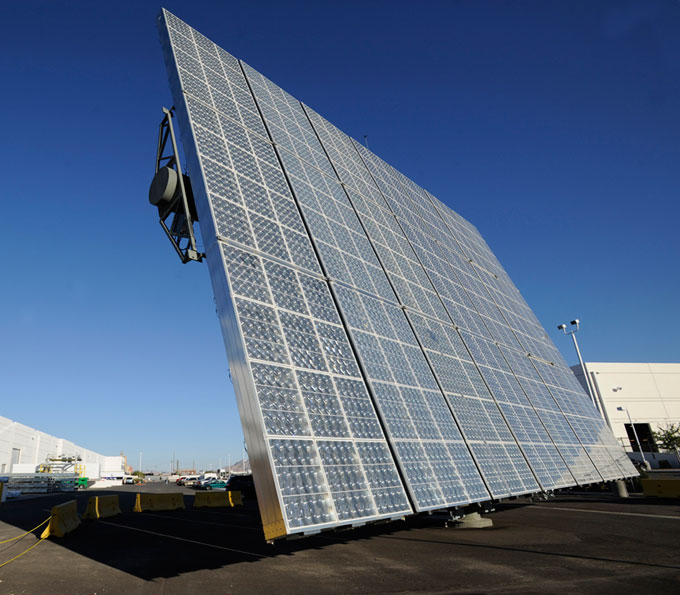
By Evan DickAn Amonix manufacturing facility in Las Vegas is using solar energy to power the production of utility-scale concentrating photovoltaic systems (CPV).

Eight of these systems installed at the 214,000 ft2 manufacturing facility generate 1,500 MWh per year, supplying 100% of the site’s electricity demand. According to Amonix, the plant will manufacture enough CPV systems to in turn generate 375,000 MWh per year. The use of solar power also helped the facility earn LEED Gold certification.

For more information, see www.amonix.com.


Published December 31, 1969

(2011, December 27). Solar Modules Power Solar Manufacturing in Nevada. Retrieved from https://www.buildinggreen.com/departments/newsbrief

Add new comment

To post a comment, you need to register for a BuildingGreen Basic membership (free) or login to your existing profile.

IFMA Launches Online Benchmarking Exchange

News Brief

IFMA Launches Online Benchmarking Exchange

By Evan DickThe International Facilities Management Association (IFMA) has launched an online survey management system called BEX that will house the association’s benchmarking surveys and results. The new system makes it easier to participate in the surveys and to access results. It allows facility professionals to update, filter, and search data; make calculations based on common metrics; submit data from multiple buildings; and access real-time benchmarking results.

Metric and currency conversions are available. IFMA’s surveys gather data on a wide range of facility statistics, including occupancy costs, janitorial costs, and utility and maintenance costs. In 2012, IFMA will conduct a survey that focuses on energy management, the results of which could potentially help offset the loss of the 2007 and 2011 Commercial Buildings Energy Consumption Survey (CBECS) data (see “Key Energy Data Hit Hard by Federal Budget Cuts,”

EBN May 2011).

Participants will get free and unlimited access, and nonparticipants can purchase an annual subscription to gain access to surveys and results. For more information and to access BEX, see www.ifma.org/BEX.


Published December 31, 1969

(2011, December 27). IFMA Launches Online Benchmarking Exchange. Retrieved from https://www.buildinggreen.com/departments/newsbrief

Add new comment

To post a comment, you need to register for a BuildingGreen Basic membership (free) or login to your existing profile.

Air Pollution May Cause More Severe Precipitation

News Brief

Air Pollution May Cause More Severe Precipitation

Research published in the journal Nature Geoscience by a team of atmospheric scientists at the University of Maryland shows that fine particulate matter—most of which comes from combustion-related air pollution—has greater effects on cloud formation and precipitation patterns than previously understood.

The research shows that high levels of suspended particles known as aerosols increase the variability of precipitation, reducing the chance of mild precipitation and increasing the chance of severe precipitation. The researchers reported that this refined understanding of the relationship among clouds, aerosols, and precipitation is absent from current climate models.

The mechanisms through which aerosols affect climate are still not fully understood, but this research should set the stage for further discoveries—while giving us another reason to reduce aerosol pollution.


Published December 31, 1969

(2011, December 27). Air Pollution May Cause More Severe Precipitation. Retrieved from https://www.buildinggreen.com/departments/newsbrief

Add new comment

To post a comment, you need to register for a BuildingGreen Basic membership (free) or login to your existing profile.

EPA: Less Lead in Air, But Still a Danger to Millions

News Brief

EPA: Less Lead in Air, But Still a Danger to Millions

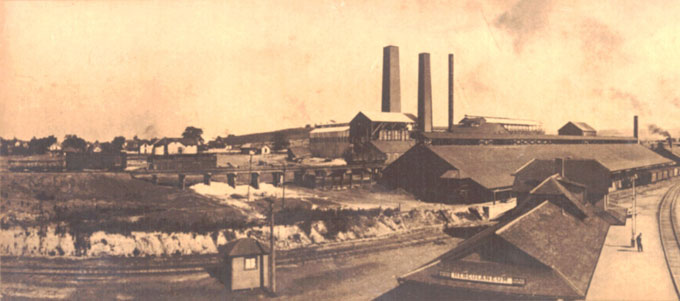
By Evan DickThe U.S. Environmental Protection Agency (EPA) has released monitoring data showing that 21 areas in 14 states and Puerto Rico still do not meet the National Ambient Air Quality Standards for lead established in 2008.

While the data show the majority of the country is in compliance, locations that don’t meet the standard include densely populated areas of Los Angeles, Chicago, and Cleveland as well as several smaller cities, such as Muncie, Indiana; Tampa Bay, Florida; and Reading, Pennsylvania. In addition, three areas in Arizona, Tennessee, and New York still lack sufficient data for a classification.

According to EPA, the phase-out of leaded gasoline has resulted in a 93% drop in lead levels in the air since 1980, but lead still enters the atmosphere from smelters, iron and steel foundries, and leaded aviation fuel, as well as so-called legacy pollution—contaminated areas that release lead into the air when soil is disturbed by human activity or climate conditions.

Airborne lead can be inhaled or ingested after it settles. For more information, go to www.epa.gov.


Published December 31, 1969

(2011, December 27). EPA: Less Lead in Air, But Still a Danger to Millions. Retrieved from https://www.buildinggreen.com/departments/newsbrief

Add new comment

To post a comment, you need to register for a BuildingGreen Basic membership (free) or login to your existing profile.

Obama Announces $4 Billion Retrofit Investment

News Brief

Obama Announces $4 Billion Retrofit Investment

The effort will see $2 billion invested in federal buildings with no first cost for the federal government due to a financing structure whereby energy service companies perform the retrofits and building owners gradually pay for the upgrades through savings on utility bills (see “Existing Buildings a Promising Investment, Say Global Firms,”

EBN Dec. 2011).

The other $2 billion was committed by private-sector building owners and will be invested in 1.6 billion ft2 of commercial building space, according to the White House.


Published December 31, 1969

(2011, December 27). Obama Announces $4 Billion Retrofit Investment. Retrieved from https://www.buildinggreen.com/departments/newsbrief

Add new comment

To post a comment, you need to register for a BuildingGreen Basic membership (free) or login to your existing profile.

Two New Laws Restrict Use of LEED

News Brief

Two New Laws Restrict Use of LEED

The U.S. Congress is calling a halt to certain military spending on green building in a newly passed defense authorization bill (H.R. 1540). The bill prohibits use of Department of Defense funds to achieve LEED Gold or Platinum, with waivers possible if a cost-benefit analysis for the project can demonstrate payback. Exceptions may also be made without a special waiver if achieving Gold or Platinum “imposes no additional cost.”

The bill also requires that the Secretary of Defense submit a cost-benefit report by June 30, 2012 on the sustainable design standards used by the military for new construction and renovations. The report will look at cost, payback, and return on investment of each level of LEED certification individually, of LEED volume certification, and of ASHRAE standards 90.1 and 189.1.

The bill “represents a rollback of the federal government at the forefront of pushing green building and LEED,” according to green building attorney Shari Shapiro, Esq. “Over the last five years, the federal government has been one of the largest customers for LEED,” she told EBN, and she sees indications in other legislation that Congress is trying to “push back at the use of LEED particularly but also green building in general.”

The General Services Administration (GSA), part of the executive branch of government, has responded to executive orders by requiring LEED Gold certification for all new construction and major renovations of federal buildings—putting GSA and Congress on a potential collision course. According to Shapiro, when an executive order and congressional legislation are in direct conflict, the matter often ends up in court—and the legislative branch almost always prevails.

In a similar move, Maine Governor Paul LePage has signed an executive order that effectively bans the use of LEED—formerly required by law—in State construction and renovation projects. The order requires that green building rating systems used for State buildings must offer equal recognition of wood products certified by the Sustainable Forestry Initiative (SFI), the Forest Stewardship Council (FSC), the American Tree Farm System, and the Programme for the Endorsement of Forest Certification systems (an international group allied with SFI).Certified wood credits in the LEED rating systems recognize only materials certified by FSC—and statements suggest that some federal legislators had this in mind while writing the military appropriations bill.

For more information:

The Library of Congress

Published December 31, 1969

(2011, December 20). Two New Laws Restrict Use of LEED. Retrieved from https://www.buildinggreen.com/departments/newsbrief

Add new comment

To post a comment, you need to register for a BuildingGreen Basic membership (free) or login to your existing profile.

LEED for Existing Buildings Outpacing New Construction

News Brief

LEED for Existing Buildings Outpacing New Construction

The U.S. Green Building Council (USGBC) announced on December 7, 2011 that, for the first time in its history, the cumulative square footage of buildings certified under its LEED for Existing Buildings: Operations & Maintenance (LEED-EBOM) program is greater than LEED-certified new construction. LEED-EBOM certification has risen rapidly since 2008, according to USGBC.

“The U.S. is home to more than 60 billion square feet of existing commercial buildings, and we know that most of those buildings are energy guzzlers and water sieves,” said USGBC president Rick Fedrizzi, noting the importance of the uptake of LEED-EBOM. “Making these existing buildings energy- and water-efficient has an enormous positive impact on the building's cost of operations. And the indoor air quality improvements that go with less toxic cleaning solutions and better filtration create healthier places to live, work, and learn.”

Recent high-profile green retrofits, including the newly LEED-certified Empire State Building in New York (see Empire State Building Achieves LEED Gold for Operations, EBN Oct. 2011), and Transamerica Pyramid in San Francisco underscore an industry-wide recognition that greening building operations and maintenance can also lead to greener pocketbooks.

Energy modeling for the LEED Gold Empire State Building retrofit predicts $4.4 million in annual energy cost savings. A co-generation plant at the LEED Platinum Transamerica Pyramid saves about $700,000 annually. Achieving these cost savings is a driving force in the green commercial retrofit market, which analysts expect will more than triple in size by 2015.

Published December 31, 1969

(2011, December 9). LEED for Existing Buildings Outpacing New Construction. Retrieved from https://www.buildinggreen.com/departments/newsbrief

Add new comment

To post a comment, you need to register for a BuildingGreen Basic membership (free) or login to your existing profile.

Passive House Group Bans Certain Spray Foam Insulation

News Brief

Passive House Group Bans Certain Spray Foam Insulation

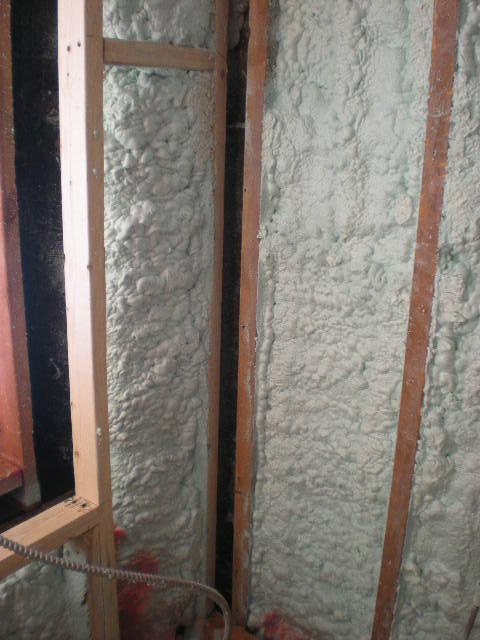
The Passive House Institute U.S. (PHIUS) will no longer give its blessing to projects incorporating spray polyurethane foam insulation (SPF) that uses blowing agents with high contribution to global warming, according to executive director Katrin Klingenberg.

“It does not make any sense at all to use them if one of the major overarching goals of energy conservation in buildings is to counteract and decrease global warming and climate change,” Klingenberg told EBN. “There really is no point to go through all the trouble of detailed Passive House design calculations if you use high-GWP [global warming potential] spray foam.”

In the past, Klingenberg said, projects have been permitted to use small amounts of SPF, but now that the U.S. group has started its own certification program, PHIUS+, even small amounts will no longer be allowed. For the time being, projects using low-GWP spray foam can still be certified as long as the “balancing requirements” that weigh material performance against carbon emissions are met.

However, PHIUS is planning to issue detailed guidance on the embodied energy of all petroleum-based insulation materials, Klingenberg said, and “in the future I would like to add the embodied energy to those balances because of the significance in super-insulation.” The PHIUS+ certification will recommend (but not require) renewable insulation materials with low embodied energy except for “a specialty application where no other insulation material will perform.” For below-grade applications, Klingenberg prefers cellular glass but says high-density expanded polystyrene (EPS) is acceptable.

For projects that were already in the pre-certification process before the new PHIUS+ program was introduced in November 2011, the SPF rules will be optional. Final program requirements for PHIUS+ will be available on January 1, 2012, through PHIUS.

Global warming potential and insulation alternatives are explored at length in The BuildingGreen Guide to Insulation Products and Practices, which offers detailed guidance for specific applications.

For more information

Passive House Institute U.S.

Published December 31, 1969

(2011, December 9). Passive House Group Bans Certain Spray Foam Insulation. Retrieved from https://www.buildinggreen.com/departments/newsbrief

Add new comment

To post a comment, you need to register for a BuildingGreen Basic membership (free) or login to your existing profile.