Magnetism Could Generate Solar Power Without Solar Panels

News Brief

Magnetism Could Generate Solar Power Without Solar Panels

Researchers in applied physics at the University of Michigan have discovered a method that uses the magnetic component of light to generate electricity without using semiconductors or photovoltaic (PV) panels.

Light is composed of electric and magnetic waves, and when it passes through certain transparent materials, the magnetic waves are amplified, causing electrons to move away from their nuclei, which creates a static electric field. Conductive materials can be placed on either end of the transparent material to collect the voltage generated across the static electric field, a method that could potentially achieve close to 100% conversion efficiency, because it does not rely on the heat-creating light absorption that limits efficiency of PV panels.

It could also potentially be used in tandem with PV panels. The researchers have applied for a patent and are currently investigating suitable transparent materials to use in further experiments.

Published December 31, 1969

(2011, November 1). Magnetism Could Generate Solar Power Without Solar Panels. Retrieved from https://www.buildinggreen.com/departments/newsbrief

Add new comment

To post a comment, you need to register for a BuildingGreen Basic membership (free) or login to your existing profile.

Oregon Startup Makes Crude Oil from Plastic

News Brief

Oregon Startup Makes Crude Oil from Plastic

Oregon-based alternative energy start-up Agilyx says it has developed a system to convert difficult-to-recycle discarded plastics into synthetic crude oil. The technology has been in development for a year and a half, and the company predicts that it will be ready for commercial sales in mid-2012.

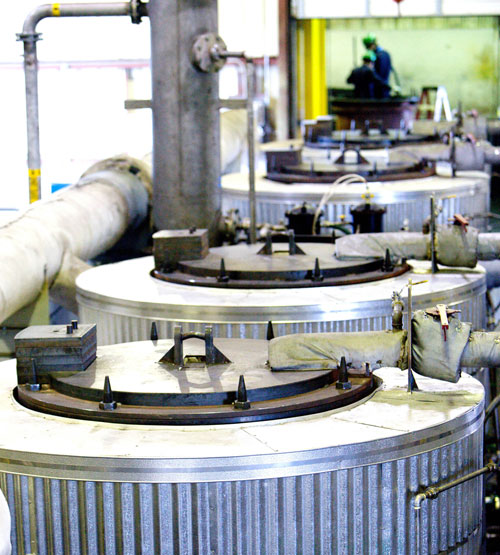
The system vaporizes the plastics and then condenses the vapor into oil. The modular system currently under development, according to the company, will be capable of converting 10,000 pounds of plastic into 60 barrels of synthetic crude oil a day.

Once the technology is developed, Agilyx plans to sell the modules to trash companies, which would own and operate the machinery and sell the synthetic crude oil to refiners. Technologies like this one, dubbed “resource recovery,” are becoming increasingly attractive as solid-waste stockpiles grow and extraction of virgin materials becomes more costly. Agilyx predicts that its systems will provide owners a 25% rate of return on their investment, and major players in the trash industry, such as Waste Management, have already invested in the company.

Resource recovery has its limitations, however: plastic is still non-renewable, and burning even recovered oil still contributes to global warming.

Published December 31, 1969

(2011, November 1). Oregon Startup Makes Crude Oil from Plastic. Retrieved from https://www.buildinggreen.com/departments/newsbrief

Add new comment

To post a comment, you need to register for a BuildingGreen Basic membership (free) or login to your existing profile.

KB Markets Net-Zero-Energy Homes

News Brief

KB Markets Net-Zero-Energy Homes

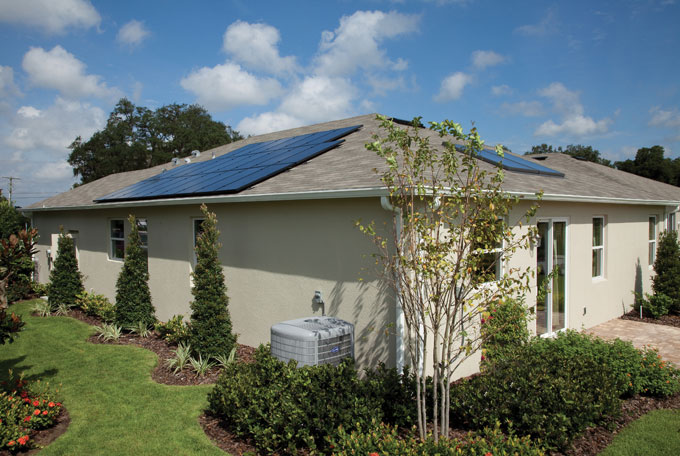
KB Home, one of the largest homebuilders in the U.S., has developed ZeroHouse 2.0, a house designed to achieve net-zero energy. The home is currently available in Tampa, Florida, and in San Antonio and Austin, Texas, but the company plans to expand the availability of net-zero options to other cities throughout 2012. Energy Star is now a minimum standard for all KB homes, but the ZeroHouse option goes beyond that standard, incorporating photovoltaic (PV) arrays in addition to energy-efficient HVAC systems and appliances and increased insulation.

For homes in the southern part of the country, these features add about $50,000 to the cost of the home, but KB estimates that occupants will save as much as $1,000 a year in utility bills. These projected savings are expressed in a previously released proprietary “EPG” label, reflecting a marketing strategy designed to tie energy savings to affordability.

Published December 31, 1969

(2011, November 1). KB Markets Net-Zero-Energy Homes. Retrieved from https://www.buildinggreen.com/departments/newsbrief

Add new comment

To post a comment, you need to register for a BuildingGreen Basic membership (free) or login to your existing profile.

Empire State Building Achieves LEED Gold for Operations

News Brief

Empire State Building Achieves LEED Gold for Operations

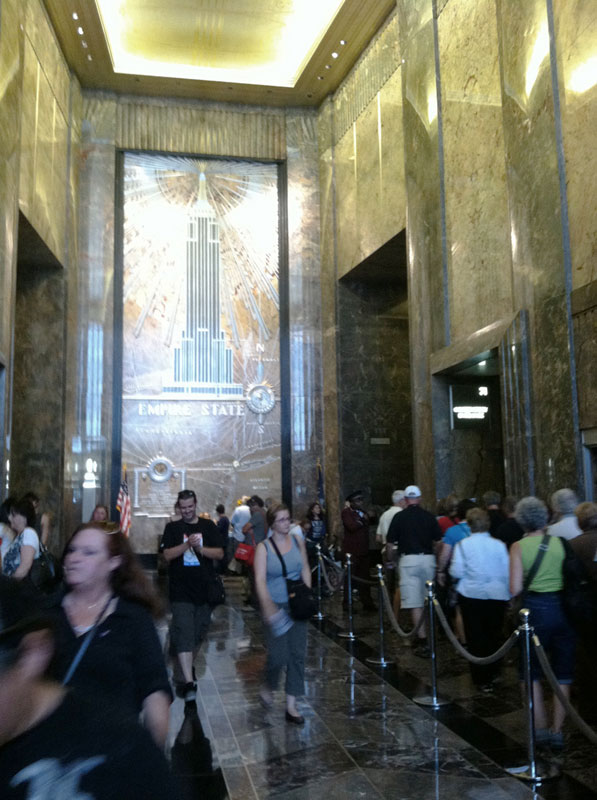
One of the largest energy-saving features of the building-wide project is a retrofit system that preserves the historic glass and window frames from the iconic building’s 6,514 windows, turning them into super-insulated glazing units that include suspended, coated film. “By earning LEED Gold, the Empire State Building has sent a powerful message that green buildings don’t have to be new,” said Rick Fedrizzi, president and CEO of the U.S. Green Building Council, in a press release.

The 2.85-million-square-foot building, completed in 1931, is also a National Historic Landmark. The offices of one tenant, Swedish construction company Skanska, earned LEED for Commercial Interiors certification at the Platinum level on the same day.


Published December 31, 1969

(2011, October 5). Empire State Building Achieves LEED Gold for Operations. Retrieved from https://www.buildinggreen.com/departments/newsbrief

Add new comment

To post a comment, you need to register for a BuildingGreen Basic membership (free) or login to your existing profile.

Project Frog's Modular Buildings Get $22 Million Boost

News Brief

Project Frog's Modular Buildings Get $22 Million Boost

By Paula MeltonGE Energy Financial Services and several other funders have invested $22 million in Project Frog, a company that provides climate-sensitive design and fabrication of modular high-performance buildings (see “BuildingGreen Announces 2009 Top-10 Green Products,”

EBN Dec. 2009).

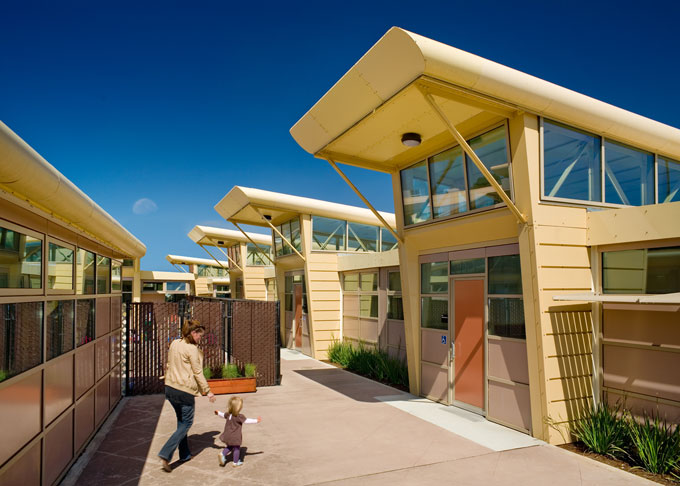
Project Frog—which began as a sustainable alternative to conventional classroom trailers and is now branching out into healthcare and other markets—uses computer modeling to optimize buildings for their designated sites, emphasizing energy efficiency, natural ventilation and daylighting, and indoor air quality.

According to Project Frog, the pre-engineered buildings can be constructed in one to six months and can readily be designed for net-zero energy or to achieve LEED certification.

The investment, which is intended to help Project Frog open up new markets nationwide, follows funding it received from the second round of GE’s ecomagination Challenge, launched in January 2011.

Ecomagination has also funded GMZ Energy, a startup that converts waste heat into energy; Winflex, which manufactures lightweight cloth rotors for wind turbines; and a variety of companies focusing on grid efficiency.

Published December 31, 1969

(2011, October 5). Project Frog's Modular Buildings Get $22 Million Boost. Retrieved from https://www.buildinggreen.com/departments/newsbrief

Add new comment

To post a comment, you need to register for a BuildingGreen Basic membership (free) or login to your existing profile.

New Hydroelectric Turbine May Kill Fewer Fish

News Brief

New Hydroelectric Turbine May Kill Fewer Fish

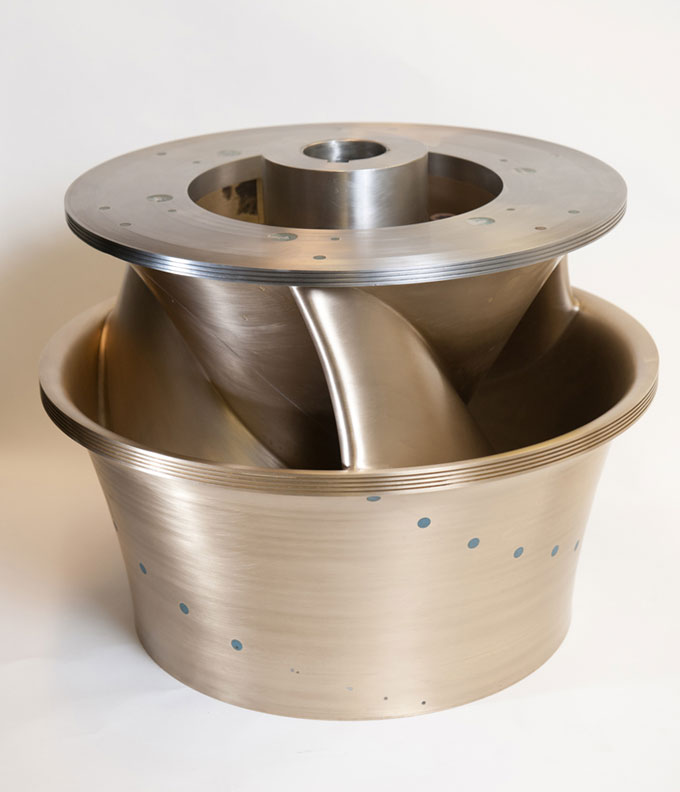
By Evan DickThe Electric Power Research Institute (EPRI) has received $1.5 million from the U.S. Department of Energy (DOE) to field-test a new hydroelectric turbine developed by research engineers at Alden Research Laboratory. The turbine is designed to maximize the use of hydroelectric resources without further jeopardizing migrating fish populations.

Preliminary testing indicates that the Alden turbine can maintain high efficiencies while allowing fish migrating downstream to pass with a 98% survival rate; upstream migration issues must be addressed separately with other mechanisms, such as fish ladders.

Instead of the six or more blades common in older turbine designs, the Alden turbine has only three blades, reducing the chance that fish will be struck by a blade. The blades also have a semi-round edge, which pushes enough water in front of the spinning blades to move the fish out of their path.

If the Alden turbine proves successful in field tests, it could open the door to maximizing the use of hydropower resources currently being lost to dam spillover and through-fish bypasses meant to protect migrating fish populations. Researchers estimate domestic hydropower capacity lost to fish protection measures to be as much as 25,000 megawatts.

Published December 31, 1969

(2011, October 5). New Hydroelectric Turbine May Kill Fewer Fish. Retrieved from https://www.buildinggreen.com/departments/newsbrief

Add new comment

To post a comment, you need to register for a BuildingGreen Basic membership (free) or login to your existing profile.

Clay and Crab Shells Could Replace Toxic Flame Retardants

News Brief

Clay and Crab Shells Could Replace Toxic Flame Retardants

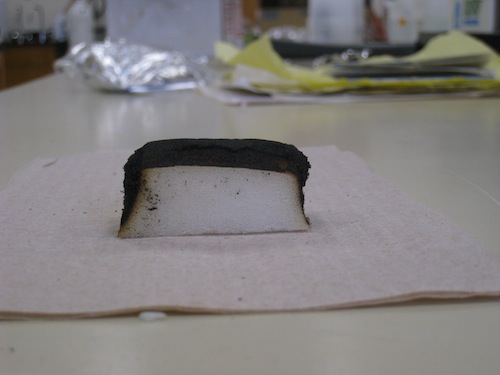
By Paula MeltonAlternating layers of clay and chitosan (a polymer derived from crustacean shells) have shown promise as a possible flame retardant in lab tests at Texas A&M University. When applied to foam and exposed to a direct flame for ten seconds, the coating formed a protective thermal barrier that kept the foam from igniting or melting—giving lead researcher Jaime Grunlan, Ph.D., hope that coatings made from renewable materials could eventually replace brominated flame retardants (BFRs).

Unlike BFRs, which chemically disrupt a fire that has already begun, this coating is designed to prevent ignition, Grunlan explained. Chitosan between the clay layers does flame up briefly, but the clay quickly “collapses,” he said. “The polymer gets eaten out by heat and fire initially, and what’s left behind is a layer of clay-rich coating which acts as a heat barrier.”

The coating requires use of nano-scale clay particles, which could raise toxicity concerns, but Grunlan said the clay nanoparticles are created and bound within water and should not be breathable during manufacture or after application. His team is also testing other thinly layered polymers as a flame-retardant coating for fabric.

Published December 31, 1969

(2011, October 5). Clay and Crab Shells Could Replace Toxic Flame Retardants. Retrieved from https://www.buildinggreen.com/departments/newsbrief

Add new comment

To post a comment, you need to register for a BuildingGreen Basic membership (free) or login to your existing profile.

DOE Approves New Efficiency Standards for Refrigerators

News Brief

DOE Approves New Efficiency Standards for Refrigerators

By Evan DickThe U.S. Department of Energy (DOE) has approved a rule that will ensure a 25% increase in energy efficiency for refrigerators beginning January 1, 2014 (see “DOE Proposes New Refrigerator Standard for 2014,”

EBN Nov. 2010).

While refrigerators have seen significant gains in efficiency—today’s models use about 75% less energy than those produced in 1975—they still account for 10% of in-home energy use. According to DOE, the new standard will save 4.5 quadrillion Btus of energy and the corresponding release of 305 million metric tons of CO2 while saving consumers $18.5 billion over a 30-year period.

A key element of the new rule is the inclusion of built-in icemaker energy use in the calculation of total energy use for a refrigerator, giving consumers a more accurate representation of how much energy it will use.

Published December 31, 1969

(2011, October 5). DOE Approves New Efficiency Standards for Refrigerators. Retrieved from https://www.buildinggreen.com/departments/newsbrief

Add new comment

To post a comment, you need to register for a BuildingGreen Basic membership (free) or login to your existing profile.

Solyndra Follows Evergreen as Domestic Solar Companies Hit Bankruptcy

News Brief

Solyndra Follows Evergreen as Domestic Solar Companies Hit Bankruptcy

Published December 31, 1969

(2011, October 5). Solyndra Follows Evergreen as Domestic Solar Companies Hit Bankruptcy. Retrieved from https://www.buildinggreen.com/departments/newsbrief

Add new comment

To post a comment, you need to register for a BuildingGreen Basic membership (free) or login to your existing profile.

USGBC Secures Land for Haiti Orphanage

News Brief

USGBC Secures Land for Haiti Orphanage

The U.S. Green Building Council (USGBC) has secured the land it needs to build a promised new orphanage and children’s center in Port au Prince, Haiti. The effort would replace an orphanage operated by nonprofit Fondation Enfant Jesus that was destroyed in the January 2010 earthquake from which Haiti is still recovering. Fondation Enfant Jesus provides medical, housing, educational, and adoption services to approximately 250 children per year; the new orphanage will shelter about 25 infants a month while they receive medical care before adoption.

HOK is providing pro bono design services for the 7,500 ft2 building, which USGBC has pledged will be the first LEED-certified orphanage in Haiti, and which Roger Limoges, chief of staff at USGBC, told EBN was targeting Platinum. Due to disrupted infrastructure, the building will be able to operate “completely off the grid,” said Limoges. “You can’t take a chance on losing power when you’ve got babies in incubators.”

The building will not only meet the needs of children orphaned by the earthquake but will also support the local economy and help train Haitian workers in green building. Limoges said the design is also “very sensitive to the culture of Haiti,” based on information gathered from multiple visits and tours of other orphanages.

USGBC first announced Project Haiti in November 2010 at Greenbuild, and in September 2011 it made a formal commitment to the project at the annual meeting of the Clinton Global Initiative. The initiative’s interest in the project, said Limoges, stemmed in part from its ability to be a “globally replicable model” of sustainable building in developing nations. “This proves you don’t have to weaken standards based on the country that you’re trying to build in,” Limoges said. He added that the project would be highlighted in both the opening and closing keynotes at Greenbuild 2011 in Toronto, where HOK will unveil the design.

More than half of the $850,000 needed for the project has been raised or pledged, with $357,000 left to go.

For more information:

Project Haiti

www.usgbc.org/haiti

HOK Blog

www.hoklife.com

 

Published December 31, 1969

(2011, September 22). USGBC Secures Land for Haiti Orphanage. Retrieved from https://www.buildinggreen.com/departments/newsbrief

Add new comment

To post a comment, you need to register for a BuildingGreen Basic membership (free) or login to your existing profile.