The reuse of buildings is often touted as an environmental benefit, but solid, up-to-date data to support that idea is scarce (see “Historic Preservation and Green Building,” EBN Jan. 2007). A new partnership hopes to change that by early 2011. The National Trust for Historic Preservation, Green Building Services, and the Cascadia Green Building Council have teamed up to generate a full report quantifying the respect impacts of value building reuse versus demolition and new construction.
Funded by a grant from the Summit Foundation, the study will focus on a range of building types in four regions of the U.S., and will include a life-cycle assessment (LCA) and examination of building materials and methods to better understand scenarios that may favor either building reuse or new construction.
While the LCA will be the culmination of the study, says Ralph DiNola, Assoc. AIA, a consultant at Green Building Services, the team will start by painting a broad picture of the built environment, gathering data including the number of existing buildings, their types, ages, and geographic distribution. “We are not familiar with a resource that has all of that in one place,” said DiNola.
Then, the team will conduct a broad survey including groups from developers to architects, policymakers, and bankers, said DiNola, “really trying to get a sense of the factors that influence decision-making when it comes to either demolition or reuse.” Reuse or demolition decisions go beyond LCA data, says DiNola, and the team hopes to capture that information in the report. That survey will also help the team build scenarios to give the LCA data context, he says.
DiNola emphasized that the study would go in a different direction than some past studies that have sought to quantify the “embodied energy” in existing buildings. “Both from a capital standpoint and with environmental impact, that is water under the bridge,” he said. “We’re really trying to talk about the avoided impacts of reuse versus new construction.”
The study may help bridge a gap between the historic preservation and green building communities, who have sometimes clashed over the fate of existing buildings. Although plenty of middle ground has been staked out over the years, environmentalists have tended to focus on energy efficiency even at some cost to historic fabric, while preservationists insist that the “greenest building is the one that’s already built.”
DiNola, whose firm has a track record of high-performing historic rehabilitation projects, said, “We’re really not tied to an outcome—we want the LCA work to give the results.”
– Tristan Roberts and Allyson Wendt


 A recent study conducted in South Korea is the first to find a correlation between the levels of two common phthalates—DEHP (di-(2-ethylhexyl)phthalate) and DBP (dibutyl phthalate)—and IQ scores in children. After accounting for several variables—including maternal IQ, living situation, birth weight, and sex—children with higher concentrations of the metabolites of these two chemicals in their urine had lower IQ scores than their peers. The study, which looked at a sample of 624 children between the ages of eight and eleven, focused on children because their developing nervous systems are more susceptible to the negative effects of phthalates, which are used as plasticizers in flexible vinyl, PVC products, adhesives, coatings, and some wood products. Most exposure to phthalates through building products happens through inhalation or skin contact. The study, “Relationship between Environmental Phthalate Exposure and the Intelligence of School-Age Children,” was published in the July issue of
  Worldwide, the square footage of certified green building space will increase 780%, from approximately 6 billion square feet (560 million m2) in 2010 to 53 billion square feet in 2020, predicts a new report from Pike Research. Most of this space—80%—will be commercial and will be certified under LEED in the U.S. or BREEAM in Europe; programs in China and India, however, will be responsible for 30% of new certifications. The report notes, “In many markets, such as Class A office space, green building certification is the standard rather than the exception.” The demand for certified commercial buildings will only grow, says the report, as “many corporations and government agencies are beginning to establish policies that they will only own and occupy spaces that have received green building certification.” Approximately 60% of currently certified commercial space worldwide is in existing buildings, but both that sector and certified new construction will continue to grow. In the residential sector, the vast majority of certified buildings are new construction; this will remain the case over the next ten years.
 Alex Wilson, the founder of BuildingGreen and executive editor of Environmental Building News and GreenSpec, is the 2010 winner of the Hanley Award for Vision and Leadership in Sustainable Housing. Now in its second year, the Hanley Award is sponsored by The Hanley Foundation, EcoHome magazine, and publisher Hanley Wood. Wilson will receive the award and an accompanying $50,000 grant at the USGBC Hanley Award Dinner ceremony on November 17th at the Greenbuild Conference in Chicago.
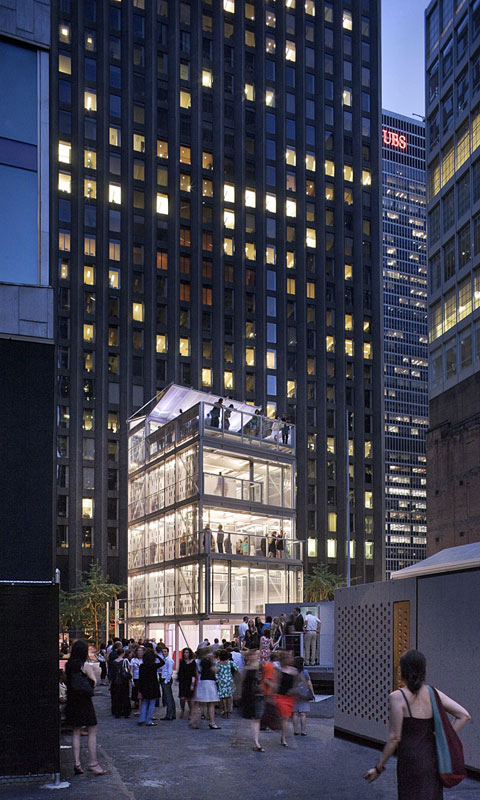 Sustainable design was featured prominently among the winners of this year’s National Design Awards from the Smithsonian’s Cooper-Hewitt National Design Museum. The U.S. Green Building Council took the Corporate and Institutional Achievement award for its efforts to promote a sustainable future, and Philadelphia firm KieranTimberlake won the Architecture award. KieranTimberlake has designed numerous LEED Platinum and AIA Top Ten projects. More details on the awards program, these winners, and other recipients can be found at

Add new comment
To post a comment, you need to register for a BuildingGreen Basic membership (free) or login to your existing profile.