New Plastic Homes Released in UK

News Brief

New Plastic Homes Released in UK

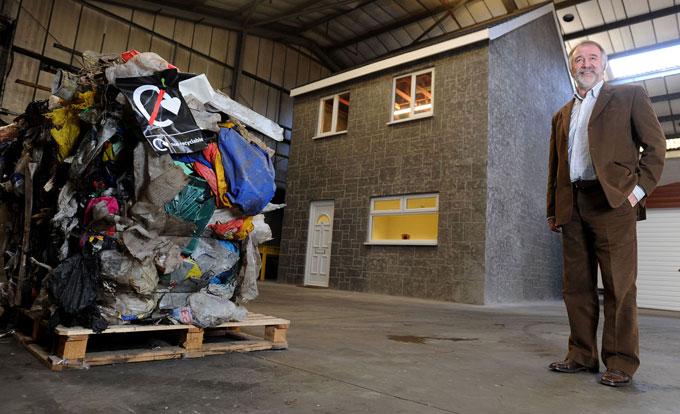
A new line of recycled plastic homes has hit the market in the United Kingdom. Wales-based company Affresol has announced a low-cost, green housing option made from the company’s patented structural compound, Thermal Poly Rock (TPR). According to Affresol, TPR is a waterproof, fire- and rot-resistant material that contains mineral wastes, PVC, and other hard plastics that would not normally be recycled. The company also claims that the average TPR home contains 18 tons of recycled plastic and is completely recyclable at the end of its life, which is estimated at a minimum of 60 years.

The houses are considered a Code 5 on the UK’s Code for Sustainable Homes, a point-based rating system with a range of 1 through 6, where Code 6 is the most sustainable. With a pilot home already in place in Swansea, Wales, and a target audience of low-income families, Affresol expects to build 3,000 TPR homes before 2013. The company is also producing modular recycled plastic buildings to be used as classrooms, offices, and storage space. For more information visit www.affresol.com.

Published December 31, 1969

(2010, May 1). New Plastic Homes Released in UK. Retrieved from https://www.buildinggreen.com/departments/newsbrief

Add new comment

To post a comment, you need to register for a BuildingGreen Basic membership (free) or login to your existing profile.

EPA Examining Environmental Impact of BPA

News Brief

EPA Examining Environmental Impact of BPA

The U.S. Environmental Protection Agency (EPA) has joined the U.S. Food and Drug Administration (FDA) in looking closely at the health and environmental effects of bisphenol A (BPA), a known endocrine disruptor. Although the largest risk for human exposure to BPA is through canned food products, the chemical is also used in the manufacture of several types of building products (see

EBN June 2008).

While FDA is looking into the risks of BPA in the food supply, EPA will be looking at its dispersal into surface, ground, and drinking water. The agency has added BPA to its list of chemicals of concern and will be requiring manufacturers to provide data on the chemical’s potential effects on humans, wildlife, and ecosystems.

More information is available at www.epa.gov/oppt/existingchemicals/pubs/actionplans/bpa.html

Published December 31, 1969

(2010, May 1). EPA Examining Environmental Impact of BPA. Retrieved from https://www.buildinggreen.com/departments/newsbrief

Add new comment

To post a comment, you need to register for a BuildingGreen Basic membership (free) or login to your existing profile.

DOE Program Connects Building Owners and Energy Experts

News Brief

DOE Program Connects Building Owners and Energy Experts

UPDATE May 10, 2010:The deadline for proposals to participate in the partnership program has been extended to May 14, 2010, at 3 p.m. EDT.The U.S. Department of Energy (DOE) has announced a new initiative to reduce energy use in new and existing buildings across the commercial building sector and is currently accepting applications for participating experts and projects.

With funding from the American Recovery and Reinvestment Act, the Commercial Buildings Partnership will introduce energy-efficiency experts from DOE National Laboratories and the private sector to building owners, particularly those with extensive real estate portfolios. The intent of the program is to expedite the adoption of energy-saving technologies by involving building owners who can implement strategies across their portfolios; program participants will have to publicly document their projects in detailed case study format, making the lessons learned available to nonparticipating projects.

Interested property owners should submit proposals for new or existing building projects by May 10, 2010; technical experts interested in advising on these projects should respond by the same date. Participating DOE National Laboratories include the Lawrence Berkeley National Laboratory, the National Renewable Energy Laboratory, and the Pacific Northwest National Laboratory.

For more information:

U.S. Department of Energy Commercial Buildings Partnership

National Renewable Energy Laboratory (program details)


Published December 31, 1969

(2010, April 29). DOE Program Connects Building Owners and Energy Experts. Retrieved from https://www.buildinggreen.com/departments/newsbrief

Add new comment

To post a comment, you need to register for a BuildingGreen Basic membership (free) or login to your existing profile.

Solar Industry Grew Significantly in 2009

News Brief

Solar Industry Grew Significantly in 2009

A recent report from the Solar Energy Industries Association (SEIA) shows significant growth in overall U.S. solar electric capacity for 2009, with the industry climbing a total of 37%.

SEIA cites residential and utility market demand, declining technology prices, and related policy advances as the primary drivers behind the increase, which includes growth in both photovoltaic (PV) and concentrating solar power (CSP) installations. According to the report, installed residential grid-tied PV capacity doubled from 78 to 156 megawatts, while three new total utility-scale CSP projects went online, bringing total installed CSP capacity to 432 MW.

Last year the U.S. ranked fourth worldwide in new solar capacity, with California having the highest capacity by state. SEIA is forecasting that capacity growth in 2010 will be even greater.

For more information

Solar Energy Industries Association


Published December 31, 1969

(2010, April 29). Solar Industry Grew Significantly in 2009. Retrieved from https://www.buildinggreen.com/departments/newsbrief

Add new comment

To post a comment, you need to register for a BuildingGreen Basic membership (free) or login to your existing profile.

LEED for Healthcare Draft Open for Comments

News Brief

LEED for Healthcare Draft Open for Comments

After a long wait, the U.S. Green Building Council (USGBC) has opened a second public comment period for its LEED for Healthcare rating system.

The new LEED for Healthcare draft includes changes to almost every one of its 62 credits and prerequisites, although most of the changes are minor and are about aligning LEED for Healthcare with the LEED 2009 rating systems that were launched last year.

The more significant revisions were those made by the LEED for Healthcare Core Committee in response to comments it received during the first public comment period, which occurred in November 2007. Although most of these changes are unremarkable, some of the more significant ones include:

•SSc9.1: Connection to the Natural World—Places of Respite has been modified to allow interior spaces such as atria to contribute, rather than only outdoor areas.•WEc4: Water Use Reduction has become three credits: Building Equipment, Cooling Towers, and Food Waste Systems.•In IEQp2: Environmental Tobacco Smoke (ETS) Control, the allowed smoking distance from areas such as entrances has been increased to 50 feet, from 25 feet.•A credit calling for views from inpatient units (excluding inpatient bedrooms) was removed.

In addition, two of the more innovative credits in the rating system were removed and placed into the LEED Pilot Credit Library, where project teams can test them and earn points for doing so via the Innovation and Design credit. These credits, now available as in pilot form for other LEED rating systems as well, are EAc7: Medical Process Equipment Efficiency, and MRc4.1: PBT Source Reduction—Dioxins and Halogenated Compounds.

Although LEED for Healthcare includes many credits that match their counterparts in LEED-NC and other LEED rating systems, the current draft retains many unique features, including a prerequisite (as well as a credit) calling for an integrative design process, credits for reducing mercury and other heavy metals in materials, and a credit for reducing contaminants from combustion.

The second public comment period is open from April 19 to May 18. The draft rating system, a summary of revisions, a comment form, and other documents are available on USGBC’s rating systems drafts webpage. If the second public comment period leads to further substantive changes, a third comment period will ensue. USGBC members will then have the opportunity to vote on the rating system by opting in to a consensus body.

For more information

U.S. Green Building Council


Published December 31, 1969

(2010, April 21). LEED for Healthcare Draft Open for Comments. Retrieved from https://www.buildinggreen.com/departments/newsbrief

Add new comment

To post a comment, you need to register for a BuildingGreen Basic membership (free) or login to your existing profile.

DOE Raises the Bar for Heating Equipment

News Brief

DOE Raises the Bar for Heating Equipment

The U.S. Department of Energy (DOE) has released new minimum energy-efficiency standards for residential water heaters, direct heating equipment, and pool heaters.

Compared to earlier proposals from late 2009, the newly released document will mandate slightly lower standards for smaller gas-fired water heaters, but significantly higher standards for larger-volume models, both gas and electric.

Notably, the standard for larger-volume electric storage water heaters is more than double that of the originally proposed standard, and will for all practical purposes require heat-pump technology, according to the Air-Conditioning, Heating, and Refrigeration Institute (AHRI).

The new standards are expected to be published in the Federal Register very soon and will take effect three years after publication for direct heating equipment and pool heaters; five years after publication for water heaters.

For more information:

www1.eere.energy.gov/buildings/appliance_standards/


Published December 31, 1969

(2010, April 5). DOE Raises the Bar for Heating Equipment. Retrieved from https://www.buildinggreen.com/departments/newsbrief

Add new comment

To post a comment, you need to register for a BuildingGreen Basic membership (free) or login to your existing profile.

Green Leaders Among 2010 AIA Fellows

News Brief

Green Leaders Among 2010 AIA Fellows

The American Institute of Architects (AIA) has elevated 134 members to its College of Fellows. Several of those honored with FAIA status in 2010 have also made significant contributions to the field of green building and design.


Bruce Coldham, principal at Coldham & Hartman in Amherst, Massachusetts

Michael Davis, principal and vice president at Bergmeyer in Boston

Stephanie Gelb of Battery Park City Authority in New York

Phil Harrison, president and CEO of Perkins+Will

Russell Perry, director of corporate sustainability at SmithGroup

Gwynne Pugh, founding partner at Pugh + Scarpa Architects

Lawrence Scarpa, founding partner at Pugh + Scarpa Architects

Walter Sedovic, principal and CEO of Walter Sedovic Architects in Irvington, New York

Scott Shell, principal and director of sustainability at EHDD Architecture in San Francisco


The honorees will be recognized at a ceremony on July 11, 2010, during the annual AIA convention in Miami. For a complete listing of the 2010 AIA Fellows, visit www.aia.org/practicing/awards/AIAB082298.

Published December 31, 1969

(2010, April 5). Green Leaders Among 2010 AIA Fellows. Retrieved from https://www.buildinggreen.com/departments/newsbrief

Add new comment

To post a comment, you need to register for a BuildingGreen Basic membership (free) or login to your existing profile.

EPA Examining Environmental Impact of BPA

News Brief

EPA Examining Environmental Impact of BPA

The U.S. Environmental Protection Agency (EPA) has joined the U.S. Food and Drug Administration (FDA) in looking closely at the health and environmental effects of bisphenol A (BPA), a known endocrine disruptor.

Although the greatest risk for human exposure to BPA is through canned food products, the chemical is also used in the manufacture of several types of building products (see EBN June 2008). While FDA is looking into the risks of BPA in the food supply, EPA will be looking at its dispersal into surface, ground, and drinking water.

The agency has added BPA to its list of chemicals of concern, and will be requiring manufacturers to provide data on the chemical’s potential effects on humans, wildlife, and ecosystems. More information is available at www.epa.gov/oppt/existingchemicals/pubs/actionplans/bpa.html


Published December 31, 1969

(2010, April 5). EPA Examining Environmental Impact of BPA. Retrieved from https://www.buildinggreen.com/departments/newsbrief

Add new comment

To post a comment, you need to register for a BuildingGreen Basic membership (free) or login to your existing profile.

States Slow to Use Stimulus Funds for Weatherization

News Brief

States Slow to Use Stimulus Funds for Weatherization

One year after the American Recovery and Reinvestment Act of 2009 awarded $5 billion to the U.S. Department of Energy’s (DOE) Weatherization Assistance Program, just $368 million of it has been spent by states on weatherization projects. A report recently released by the DOE Office of the Inspector General characterized these findings as “alarming” and surmised that “the nation has not, to date, realized the potential economic benefits of the $5 billion in Recovery Act funds allocated to the weatherization program.”

The Weatherization Assistance Program provides services to low-income homeowners and tenants to make their homes more energy efficient. Of the $5 billion appropriated for these projects, DOE kept $270 million to fund the administration of the remaining $4.7 billion, all of which has now been granted to all 50 states as well as 5 territories, 2 tribes, and the District of Columbia. By December 2009, the grantees had been authorized by DOE to spend up to 50% of the funds, but by February 2010 only about 8% of it had been drawn for weatherization projects. Of the ten highest-funded states, only two—Ohio (21.2%) and Wisconsin (3.7%)—had finished weatherizing more than 2% of the housing units slated for upgrades. (Fourteen states had completed more than 10% of their planned projects, but these states accounted for a much smaller percentage of the total funds granted.)

Those numbers may be skewed slightly, according to DOE, by the likelihood that for much of 2009 states were still weatherizing homes using funds granted before the Recovery Act funds were allocated. But the department identified several other factors that were slowing action, most of them direct consequences of the economic downturn and fiscal disarray at the state level. Many state agencies were subject to hiring freezes and involuntary staff furloughs, for example, which often meant that needed personnel could not be hired (further sapping the program’s job-creation potential) or that those in the position to provide training were unavailable. Other states had delayed budgets and therefore lacked the authority to spend the funds.

Looking ahead at 2010, the report stated, DOE’s primary concern is that weatherization funds may be spent unwisely in an effort to “catch up” to expectations, and as a result will now require states to meet 30% of their weatherization goals before drawing down the remaining half of their grant money.

For more information:

Weatherization Assistance Program


Published December 31, 1969

(2010, April 2). States Slow to Use Stimulus Funds for Weatherization. Retrieved from https://www.buildinggreen.com/departments/newsbrief

Add new comment

To post a comment, you need to register for a BuildingGreen Basic membership (free) or login to your existing profile.

Building Re-Skinning Award Winners Announced

News Brief

Building Re-Skinning Award Winners Announced

Zerofootprint has announced the five winners of its international Re-Skinning Awards, which recognize retrofits in five building categories that result in extraordinary environmental performance (see BuildingGreen.com July 2009). Entries were judged on the quality of re-skinning (changing the building envelope), overall energy efficiency, design aesthetics, return on investment, scalability, use of information technologies, and the social benefits of the retrofits. The awards will become an annual event, and Zerofootprint has also announced the ZEROprize, to be awarded to the first team to retrofit an older, high-rise, concrete building and achieve net-zero carbon, water, and energy use. The winners of the Re-Skinning Awards are:
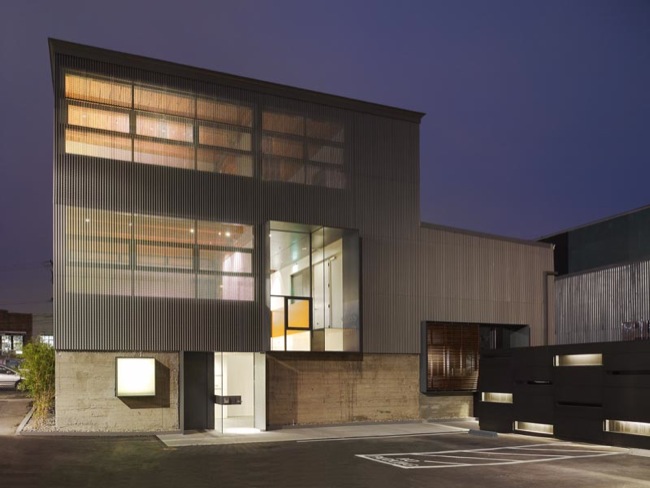
Small/Medium Commercial: Aidlin Darling Architects won in this category for its retrofit of an early 20th century industrial building in San Francisco. A new double-skin façade allows new windows to be hidden behind a perforated metal screen, maintaining the historic industrial look of the building while allowing daylight to the interior.

Large Commercial: SparkasseVorderpfalz, a regional bank in Ludwigshafen, Germany, was refurbished over three years by a team led by Thiemo Ebbert and Rudolf Evers. The retrofit included improvement of the structural elements of the building and addition of secondary glazing, all without disturbing day-to-day operations in the bank. The building now uses 64% less energy than it did before the renovations.

Small Residential: the Now House in Toronto, Canada, designed by Work Worth Doing Studio and Lorraine Gauthier, is a demonstration of a process for upgrading existing homes to net-zero-energy performance.

Large Residential: DahmArchitekten and GESOBAU AG retrofitted 538 of 15,000 residential units built in Berlin in the 1960s. A combination of building envelope upgrades, heating and hot water system conversions, and tenant education led to 70% energy savings. The remaining units will be renovated by 2015.

Future of Re-Skinning: Laboratory for Visionary Architecture won in this category for its proposal to re-skin the University of Technology Sydney Tower. The skin would contain building-integrated photovoltaic cells, collect rainwater, and improve daylight distribution in the building. Developed as a system, the skin could be used on buildings elsewhere.

For more information:

Zerofootprint Re-Skinning Competition

thezeroprize.com

 

Published December 31, 1969

(2010, April 2). Building Re-Skinning Award Winners Announced. Retrieved from https://www.buildinggreen.com/departments/newsbrief

Add new comment

To post a comment, you need to register for a BuildingGreen Basic membership (free) or login to your existing profile.