At Long Last, ASHRAE Standard 189 Is Here

News Brief

At Long Last, ASHRAE Standard 189 Is Here

After a tumultuous, three-year development process that included the disbanding and reorganization of the committee charged with its creation, the long-awaited first code-enforceable green building standard in the nation has been approved and published.

According to an estimate by the National Renewable Energy Laboratory (NREL), Standard 189.1 could lead to site energy savings between 10% and 34% over Standard 90.1-2007, based on the minimum prescriptive recommendations of the new standard—and possibly even higher, since further energy-saving measures were incorporated after the NREL inquiry.

While energy efficiency has been the most talked-about component of Standard 189.1, it also addresses the areas of site sustainability, water efficiency, indoor environmental quality, and a building’s impact on the atmosphere and natural resources.


Published December 31, 1969

(2010, February 9). At Long Last, ASHRAE Standard 189 Is Here. Retrieved from https://www.buildinggreen.com/departments/newsbrief

Add new comment

To post a comment, you need to register for a BuildingGreen Basic membership (free) or login to your existing profile.

Final WaterSense Specification for Homes Released

News Brief

Final WaterSense Specification for Homes Released

After a three-year development process that included several public comment periods and a pilot program, the U.S. Environmental Protection Agency (EPA) has released the final WaterSense specification for single-family homes.

Homes that meet the specification should use 20% less water (about 10,000 gallons or 38,000 liters) than those built to code, saving homeowners an average of $200 a year, according to EPA. To be certified, homes must use WaterSense-labeled plumbing fixtures, Energy Star-certified appliances, water- and energy-efficient hot water systems, and water-efficient landscaping. An onsite inspection verifies a homebuilder’s or owner’s claims before certification is awarded. More information is available at http://www.epa.gov/watersense/.

Published December 31, 1969

(2010, February 1). Final WaterSense Specification for Homes Released. Retrieved from https://www.buildinggreen.com/departments/newsbrief

Add new comment

To post a comment, you need to register for a BuildingGreen Basic membership (free) or login to your existing profile.

California Adopts Nation's First Statewide Green Building Code

News Brief

California Adopts Nation's First Statewide Green Building Code

In a unanimous January 2010 decision, the California Building Standards Commission approved the Green Building Standards Code—a.k.a. “Calgreen”—the first mandatory statewide green construction code to be adopted in the U.S.

Scheduled to take effect in January 2011, Calgreen will require all new buildings to reduce water consumption by 20%; divert 50% of construction waste from landfills; separately meter indoor and outdoor water use (nonresidential only); and submit to mandatory inspections of mechanical system equipment (nonresidential buildings over 10,000 ft2, 930 m2, only). According to the California Air Resources Board, these provisions should reduce California’s greenhouse gas emissions by 3 million metric tons carbon-equivalent by 2020.

Calgreen was developed from voluntary green building standards enacted across the state in 2008 (see

EBN Sept. 2008), and it does not preclude local jurisdictions from instituting stricter green building regulations, which more than 50 California municipalities already have in place.


Published December 31, 1969

(2010, February 1). California Adopts Nation's First Statewide Green Building Code. Retrieved from https://www.buildinggreen.com/departments/newsbrief

Add new comment

To post a comment, you need to register for a BuildingGreen Basic membership (free) or login to your existing profile.

Hawaii First State to Require Solar Hot Water in New Homes

News Brief

Hawaii First State to Require Solar Hot Water in New Homes

As of January 2010, new single-family homes in Hawaii must be equipped with solar thermal water heating in order to receive a building permit.

When this law was passed in 2008, roughly 25% of Hawaiians were using the sun to heat their domestic hot water (see EBN Aug. 2008). Tax credits of 35% and a $1,000 rebate were available while the systems were voluntary, but those incentives were phased out last month.

As of January 2010, new single-family homes in Hawaii must be equipped with solar thermal water heating in order to receive a building permit.

When this law was passed in 2008, roughly 25% of Hawaiians were using the sun to heat their domestic hot water (see EBN Aug. 2008). Tax credits of 35% and a $1,000 rebate were available while the systems were voluntary, but those incentives were phased out last month.

Critics take issue with the many exemptions that are available—in cases where solar access is limited, where the payback period would be longer than 15 years, where other renewables are used for water heating, or where a gas-fired tankless water heater plus one other gas-fired appliance are installed. That last exemption is expected to be monitored closely by environmental and solar thermal advocacy groups to guard against the possibility that it will lead to a rise in gas-fired tankless water heating.


Published December 31, 1969

(2010, January 21). Hawaii First State to Require Solar Hot Water in New Homes. Retrieved from https://www.buildinggreen.com/departments/newsbrief

Add new comment

To post a comment, you need to register for a BuildingGreen Basic membership (free) or login to your existing profile.

BAC Offers New Sustainable Design Courses, Certificate Options

News Brief

BAC Offers New Sustainable Design Courses, Certificate Options

The Boston Architectural College (BAC) Department of Sustainable Design, a national leader in sustainability education for building professionals, will offer a variety of new certification options beginning in January 2010.

In addition to the existing certificate in sustainable design (now with two required courses), students and professionals will be able to pursue certificates in community planning and design, sustainable residential design, and sustainable building design.

“There is now a broad interest in sustainable design among developers, planners, facility managers, and everybody in between,” said Lance Fletcher, AIA, director of sustainable design, of the changes to the program. “We’re trying to pick out these groups and address their needs more specifically."

Along with the new certificates, the department will also offer nine new courses covering such topics as green roofs, lighting design, sustainable neighborhoods, construction management, legal issues, life cycle assessment, and energy modeling.

EBN publisher BuildingGreen is a partner with BAC in its sustainable design program. Visit www.the-bac.edu/x350.xml for more information.


Published December 31, 1969

(2010, January 1). BAC Offers New Sustainable Design Courses, Certificate Options. Retrieved from https://www.buildinggreen.com/departments/newsbrief

Add new comment

To post a comment, you need to register for a BuildingGreen Basic membership (free) or login to your existing profile.

L.A. Water Consumption Significantly Reduced

News Brief

L.A. Water Consumption Significantly Reduced

After five months of mandatory water rationing in Los Angeles, the city is reporting a considerable reduction in water consumption.

The rationing, which was imposed over the summer of 2009 as part of a water conservation ordinance, limits hand-watering and automatic sprinkler use, requires shut-off nozzles to be used when hose-washing cars, and prohibits runoff into streets and gutters.

According to the Department of Water and Power, L.A. has cut its water consumption by 23% for single-family homes, 29% for government buildings, 15% for commercial customers, and 12% for multi-dwelling residential facilities. Overall water consumption decreased by 18.4% to the lowest level in 18 years.

Published December 31, 1969

(2010, January 1). L.A. Water Consumption Significantly Reduced. Retrieved from https://www.buildinggreen.com/departments/newsbrief

Add new comment

To post a comment, you need to register for a BuildingGreen Basic membership (free) or login to your existing profile.

U.S. Green-e Certified Renewable Energy Sales Climb 45%

News Brief

U.S. Green-e Certified Renewable Energy Sales Climb 45%

The most recent Green-e Verification Report, released annually by the Center for Resource Solutions (CRS), shows a 45% increase in the U.S. certified renewable energy certificate (REC) market from 2007 to 2008.

The report found that more than 13 terawatt-hours (TWh) of Green-e energy were purchased last year—nearly double 2007 sales. According to the report, commercial sales of Green-e power reached a record high at 2.9 TWh and utility green-pricing sales rose to 2.2 TWh.

CRS, a nonprofit that writes and administers standards for the sale of renewables and greenhouse gas reductions in the U.S. market, attributes the sales increases to the fact that more consumers and electricity providers are recognizing the value of certified green energy in the marketplace.

Published December 31, 1969

(2010, January 1). U.S. Green-e Certified Renewable Energy Sales Climb 45%. Retrieved from https://www.buildinggreen.com/departments/newsbrief

Add new comment

To post a comment, you need to register for a BuildingGreen Basic membership (free) or login to your existing profile.

California Leads States in Climate Change Adaptation

News Brief

California Leads States in Climate Change Adaptation

In December 2009 Governor Arnold Schwarzenegger unveiled the final version of the California Climate Adaptation Strategy, a project of the California Natural Resources Agency examining the likely impacts of climate change on the state and proposing a suite of adaptation measures.

The strategy, a 200-page document available for download at www.climatechange.ca.gov/adaptation/, was developed in response to an executive order by Schwarzenegger in 2008, presented as a draft in August 2009, and opened to the public for comments before its final approval.

As reported in

EBN and elsewhere, scientific consensus overwhelmingly concludes that greenhouse gas mitigation is necessary but not sufficient to prevent harm to human life and livelihood from changes wrought by rising global temperatures; adaptation is also necessary (see

EBN Sept. 2009). California is the first state in the nation to adopt an official plan for adapting to climate change.

Published December 31, 1969

(2010, January 1). California Leads States in Climate Change Adaptation. Retrieved from https://www.buildinggreen.com/departments/newsbrief

Add new comment

To post a comment, you need to register for a BuildingGreen Basic membership (free) or login to your existing profile.

Asphalt Shingle Recycling Program Launched

News Brief

Asphalt Shingle Recycling Program Launched

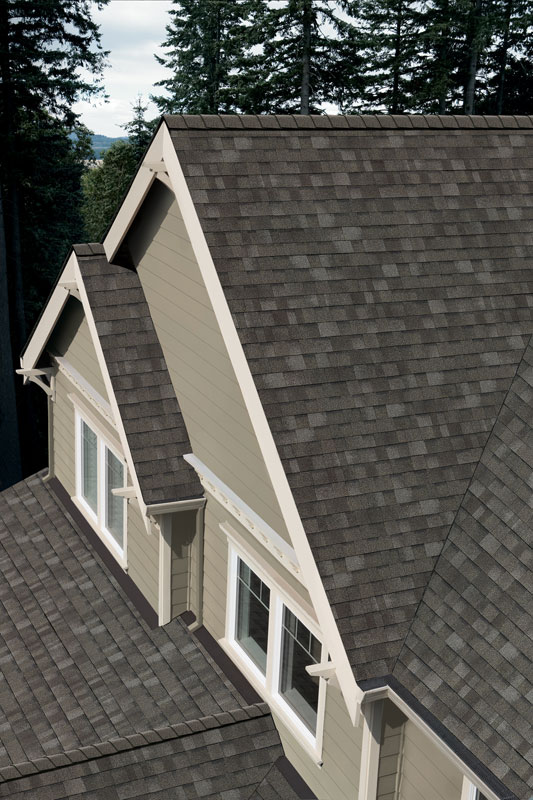
Owens Corning has announced that it will partner with Heritage Environmental Services to offer a national recycling program for its asphalt shingles. The program will provide contractors with access to recycling facilities nationwide through Owens Corning’s preferred contractor program, making recycling convenient and cost-effective. According to Owens Corning, this is the first program of its kind.


When recycled, asphalt shingles are ground up and added to hot-mix asphalt used in road construction and repair. More information is available at roofing.owenscorning.com.

Published December 31, 1969

(2010, January 1). Asphalt Shingle Recycling Program Launched. Retrieved from https://www.buildinggreen.com/departments/newsbrief

Add new comment

To post a comment, you need to register for a BuildingGreen Basic membership (free) or login to your existing profile.

Model Contracts Clarify Green Building Responsibilities

News Brief

Model Contracts Clarify Green Building Responsibilities

As green building takes hold, so too do concerns about litigation and the need for better contracting mechanisms (see

EBN Dec. 2009). Both The American Institute of Architects (AIA) and ConsensusDOCS have released new model contract addenda to address these concerns.

The AIA document, AIA–B124 (2007), updates a 2004 amendment to the organization’s model owner-architect contract, and covers responsibilities and risks related to LEED certification. ConsensusDOCS, a coalition of industry associations representing owners, contractors, and designers, has developed a green building addendum that can be used in conjunction with its other contracts and lays out roles and responsibilities for all members of a design team. Among other things, it calls for a green building facilitator to lead green efforts during the design process; this can be done by either a team member or an outside consultant.

The AIA document is available for purchase (for $6) at www.constructionbook.com; the ConsensusDOCS addendum is available at www.consensusdocs.org.

Published December 31, 1969

(2010, January 1). Model Contracts Clarify Green Building Responsibilities. Retrieved from https://www.buildinggreen.com/departments/newsbrief

Add new comment

To post a comment, you need to register for a BuildingGreen Basic membership (free) or login to your existing profile.