California Utilities to Pump Billions into Energy-Efficiency

News Brief

California Utilities to Pump Billions into Energy-Efficiency

The California Public Utilities Commission recently approved a budget that will funnel $3.1 billion to energy-efficiency efforts statewide over the next three years—an initiative that the commission says is the largest such program in American history.

The budget will fund, among other things, the California Statewide Program for Residential Energy Efficiency (CalSPREE), which aims to reduce energy consumption by 20% through retrofits of 130,000 homes by 2012.

Other funding initiatives included are: $260 million for retrofits of public sector buildings by 64 local government entities; $175 million for programs aimed at achieving net-zero energy in residential and commercial buildings; $100 million for education and training programs for white- and blue-collar professionals in the energy-efficiency industry; and consumer rebate programs for households purchasing energy-efficient products.


Published December 31, 1969

(2009, October 14). California Utilities to Pump Billions into Energy-Efficiency. Retrieved from https://www.buildinggreen.com/departments/newsbrief

Add new comment

To post a comment, you need to register for a BuildingGreen Basic membership (free) or login to your existing profile.

Older Buildings May Harbor PCBs, EPA Warns

News Brief

Older Buildings May Harbor PCBs, EPA Warns

The U.S. Environmental Protection Agency (EPA) has announced new procedures for minimizing the risk of exposure to polychlorinated biphenyls (PCBs) in buildings.

According to EPA, between the years of 1950 and 1978 (when PCBs were phased out of use in the United States) the oily chemical was often added to caulking—used to seal gaps in window- and doorframes, masonry, and joints—to make the material more pliable (See EBN Nov. 2004).

As caulk ages and becomes brittle, it can crack and degrade into particles that may become airborne—and may contain PCBs. While the health hazards of certain PCBs used at heavy industrial sites have been well documented, the agency said that the risks of airborne PCBs from caulk are unknown and demand further research.

Until more is known, EPA is offering guidance on PCB testing and a list of precautions for building managers to reduce the chances of exposure. Suggested actions include regular cleaning of air ducts; improving ventilation; damp-mopping surfaces rather than dry-sweeping; using vacuums with HEPA filters; and diligent washing of hands, surfaces, and frequently handled objects. The agency also suggests that buildings testing positive for PCBs can incorporate the removal of old caulk into any planned renovation projects. For more information, visit www.epa.gov/pcbsincaulk/.


Published December 31, 1969

(2009, October 14). Older Buildings May Harbor PCBs, EPA Warns. Retrieved from https://www.buildinggreen.com/departments/newsbrief

Add new comment

To post a comment, you need to register for a BuildingGreen Basic membership (free) or login to your existing profile.

President Orders Federal Agencies to Save Energy

News Brief

President Orders Federal Agencies to Save Energy

President Obama set federal agencies on a path to sustainability by signing an executive order on October 5, 2009. The order breaks new ground in federal climate action by requiring agencies to set 2020 greenhouse gas emissions reduction targets by the end of 2009 and meet a number of other environmental goals. It also requires agencies to measure their progress toward these goals and report to the Council on Environmental Quality (CEQ), which reports to the President.

In addition to reducing greenhouse gas emissions by 2020, federal agencies must:

    • reduce gasoline use in automobile fleets by 30% by 2020;
    • improve water efficiency by 26% by 2020;
    • achieve a 50% recycling and waste diversion rate by 2015; and
    • achieve net-zero-energy buildings by 2030.

Other requirements cover the environment impacts of purchases and civilian contracts as well as support for community sustainability efforts.

With 500,000 buildings, 600,000 vehicles, 1.8 million civilian employees, and $500 billion in purchases annually, the federal government has a large reach. “As the largest consumer of energy in the U.S. economy, the federal government can and should lead by example when it comes to creating innovative ways to reduce greenhouse gas emissions, increase energy efficiency, conserve water, reduce waste, and use environmentally responsible products and technologies,” said President Obama.


Published December 31, 1969

(2009, October 14). President Orders Federal Agencies to Save Energy. Retrieved from https://www.buildinggreen.com/departments/newsbrief

Add new comment

To post a comment, you need to register for a BuildingGreen Basic membership (free) or login to your existing profile.

USC Offers Ph.D. in Architectural Technology

News Brief

USC Offers Ph.D. in Architectural Technology

At a time when many universities are struggling to fund advanced degree programs, the University of Southern California (USC) School of Architecture has established a doctoral program in architecture that emphasizes architectural technology. The school seeks candidates interested in studying all aspects of the building envelope, including sustainability, daylighting, structures, computing, building information modeling (BIM), energy performance, power generation, glare, intelligent skins, and others. For more information, visit USC Architecture on the web.

At a time when many universities are struggling to fund advanced degree programs, the University of Southern California (USC) School of Architecture has established a doctoral program in architecture that emphasizes architectural technology. The school seeks candidates interested in studying all aspects of the building envelope, including sustainability, daylighting, structures, computing, building information modeling (BIM), energy performance, power generation, glare, intelligent skins, and others. For more information, visit USC Architecture on the web.


Published December 31, 1969

(2009, October 14). USC Offers Ph.D. in Architectural Technology. Retrieved from https://www.buildinggreen.com/departments/newsbrief

Add new comment

To post a comment, you need to register for a BuildingGreen Basic membership (free) or login to your existing profile.

LEED-ND Approved by New Urbanists

News Brief

LEED-ND Approved by New Urbanists

The membership of the Congress for New Urbanism (CNU) has approved the current version of the LEED for Neighborhood Development (LEED-ND) rating system. The system must be approved by all three participating organizations—CNU, the Natural Resources Defense Council (NRDC), and the U.S. Green Building Council (USGBC)—before it can be launched for use.

CNU membership voted 94% to 6% in favor of launching the system; the organization claims that around 10% of its membership voted. A similar member ballot in USGBC is ongoing, and NRDC is polling its own board and that of Smart Growth America. CNU president and CEO John Norquist said of the vote, "Over the years, CNU members helped improve the system's ability to assess the degree to which projects embrace the principles of the Charter of the New Urbanism. The ballot result confirms their work.”

The membership of the Congress for New Urbanism (CNU) has approved the current version of the LEED for Neighborhood Development (LEED-ND) rating system. The system must be approved by all three participating organizations—CNU, the Natural Resources Defense Council (NRDC), and the U.S. Green Building Council (USGBC)—before it can be launched for use.

CNU membership voted 94% to 6% in favor of launching the system; the organization claims that around 10% of its membership voted. A similar member ballot in USGBC is ongoing, and NRDC is polling its own board and that of Smart Growth America. CNU president and CEO John Norquist said of the vote, "Over the years, CNU members helped improve the system's ability to assess the degree to which projects embrace the principles of the Charter of the New Urbanism. The ballot result confirms their work.”

More information about the rating system is available at www.usgbc.org/leed/ or www.cnu.org/leednd/.


Published December 31, 1969

(2009, September 29). LEED-ND Approved by New Urbanists. Retrieved from https://www.buildinggreen.com/departments/newsbrief

Add new comment

To post a comment, you need to register for a BuildingGreen Basic membership (free) or login to your existing profile.

New USGBC Initiative Targets Building Performance

News Brief

New USGBC Initiative Targets Building Performance

In an expanded effort to ensure continual performance of LEED projects, the U.S. Green Building Council (USGBC) recently launched its Building Performance Initiative, which will work in conjunction with the Council’s decision to revoke certification under the 2009 rating system—and beyond—if a building’s performance is inconsistent (see

EBN Aug. 2009).

USGBC hopes to establish a systematic process for optimizing building performance by compiling comprehensive data from thousands of LEED-certified buildings, analyzing it, and supplying building owners and developers with evidence of how buildings are actually used on a daily basis so that they may address performance gaps.

Summits will be held throughout September and October 2009 to encourage feedback and engage practitioners, who will have access to USGBC’s data collection schedule and proposed methodology. Results from these gatherings will be released during the first annual Building Performance Summit at the Greenbuild conference this November in Phoenix. For more information, visit www.usgbc.org.

Published December 31, 1969

(2009, September 25). New USGBC Initiative Targets Building Performance. Retrieved from https://www.buildinggreen.com/departments/newsbrief

Add new comment

To post a comment, you need to register for a BuildingGreen Basic membership (free) or login to your existing profile.

Green Seal Certification Standard Established for Restaurants

News Brief

Green Seal Certification Standard Established for Restaurants

Dining out just got greener, thanks to Green Seal’s new GS-46 Environmental Standard for Restaurants and Foodservices, the first standard of its kind. The first Green Seal specification to be approved by the American National Standards Institute (ANSI), GS-46 addresses the environmental impacts of food, energy and water use, and supplies in the foodservice industry—covering full-service, limited-service, non-commercial, and catering operations—and imparts a framework for reducing waste.

The standard combines metrics, performance, and practice to help restaurants meet their environmental goals and includes an organizational commitment to encourage ongoing efforts. Roughly 945,000 U.S. businesses are eligible for GS-46 certification, which has three tiers: bronze, silver, and gold. Initial fees for certification range from $1,400–$4,500, depending on annual sales and the level of certification; annual monitoring fees that are charged in subsequent years range from $980–$3,150, depending on the same factors

Published December 31, 1969

(2009, September 25). Green Seal Certification Standard Established for Restaurants. Retrieved from https://www.buildinggreen.com/departments/newsbrief

Add new comment

To post a comment, you need to register for a BuildingGreen Basic membership (free) or login to your existing profile.

Underwriting Standards for Green Mortgage-Backed Securities

News Brief

Underwriting Standards for Green Mortgage-Backed Securities

Mike Italiano, U.S. Green Building Council cofounder and current CEO of the Institute for Market Transformation to Sustainability, recently announced a new set of underwriting standards for investors interested in backing commercial green building projects.

The forthcoming standards are ANSI-approved and are the result of a four-year collaboration with Capital Markets Partnership, a coalition of banks, money managers, and governments. The partnership is also at work designing a securities product called “Sustainable Building Securities,” a bond that will be backed 100% by green mortgages. For more information, visit www.capitalmarketspartnership.com.

Published December 31, 1969

(2009, September 25). Underwriting Standards for Green Mortgage-Backed Securities. Retrieved from https://www.buildinggreen.com/departments/newsbrief

Add new comment

To post a comment, you need to register for a BuildingGreen Basic membership (free) or login to your existing profile.

Habitat and Home Depot Bring More Green to Affordable Housing

News Brief

Habitat and Home Depot Bring More Green to Affordable Housing

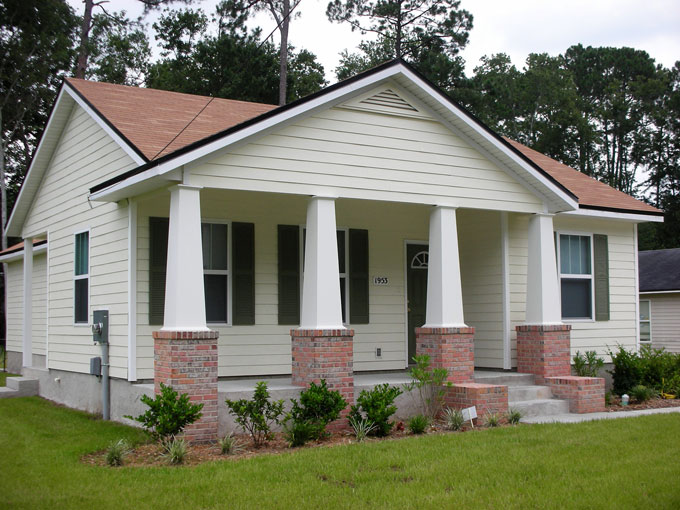
Habitat for Humanity and The Home Depot Foundation recently announced the expansion of their Partners in Sustainable Building program, which provides grants to Habitat affiliates for building energy-efficient, green, affordable homes. The initiative, begun as a pilot in 2008, will direct an additional $30 million over the next five years in grants to Habitat affiliates nationwide (see

EBN May 2008). During the past year, the pilot program helped 30 Habitat affiliates build more than 250 homes to green standards. According to the organization, the pilot demonstrated energy savings between 15% and 30% in those homes compared to the typical Habitat home—and up to 50% in the homes that were built to LEED Platinum standards.

In the first year of the expanded program, another 120 affiliates will become eligible for the grants, with more new affiliates becoming eligible each year. By the end of the five-year program, Habitat plans to have constructed 5,000 new energy-efficient, affordable homes and to have helped more than 400 affiliate organizations educate their staff and participants about building to green standards.

Published December 31, 1969

(2009, September 25). Habitat and Home Depot Bring More Green to Affordable Housing. Retrieved from https://www.buildinggreen.com/departments/newsbrief

Add new comment

To post a comment, you need to register for a BuildingGreen Basic membership (free) or login to your existing profile.

Bob Berkebile Receives Heinz Award

News Brief

Bob Berkebile Receives Heinz Award

A leader in green design for more than 30 years, Bob Berkebile, FAIA, founding principal of BNIM, has received a Heinz Award. The prestigious awards are given each year to outstanding individuals in several categories, including environmental work. Berkebile, who is an

EBN advisory board member, was the founding chairman of The American Institute of Architects Committee on the Environment, served on the board of directors of the U.S. Green Building Council, and was instrumental in the development of LEED.

Published December 31, 1969

(2009, September 25). Bob Berkebile Receives Heinz Award. Retrieved from https://www.buildinggreen.com/departments/newsbrief

Add new comment

To post a comment, you need to register for a BuildingGreen Basic membership (free) or login to your existing profile.