EPA and NREL See Renewables Potential in Brownfields

News Brief

EPA and NREL See Renewables Potential in Brownfields

The U.S. Environmental Protection Agency (EPA) and the National Renewable Energy Laboratory (NREL) are looking at some of the nation’s 15 million acres (6 mil-lion hectares) of contaminated or potentially contaminated land (“brownfields”) for siting renewable energy installations. Under EPA’s “Re-Powering America’s Land” program, which was established in 2008 to encourage renewable energy development on EPA-designated brownfields, the federal agency and national laboratory have now teamed up to conduct renewable energy feasibility studies on twelve sites in ten states and Puerto Rico, including decommissioned mines, landfills, refineries, and a variety of Superfund sites. For more on the program and to view the proposed sites, visit www.epa.gov/renewableenergyland/.

Published December 31, 1969

(2010, March 31). EPA and NREL See Renewables Potential in Brownfields. Retrieved from https://www.buildinggreen.com/departments/newsbrief

Add new comment

To post a comment, you need to register for a BuildingGreen Basic membership (free) or login to your existing profile.

WaterSense Showerhead Specification Released

News Brief

WaterSense Showerhead Specification Released

The U.S. Environmental Protection Agency (EPA) released the final WaterSense specification for showerheads in March 2010. As expected, the specification sets the maximum flow rate at 2.0 gallons per minute (7.6 lpm) at a flowing pressure of 80 psi. EPA estimates that labeled showerheads will begin appearing in stores by the end of April. For more on this standard, see

EBN Nov. 2009 and www.epa.gov/watersense/.

Published December 31, 1969

(2010, March 31). WaterSense Showerhead Specification Released. Retrieved from https://www.buildinggreen.com/departments/newsbrief

Add new comment

To post a comment, you need to register for a BuildingGreen Basic membership (free) or login to your existing profile.

EPA Delays Greenhouse Gas Regulations

News Brief

EPA Delays Greenhouse Gas Regulations

In December 2009, the U.S. Environmental Protection Agency (EPA) declared greenhouse gases a threat to humans, thus bringing them under the regulatory authority of the agency under the Clean Air Act (see

EBN Jan. 2010). EPA had planned to begin regulating greenhouse gases from large stationary sources (those that emit more than 25,000 tons of gases a year) in 2010; a February 2010 letter to Congress from EPA Administrator Lisa Jackson noted that the agency is now pushing those plans back to at least 2011. The move comes after Congress and various industry groups, including the American Chemistry Council, voiced concerns that regulation could slow economic recovery.

Published December 31, 1969

(2010, March 31). EPA Delays Greenhouse Gas Regulations. Retrieved from https://www.buildinggreen.com/departments/newsbrief

Add new comment

To post a comment, you need to register for a BuildingGreen Basic membership (free) or login to your existing profile.

Connecticut May Forgive Student Loans for Green Jobs

News Brief

Connecticut May Forgive Student Loans for Green Jobs

Connecticut lawmakers have proposed a bill that would dedicate $6 million to fund a green jobs loan forgiveness program.

The program would provide incentive for Connecticut residents looking for work in fields like renewable energy, alternative fuels, or hazard-free product design, awarding as much as $2,500 annually (for up to four years or five percent of the loans, whichever is lesser) to students who earn an associate’s or bachelor’s degree from a Connecticut institution and then work for at least two years in the field in that state.

Similar loan forgiveness programs have been in place for years to entice new doctors to practice in rural areas and to encourage teachers to pursue math and science degrees or take positions in struggling urban districts, but Connecticut’s proposed program is believed to be the first of its kind for green jobs.


Published December 31, 1969

(2010, March 25). Connecticut May Forgive Student Loans for Green Jobs. Retrieved from https://www.buildinggreen.com/departments/newsbrief

Add new comment

To post a comment, you need to register for a BuildingGreen Basic membership (free) or login to your existing profile.

American Standard Donates $1 Million to Nature Conservancy

News Brief

American Standard Donates $1 Million to Nature Conservancy

As part of a freshwater conservation initiative, American Standard recently committed $1 million to The Nature Conservancy to raise consumer awareness of saving water at home.

The funds, which will be endowed over a two-year period, will be dedicated to projects that educate consumers about water-efficient, low-consumption fixtures. According to the Conservancy, the money will “directly support priority conservation projects around the world and empower people to start making changes in their daily lives to help use water more sustainably.”

As part of a freshwater conservation initiative, American Standard recently committed $1 million to The Nature Conservancy to raise consumer awareness of saving water at home.

The funds, which will be endowed over a two-year period, will be dedicated to projects that educate consumers about water-efficient, low-consumption fixtures. According to the Conservancy, the money will “directly support priority conservation projects around the world and empower people to start making changes in their daily lives to help use water more sustainably.”

The partnership will save an estimated 18 billion gallons of potable water annually.


Published December 31, 1969

(2010, March 4). American Standard Donates $1 Million to Nature Conservancy. Retrieved from https://www.buildinggreen.com/departments/newsbrief


Add new comment

To post a comment, you need to register for a BuildingGreen Basic membership (free) or login to your existing profile.

Less Is More, Says New Development Company

News Brief

Less Is More, Says New Development Company

Martin Melaver, CEO of Georgia real estate firm Melaver Inc., and Patty McIntosh, formerly vice president in charge of coastal programs for the Georgia Conservancy, have teamed up to create a new development company that they say will add value to communities by reducing what is built.

Melaver McIntosh will offer services in sustainability planning, financing and certification, and green development, and aims to respond to what its founders see as a failure of public and private sustainability efforts to work together.


Published December 31, 1969

(2010, March 4). Less Is More, Says New Development Company. Retrieved from https://www.buildinggreen.com/departments/newsbrief

Add new comment

To post a comment, you need to register for a BuildingGreen Basic membership (free) or login to your existing profile.

Seattle Buildings Must Disclose Energy Use

News Brief

Seattle Buildings Must Disclose Energy Use

The Seattle city council in late January 2010 approved an ordinance requiring nonresidential and multi-family residential buildings within the city to benchmark (using Portfolio Manager or a similar tool) and report their energy use.

The ordinance will be implemented in phases, with nonresidential buildings over 50,000 ft2 (4,650 m2) required to benchmark and begin reporting by April 2011, while multi-family dwellings and nonresidential buildings over 10,000 ft2 (930 m2) must begin reporting by April 2012. Building owners must provide this energy use information upon request to prospective or current tenants, potential buyers, or prospective lenders.

“Energy disclosure is a key first step to tap into the gold mine of opportunities to save energy and money while improving the City's existing building stock,” said city council chair Richard Conlin.

Tenants also face obligations under the new ordinance: they must furnish building owners with whatever energy-use information cannot be monitored by the owner and is required for compliance with the reporting requirement.


Published December 31, 1969

(2010, March 4). Seattle Buildings Must Disclose Energy Use. Retrieved from https://www.buildinggreen.com/departments/newsbrief

Add new comment

To post a comment, you need to register for a BuildingGreen Basic membership (free) or login to your existing profile.

NAIMA Forms New Advocacy Council

News Brief

NAIMA Forms New Advocacy Council

In response to Congress’ current focus on energy policy, climate policy, and job creation, the North American Insulation Manufacturers Association (NAIMA), which focuses on fiberglass and mineral wool insulation, has created a special council to engage with legislators. Chaired by industry leaders and operating within the trade association, the Council of NAIMA hopes to unite the insulation industry by “promoting the use of insulation to achieve energy savings and attendant environmental and economic benefits.” In addition to advocating for energy efficiency policies and programs, the Council will focus its lobbying efforts on creating jobs in the industry, incentivizing insulation retrofits, and increasing insulation requirements for codes and standards, with attention paid to those that support net-zero building. Council membership is open to all types of insulation manufacturers and their suppliers. For more information, visit www.naima.org/council.


Published December 31, 1969

(2010, March 1). NAIMA Forms New Advocacy Council. Retrieved from https://www.buildinggreen.com/departments/newsbrief

Add new comment

To post a comment, you need to register for a BuildingGreen Basic membership (free) or login to your existing profile.

U.S. Wind Industry Breezes to New Heights in 2009

News Brief

U.S. Wind Industry Breezes to New Heights in 2009

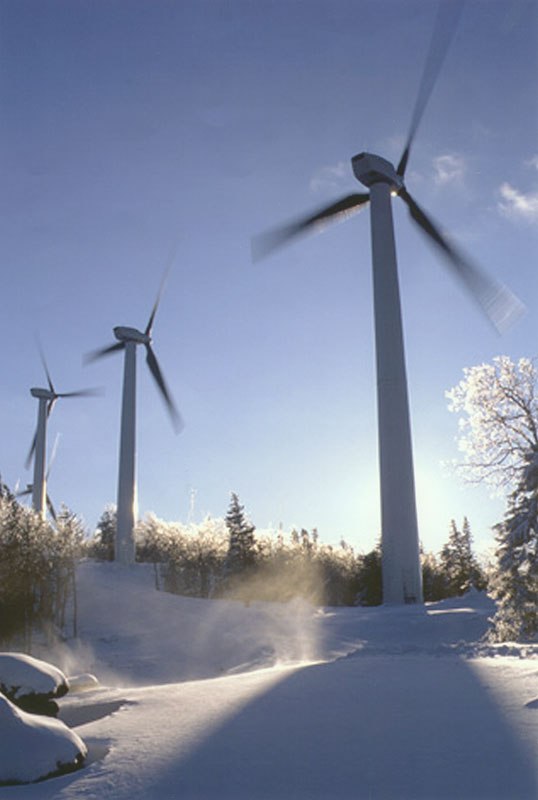
The American Wind Energy Association (AWEA) recently reported a significant expansion of wind power for the U.S. in 2009, as roughly 9,900 megawatts (MW) were added to existing capacity. This 39% jump is the largest on record and brings the country’s total wind capacity to 35,000 MW, representing 2% of electrical generation capacity in the U.S.—enough energy to power approximately 9.7 million homes. According to AWEA, the growth is attributable to the American Recovery and Reinvestment Act, which provides tax and investment incentives for the wind industry. Turbine orders that were placed in 2008 but delivered last year were also cited as a direct cause for the 2009 wind expansion. Despite the recent growth, AWEA stressed the need for long-term policy to combat job losses resulting from a pattern of low orders and high inventory in the first part of 2010.


Published December 31, 1969

(2010, March 1). U.S. Wind Industry Breezes to New Heights in 2009. Retrieved from https://www.buildinggreen.com/departments/newsbrief

Add new comment

To post a comment, you need to register for a BuildingGreen Basic membership (free) or login to your existing profile.

Los Angeles Considers Mandatory Rainwater Capture

News Brief

Los Angeles Considers Mandatory Rainwater Capture

The Los Angeles Department of Public Works (LADPW) has approved an ordinance that would require the capture and reuse of stormwater by new homes, large developments, and certain redevelopments in the city. If signed into law, the ordinance would apply to runoff from ¾-inch (or greater) rainstorms, requiring 100% reuse or infiltration, thereby preventing an estimated 104 million gallons of polluted water from entering the ocean. Mitigation fees, which the Building Industry Association (BIA) has opposed, would apply to builders who are unable to fulfill the requirements of the ordinance. Negotiations between LADPW and BIA have yielded a $13 per gallon fee for neglected rainwater—originally set at $20—and the option of cleaning runoff in a high-efficiency bio-filtration system before releasing it. Collected fees would finance future low-impact public development projects. The ordinance, if passed, would be effective by 2011.

Published December 31, 1969

(2010, March 1). Los Angeles Considers Mandatory Rainwater Capture. Retrieved from https://www.buildinggreen.com/departments/newsbrief

Add new comment

To post a comment, you need to register for a BuildingGreen Basic membership (free) or login to your existing profile.