
Championing the
Changemakers
BuildingGreen champions the changemakers in sustainable design and building, with trusted insight, unparalleled education, and communities that are transforming the industry.
Log in to your profile

Image: Piranka

Product Review
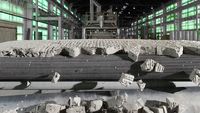
Foam glass aggregate made from post-consumer recycled glass bottles can replace both foam insulation and aggregate below grade.
Extruded polystyrene’s (XPS) high R-value and water resistance have made it the default insulation for below-grade applications, but its petroleum-based styrene chemistry, inherent flammability, and high-global-warming-potential (GWP) blowing agents make these board products less than desirable environmental choices. And although high-density... Read more
News Brief
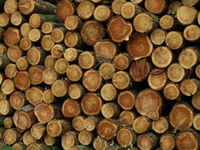
Timber Traceability is one group’s answer to the controversial Legal Wood pilot path.
Who’s in favor of legally sourced wood?
If you’re raising your hand, you’re not alone: illegal logging is a global scourge that destroys ecosystems and contributes to climate change. It’s carried out by organized crime, and is used to fund civil wars and terrorism. And by some estimates, as much as half the timber in the world is... Read more
April Fools

“Immersive” Lundhjem houses recently won the Lille Arne prize from the Danish Association of Architects.
Danish company Lundhjem has received the 2019 Lille Arne award from the Danish Association of Architects, which praised the trendy designs for their “seamless biophilia experience” and “uncompromising contact with nature.”
We reached rising star Aksel Lund, the architect behind Lundhjem, at his Copenhagen office to discuss the award.... Read more
April Fools
LEED v4.20 introduces a wide range of cannabis-oriented prerequisites
Responding to marijuana legalization in Canada and multiple U.S. states, U.S. Green Building Council (USGBC) has announced numerous changes to ensure the LEED standard stays current with changing demographics among cannabis users.
“LEED is constantly evolving, and we are proud to remain ahead of the curve on this major shift in... Read more
April Fools

How the highest-profile event in sustainable design went terribly, terribly wrong
It started with a kombucha-fueled bacchanal on a remote island in the Pacific Northwest. It ended in a prison cell.
The Green Building unFestival was billed as a more exclusive and more entertainment-centered version of the unConference sponsored annually by the International Living Future Institute. ILFI is one of many entities now... Read more
April Fools

With the rousing success of the WELL Building Standard, the Green Building Initiative has launched a competing standard that emphasizes occupant comfort, energy savings, and freedom.
There are a number of building standards claiming to improve occupant health and well-being. Costly, complicated certifications such as WELL, Fitwel, and others place an emphasis on promoting “wellness” at the expense of what Americans want most: comfort, convenience, and freedom. A new standard from the Green Building Initiative (GBI), which... Read more
Webcast
WSP's Julie Sinistore will walk you through how to document the least implemented requirements in LEED v4 Materials and Resources credit category. As an expert life cycle assessment (LCA) practitioner, she will help you become familiar with the ins and outs of LCA and how it is applied in LEED v4 and V4.1 BD+C including whole building life... Read more
News Analysis
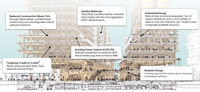
Sidewalk Labs is validating strategies for carbon-neutral neighborhoods—and finding valuable lessons for any urban development in the process.
Mass-timber buildings with Passive House-level performance. All-electric energy systems with renewables and storage. Green stormwater infrastructure. Advanced occupant-engagement strategies.
The sustainability plan for Sidewalk Toronto’s Quayside development reads like a green urbanism wish list. It would be tempting to write the plan... Read more
Feature
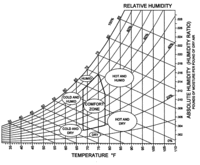
Ready to expand your comfort zone? Handing control to occupants is the best way to ensure they’re satisfied.
This article builds on a 15-year-old BuildingGreen classic, originally written by Jessica Boehland and Nadav Malin. Our update includes exciting new work going on with thermal comfort in mixed-mode buildings. Quotes from 2019 interviews are marked as such.
The most common complaint facility managers hear from building occupants is that... Read more
News Brief
Though products are not yet on the market, a state commission has given the go-ahead for select foam insulation without flame retardants or fire testing.
WARNING – FIRE HAZARD.
That’s how plastic foam insulation will have to be marked following a decision by the State of California Building Standards Commission to allow flame-retardant-free products to be used below grade. The boards will also have to say, in ½-inch-high red lettering, “This product is required to be installed below a... Read more
Spotlight Report
Ready to expand your comfort zone? Handing control to occupants is the best way to ensure they’re satisfied.
The most common complaint facility managers hear from building occupants is that their office space is too cold. That would seem an easy enough problem to solve, except that the number two complaint is that it’s too hot.... Read more
News Brief
A new “field guide” to becoming a regenerative practitioner suggests starting with oneself.
Sustainable development involves minimal disruption of living things and natural systems, but regenerative development is different: it aims to enhance the ability of life to thrive. If this seems difficult, don’t despair: a new guide offers advice on how to become a “regenerative practitioner.” And it all starts with your inner life.
“... Read more
Product Review
Hanging Gardens offers a “smart” blue-roof system that stores water on roofs, monitoring weather and local stormwater to more effectively manage runoff.
Building owners generally frown upon water pooling on a roof, but with careful detailing, roofs can be a good place to store excess rainwater. Storing water on roof makes sense in urban areas when there is little free space on the lot, or when putting it in the ground is expensive or inappropriate, such as on brownfield sites. These “blue roofs... Read more
News Analysis
BD+C and ID+C projects can now register—and v4 projects can already substitute v4.1 versions of credits.
Even though LEED v4 launched more than five years ago, it’s still a “new” rating system to many users. That’s partly because the construction cycle is long, but it’s also due to the fact that registration under v4 wasn’t required until late 2016. But LEED v4 definitely isn’t new anymore: with the beta launch of LEED v4.1 for Building Design and... Read more
Op-Ed
The 4.1 version of LEED’s design and construction rating systems is outstanding. Is it too late?
As Malcolm Gladwell illustrates so well in his bestselling book Outliers, nothing great emerges fully formed. Just ask the inventor of WD-40 about his previous 39 formulations.
LEED 4.1 is such an achievement. The current working drafts of LEED for Building Design and Construction (BD+C) and LEED for Interior Design and Construction (ID... Read more
News Brief
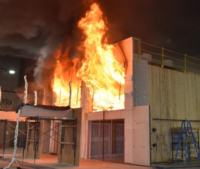
After years of study and testing, the International Code Council will allow heavy timber buildings taller than 85 feet.
It’s about to get a lot easier to build high with mass timber.
It all started when the American Wood Council (AWC), a trade group promoting the use of wood in construction, approached the International Code Council (ICC) with a request: study tall wood construction. In particular, AWC wanted some scientific rigor brought to the issue... Read more
Product Review

Alpen is rolling out triple-pane products that are thinner and lighter—and will eventually be cheaper.
The good news about window performance is that the market has been transformed by the building industry moving to dual-pane, low-e, argon-filled glazing with performance around R-4, according to Lawrence Berkeley National Laboratory (LBNL). See Figure 1 in the slideshow.
The bad news is that since around 1990, the performance of the... Read more
Op-Ed
In a year of devastating disasters, greenhouse gas emissions rose. Here’s what we can do about it.
By James S. Russell
We’ve just ended a year of fires that killed 85 in California, nearly destroying the town of Paradise, and hurricanes that took 53 lives in Florida and 43 in the Carolinas, leaving thousands of destroyed homes and billions of dollars of damage in their wake. The connection of these and other storms and droughts to... Read more
Product Review
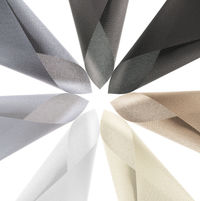
Mermet offers a fiberglass textile for interior rollershades that has good performance and material transparency.
In December’s issue, we covered new products that manufacturers released at Greenbuild, but we’ve saved another for this month—Mermet’s GreenScreen Nature sun-control textile. Manufactured by the company’s affiliate in France, Nature is available in roller shades from Draper, Hunter Douglas, and Lutron, and is part of Mermet’s GreenScreen line... Read more
Blog Post
The SDL Show-and-Tell session is where Greenbuild becomes more personal, more intimate, less business-to-business, and more community-centric.
The Greenbuild International Conference and Expo is the world’s largest conference and expo centered around sustainable design. Greenbuild is unparalleled in its robust educational and networking opportunities, but it can also be a bit overwhelming. Over the past couple of years, I’ve especially enjoyed a special evening of respite, inspiration... Read more


