Cadmium Rule on Hold After Industry Pressure

News Brief

Cadmium Rule on Hold After Industry Pressure

By Erin WeaverA new rule intended to increase companies’ reporting of the use of cadmium compounds has been retracted due to industry pressure. The U.S. Environmental Protection Agency (EPA) published the rule last November under the Toxic Substances Control Act, adding cadmium to the list of substances for which all companies that produced, imported, or processed the material—or proposed doing so—in the last ten years must submit any unpublished health and safety studies to EPA. The documents were announced to be due by March 4, 2013. An industry group, the International Cadmium Association, submitted a letter to EPA objecting that companies had not had the opportunity to give feedback on the rule and asking EPA to withdraw the rule or extend the deadline for companies to seek exclusions for some cadmium compounds, as they are found in such a large number of products. EPA has since withdrawn the rule for further consideration, citing “significant confusion and uncertainty within certain industrial sectors.”

Cadmium is most often used in making rechargeable batteries.

Published December 31, 1969

(2013, January 28). Cadmium Rule on Hold After Industry Pressure. Retrieved from https://www.buildinggreen.com/departments/newsbrief

Add new comment

To post a comment, you need to register for a BuildingGreen Basic membership (free) or login to your existing profile.

Adapting Infrastructure for Density

News Brief

Adapting Infrastructure for Density

By Erin WeaverProviding infrastructure that encourages compact growth will be essential as the U.S. population grows in the coming decades, and a new report from the Urban Land Institute (ULI) highlights successful strategies for doing so. “Shifting Suburbs: Reinventing Infrastructure for Compact Development” looks at eight examples of redevelopment to encourage walking, cycling, and public transit in suburbs across the U.S. and addresses common challenges, which include funding and planning issues.

The young professionals of “Generation Y” are creating demand for urban convenience in previously suburban areas, challenging communities to adapt traditional infrastructure to support dense development, says the report. Case studies include transit-oriented development; mall retrofits to turn “dying or obsolete” malls into mixed-use spaces; and the transformation of commercial corridors from “disjointed jumbles” of strip retail and parking lots into dense nodes with improved transit options. Key strategies, the report says, include stakeholder engagement; diverse funding sources; an emphasis on public spaces; and proactive planning for future development.

To download the report, go to www.uli.org.

Published December 31, 1969

(2013, January 28). Adapting Infrastructure for Density. Retrieved from https://www.buildinggreen.com/departments/newsbrief

Add new comment

To post a comment, you need to register for a BuildingGreen Basic membership (free) or login to your existing profile.

Ants Absorb Detectable Levels of Phthalates

News Brief

Ants Absorb Detectable Levels of Phthalates

By Erin WeaverScientists in France suggest that ants can serve as bio-indicators of phthalate pollution, after finding the plasticizers in the insects’ exoskeletons and internal tissues. In the study, published in

Science of the Total Environment, ants from various locations in Europe and Africa tested positive for the presence of phthalates even when the insects were known never to have had direct contact with plastic. Ants kept in a closed, phthalate-free box showed steady amounts of the chemicals over time, while those kept in open boxes showed increasing quantities of phthalates. This indicates the chemicals were absorbed from the surrounding air; phthalates are known to enter the environment as the plastic items containing them—such as vinyl flooring—deteriorate. The researchers found similar results when testing crickets and honeybees.

Published December 31, 1969

(2013, January 28). Ants Absorb Detectable Levels of Phthalates. Retrieved from https://www.buildinggreen.com/departments/newsbrief

Add new comment

To post a comment, you need to register for a BuildingGreen Basic membership (free) or login to your existing profile.

EBie Awards Submissions Due in February

News Brief

EBie Awards Submissions Due in February

By Erin WeaverThe 2013 EBie Awards will be announced in June, with project submissions due by February 26. The national awards, from Urban Green, the New York City chapter of the U.S. Green Building Council, recognize professionals working to bring existing buildings into line with standards such as LEED for Existing Buildings: Operations & Maintenance.

The EBies may be awarded to building owners, facilities managers, engineers, and other professionals contributing to significantly increased environmental performance. There are seven categories in this second year of the awards, focusing on energy, water, operations, materials, lighting, and tenant engagement, and all submissions must include project data from the U.S. Environmental Protection Agency’s Portfolio Manager.

More information and the submission form may be found at www.ebies.org.

Published December 31, 1969

(2013, January 28). EBie Awards Submissions Due in February. Retrieved from https://www.buildinggreen.com/departments/newsbrief

Add new comment

To post a comment, you need to register for a BuildingGreen Basic membership (free) or login to your existing profile.

Deaths Related to Air Pollution Increase Worldwide

News Brief

Deaths Related to Air Pollution Increase Worldwide

By Erin WeaverA new study in

The Lancet shows air pollution contributing to an increasing number of deaths worldwide, with 3.2 million premature deaths in 2010 attributable to outdoor air pollution. Part of the Global Burden of Disease Study 2010, the article tracks changes in risk factors since 1990. While communicable diseases and malnutrition cause fewer deaths than they did two decades ago, deaths attributable to air pollution have increased fourfold.

Overall, non-communicable diseases such as cancer and heart disease have become the leading causes of death, and many of them are caused at least in part by pollutants. Much of the increase in pollution-related mortality is in Asia, where rising numbers of vehicles result in more soot and other ambient particulate matter from diesel exhaust. Indoor air pollution, especially from coal- and wood-burning stoves, has decreased since 1990—but it still caused approximately 3.5 million premature deaths, largely in India and parts of Africa.

Published December 31, 1969

(2013, January 28). Deaths Related to Air Pollution Increase Worldwide. Retrieved from https://www.buildinggreen.com/departments/newsbrief

Add new comment

To post a comment, you need to register for a BuildingGreen Basic membership (free) or login to your existing profile.

AIA Allows Sustainability Label to Expire

News Brief

AIA Allows Sustainability Label to Expire

By Tristan RobertsThe board of the American Institute of Architects (AIA) voted in December 2012 to allow a requirement that its members earn continuing education units (CEUs) with a focus in Sustainable Design (SD) content to expire. When the requirement was instituted in 2009, a 2012 date was set for reevaluation (see “AIA Requires Sustainability in Continuing Education,” May 2008). Members had to allocate half of their eight required health, safety, and welfare (HSW) hours to SD through HSW/SD designated courses. Those courses will now be folded into HSW, which will have a broader definition. Beginning in 2013, architects are required to accomplish 18 general learning units, 12 of which will be HSW. AIA representatives state that the change reflects the view that all architecture should be sustainable.

Published December 31, 1969

(2013, January 28). AIA Allows Sustainability Label to Expire. Retrieved from https://www.buildinggreen.com/departments/newsbrief

Add new comment

To post a comment, you need to register for a BuildingGreen Basic membership (free) or login to your existing profile.

Hottest Year on Record (Again)

News Brief

Hottest Year on Record (Again)

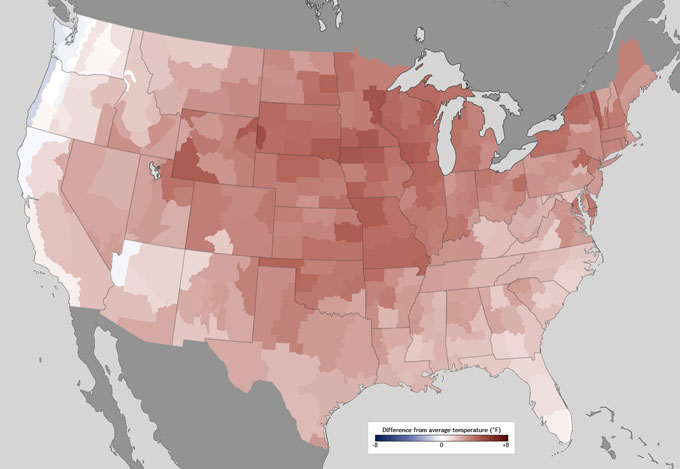
By Erin WeaverThe U.S. National Oceanic and Atmospheric Administration (NOAA) has confirmed that 2012 was the hottest year in the contiguous U.S. since recordkeeping began in 1895. The warmest spring on record and the second-warmest summer combined with higher-than-average temperatures over the rest of the year to clock an overall average of 55.3°F nationwide—exceeding the previous record of just 14 years earlier by 1°F. Nineteen individual states, and cities from Boston to Denver, set records for their warmest year. The worst drought in decades affected 39% of the country, contributing to wildfires that burned 9.2 million acres in the third-worst year of wildfires on record.

In the southern hemisphere, meanwhile, Australia’s summer is setting records as well. With temperatures routinely averaging above 100°F, the country’s Bureau of Meteorology has added two new colors to extend the range of its forecasting maps, and motorists have reported gasoline vaporizing while being pumped into gas tanks.

Published December 31, 1969

(2013, January 28). Hottest Year on Record (Again). Retrieved from https://www.buildinggreen.com/departments/newsbrief

Add new comment

To post a comment, you need to register for a BuildingGreen Basic membership (free) or login to your existing profile.

Energy-Efficiency Tax Credits Reinstated

News Brief

Energy-Efficiency Tax Credits Reinstated

By Erin WeaverThe American Taxpayer Relief Act of 2012, passed on January 1, 2013, to avoid the so-called fiscal cliff includes the reinstatement of two tax credits for energy-efficient residences and appliances. Title 26 subsections (SS) 45L and 25C are in effect through December 31, 2013, and retroactively to their previous expiration on December 31, 2011, making them applicable to both 2012 and 2013 projects.

SS45L is a business tax credit of up to $2,000 for contractors or developers building or renovating dwelling units of up to three stories, including multifamily properties; the credit may be claimed for each unit. The previous version of SS45L required a 50% reduction in energy use compared to the 2003 International Energy Conservation Code (IECC); this has been changed to reference the 2006 IECC. This is not a substantial change to efficiency requirements, as the 2006 IECC update largely focused on simplifying compliance; properties qualifying for the credit based on the previous version are likely to meet the new standards. SS25C is an individual tax credit of 10% of the cost of efficient appliances or property improvements, such as insulation. The credit is capped at $500 and is applicable to all improvements from Decemeber 31, 2011, to December 31, 2013.

Published December 31, 1969

(2013, January 28). Energy-Efficiency Tax Credits Reinstated. Retrieved from https://www.buildinggreen.com/departments/newsbrief


Add new comment

To post a comment, you need to register for a BuildingGreen Basic membership (free) or login to your existing profile.

New Research Shows Walkable Neighborhoods Key to Health

News Brief

New Research Shows Walkable Neighborhoods Key to Health

American Journal of Preventive Medicine, researchers at the University of British Columbia looked at hundreds of neighborhoods around San Diego and Seattle, assigning them scores based on factors that included parks, walkability, and access to stores selling fresh fruits and vegetables within a half-mile. (The presence of fast-food restaurants in that range lowered a neighborhood’s score.)

The researchers then examined the health information of 681 randomly selected children between the ages of six and eleven in those areas; after accounting for various other factors, such as ethnicity, family income, and parents’ body mass index, they found that children in high-scoring neighborhoods were 59% less likely to be obese than children in low-scoring areas.

The researchers conclude that people are more likely to be physically active when they can comfortably walk to nearby amenities, something that proved more common in older neighborhoods examined in the study. Grocery stores in strip development, for example, offer fresh food but are often virtually inaccessible on foot.


Published December 31, 1969

(2013, January 28). New Research Shows Walkable Neighborhoods Key to Health. Retrieved from https://www.buildinggreen.com/departments/newsbrief

Add new comment

To post a comment, you need to register for a BuildingGreen Basic membership (free) or login to your existing profile.

Residential Infill Development Increasing

News Brief

Residential Infill Development Increasing

By Erin WeaverResidential construction in U.S. metropolitan regions is increasingly happening in previously developed areas, according to a new report from the U.S. Environmental Protection Agency (EPA). “Residential Construction Trends in America’s Metropolitan Regions” looked at 209 such areas and found that, between 2005 and 2009, 21% of new home construction was infill replacing parking lots, former industrial development, and other existing land cover.

Of the 51 largest metropolitan regions in the study, 36 saw an increase in the percentage of infill development compared to the previous five years, and infill made up the majority of new home construction in New York City and several California cities. Infill development takes advantage of existing infrastructure and increases a community’s tax base; most metropolitan areas, however, are still expanding outward faster than they are gaining density of housing.

For more on the study, see www.epa.gov.

Published December 31, 1969

(2013, January 28). Residential Infill Development Increasing. Retrieved from https://www.buildinggreen.com/departments/newsbrief

Add new comment

To post a comment, you need to register for a BuildingGreen Basic membership (free) or login to your existing profile.