U.S. and China to Cut Climate Impact of Air Conditioners

News Brief

U.S. and China to Cut Climate Impact of Air Conditioners

The two biggest contributors of HFC emissions agree to a phase-down to mitigate global warming.

Using the Montreal Protocol framework, President Obama and his Chinese counterpart President Xi have agreed to advance anti-climate-change measures by reducing production and consumption of hydrofluorocarbons (HFCs).

The leaders agreed to amend the 1987 Montreal Protocol, which successfully decreased ozone-depleting CFC refrigerants and blowing agents but led to the widespread use of HFCs as an alternative—a chemical scientists now know has global warming potential thousands of times greater than that of CO2 (see “Avoiding the Global Warming Impact of Insulation”). Even though small amounts are released gradually from air conditioners, refrigerators, fire-suppression equipment, and insulation, the U.S. Environmental Protection Agency has warned that HFC emissions could account for as much as 19% of global greenhouse gas emissions by 2050—due in large part to increased demand for air conditioning.

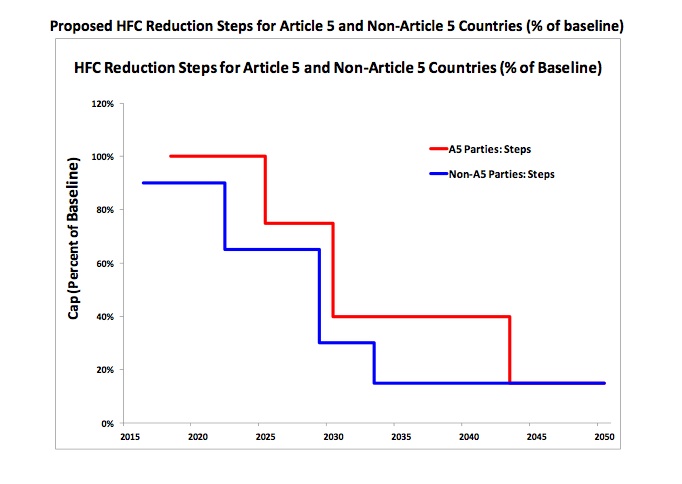
With the support of China, the U.S. plans to propose a Montreal Protocol amendment it co-drafted with Canada and Mexico at the 2013 meeting of signatories. The proposed amendment calls for a phased reduction plan in which participating countries decrease HFC emissions gradually in the coming years—70% by 2029 (60% for countries receiving financial assistance under the Protocol’s Multilateral Fund). Corresponding U.S. policy would be implemented through the Significant New Alternatives Policy (SNAP) program, which would encourage the use of alternative chemicals such as low-GWP blends and hydrocarbons.

If countries such as Brazil and India follow in the U.S. and China’s footsteps and the amendment is globally adopted, it would be possible to avoid emissions equivalent to 90 gigatons of CO2 by 2050 and prevent a temperature increase of 0.5 degrees Celsius by the end of the century, according to John Podesta, chair of the Center for American Progress.

For more information:

The White House, Office of the Press

whitehouse.gov/the-press-office/

Published December 31, 1969

(2013, June 27). U.S. and China to Cut Climate Impact of Air Conditioners. Retrieved from https://www.buildinggreen.com/departments/newsbrief

Add new comment

To post a comment, you need to register for a BuildingGreen Basic membership (free) or login to your existing profile.

Endangered Sea Turtles Flee Light Pollution

News Brief

Endangered Sea Turtles Flee Light Pollution

A new study finds that light pollution limits nesting areas for endangered sea turtles.

Two species of endangered sea turtles in the Mediterranean were more likely to choose nesting areas under increasingly hard-to-find dark skies, according to new research published in the journal Biological Conservation. Light pollution has long been known to cause problems for hatchlings—city lights make them more visible to predators and lead them in the opposite direction of the water—but this study is the first to show impacts for adult turtles. The newfound preference suggests that light pollution is affecting the population of these nocturnal nesters by limiting suitable nesting spots.

Researchers made their findings by comparing nesting maps of coastal areas in Israel with satellite imagery of light pollution. The same technique could be used worldwide to help conservationists identify where to place reserves or to strengthen light-pollution ordinances. The researchers note that their methodology does not require extensive on-the-ground studies and may make it easier to develop comprehensive policy.

Published December 31, 1969

(2013, June 27). Endangered Sea Turtles Flee Light Pollution. Retrieved from https://www.buildinggreen.com/departments/newsbrief

Add new comment

To post a comment, you need to register for a BuildingGreen Basic membership (free) or login to your existing profile.

Study Predicts 40% Less Driving in LEED Neighborhoods

News Brief

Study Predicts 40% Less Driving in LEED Neighborhoods

Using a new modeling tool, researchers predicted vehicle miles traveled would decrease 40%–76% in LEED-ND certified areas.

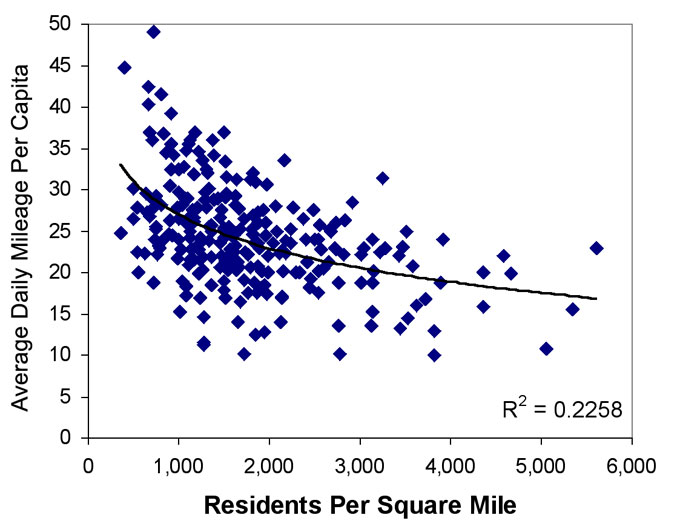
Researchers developed a new predictive model to estimate vehicle miles traveled (VMT) per person in six U.S. regions, validating their model against actual VMT in the same neighborhoods, as catalogued in the National Household Travel Survey released periodically by the U.S. Department of Federal Highway Administration.

They then used the new methodology to predict VMT in twelve neighborhoods certified through the LEED-ND program and compared their estimates with driving data in non-LEED neighborhoods in the same metropolitan areas. Predicted VMT in the LEED neighborhoods was 40%–76% less than VMT in conventional developments.

These results follow naturally from LEED-ND’s focus on urban infill, density, and walkable streets, argues Kaid Benfield, director of sustainable communities at the Natural Resources Defense Council, which helped develop the rating system. He adds that the dense development encouraged by the program doesn’t eliminate driving but rather limits the longest average driving trip to five miles or less.

According to the study, denser and more urban LEED-ND projects were estimated to have the highest transit use and the shortest vehicle trip lengths.

For more information:

Natural Resources Defense Council

switchboard.nrdc.org


Published December 31, 1969

(2013, June 27). Study Predicts 40% Less Driving in LEED Neighborhoods. Retrieved from https://www.buildinggreen.com/departments/newsbrief

Add new comment

To post a comment, you need to register for a BuildingGreen Basic membership (free) or login to your existing profile.

Lack of Fresh Air, Chemicals from Building Materials May Make Schoolchildren Sick

News Brief

Lack of Fresh Air, Chemicals from Building Materials May Make Schoolchildren Sick

When ventilation rates were up to code, children missed fewer days of school in a two-year study, and illness patterns implicate our building products.

LBNL’s findings, which were published in the journal Indoor Air, also suggest that indoor pollutants may be at the heart of the elevated absences. Although other scientists have shown that respiratory infections spread more readily in classrooms lacking in fresh air, these findings suggest a more complex relationship between poor ventilation and illness. If there were a direct connection, researchers would expect to see at most a seven-day lag between inadequate ventilation rates and student absences.

But because of the relatively long 21-day lag between dips in ventilation rates and student absences, “we speculate that perhaps chronically poor ventilation exposes you to more of the chemicals and irritants inside classrooms, such as from building materials, furniture, equipment, and cleaning products,” lead researcher Mark Mendell said, “and maybe that chronic exposure makes you more susceptible to getting respiratory infections.”

California schools are losing $33 million a year in state attendance-based funding because of poor ventilation, the researchers estimate, while families are paying an extra $80 million a year in added childcare costs.


Published December 31, 1969

(2013, June 27). Lack of Fresh Air, Chemicals from Building Materials May Make Schoolchildren Sick. Retrieved from https://www.buildinggreen.com/departments/newsbrief

Add new comment

To post a comment, you need to register for a BuildingGreen Basic membership (free) or login to your existing profile.

EPA to Release Next Generation of Portfolio Manager

News Brief

EPA to Release Next Generation of Portfolio Manager

The agency is promising a much friendlier tool—but some buildings’ Energy Star scores could slip.

Energy Star Portfolio Manager is getting a much-anticipated facelift on July 10, 2013. As the primary tool building owners use to track and benchmark energy and water consumption, Portfolio Manager has recently grown in popularity due to the adoption of energy reporting laws in a number of cities.

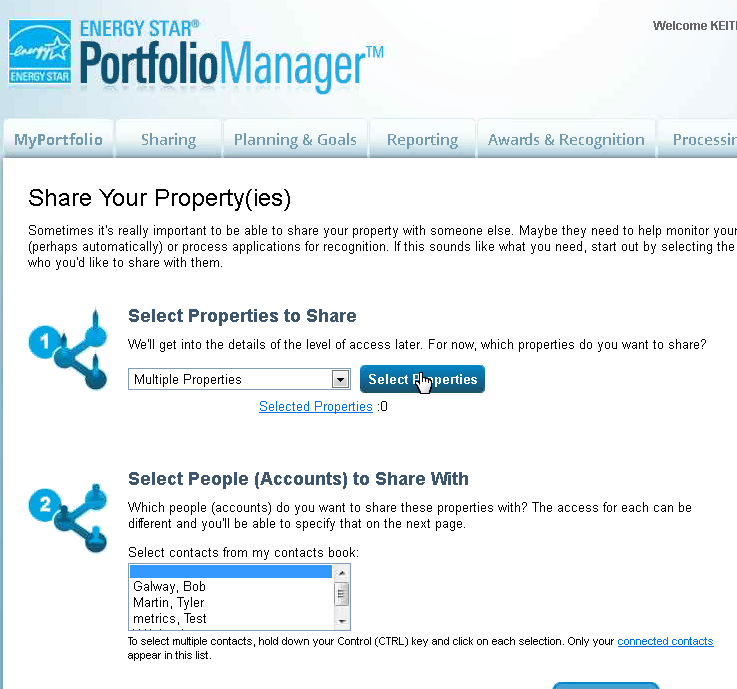
New features after the upgrade will include the ability to share data with other users, create and manage groups of buildings by type, and customize the interface based on most-used features. New building types will also be added.

Although an updated interface and easier report generation will likely come as welcome changes, some users may see a drop in their Energy Star score due to new building and weather data and an update of site-to-source energy conversions, according to the U.S. Environmental Protection Agency (EPA), which runs the Energy Star program.

EPA has also warned that the entire system will be unavailable for several days during the updates and has cautioned users to plan for down time, save custom report data, and submit Energy Star certification applications before June 25.

For more information:

Energy Star Program

energystar.gov/buildingshelp


Published December 31, 1969

(2013, June 27). EPA to Release Next Generation of Portfolio Manager. Retrieved from https://www.buildinggreen.com/departments/newsbrief

Add new comment

To post a comment, you need to register for a BuildingGreen Basic membership (free) or login to your existing profile.

A Rating System for Sustainable Purchasing

News Brief

A Rating System for Sustainable Purchasing

A new trade group seeks to replicate the success of LEED for those in the institutional procurement arena.

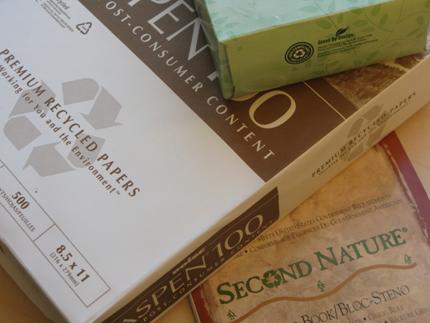
New guidance and incentives from the Sustainable Purchasing Council (SPC) will encourage institutional buyers to incorporate green products into their procurement policies.

The group says it will promote cost-effective sustainable procurement practices and develop a rating system similar to LEED to recognize businesses that demonstrate leadership. By acknowledging businesses with green purchasing programs, SPC hopes to drive new competition based on sustainability. SPC steering committee members include representatives of UL Environment, the U.S. Department of Energy, and the U.S. General Services Administration.

SPC grew out of the Green Products Roundtable, a volunteer forum convened in 2008, which developed a prioritization framework using existing rating programs to help institutional buyers identify the ecological importance of green claims. The framework was designed to make economic sense, too, enabling businesses to reduce risk and waste.

SPC then partnered with the Association for the Advancement of Sustainability in Higher Education (AASHE) in 2012 to conduct a pilot project. The project strengthened the purchasing credits in AASHE’s STARS program, which rates the sustainability programs of colleges. SPC specifically advocated for performance-based credits and recommended including electricity and fuel in purchasing standards.

These recommendations could suggest the future direction of SPC, which will formally launch July 23, 2013.

Published December 31, 1969

(2013, June 27). A Rating System for Sustainable Purchasing. Retrieved from https://www.buildinggreen.com/departments/newsbrief

Add new comment

To post a comment, you need to register for a BuildingGreen Basic membership (free) or login to your existing profile.

Sustainability in Preservation Gets Its Own Guidebook

News Brief

Sustainability in Preservation Gets Its Own Guidebook

The U.S. Interior Department provides illustrated guidelines on energy retrofitting in historic buildings.

The Technical Preservation Services office at the U.S. Department of the Interior has given new weight to sustainability in a recent update to the Illustrated Guidelines for Rehabilitating Historic Buildings. Published in 1992, the guide’s chapter on “Energy Conservation” has been replaced with a separate 26-page guide titled Illustrated Guidelines on Sustainability for Rehabilitating Historic Buildings. The more extensive review of sensitive energy retrofitting for historic buildings signifies a growing willingness to align the goals of sustainability with those of historic preservation.

The guidelines direct historic building owners on making sustainable improvements without violating The Secretary of the Interior’s Standards for Rehabilitation. While not a manual of codified requirements, it offers specific advice for how to make efficiency improvements without compromising the “historic character” of buildings.

The manual outlines “recommended” and “not recommended” practices on topics from maintenance to the installation of solar technology. Recommended practices include installing cool or green roofs, adding skylights, and installing insulation when appropriate. Illustrations accompany the text to demonstrate real-world examples.

For more information:

Illustrated Guidelines on Sustainability for Rehabilitating Historic Buildings

Published December 31, 1969

(2013, June 27). Sustainability in Preservation Gets Its Own Guidebook. Retrieved from https://www.buildinggreen.com/departments/newsbrief

Add new comment

To post a comment, you need to register for a BuildingGreen Basic membership (free) or login to your existing profile.

Retrofits a Better Bet Than Stocks and Bonds, Says Analysis

News Brief

Retrofits a Better Bet Than Stocks and Bonds, Says Analysis

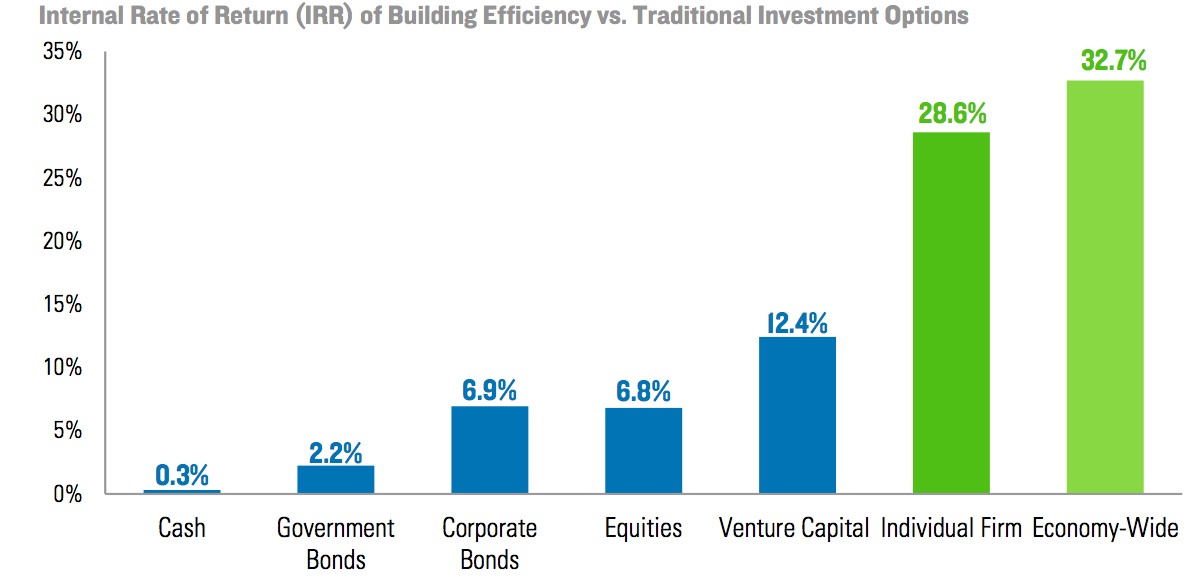
With an estimated 28.6% return on revenue over 10 years, efficiency investments would bring $65 billion a year into the U.S. economy.

A 30% increase in existing building efficiency by 2030 could provide returns of $65 billion annually, according to a study commissioned by United Technologies Corporation, parent company of HVAC manufacturer Carrier.

The Rhodium Group, which prepared the report, Unlocking American Efficiency, found that investments in technology such as efficient lighting and HVAC systems and design practices such as passive solar design would provide a return rate better than that of corporate bonds, equities, or high-performing venture capital stocks.

With an initial investment of $275 billion nationwide, commercial building owners would realize savings of $34 billion per year, according to the report, with homeowners saving $23 billion and public-sector building owners pocketing $8 billion. The report argues that greater building efficiency would allow businesses to hire more employees and give governments extra funds to balance budgets or invest in other areas, such as education.

The report authors recommend a variety of policies they say would remove barriers and spur investment, such as making Energy Star mandatory for both commercial and residential buildings. Other recommendations focus on how government agencies could lead the way by retrofitting their own building stock or offering finance programs using public funds.


Published December 31, 1969

(2013, June 27). Retrofits a Better Bet Than Stocks and Bonds, Says Analysis. Retrieved from https://www.buildinggreen.com/departments/newsbrief

Add new comment

To post a comment, you need to register for a BuildingGreen Basic membership (free) or login to your existing profile.

EPA Proposes Strict Formaldehyde Limits for Composite Wood Products

News Brief

EPA Proposes Strict Formaldehyde Limits for Composite Wood Products

New federal rules would mirror California standards and address concerns about third-party testing.
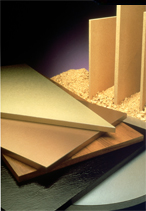
In the first significant regulatory move restricting toxic chemicals in years, the U.S. Environmental Protection Agency (EPA) recently proposed two federal rules for regulating formaldehyde emissions from composite wood products—including domestic and imported particleboard, medium-density fiberboard (MDF), hardwood plywood, and the finished products made from them.

Combined, the rules are intended to protect people from exposure to formaldehyde, a known carcinogen, but they would also standardize regulations across the U.S., making compliance easier for manufacturers and importers.

The first rule addresses emissions, as covered in the 2010 Formaldehyde Standards for Composite Wood Products Act (Title VI of the Toxic Substances Control Act): these are the same standards used by the California Air Resources Board (CARB). Current CARB standards for formaldehyde are 0.05 parts per million or less; qualifying products that use no-added-formaldehyde resins or ultra-low-emitting formaldehyde resins are exempt from testing.

Laminates that use veneers bonded to compliant substrates with formaldehyde resins are not currently regulated under CARB but would be subject to the EPA rules.

The second rule would “establish the framework for a third-party certification program” that would ensure products meet the emissions standards, according to EPA. The agency is exploring the use of internationally accredited certifiers, rather than those monitored by CARB, so that third-party testing of both domestic and imported products is consistent.

EPA is accepting public feedback on the new regulations and their implementation. Those interested have 60 days from the date the rules are published in the Federal Register to submit their comments.

For more information:

U.S. Environmental Protection Agency

www.epa.gov/oppt/chemtest/formaldehyde

Published December 31, 1969

(2013, June 27). EPA Proposes Strict Formaldehyde Limits for Composite Wood Products. Retrieved from https://www.buildinggreen.com/departments/newsbrief

Add new comment

To post a comment, you need to register for a BuildingGreen Basic membership (free) or login to your existing profile.

Simple Design Features Could Save Hospitals $800,000 a Year

News Brief

Simple Design Features Could Save Hospitals $800,000 a Year

A study finds that a small investment in energy efficiency can reduce hospital energy use up to 62%.

A new study from the University of Washington Integrated Design Lab, called Targeting 100!, finds that new hospitals could lead the way in reaching the goals of the 2030 Challenge, which seeks to achieve carbon neutrality in the building sector by 2030. The research suggests that hospitals can cut their energy consumption an average of 62% by reducing the demand on heating and cooling systems through design solutions such as exterior shading, lighting controls, automatic sensors, thermal energy storage, and greater insulation. Realizing this potential would exceed the current 2030 Challenge goal of 60% savings.

Such measures proved cost-effective for these typically high-consumption buildings, with modeling revealing savings across a variety of climates, according to the authors. On average, the study found that with a first-cost premium of 3%, operational savings would pay for energy-efficiency measures in less than 11 years. This could translate to savings of $800,000 a year for a typical hospital of 477,000 ft2. Some sustainable design features, such as daylighting and access to nature, have also been shown to support healing.

The study focused on new construction, but many of the design features highlighted can also be implemented in retrofits.

UPDATE: This article has been corrected to reflect that the Targeting 100! research was conducted by the University of Washington Integrated Design Lab.


Published December 31, 1969

(2013, June 27). Simple Design Features Could Save Hospitals $800,000 a Year. Retrieved from https://www.buildinggreen.com/departments/newsbrief

Add new comment

To post a comment, you need to register for a BuildingGreen Basic membership (free) or login to your existing profile.