Children's Hospital Named First LEED-HC Platinum Building

News Brief

Children's Hospital Named First LEED-HC Platinum Building

A focused effort to make healthcare facilities more sustainable takes hold in Austin, Texas, with the littlest patients.

Water-efficient appliances, sensory gardens, and low-emitting furniture and finishes have all helped the recent expansion of Dell Children’s Medical Center earn the first-ever LEED for Healthcare (LEED-HC) Platinum designation.

Measures taken for the $49 million dollar W.H. and Elaine McCarty South Tower

capitalize on a growing body of research that suggests access to nature and green design strategies can promote healing. The new facility, which features an epilepsy monitoring unit and a toddler rehab center, has an outdoor labyrinth and a children’s sensory garden. Exposure to plants and natural sounds will be used to reduce stress and encourage movement for physical therapy. Green design principles also aligned with health goals in the decision to avoid persistent, bioaccumulative toxic (PBT) chemicals in interior furnishings.

“Sustainable environments have a profound, measurable effect on the healing process, not only for patients but also for all who enter our doors,” stated Michele Van Hyfte, manager of environmental stewardship for the hospital, in a press release.

Dell Children’s Medical Center has years of seeing these effects in practice: the main building became the world’s first LEED Platinum-certified hospital in 2008 before LEED-HC was launched in 2011 as a distinct standard.

LEED-HC is designed to address the special needs of hospitals, which operate at all hours, have strict regulatory requirements, and use massive amounts of energy for their equipment. A clinic in Washington earned the world’s first LEED-HC certification, achieving Gold, in April 2013.


Published December 31, 1969

(2013, September 3). Children's Hospital Named First LEED-HC Platinum Building. Retrieved from https://www.buildinggreen.com/departments/newsbrief

Add new comment

To post a comment, you need to register for a BuildingGreen Basic membership (free) or login to your existing profile.

Daylighting Correlates with More Sleep in New Study

News Brief

Daylighting Correlates with More Sleep in New Study

Employees with windows in their offices had healthier lifestyles and got more rest at night, researchers say.

It’s well established that very high levels of daylight exposure can improve health and well-being, but few studies have explored the health effects of routine indoor exposure through windows or skylights. That was the focus of findings by Ivy Cheung and an international team of collaborators published in the journal Sleep, “Impact of Workplace Daylight Exposure on Sleep, Physical Activity, and Quality of Life.”

Measuring the effects of daylighting on 27 day-shift workers who had windows in their offices and 22 who did not, the researchers found that employees with windows got 175% more exposure to white light and slept on average 47 minutes more per night than employees who had no windows. Workers in windowless offices also reported lower vitality and higher rates of physical problems they said limited their work or other daily activities. There were no differences in age, race, gender, years at current job, or work duration between the windowed and windowless groups, but management vs. non-management positions and income levels are not discussed.

Noting the “strong association” between office windows and well-being, the researchers recommend a greater emphasis on daylight access for employees.

These findings reinforce those of a 2010 study of middle-school students by Mariana Figueiro and Mark Rea of Rensselaer Polytechnic Institute, published in Neuroendocrinology Letters. Figueiro and Rea found that blocking short-wavelength daylight from reaching the students’ eyes in the morning measurably affected their dim-light melatonin level, which in turn affects sleep cycles.

Published December 31, 1969

(2013, July 28). Daylighting Correlates with More Sleep in New Study. Retrieved from https://www.buildinggreen.com/departments/newsbrief

Add new comment

To post a comment, you need to register for a BuildingGreen Basic membership (free) or login to your existing profile.

Analysis: Economy, Environment Merge to Speed Global Decline

News Brief

Analysis: Economy, Environment Merge to Speed Global Decline

Economic collapse and then global warming will catch us off guard, experts fear. Analysis shows negative feedback loops are already at work.

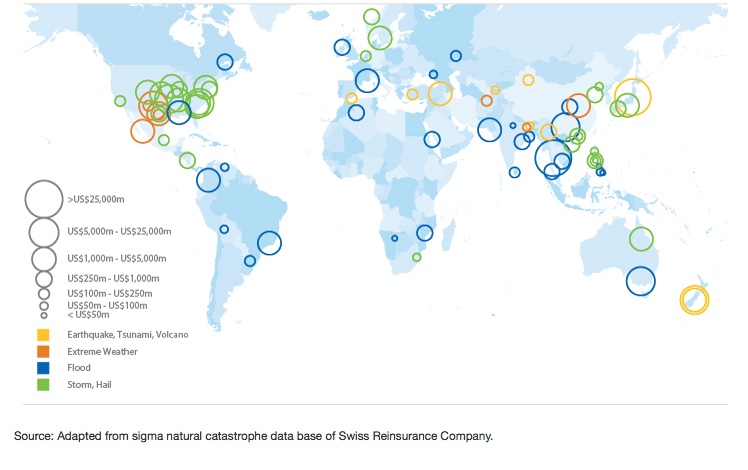
Experts perceive “major systemic economic failure” and “failure of climate change adaptation” as two of the most systematically critical global risks for the next ten years, says the World Economic Forum (WEF) in its annual Global Risks Report. Finding that environmental and economic systems are highly correlated and interdependent, the report highlights the relationship in a case section titled “Testing Economic and Environmental Resilience.”

WEF frames its survey results as an urgent message: “like a super storm, two major systems are on a collision course,” the report warns. Referencing a 2011 Mercer study, the report estimates that climate change will cumulatively issue a $2–$4 trillion blow to global health and infrastructure investments by 2030. So far, international policies have committed only $100 billion for adaptation and damage costs. Meanwhile, both advanced and developing economies are projected to see slower growth, and massive debt has introduced unprecedented levels of fiscal fragility.


A network analysis—where relationships between risks were determined by experts rating pairs of challenges as highly interconnected—revealed that declining economic and environmental systems are correlated. WEF says this correlation currently manifests itself in a daunting negative feedback loop (a vicious cycle of problems reinforcing one another). Efforts to avert climate change are hindered by limited public resources, but the longer decision-makers wait, the more it will cost. The report notes the increasing difficulty of implementing international climate-change mitigation agreements since the economic slow-down.

The report points to the private sector as an untapped source of funding and innovation. In the U.S., where 80% of the nation’s critical infrastructure is in private hands, public-private collaboration will be essential to protecting the nation’s assets, according to the report.


Published December 31, 1969

(2013, July 28). Analysis: Economy, Environment Merge to Speed Global Decline. Retrieved from https://www.buildinggreen.com/departments/newsbrief

Add new comment

To post a comment, you need to register for a BuildingGreen Basic membership (free) or login to your existing profile.

Nanosolar to Auction Last of Assets

News Brief

Nanosolar to Auction Last of Assets

Nanosolar joins the list of failed thin-film solar firms despite $70 million in investment just last year.

In its heyday 11 years ago, the thin-film solar startup Nanosolar was valued at $2 billion and attracted investors like Energy Capital Partners and Benchmark Capital. Now, following layoffs and lawsuits, it has sold its assembly factory to an unnamed Swiss investor for an undisclosed amount and will auction assets from its factory in San Jose, California, in August 2013.

The company had been making thin-film photovoltaic (PV) panels by printing copper indium gallium selenide (CIGS) ink on a foil only a few nanometers thick, without using high-vacuum manufacturing equipment. The metal-wrap-through process was thought to be promising in reducing the cost and embodied energy of solar photovoltaics, but as the price of silicon-based solar has dropped, the CIGS panels haven’t stayed cost-competitive. Nanosolar reportedly raised $70 million in investment in 2012 but then cut 75% of its staff earlier this year. The company faces at least one lawsuit, as Hellmann Worldwide Logistics has issued a claim for unsettled bills.

The Swiss investor who secured the deal will use Nanosolar’s module manufacturing division, Nanosolar GmbH, located in Luckenwalde, Germany, to make a crystalline silicon panel for utility plants and another PV product for the residential sector—details of which are not being disclosed.

Nanosolar GmbH plans to continue supporting existing customers with exchange modules, technical support, and service, according to the company.

Published December 31, 1969

(2013, July 28). Nanosolar to Auction Last of Assets. Retrieved from https://www.buildinggreen.com/departments/newsbrief

Add new comment

To post a comment, you need to register for a BuildingGreen Basic membership (free) or login to your existing profile.

Federal Buildings to Use More Rigorous ASHRAE 90.1-2010 Energy Standard

News Brief

Federal Buildings to Use More Rigorous ASHRAE 90.1-2010 Energy Standard

The Department of Energy is requiring new efficiency standards for federal buildings that it predicts will save 18% more energy.

The U.S. Department of Energy (DOE) recently updated energy-efficiency standards for new federal commercial and multifamily high-rise buildings to use ASHRAE 90.1-2010 as a minimum design standard—an upgrade from ASHRAE 90.1-2007—and is requiring an additional 30% savings over the standard when cost-effective over the building’s life cycle.

The new rule, published in the Federal Register, is projected by DOE to save 18.2% in source energy in commercial buildings compared with ASHRAE 90.1-2007.

The update is part of the regular DOE review of ASHRAE 90.1 updates for federal buildings. Federal selection of energy code also affects state adoption, although many states lag behind their legal requirements.

The more rigorous standard will apply to buildings for which design begins on or after July 9, 2014.

Published December 31, 1969

(2013, July 28). Federal Buildings to Use More Rigorous ASHRAE 90.1-2010 Energy Standard. Retrieved from https://www.buildinggreen.com/departments/newsbrief

Add new comment

To post a comment, you need to register for a BuildingGreen Basic membership (free) or login to your existing profile.

Net-Zero Homes Need Labeling, Instruction Manuals

News Brief

Net-Zero Homes Need Labeling, Instruction Manuals

Net-zero homes need clear labeling to attract homebuyers and an instruction manual for when they are sold, according to NIST.

Keeping size in check, incorporating passive solar techniques, and building a tight, well-insulated envelope are listed as high-priority design strategies for net-zero-energy homes, according to a new report from the National Institute of Standards and Technology (NIST). Strategies to Achieve Net-Zero-Energy Homes: A Framework for Future Guidelines is based on the input of experts from a workshop NIST held in 2011.

Acknowledging that homeowners are not widely investing in net-zero homes, the report recommends factoring the cost of energy into home financing as well as offering homeowners consolidated information sources. It says a new, consistent labeling system for multiple consumer preferences—including energy efficiency, durability, indoor air quality, and accessibility—is needed.

The report lists some available resources relevant to creating a comprehensive home scoring system, although, as Allison Bailes of Green Building Advisor observes, it oddly excludes the Home Energy Rating System (HERS) Index. Even though HERS does not cover all the categories the NIST report asserts a rating system should include, it has become an established platform to compare energy performance, and its scale accommodates net-zero buildings.

The report also delves into issues with technology, builders, and occupants. More efficient systems are needed (examples in the report focus on HVAC), but builders are sometimes wary of introducing unproven technologies, and occupants sometimes behave in ways that do not maximize efficiency capabilities (see Want a Net-Zero Home? Be a Net-Zero Family.)

To fill in the knowledge gaps, NIST has sponsored a $2.5 million test facility to study the performance of a net-zero home by running real appliances, such as televisions and toasters, as if a family of four were living in the house. Small devices, programmed by NIST scientists, replicate the heat and humidity occupants would produce in the 4,000 square foot house. Every move of the virtual family has been scripted—down to the 14-year-old daughter taking longer showers. The information will be used to understand how human behavior affects energy performance and to create guidelines for owners of net-zero-energy homes. After a year, the facility will be used to test new technologies.


 

Published December 31, 1969

(2013, July 28). Net-Zero Homes Need Labeling, Instruction Manuals. Retrieved from https://www.buildinggreen.com/departments/newsbrief

Add new comment

To post a comment, you need to register for a BuildingGreen Basic membership (free) or login to your existing profile.

Health Product Declaration Group Names John Knott Director

News Brief

Health Product Declaration Group Names John Knott Director

The former developer has been tasked with making building product transparency the industry standard.

The Health Product Declaration Collaborative (HPDC), an organization that launched in 2012 to help manufacturers report health-related information for building products, has hired urban redevelopment expert John Knott Jr. as its first executive director.

Knott has more than 40 years of experience in making healthy places. Serving as the CEO and managing director of the Island Preservation Partnership, he helped develop the 1,206-acre Dewees Island oceanfront retreat, which is dedicated to environmental preservation. As president and CEO of the Noisette Company, he led efforts to restore 3,000 acres in the historic urban core of the City of North Charleston. Knott has worked on numerous award-winning projects, including the Baltimore Inner Harbor and the University of Texas Health Science Center, which won the AIA Committee on the Environment’s Top Ten Green Projects award in 2006, partly for the project’s focus on nontoxic materials. Knott is also a longtime member of EBN’s Advisory Board.

Creator of the CityCraft process, Knott has often taken a large-scale approach to restoring the health of communities and systems. Now, he will ask manufacturers to disclose residuals that account for even 0.01% of a product and fully disclose any known health hazards. The HPD format has quickly gained traction since its launch but has a long way to go in becoming the industry standard.

Aaron Smith, HPDC board treasurer, says Knott is up for the job; “Mr. Knott’s diverse industry experience and leadership roles bring an exciting perspective to the Health Product Declaration Collaborative that I believe will allow us to engage successfully with manufacturers and expand acceptance of the HPD across multiple stakeholder groups,” he told the Building Design and Construction Network.


Published December 31, 1969

(2013, July 28). Health Product Declaration Group Names John Knott Director. Retrieved from https://www.buildinggreen.com/departments/newsbrief

Add new comment

To post a comment, you need to register for a BuildingGreen Basic membership (free) or login to your existing profile.

Grounds Maintenance Implicated in Butterfly Extinctions

News Brief

Grounds Maintenance Implicated in Butterfly Extinctions

Habitat loss and pesticides overwhelm two hardy butterfly subspecies.

The U.S. Fish and Wildlife Service recently announced that two subspecies of butterfly native to South Florida, the rockland grass skipper and the Zestos skipper, are likely extinct.

Though loved for their delicate appearance, butterflies have a reputation with scientists as being relatively resilient to environmental changes wrought by humans. When their habitats are lost to development or invasive species, populations sometimes disappear in one place, only to show up in another.

That’s why scientists waited more than a decade to declare these extinctions and why some Floridians are viewing this as a serious indicator of an unhealthy environment. The Fish and Wildlife Conservation Commission has formed the Imperiled Butterflies of Florida Workgroup (IBWG) in order to more closely study other threatened or endangered members of this important pollinator species, and the news has drawn many to scrutinize pesticides used by building owners and municipalities—a possible cause of the insects’ decline.

The building sector can play an important role in conservation efforts by including native plants in landscaping designs and minimizing pesticide use with Integrated Pest Management (IPM) or other measures. “It would be really easy for people to make a significant difference in the environment just by the way they planted their suburban yards,” said Jeffrey Glassberg, president of the North American Butterfly Association, as quoted in The Washington Post.


Published December 31, 1969

(2013, July 28). Grounds Maintenance Implicated in Butterfly Extinctions. Retrieved from https://www.buildinggreen.com/departments/newsbrief

Add new comment

To post a comment, you need to register for a BuildingGreen Basic membership (free) or login to your existing profile.

Refrigerators, Freezers Must Meet Tougher Energy Star Requirements

News Brief

Refrigerators, Freezers Must Meet Tougher Energy Star Requirements

EPA raises efficiency standards and paves the way for demand-response technologies through the Energy Star program.

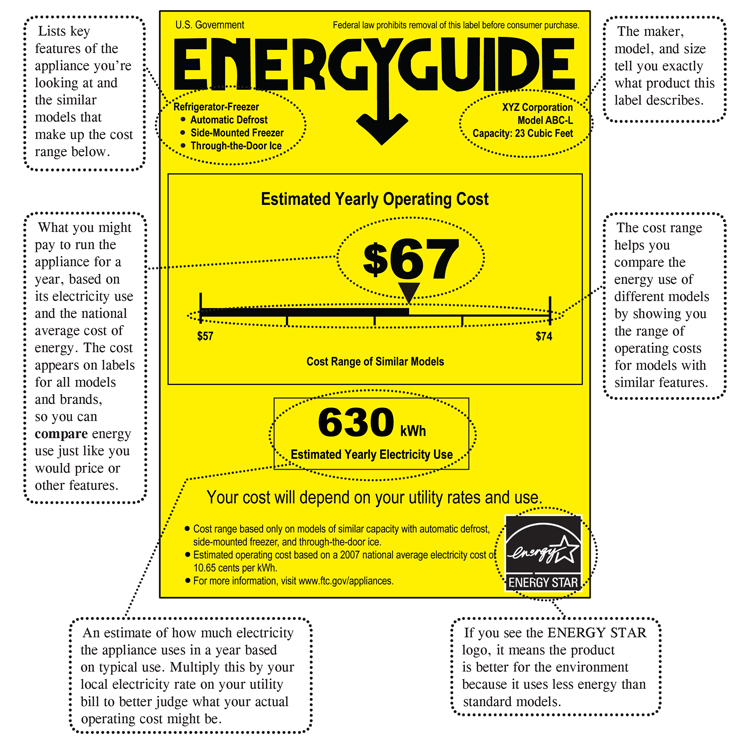
Residential refrigerators and freezers will have to meet higher efficiency standards to qualify for an Energy Star label, effective September 2014, the U.S. Environmental Protection Agency (EPA) has announced.

Current Energy Star standards require these appliances to perform 15% more efficiently than the federal minimum requirements set in 2001. However, more efficient federal minimum requirements come into effect in 2014, and the Energy Star label will correspondingly adjust to require higher levels of efficiency. A 21.6 ft3 built-in refrigerator with a top-mounted freezer, for example, must meet projected energy use of 500 kWh/year.

If all refrigerators and freezers sold in the U.S. met the updated Energy Star requirements, energy cost savings would reach $890 million and reduce annual greenhouse gas emissions by the equivalent of removing more than one million vehicles from the road, estimates a press release from EPA.

The revised standards also establish optional criteria for “connected features” that could aid consumers in reducing their energy use. Future refrigerators could have communication technology that allows an owner to view real-time energy use, receive messages to a smart phone if the door has been left open, or manage settings remotely. The appliances could also be “smart-grid ready”—employing demand-response technology capable of automatically lowering energy use during expensive peak times—at the permission of the consumer and with manual override abilities.

Published December 31, 1969

(2013, July 28). Refrigerators, Freezers Must Meet Tougher Energy Star Requirements. Retrieved from https://www.buildinggreen.com/departments/newsbrief

Add new comment

To post a comment, you need to register for a BuildingGreen Basic membership (free) or login to your existing profile.

OSHA Puts the Squeeze on Asthma-Causing Polyurethanes

News Brief

OSHA Puts the Squeeze on Asthma-Causing Polyurethanes

Isocyanates are a key ingredient in spray-foam and polyiso insulation as well as “green” wood products.

Too many workers in construction and related industries are at risk for potentially fatal asthma associated with production of polyurethane compounds, says the U.S. Occupational Safety and Health Administration (OSHA). The agency recently announced a National Emphasis Program aimed at reducing or eliminating health effects from occupational exposure to isocyanates, a key component of products like foam insulation. The plan will pair education with increased enforcement.

Isocyanates are ubiquitous in the building industry. When combined with a polyol, they react to form the polyurethanes found in high-performance insulation products, foam furniture cushions, coatings, and no-added-formaldehyde wood products made with MDI (methyl diphenyl diisocyanate). Although not considered dangerous after curing, isocyanates emitted during the curing process are a leading cause of occupational asthma and chemical sensitivity.

The respiratory effects of isocyanates have been known since the 1950s, according to OSHA—and many chemicals in this group are also “potential human carcinogens or known to cause cancer in animals”—but recommendations for reducing exposure are sometimes ignored. Industries targeted for more inspections due to a history of overexposure include:

• building and construction (see “EPA Takes Action on Spray-Foam Health Risks”)

• paint manufacturing

• plastic foam manufacturing (see “Can We Replace Foam Insulation?”)

• furniture manufacturing (due to wood binders, adhesives, and lacquers as well as foam cushions)

• textile manufacturing (due to nonwoven fabrics, such as polyurethane upholstery)

Recommended measures to decrease isocyanate exposure include site isolation, ventilation, and protective clothing.

Published December 31, 1969

(2013, July 28). OSHA Puts the Squeeze on Asthma-Causing Polyurethanes. Retrieved from https://www.buildinggreen.com/departments/newsbrief

Add new comment

To post a comment, you need to register for a BuildingGreen Basic membership (free) or login to your existing profile.