First LEED v4 Projects Certified

News Brief

First LEED v4 Projects Certified

LEED v4 was just launched, but a commercial interiors project and an existing building are already gleaming with Gold and Silver through the beta program.

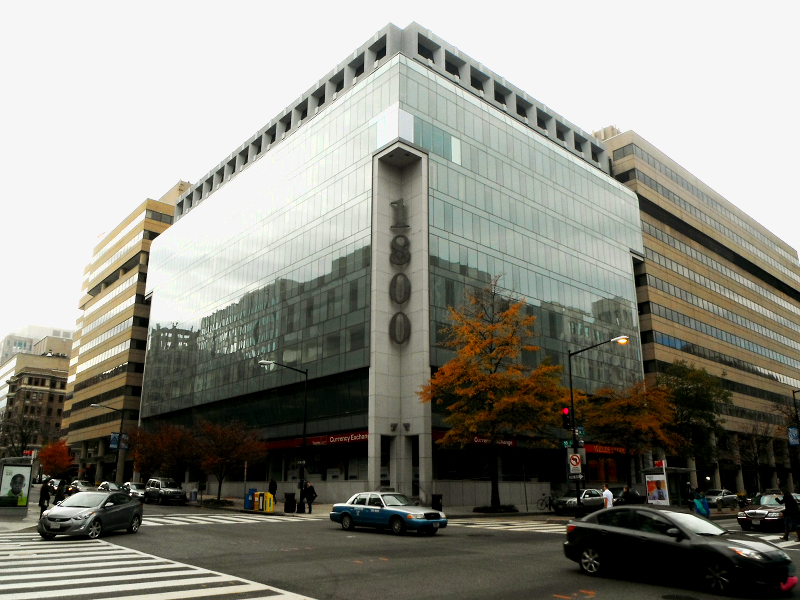
Just days after the official launch of LEED v4 at Greenbuild 2013, two projects have already achieved certification: the Haworth Organic Showroom in Beijing (certified Gold under LEED for Commercial Interiors, or LEED-CI) and 1800 K Street in Washington, D.C. (certified Silver under LEED for Existing Buildings: Operations & Maintenance, or LEED-EBOM).

Housed in the LEED Platinum Parkview Green, the Haworth Beijing showroom features 60% reclaimed materials, according to the furniture manufacturer. LEDs helped the project decrease modeled energy consumption 59%, and onsite graywater treatment helped reduce modeled potable water consumption 53%, compared with code baselines. The project earned 71 out of 110 points.

With an Energy Star rating of 81 (meaning it performs better on energy and water measures than 81% of similar buildings in the U.S.), 1800 K Street is owned by Deutsche Asset & Wealth Management and managed by Transwestern. The building achieved LEED-EBOM Gold under LEED 2009 simultaneously, earning 64 points under the older system and 52 under the newer one. “The new LEED v4 rating system holds buildings to higher standards, and we are excited to see how much building sustainability improves with these new guidelines,” stated Transwestern’s Allan Skodowski in a press release.

To date, three LEED for Core and Shell projects have also received pre-certification under v4. Numerous New Construction (LEED-NC) projects are in the same v4 beta program that allowed such early certification under the new rating system, but these projects take longer to complete.


Published December 31, 1969

(2013, December 30). First LEED v4 Projects Certified. Retrieved from https://www.buildinggreen.com/departments/newsbrief

Add new comment

To post a comment, you need to register for a BuildingGreen Basic membership (free) or login to your existing profile.

Changes Finalized for 2015 Energy Code

News Brief

Changes Finalized for 2015 Energy Code

The 2015 IECC applies to historic buildings and offers a performance path based on the HERS Index.
Hearings to settle proposals for the 2015 International Energy Conservation Code (IECC)—the code that serves as the model for states and localities across the country—have ended, finalizing some marked differences from the 2012 version.

One of the biggest changes eliminates the code’s blanket exemption of historic buildings. In the latest version, energy standards do apply to both residential and commercial historic buildings, and a report detailing why a provision is detrimental to the historic character of the building is required for exceptions.

Another approved change in the residential code adds a performance path for compliance based on the HERS Index. Instead of basing performance on energy costs—limited to heating, cooling, and water heating—the new path requires that homes achieve a HERS score between 51 and 55, depending on the climate zone; HERS is already widely used and accounts for energy use from lighting and appliances, too.

Reinstating mechanical equipment tradeoffs, one of this year’s highly controversial proposals, was defeated, and a measure requiring builders to dedicate roof space and install chase wiring to ensure that all new homes are “solar-ready” fell short of passage by one vote, but may indicate where the code could go next.

The code is updated every three years, but states are just beginning to adopt the 2012 version and, according to GreenBuildingAdvisor.com, the 2015 version is not likely to be published until 2014.


 

Published December 31, 1969

(2013, December 2). Changes Finalized for 2015 Energy Code. Retrieved from https://www.buildinggreen.com/departments/newsbrief

Add new comment

To post a comment, you need to register for a BuildingGreen Basic membership (free) or login to your existing profile.

ASHRAE Standard Revised to Cut Excess Ventilation

News Brief

ASHRAE Standard Revised to Cut Excess Ventilation

ASHRAE’s 62.1-2013 standard gives project teams more flexibility to determine appropriate exhaust rates, providing potential energy savings.

The 2013 version of ASHRAE’s indoor air quality standard has been published with 10 addenda to the 2010 standard. According to Roger Hedrick, Standard 62.1 committee chair, the updates will allow building designers and operators to reduce energy consumption by cutting “excess ventilation.”

Some changes could help projects avoid unneeded prescriptive measures; for example, a performance-based option for exhaust rates is added. Notably, this addendum requires monitoring concentrations of contaminants, unlike the existing performance-based method for setting supply ventilation rates. Ventilation rates for sports spaces (such as spottily occupied school gymnasiums) can also be determined partly on a per-occupant basis, allowing ventilation levels to be adjusted based on demand. Toilet exhaust air may now be recirculated after appropriate treatment.

There are also modified requirements for water used in humidification systems and zone air distribution effectiveness for underfloor air distribution. Air entering wetted cooling coils must be filtered to MERV 8—a more stringent requirement than the previous MERV 6 level—in order to reduce potential for particulate deposit on the coils.

Standard 62.1-2013 can be purchased from ASHRAE’s online bookstore.


Published December 31, 1969

(2013, December 2). ASHRAE Standard Revised to Cut Excess Ventilation. Retrieved from https://www.buildinggreen.com/departments/newsbrief

Add new comment

To post a comment, you need to register for a BuildingGreen Basic membership (free) or login to your existing profile.

Maryland May Accept IgCC for Public Buildings Along with LEED

News Brief

Maryland May Accept IgCC for Public Buildings Along with LEED

Objections to FSC were a factor in the state’s endorsement of multiple frameworks—starting with recommending IgCC as a compliance option for its own buildings.

Maryland may soon authorize an alternative path to its LEED Silver requirement for state-owned buildings.

As Stuart Kaplow reported in the Green Building Law Update, the Maryland Green Building Council (a State agency that is not associated with the U.S. Green Building Council’s Maryland chapter), is close to finalizing its version of the International Green Construction Code (IgCC), which it will recommend as an alternate compliance path for green construction in State-owned buildings, including schools. In its annual report, the council says the code ensures comparable building performance at “a potential reduction in cost” and will serve as a model that jurisdictions can choose to adopt or adapt, giving them “the ability to craft a more prescriptive Maryland-focused code.”

Tom Liebel, chair of the Maryland Green Building Council, told EBN, “The state of Maryland was an early adopter of the LEED rating system, and we continue to be fully supportive of LEED.” Giving multiple options, though, “lets jurisdictions know that the State has done a rigorous review” that leaves choices open to local governments without compromising sustainable design standards. Some localities have expressed concern regarding LEED’s certified wood credit, for example, according to Liebel. IgCC not only gives them another option but, as a code, can also be tailored to local principles.

IgCC was enabled for use by the Maryland Legislature in 2011, but no local governments have enacted it to date. However, as LEED v4 is released, Liebel predicts more jurisdictions will begin to explore their options.


Published December 31, 1969

(2013, December 2). Maryland May Accept IgCC for Public Buildings Along with LEED. Retrieved from https://www.buildinggreen.com/departments/newsbrief

Add new comment

To post a comment, you need to register for a BuildingGreen Basic membership (free) or login to your existing profile.

Cornell Reports No Revenue Boost for Green Hotels

News Brief

Cornell Reports No Revenue Boost for Green Hotels

Eco-certified hotels do not bring in more booking revenue, but researchers say it’s safe to go green, if only for the operational benefits.

A report published by the Cornell Center for Hospitality Research has found that sustainability certifications don’t allow hotels to charge higher rates or increase bookings—but they also don’t hurt. Howard G. Chong and Rohit Verma, authors of the study, say that their findings leave the door open for hotels to pursue green certifications, even if operational savings are currently the only financial benefit.

Researchers used information from Sabre’s Global Distribution System and Travelocity.com websites to compare the average daily rates (ADR) of 6,000 conventional hotels to 3,000 similar hotels flagged as “eco-certified.” A small green leaf on these sites marks hotels that have earned at least one of a dozen of international sustainability certifications, including LEED and Energy Star.

On average, this marketing had a neutral effect: the going rates and number of bookings were neither higher nor lower for the eco-certified hotels. Even though the study did not gather data on reduced energy costs, the authors argue that those who have hesitated to implement green programs with demonstrated operational savings should be encouraged by the fact that widely advertised green status isn’t hurting booking revenues.

“Though revenues overall may not have risen, cost savings from sustainability programs are still real benefits to the bottom line,” according to the report. “The pragmatist should see this as a green light to continue measured improvements in hotel environmental performance.” The report does not address the extent to which hotels realize other financial benefits from green certifications, such as tax or development incentives or increased asset values.


Published December 31, 1969

(2013, December 2). Cornell Reports No Revenue Boost for Green Hotels. Retrieved from https://www.buildinggreen.com/departments/newsbrief

Add new comment

To post a comment, you need to register for a BuildingGreen Basic membership (free) or login to your existing profile.

FSC to Use Forensics to Uncover Criminal Forestry Practices

News Brief

FSC to Use Forensics to Uncover Criminal Forestry Practices

New testing would detect the presence of endangered species or genetically modified organisms in wood products.

Is that “birch” plywood cabinetry you specified actually made of an illegally logged rainforest species? A new partnership between the Forest Stewardship Council (FSC) and the Forest Products Laboratory (FPL, a division of the U.S. Department of Agriculture Forest Service) aims to verify environmental claims about forestry products.

The testing will look for impurities in samples of composite wood and paper products, including fibers from endangered species or other illegally logged trees as well as from genetically modified organisms (which are not permitted in products marked “FSC Mixed”). Although there is “no reason to suspect” that FPL’s forensic scientists will find any of these things, says Brad Kahn, communications director for FSC–US, “we want to make sure we are keeping our system as rigorous and credible as possible.”

Kahn adds that many larger companies already do their own forensic testing without sharing the results, whereas FSC will be publishing its findings. He notes that the new testing will help ensure that all FSC chain-of-custody certificate holders “are competing on the same level.”

Published December 31, 1969

(2013, December 2). FSC to Use Forensics to Uncover Criminal Forestry Practices. Retrieved from https://www.buildinggreen.com/departments/newsbrief

Add new comment

To post a comment, you need to register for a BuildingGreen Basic membership (free) or login to your existing profile.

NSF Certification Verifies Sustainability of Stone

News Brief

NSF Certification Verifies Sustainability of Stone

Calling stone “natural” doesn’t cut it anymore: NSC 373 sets a new standard for quarrying, processing, and transporting dimension stone.

Although stone has inherently green properties, its life cycle includes many environmental stumbling blocks (see “Stone, the Original Green Building Material”). A new NSF International standard developed by the Natural Stone Council (NSC)—NSC 373, Sustainability Assessment for Natural Dimension Stone—aims to distinguish products with a lighter environmental footprint.

The program examines such sustainability indicators as transportation energy (the source of stone’s greatest environmental impact), water use, site management, chemical and waste management, and health and safety.

An NSC chain-of-custody program, reportedly to be published soon, will supplement the new standard by holding a product’s entire distribution network accountable for environmental stewardship as well. “NSC 373 provides a needed standard of excellence in sustainability for the natural stone industry and will serve as the first step of the developing NSC chain-of-custody program,” said NSC executive director Duke Pointer in a press release. The two together “will define and help promote more sustainable products within our industry.”

For more information, see the NSC website.

Published December 31, 1969

(2013, December 2). NSF Certification Verifies Sustainability of Stone. Retrieved from https://www.buildinggreen.com/departments/newsbrief

Add new comment

To post a comment, you need to register for a BuildingGreen Basic membership (free) or login to your existing profile.

Global Coalition for Green Schools Launched at Greenbuild

News Brief

Global Coalition for Green Schools Launched at Greenbuild

Aspiring to build green learning spaces for every child on earth within a generation, the group will share ideas around the globe.

Green building councils around the world have come together to form the Global Coalition for Green Schools.

With 29 founding members from Botswana to Brazil and from Singapore to Slovenia, network members will share resources, tools, case studies, and best practices to help one another realize a common vision of “ensuring that every child has the opportunity to learn in a green school within this generation,” according to the Center for Green Schools at the U.S. Green Building Council (USGBC) and the World Green Building Council.

Acknowledging that building practices and communities vary based on climate and culture, Rachel Gutter, director of the Center for Green Schools, says different communities still need to learn from one another. “Our approaches to greening schools may look very different, but what we all desire is to give our children every possible opportunity to succeed,” she said.

The announcement, which follows a dual “Greenest School on Earth” award given to facilities in Hong Kong and Kenya, came during USGBC’s 2013 Greenbuild conference.


Published December 31, 1969

(2013, December 2). Global Coalition for Green Schools Launched at Greenbuild. Retrieved from https://www.buildinggreen.com/departments/newsbrief

Add new comment

To post a comment, you need to register for a BuildingGreen Basic membership (free) or login to your existing profile.

UL, USGBC Team Up to Standardize LCA Rules

News Brief

UL, USGBC Team Up to Standardize LCA Rules

The new partnership aims to prevent apples-to-oranges product comparisons under the guise of life-cycle assessment and environmental product declarations.

“We’re working on filling in some of the gaps” with the underlying data that informs LCA, Firth told EBN. Although there are rules specifying how to conduct an assessment (see “The Product Transparency Movement: Peeking Behind the Corporate Veil”), they currently leave too many options open, argues Firth. There’s nothing saying that two manufacturers of similar products have to use the same database, for example, so companies end up choosing the data they prefer—which creates the potential for gaming the system. “I don’t think there’s any wrongdoing,” Firth emphasizes, “but we can do a bit better than this. They do the best they can, but those rules aren’t there to help them.”

Also, he adds, there are multiple LCA software tools, which all use the chosen data differently. This can lead to sometimes-disparate results: in a recent analysis of biomass emissions, for example, UL found a 30% difference in outputs between two different software programs. “Those inconsistencies have to be known, and they have to be fixed,” he said.

According to the USGBC announcement of the partnership, which coincided with its 2013 Greenbuild conference, the new rules under development will eventually undergird a new disclosure format—a “joint USGBC-UL EPD” designed to help ensure that the environmental impact of multiple products in the same category can be compared reliably.


Published December 31, 1969

(2013, December 2). UL, USGBC Team Up to Standardize LCA Rules. Retrieved from https://www.buildinggreen.com/departments/newsbrief

Add new comment

To post a comment, you need to register for a BuildingGreen Basic membership (free) or login to your existing profile.

USGBC Names Recipients of 2013 Leadership Awards

News Brief

USGBC Names Recipients of 2013 Leadership Awards

This year’s winners are recognized for their innovation and commitment in diverse fields—from university president to town mayor.

Among those recognized is Joel Ann Todd, chair of the LEED steering committee and a 20-year supporter of sustainable design. “Joel Ann Todd has been a tireless and passionate advocate for quality and meaningful metrics in LEED and other programs around the world,” according to Nadav Malin, president of BuildingGreen, which publishes EBN. “Working with her over the years on LEED, Green Building Challenge, and AIA’s seminal Environmental Design Guide has been an honor and a pleasure, and this award is certainly well deserved.”

Bob Dixson, the mayor of Greensburg, Kansas, is also honored for his work rebuilding his town using sustainable design principles and renewable energy after it was devastated by a tornado in 2007. Gerald Hines, founder and chairman of Hines Interest Limited Partnership, will be given the President’s Award to honor his commitment to sustainability in the real estate industry; Hines’ firm has more than 100 million ft2 of LEED-certified space.

Other recipients include Mike McNally, who made a splash earlier this year by pulling Skanska USA from the Chamber of Commerce to protest anti-LEED lobbying, and two presidents of schools of higher education, Jo Ann Gora and Mary Spilde. Intel Corporation is also recognized as the largest voluntary producer of green power. The awards will be presented at the Leadership Awards Luncheon during Greenbuild 2013 in Philadelphia.

Published December 31, 1969

(2013, December 2). USGBC Names Recipients of 2013 Leadership Awards. Retrieved from https://www.buildinggreen.com/departments/newsbrief

Add new comment

To post a comment, you need to register for a BuildingGreen Basic membership (free) or login to your existing profile.