ASHRAE Develops World Climate Zone Maps

News Brief

ASHRAE Develops World Climate Zone Maps

Standard 169-2013 expands its dataset globally and adds a new zone for extremely hot climates.

“With this major revision, Standard 169 now includes climate zone maps for the entire world, as opposed to the 2006 standard, which only included a U.S. climate zone map,” according to Dru Crawley, chair of the committee that wrote the standard. “This allows users outside the U.S. to more easily determine which climate zone their location is in.”

Information provided for each location includes enthalpy, humidity ration, wind conditions, solar irradiation, elevation, and dry-bulb, wet-bulb, and dew point temperatures. The reference standard also includes statistical data, such as mean temperatures, daily ranges, degree hours, and seasonal percentages within ranges of temperatures.

In addition, Climate Zone 0 is newly incorporated into the standard for “extremely hot” settings. Humid and dry zones are separated into 0A and 0B, respectively. Updated climate data in Standard 169-2013 is a result of the data-gathering efforts from ASHRAE Research project 1453.

For more information:

ASHRAE bookstore

techstreet.com/ashrae/

Published December 31, 1969

(2014, February 3). ASHRAE Develops World Climate Zone Maps. Retrieved from https://www.buildinggreen.com/departments/newsbrief

Add new comment

To post a comment, you need to register for a BuildingGreen Basic membership (free) or login to your existing profile.

FDA: Antimicrobial Risks Outweigh Benefits

News Brief

FDA: Antimicrobial Risks Outweigh Benefits

Common antibacterial chemicals, including triclosan, are the target of a proposed FDA rule.

Biocides used in antibacterial soaps and incorporated into many building materials and consumer products probably do more harm than good, says the U.S. Food and Drug Administration (FDA). The agency has released a new rule demanding that companies using triclosan, triclocarban, and similar biocides in “over-the-counter antiseptic drug products” prove that their products are not only safe and but also more effective than regular soap and water.

Mounting evidence suggests that triclosan, a chlorinated compound, affects the endocrine systems of animals, disrupts aquatic ecosystems, and may contribute to allergic sensitization in children. It also may cause antibiotic resistance and has shown potential for bioaccumulation.

Although the proposed FDA rule targets only “products intended for use with water“ (i.e., soap), the resulting data could potentially halt the widespread use of triclosan, triclocarban, and similar antibacterial compounds in consumer products and interior building materials. Antimicrobials are commonly used in everything from door hardware to drywall to paint (see “Antimicrobials: Hygiene or Harm?”).

The proprietary antimicrobial blend sold under the trade name Microban may or may not contain triclosan; the manufacturer lists an array of treated building products, from air filters to urinals, and claims the purpose of Microban is to protect building materials from mold, not to prevent disease.

The public comment period for the proposed rule will end June 16, 2014.


Published December 31, 1969

(2014, February 3). FDA: Antimicrobial Risks Outweigh Benefits. Retrieved from https://www.buildinggreen.com/departments/newsbrief

Add new comment

To post a comment, you need to register for a BuildingGreen Basic membership (free) or login to your existing profile.

EPA Crowd-Sources Toxicity Analysis of 1,800 Chemicals

News Brief

EPA Crowd-Sources Toxicity Analysis of 1,800 Chemicals

Hoping to accelerate chemical assessments, the Environmental Protection Agency calls on the public to help decode new screening data on hundreds of chemicals.

The chemicals were screened as a part of the Toxicity Testing in the 21st Century (Tox21) program—a federal collaboration between EPA, the National Institutes of Environmental Health Sciences (NIEHS), the National Center for Advancing Translational Sciences (NCATS), and the U.S. Food and Drug Administration (FDA). The Tox21 program uses robotics and high-throughput screening to discover the proteins, pathways, and cellular processes that chemicals interact with when used in industrial and consumer products, food additives, or drugs. Nearly 2,000 chemicals were analyzed in 700 in vitro assays, a type of test that measures the activity of a chemical on a sample of organic tissue.

“Making these data publicly available will help researchers across disciplines to better identify hazardous chemicals,” according to Raymond Tice, Ph.D., who heads the Biomolecular Screening Branch at NIEHS. EPA is hoping to encourage that research by announcing two ToxCast challenges, which will reward teams for accurately predicting the lowest dose of a chemical that causes an adverse reaction in animals. The competitions are meant to generate solutions for how the data can be used to predict health effects; given those solutions, EPA would be better able to prioritize chemicals needed for testing under the Toxic Substance Control Act, the Safe Drinking Water Act, and its Endocrine Disruption Screening Program.

For more information:

ToxCast Chemical Data Challenges

epa.gov/ncct/

Published December 31, 1969

(2014, February 3). EPA Crowd-Sources Toxicity Analysis of 1,800 Chemicals. Retrieved from https://www.buildinggreen.com/departments/newsbrief

Add new comment

To post a comment, you need to register for a BuildingGreen Basic membership (free) or login to your existing profile.

SCAQMD Sets First VOC Limits for Colorants

News Brief

SCAQMD Sets First VOC Limits for Colorants

Precedent-setting regulations in Southern California now limit VOCs in colorants and toughen the requirements for certain specialty coatings.

Tighter emissions restrictions on colorants and specialty coatings have taken effect in Southern California. The South Coast Air Quality Management District (SCAQMD), which sets policy in Los Angeles, Orange, San Bernardino, and Riverside counties, will begin enforcing lower VOC limits for certain architectural and industrial maintenance coatings.

Previously unregulated colorants now have a VOC limit of 50 grams per liter (g/L). Although colorant added at the factory or sold for use on the jobsite is not subject to the limit, the rule regulates tints added at the point of sale, which can elevate VOC levels in a final product even when a low- or zero-VOC base coating is used. The VOC limit on primers, sealers, and undercoats remains at 100 g/L and was not lowered as had been proposed; however, lower limits were set for several specialty coatings, including concrete surface retarders, fire-proofing coatings, and mastic coatings. In addition, coatings sold in containers larger than two fluid ounces must include VOC content on the labeling.

Although the regulations apply only to four Southern California counties, and existing versions of LEED reference older versions of SCAQMD rules (and are not likely to be updated if precedent holds), the standard could be a potential model for future regulatory changes elsewhere in the U.S.

Published December 31, 1969

(2014, February 3). SCAQMD Sets First VOC Limits for Colorants. Retrieved from https://www.buildinggreen.com/departments/newsbrief

Add new comment

To post a comment, you need to register for a BuildingGreen Basic membership (free) or login to your existing profile.

Lead Exposure Persists for Painters, Metal Workers

News Brief

Lead Exposure Persists for Painters, Metal Workers

A large number of people are still exposed to unhealthy levels of lead through their jobs—most in construction and manufacturing.

Workers in construction trades continue to account for a large percentage of those exposed to dangerous levels of lead, according to a federal report.

The Centers for Disease Control and Prevention (CDC) reports that from 2002 to 2011, occupational exposure caused 7,076 adults in the U.S. to have “very high” blood lead levels (BLL), defined as being at or above 40 µg/dL. Within this group, 49% were employed in battery manufacturing, nonferrous metal production, or painting and wallcovering contracting. Painting, renovation, and remodeling work were also prominent causes in the 6% of cases with a known exposure source that was not occupationally related, CDC noted.

In two case histories provided by the CDC, one worker was exposed to lead by recycling the grit and steel shot from his company’s sandblasting operations, and another had been scraping paint without appropriate protections. These types of work-related exposures may result in such high lead levels in part because the Occupational Safety and Health Administration’s (OSHA) lead standards do not require medical removal for construction workers until their BLL reaches 50 µg/dL, while CDC’s reference level for a healthy adult is 10 µg/dL. In addition, workers may return to work as soon as their BLL falls below 40 µg/dL, leaving them vulnerable to chronic exposure.

CDC recommends that employers increase efforts to reduce exposure and that examining physicians exercise their authority to order leave or transfers for patients even if BLLs are lower than current OSHA standards.

For more information:

Centers for Disease Control and Prevention

cdc.gov/mmwr/

Published December 31, 1969

(2014, February 3). Lead Exposure Persists for Painters, Metal Workers. Retrieved from https://www.buildinggreen.com/departments/newsbrief

Add new comment

To post a comment, you need to register for a BuildingGreen Basic membership (free) or login to your existing profile.

More Questions Than Answers in Report on Reflective Pavements

News Brief

More Questions Than Answers in Report on Reflective Pavements

A report funded by the asphalt industry warns there could be consequences from solar radiation bounced off reflective pavements.

A white paper funded by The National Asphalt Pavement Association and the State Asphalt Pavement Associations recently drew attention by asserting that reflective pavements, which are promoted in programs like LEED for mitigating the urban-heat-island effect, could be doing more harm than good. However, the conclusions drawn from limited field research are sketchy, raising questions about whether the asphalt industry introduced bias.

The report, titled “Unintended Consequences: A Research Synthesis Examining the Use of Reflective Pavements to Mitigate the Urban Heat Island Effect,” argues that non-roof pavement with a high solar reflective index (SRI) may reflect solar radiation in a way that creates undesired ground-level impacts—chief among them increased cooling loads from reflected heat absorbed by adjacent buildings.

However, as co-author Zhihua Wang, Ph.D., himself told EBN, the report’s literature review is focused on one side of the story,” and the research is preliminary. For example, to study how effectively reflective pavements reduce overlying air temperatures, the researchers monitored air temperatures just five feet above small, 12' x 12' sections of reflective and non-reflective surfaces. Unsurprisingly, they found little difference in air temperatures. “The [field research] is not very representative of the heat-island effect,” according to Wang. “It is more representative of general physics.”

That said, Wang supports the report’s conclusion that porous asphalt and pervious concrete are likely better materials to mitigate the urban-heat-island effect because of their lower nighttime surface temperature, as observed in the same study. The authors plan to publish their research for peer review.

Published December 31, 1969

(2014, February 3). More Questions Than Answers in Report on Reflective Pavements. Retrieved from https://www.buildinggreen.com/departments/newsbrief

Add new comment

To post a comment, you need to register for a BuildingGreen Basic membership (free) or login to your existing profile.

Updated Thermal Comfort Standard Could Save Energy

News Brief

Updated Thermal Comfort Standard Could Save Energy

The 2013 version of ASHRAE’s Standard 55 allows designers to reduce energy use by incorporating adaptive thermal comfort strategies.

ASHRAE has published its latest update to Standard 55, Thermal Environmental Conditions for Human Occupancy, with some major revisions that make room for adaptive thermal comfort principles.

Especially notable are two new revisions that may provide for energy savings by giving designers more flexibility, according to Gwelen Paliaga, chair of the committee that wrote the standard. Older versions of the standard allowed a wider range of temperatures in naturally ventilated buildings, but the new version extends the comfort threshold even further if air movement is also utilized. This may make compliance to the standard more achievable for naturally ventilated buildings. In addition, the calculation tools are well established, according to Paliaga, because the standard already accounts for the cooling effect of air movement in mechanically conditioned spaces.

There is also an alternate procedure for estimating the amount of insulation occupants get from their clothing, which is based on updated field research that takes weather into account. A predictive model that estimates how much warm clothing occupants will wear throughout the seasons can be used to more accurately calculate the optimal thermostat setpoints for design calculations and annual simulations.

The standard incorporates 18 new addenda overall and has been reorganized so that calculation procedures appear sequentially. “The standard had been very theoretical, and now it’s much more of a design procedure,” Paliaga told EBN. “LEED users will find the difference to be night and day.” Standard 55-2013 can be purchased through ASHRAE’s online bookstore.

Published December 31, 1969

(2014, February 3). Updated Thermal Comfort Standard Could Save Energy. Retrieved from https://www.buildinggreen.com/departments/newsbrief

Add new comment

To post a comment, you need to register for a BuildingGreen Basic membership (free) or login to your existing profile.

LEED Ban Lifted in New Military Spending Bill

News Brief

LEED Ban Lifted in New Military Spending Bill

A two-year halt on spending for LEED Gold and Platinum was called off in the 2014 federal defense authorization act.

Congress has lifted its restriction on LEED spending by the U.S. military.

The National Defense Authorization Act (NDAA) signed by President Obama on December 26, 2013, does not renew a two-year prohibition on use of Department of Defense (DoD) funds to achieve LEED Gold or Platinum (see “Two New Laws Restrict Use of LEED”).

Although there had been an exception for projects that could achieve Gold or Platinum at no additional cost (see “Army to Congress: LEED Doesn’t Cost More”), the provision was just the tip of a political iceberg involving the timber industry; statements by Roger Wicker (R–Mississippi), who introduced the restrictions, suggested the ban stemmed from “the wood wars.” LEED recognizes only the strict Forest Stewardship Council (FSC) standard for certified wood, a sore point with the mainstream timber industry.

According to Stuart Kaplow, who reported on the change in Green Building Law Update, such a targeted restriction on LEED may no longer be necessary. That’s because Green Globes, which recognizes the Sustainable Forestry Initiative (SFI) certification favored by vocal forestry lobbyists, now shares equal status with LEED for the federal government.

Additionally, “this is a big deal because the act includes $527 billion in base defense spending for the current fiscal year,” according to Kaplow. Most major renovations and new construction funded by those billions will have to adhere to DoD’s internal regulations, the United Facilities Criteria (UFC), which require third-party verification of sustainable design and construction through an approved rating system. Current UFC wording designates “LEED Silver or equivalent” as the minimum standard, and DoD has historically left the word “equivalent” open to interpretation within each military department (see “4 Reasons Battles Over LEED in the Military Are a Distraction”).

Published December 31, 1969

(2014, February 3). LEED Ban Lifted in New Military Spending Bill. Retrieved from https://www.buildinggreen.com/departments/newsbrief

Add new comment

To post a comment, you need to register for a BuildingGreen Basic membership (free) or login to your existing profile.

Tenants Drawing the Blinds in Their Glass Buildings

News Brief

Tenants Drawing the Blinds in Their Glass Buildings

New Yorkers may choose a glass condo or corner office for the views, but a new study shows that once they get there, they’re drawing the blinds.

A recent report titled “Seduced by the View” makes the case that all those floor-to-ceiling windows that New Yorkers pay for with higher rents and energy bills usually end up covered by blinds.

In a small, rather anecdotal, study conducted by New York’s Urban Green Council, researchers focused on 55 residential and commercial buildings dispersed through Manhattan, Brooklyn, and Queens. Over three months, they collected photos of the exposed sides of each building and took note of the direction that the windows faced and the time of day that they were photographed.

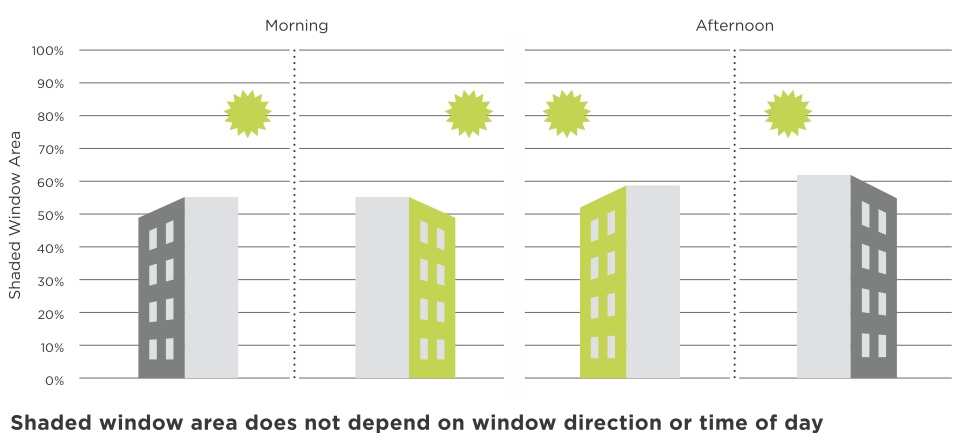
The researchers found that, on average, blinds or shades covered 59% of these buildings’ window area, and more than 75% of buildings had more than half of the window area covered. Furthermore, tenants weren’t opening or closing the blinds based on the time of day: approximately the same fraction of window area was covered regardless of the position of the sun.

Buildings in the study were selected based on whether they were easily photographed from the street, and researchers only ended up with around 107 photos, but what they found seems to have a shade of truth. The windows that tenants pay a high price for often end up covered for reasons other than getting too much light; researchers suggest “perhaps it’s privacy, or the inconvenience of raising them once they are lowered.”

Considering all the well-documented drawbacks of over-glazing—from increasing heating and cooling loads to causing bird fatalities—the Urban Green Council says it may be time to rethink all that glass that just ends up as an inconvenience.


Published December 31, 1969

(2013, December 30). Tenants Drawing the Blinds in Their Glass Buildings. Retrieved from https://www.buildinggreen.com/departments/newsbrief

Add new comment

To post a comment, you need to register for a BuildingGreen Basic membership (free) or login to your existing profile.

Coastal Wetlands Disappearing Faster Than Before

News Brief

Coastal Wetlands Disappearing Faster Than Before

The U.S. coastal wetland status report looks dreary, with huge freshwater and saltwater losses, while re-establishment programs fall behind.

Within five years, the United States lost more than 360,000 acres of coastal wetlands, according to a federal study, revealing restoration and re-establishment programs are barely making a dent when pitted against land development, sea-level rise, and violent storms.

A status report conducted by the U.S. Department of the Interior’s Fish and Wildlife Service and the National Oceanic and Atmospheric Administration found approximately 80,000 acres of freshwater and saltwater wetlands in coastal watersheds disappeared each year between 2004 and 2009—a 25% increase from the acres lost per year in the previous survey. An estimated 71% of wetland losses were in the coastal watersheds of the Gulf of Mexico.

The report attributes much of the losses to severe storms and land development. Saltwater wetlands in the Gulf were severely inundated and eroded by hurricanes Katrina, Rita, and Ike. In contrast, 37% of freshwater wetland that was lost to upland was driven by urban and rural development, and human populations in coastal counties continue to grow.

The report did find evidence of re-establishment programs making some headway. For example, freshwater wetland area from agricultural lands increased by 50,230 acres, and wetlands from “other uplands” increased by 15,290 acres. However, some of these figures may include forested wetlands that were cleared for silviculture, and they still reflect a lack of re-establishment programs in coastal watersheds compared to the nation as a whole.

For more information:

National Oceanic and Atmospheric Administration
habitat.noaa.gov/highlights

Published December 31, 1969

(2013, December 30). Coastal Wetlands Disappearing Faster Than Before. Retrieved from https://www.buildinggreen.com/departments/newsbrief

Add new comment

To post a comment, you need to register for a BuildingGreen Basic membership (free) or login to your existing profile.