Radon Not the Only Soil Gas to Poison Minnesota Homes

News Brief

Radon Not the Only Soil Gas to Poison Minnesota Homes

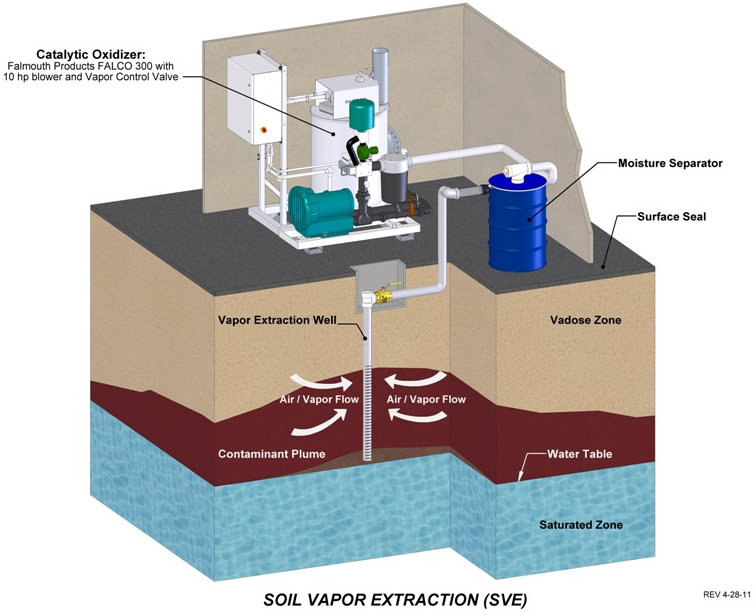
The Minnesota Pollution Control Agency is finding that soil vapors are bringing long-ago buried pollution into basements and houses.

A Minnesota state agency is currently reviewing 293 sites where it thinks vapor intrusion from soil might be putting people at risk—but its not radon they’re concerned about; it is industrial solvents dumped decades ago.

The Minnesota Pollution Control agency decided in 2008 to revisit cleanup sites that had been closed years ago after it discovered that chemicals that may have been dumped there—and considered safely buried—could vaporize and rise through the soil into the basements of homes and businesses (see “Radon and Other Soil Gases: Dealing with Hazards from Below”). Among 53 known problem sites, eight had been dry cleaning businesses, and another was an old General Mills research plant where the chemical trichloroethylene (TCE) was commonly dumped outdoors from 1949 to 1962. TCE has since been linked to higher risk of cancer, birth defects, and mood disorders.

Mitigation systems have now been installed in eleven homes, reports the StarTribune; mitigation efforts consist of negative-air-pressure systems that draw vapors out of the soil, and General Mills has agreed to pay for more than 100 more. However, Minnesota is just a start; other states have not even begun to review polluted sites for vapor risks.


Published December 31, 1969

(2014, May 5). Radon Not the Only Soil Gas to Poison Minnesota Homes. Retrieved from https://www.buildinggreen.com/departments/newsbrief

Add new comment

To post a comment, you need to register for a BuildingGreen Basic membership (free) or login to your existing profile.

South Carolina Ban Rejects LEED v4 Materials Credit

News Brief

South Carolina Ban Rejects LEED v4 Materials Credit

The law forbids state building projects to pursue points for material transparency and optimization in LEED v4.

Spurred by the chemical industry, the State of Ohio in February moved to effectively ban LEED v4 for state projects. This month, the State of South Carolina took a narrower path toward the same goal by banning a specific LEED v4 credit (MRc4) that encourages manufacturers to disclose or eliminate hazardous chemicals used in their products.

The law (H3592), which took effect when Governor Nikki Haley signed it April 7, 2014, states that South Carolina building projects will “not be allowed” to pursue points from the “building product disclosure and optimization credit that requires material ingredient reporting.” The law closely resembles a 2013 measure (S635) in the state banning projects from earning LEED points for certified wood.

The move continues nationwide political wrangling over LEED’s credits regarding certified wood and hazardous chemicals. See “Two New Laws Restrict Use of LEED,” “Georgia Outlaws LEED in Latest ‘Wood Wars’ Battle,” and “Skanska Quits U.S. Chamber Over Anti-LEED Lobbying.”

South Carolina has required all major state-funded construction projects to achieve LEED Silver or two Green Globes since 2007 and has further requirements that a minimum percentage of points must be earned from energy performance credits.

Published December 31, 1969

(2014, May 5). South Carolina Ban Rejects LEED v4 Materials Credit. Retrieved from https://www.buildinggreen.com/departments/newsbrief

Add new comment

To post a comment, you need to register for a BuildingGreen Basic membership (free) or login to your existing profile.

Urban Green Council Announces 2014 EBie Finalists

News Brief

Urban Green Council Announces 2014 EBie Finalists

These “smooth operators” and other behind-the-scenes superstars will be honored at a June awards ceremony in NYC.

Existing buildings represent our greatest opportunity to conserve energy and water, and the EBie awards, in their third year, aim to make that hard work just a little more glamorous. Urban Green Council has announced its 2014 finalists for the awards.

There are three All-Rounder finalists, for excellence in multiple categories:

• John Smith, operations manager at CommonWealth Partners in Los Angeles

• Sammie Baker, senior property manager at Parkway Properties in Austin, Texas

• Chris Pinelli, real estate manager at CBRE in Pittsburgh

Finalists in the Smooth Operator category for operations and management are:

• Brad Collins, property manager at CommonWealth Partners in San Francisco

• Gary Sechler, engineering manager at Winthrop Management in Pittsburgh

• Heidi Silveira, property manager at Parkway Properties in Sacramento, California 

Power to the People finalists, awarding energy use reductions, are:

• Ryan Merkin, vice president at Steven Winter Associates in Bronx, New York

• Steven Post, executive director at Hebrew SeniorLife in Revere, Massachusetts

There are two finalists in the Verdant Brainiac category, which awards innovation:

• Vicki Sando, environmental science program developer at PS41 in New York

• Gary Sechler, engineering manager at Winthrop Management in Pittsburgh

Two finalists could take home the Shine a Light on Me award for the best lighting retrofit:

• Robert Best, executive vice president at Jones Lang LaSalle in Miami

• Nana Wilberforce, vice president and energy manager at the PNC Financial Services Group in Pittsburgh

The Take Me to the River category acknowledges reductions in water consumption, with two finalists:

• John Smith, operations manager at CommonWealth Partners in Los Angeles

• Steven Post, executive director at Hebrew SeniorLife in Revere, Massachusetts

Winners will be announced at an awards ceremony at the Hard Rock Café in New York City on June 9, 2014.

For more information:

Urban Green Council

ebies.org

 

Published December 31, 1969

(2014, May 5). Urban Green Council Announces 2014 EBie Finalists. Retrieved from https://www.buildinggreen.com/departments/newsbrief

Add new comment

To post a comment, you need to register for a BuildingGreen Basic membership (free) or login to your existing profile.

New Nonprofit Goes After Green Globes for Greenwash

News Brief

New Nonprofit Goes After Green Globes for Greenwash

Greenwash Action is in a campaign to defend LEED against what it is calling industry attacks.

Greenwash Action, a joint initiative of the Sierra Club and Greenpeace, is gearing up to defend LEED and campaign for changes to Green Globes—the green building rating system that the organization claims has been complicit in a greenwashing scheme.

On its crowdfunding page, Greenwash Action, whose executive director, Jason Grant, has been a prominent advocate for the Forest Stewardship Council, describes its mission as “calling on the chemical, plastics, and timber industry to cease their attacks on LEED and to tell the truth about Green Globes,” referring to recent political attempts to ban LEED in government construction and to the alternate rating system that was developed by those industries to rival LEED. The website calls for Green Globes to be either strengthened or repositioned as an entry-level green building standard.

Greenwash Action promises to “defend programs that represent true environmental leadership and challenge special interests that use greenwash to confuse the marketplace” by mobilizing individuals and intervening in policy battles.

Greenwash Action is a project of the Earth Island Institute, a nonprofit incubator for environmental start-up projects.


Published December 31, 1969

(2014, May 5). New Nonprofit Goes After Green Globes for Greenwash. Retrieved from https://www.buildinggreen.com/departments/newsbrief

Add new comment

To post a comment, you need to register for a BuildingGreen Basic membership (free) or login to your existing profile.

Virtual Energy Assessments Pinpoint High Plug Loads

News Brief

Virtual Energy Assessments Pinpoint High Plug Loads

Without an auditor ever stepping foot in their buildings, facility managers are gaining insight into how much plug loads account for their buildings’ energy consumption.

Without an auditor ever stepping foot in their buildings, facility managers are gaining insight into how much plug loads account for their buildings’ energy consumption.

Virtual energy assessments can provide useful recommendations for cutting energy use and are an affordable alternative to more comprehensive walk-through audits, according to a study conducted by A Better City (ABC), a nonprofit organization based in Boston, Massachusetts.
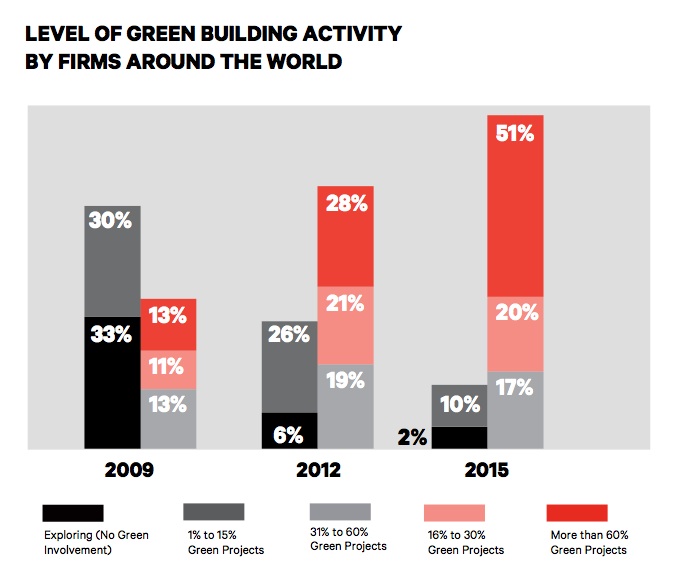
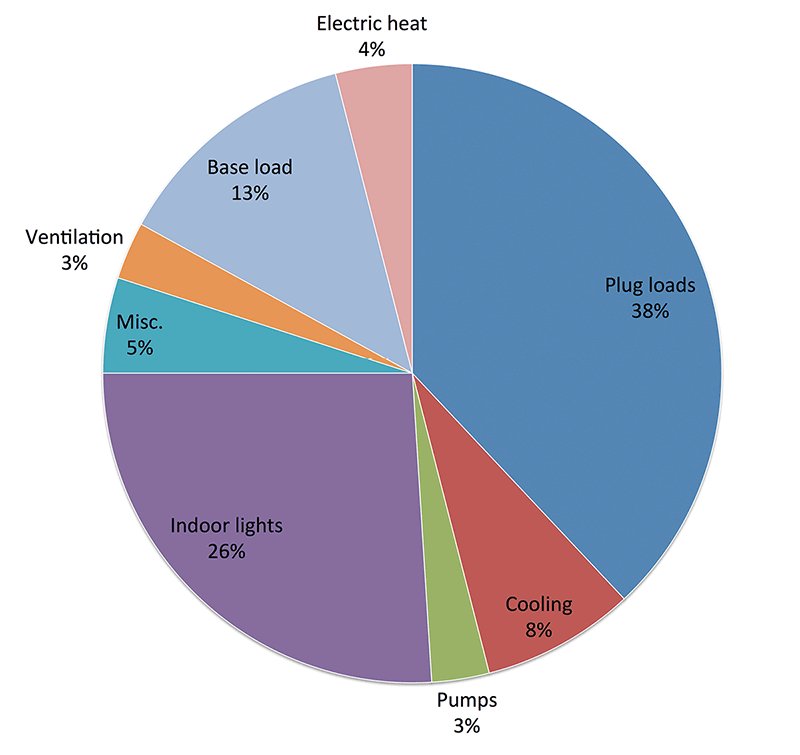
With only a building’s address and a year’s worth of 15-minute or hourly utility data, virtual assessments by the energy-audit software company Retroficiency produced an energy-use breakdown that revealed plug loads accounted for the biggest portion of energy use in the sample—38% in office properties and 35% in hotels. By implementing targeted “action steps” spanning all areas of energy use, the nine buildings studied could potentially save a combined $1,431,487 in energy costs, according to the report.

There were some limits to what an assessor could ascertain remotely. One building that was steam-heated and -cooled received an impractical recommendation to install variable-frequency drives (VFDs), for example. Study participants also expressed frustration over recommendations to reduce plug loads because they believed there was little they could do to influence occupant behavior. In general, however, most reported that they were surprised at how much information the virtual energy assessment could provide.

The U.S. Department of Energy and the General Services Administration have also used virtual energy-assessment tools to quickly identify areas of improvement in operations as well as to guide potential upgrades. ABC suggests that this technology be recognized as an alternative to the ASHRAE Level-2 audit, which is currently designated as a way to comply with Boston’s Building Energy and Disclosure Ordinance taking effect May 2014.


Published December 31, 1969

(2014, April 2). Virtual Energy Assessments Pinpoint High Plug Loads. Retrieved from https://www.buildinggreen.com/departments/newsbrief

Add new comment

To post a comment, you need to register for a BuildingGreen Basic membership (free) or login to your existing profile.

Switching to Portland Limestone Cement Could Reduce Emissions

News Brief

Switching to Portland Limestone Cement Could Reduce Emissions

A life-cycle assessment of PLC shows a 12% improvement in environmental performance over ordinary portland cement (OPC) when used in concrete mixes.

A life-cycle assessment of PLC shows a 12% improvement in environmental performance over ordinary portland cement (OPC) when used in concrete mixes.

Cradle-to-gate life cycle impacts of PLC

and OPC

Results of the assessment show that PLC has a lower environmental profile than OPC across all impact indicators.

Source: Athena Sustainable Materials Institute

The Athena Sustainable Materials Institute recently prepared a life-cycle assessment (LCA) for the Cement Association of Canada confirming assumptions about the lessened environmental impact of portland limestone cement (PLC) relative to ordinary portland cement (OPC).

Results of the assessment indicate that PLC (cement mix with high limestone content) reduces greenhouse gas emissions by 9.6% compared with OPC mix. The argument that PLC could help reduce the environmental impact of concrete has long been proposed based on what was logically deduced from substituting more limestone for less clinker—the ingredient that is most responsible for cement’s CO2 emissions as well as for the high energy consumption needed during manufacturing—but this study “gives solid numbers to evaluate,” according to Kathrina Simonen, director of the Carbon Leadership Forum, which was not involved in this LCA. The report also finds PLC performed better across all measured environmental impacts, including having a lower ozone depletion potential and lower smog potential.

The assessment is not ISO-compliant because it is constrained to “cradle-to-gate” impacts, so it does not capture impacts during the use phase or end-of-life stages. Still, the work “should support the development of further research,” Simonen told EBN.The authors of the report hope it also drives efforts to increase the levels of PLC allowed by building codes. Since Canadian rules only allow limestone content up to 15%, the report concludes that employing levels “similar to those levels allowed in European codes,” which permit up to 35%, “would go a long way to further improving the industry’s environmental performance.” PLC content is limited to 5% in the U.S. because of concerns that the limestone will affect the strength of the concrete.


Published December 31, 1969

(2014, April 2). Switching to Portland Limestone Cement Could Reduce Emissions. Retrieved from https://www.buildinggreen.com/departments/newsbrief

Add new comment

To post a comment, you need to register for a BuildingGreen Basic membership (free) or login to your existing profile.

Search for High-Performing Products in New NREL Database

News Brief

Search for High-Performing Products in New NREL Database

Users can quickly compare energy performance of everything from LEDs to solar panels on the National Renewable Energy Laboratory’s TPEx website.

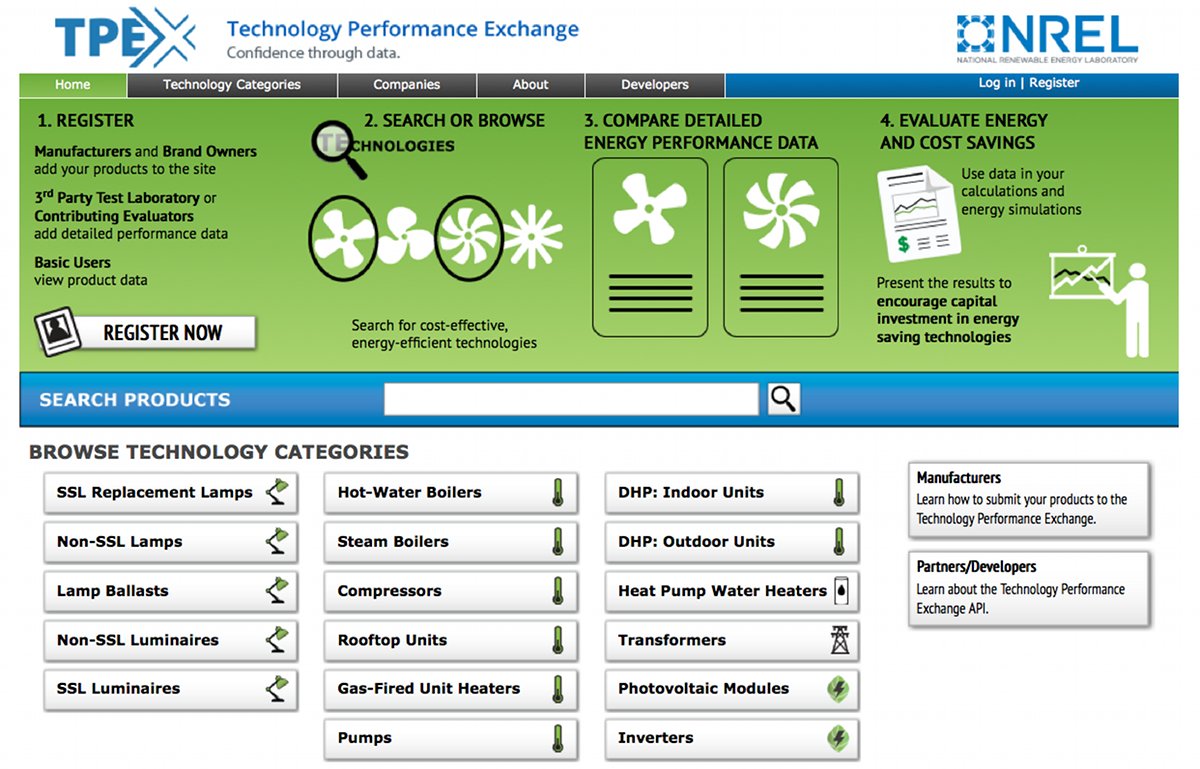
The National Renewable Energy Laboratory (NREL) recently launched its Technology Performance Exchange (TPEx), a website that provides standardized energy-performance data and allows apples-to-apples comparisons between products for various product categories. TPEx data is geared primarily toward commercial building professionals, but anyone from consumers to those who work for utilities can gain access by registering on the website for free.

According to TPEx, its intent is to act “as a bridge to help energy efficiency and renewable energy technologies overcome the ‘valley of death’” between the risky early-adoption phase of innovative products and widespread adoption (when manufacturing finally becomes profitable). For example, some technologies, such as LED replacement lamps, can evolve before U.S. Department of Energy evaluation and other third-party testing is complete on earlier versions. By providing a platform for comparisons, TPEx could speed advancement and adoption of these new technologies.

TPEx’s data is submitted by manufacturers, suppliers, third-party testing laboratories, and other contributors using standardized data entry forms tailored to each product category. End users can fine-tune searches using a variety of parameters and can compare product information that includes when the data was submitted, who submitted it, and how it was derived. The site is currently accepting data for 17 product categories—such as LED replacement lamps, photovoltaic panels, and boilers—and NREL intends to add eight more categories for envelope insulation, fans, wind turbines, and more.


Published December 31, 1969

(2014, April 2). Search for High-Performing Products in New NREL Database. Retrieved from https://www.buildinggreen.com/departments/newsbrief

Add new comment

To post a comment, you need to register for a BuildingGreen Basic membership (free) or login to your existing profile.

Soil Matters, Say Scientists at Ecosystem Conference

News Brief

Soil Matters, Say Scientists at Ecosystem Conference

A recent conference highlighted the breadth of ecosystem services soils provide and spurred debate about how soil should be protected.

Leading scientists recently gathered at a conference to discuss the value of a natural resource that is often overlooked—soil. The “Soil’s Role in Restoring Ecosystem Services” conference was sponsored by the Soil Science Society of America, the Ecological Society of America, the U.S. Geological Survey, and the American Geophysical Union and spanned topics from food security to climate change.

“We have a Clean Air Act, and we have a Clean Water Act. What we don’t have is a Clean Soil Act,” Mary Stromberger, Ph.D., one of the conference organizers, told EBN. “It has been taken for granted, and people don’t recognize it as a resource.” Some of the most important conversations that came out of the conference, she continued, were about how to place value on soils so that they might be protected through regulation. Stromberger says she thinks the “majority favor economic assessment,” or a cost-benefit analysis of the services that soils provide, but predictably, there are concerns that quantifying the value of soil would allow it to be “sold to the highest bidder,” a particular concern where developing countries might sell their most fertile lands for foreign food production.

Closer to home, even urban soils should be recognized as “hyperfunctional landscapes” according to Richard Pouyat of the U.S. Forest Service, one of the keynote presenters. In addition to sequestering carbon and regulating water cycles, soil provides aesthetically pleasing natural spaces that can support human well-being. These services justify conserving soils as much as any other natural resource during the design and construction of the built environment, he suggests.

Published December 31, 1969

(2014, April 2). Soil Matters, Say Scientists at Ecosystem Conference. Retrieved from https://www.buildinggreen.com/departments/newsbrief

Add new comment

To post a comment, you need to register for a BuildingGreen Basic membership (free) or login to your existing profile.

Milk Byproduct Could Become New Flame Retardant

News Brief

Milk Byproduct Could Become New Flame Retardant

It sounds like it belongs in our April Fools edition, but recent research really suggests we could treat our fabrics with whey, replacing toxic chemicals.

Leave it to Italy to figure out that cheese making could produce a good alternative to flame retardants. It sounds hard to believe, but researchers at the Polytechnic University of Turin are serious and have promising test results to prove it.

Think back to Miss Muffet and her curds and whey, and you may remember that whey is a byproduct of milk, often produced in the making of cheese. Whey contains proteins called caseins that researchers have found form a layer of char that blocks flames from spreading—similar to how some flame retardants function, but without the accompanying toxic compounds.

After treating fabrics in distilled water and casein powder, the researchers performed flammability tests. Only 14% of a cotton sample and 23% of a polyester cloth burned before the flames extinguished themselves. A cotton-polyester blend burned completely but smoldered 60% more slowly than the untreated material.

According to researchers, one of the biggest challenges ahead is one anyone might expect: the cheese-treated fabrics stink. The next task for researchers is to attempt to remove the molecules associated with the odor as well as to develop a binder that ensures the treatment does not wash off. If successful, it wouldn’t be the first building product that makes use of whey, which otherwise requires intensive wastewater treatment: water-based floor finishes also use the dairy byproduct.

Published December 31, 1969

(2014, April 2). Milk Byproduct Could Become New Flame Retardant. Retrieved from https://www.buildinggreen.com/departments/newsbrief

Add new comment

To post a comment, you need to register for a BuildingGreen Basic membership (free) or login to your existing profile.

ANSI to Pilot Greenwash-Busting Eco-Label Program

News Brief

ANSI to Pilot Greenwash-Busting Eco-Label Program

An ANSI accreditation program is meant to help users determine which certification bodies and green labels are legit.

Under the pilot program, a labeling scheme is eligible for Type I certification if it complies with a suite of standards demonstrating conformance with international environmental declaration standards and assessment standards. Certification bodies have separate requirements, which align with ISO/IEC 17065 – “Conformity assessment — Requirements for bodies certifying products, processes, and services.”

Although the program is a label for a label—potentially introducing more complexity into a confusing environment—ANSI-led accreditations have become a widely used method for verifying environmental claims, and the new program may offer a standardized way to compare eco-labels as well as the governing bodies that issue the labels.

ANSI

ansi.org/news

Published December 31, 1969

(2014, April 2). ANSI to Pilot Greenwash-Busting Eco-Label Program. Retrieved from https://www.buildinggreen.com/departments/newsbrief

Add new comment

To post a comment, you need to register for a BuildingGreen Basic membership (free) or login to your existing profile.