Cleaner Lungs Could Pay for Billion-Dollar Emissions Policies

News Brief

Cleaner Lungs Could Pay for Billion-Dollar Emissions Policies

Healthcare savings from better air quality would pay for proposed U.S. carbon emissions policies up to ten times over, a study finds.

Global warming policies that target carbon emissions would simultaneously reduce air pollutants that cause ailments like asthma, heart disease, and lung cancer and in turn reduce healthcare spending—a co-benefit that the Massachusetts Institute of Technology (MIT) says could more than pay for the policies.

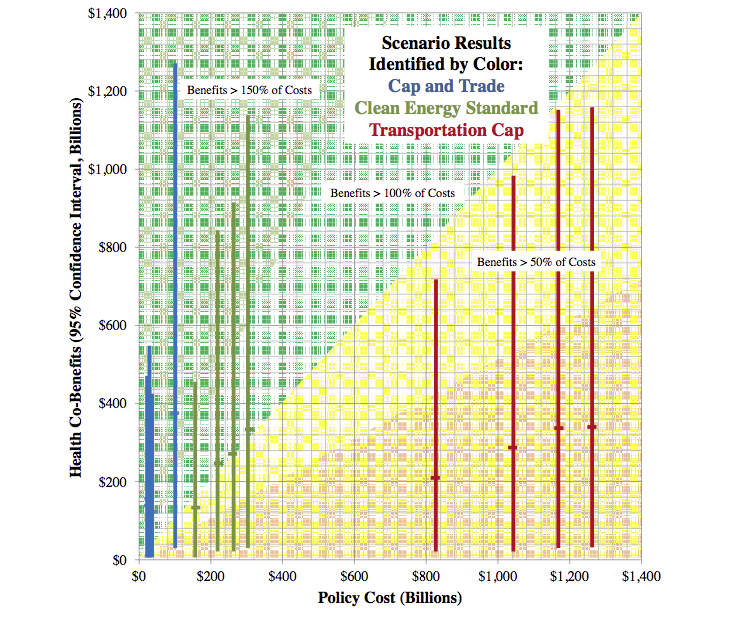
An MIT study, published in the journal Nature Climate Change, reviewed three types of policies that would achieve the same emissions reductions nationally: a transportation policy, a cap-and-trade program, and a clean-energy standard similar to the Clean Power Plan proposed by President Obama in June 2014. Researchers found avoided health costs would recoup only a quarter of the massive $1 trillion transportation policy but would completely cover the costs of the other two policies with room to spare. The cap-and-trade program would cost a tenth of the money it would save, and the clean-energy standard would save a net $39 billion.

The study is described as “the most detailed assessment to date” in a press release because researchers modeled how changes in emissions through the various policies would translate into improvements in air quality—whether ground-level ozone and fine particulate matter would be reduced in cities (where more people would experience the health benefits of cleaner air) or in less-populated areas.

However, the researchers note that carbon reductions beyond those resulting in improved air quality will eventually be needed to curb climate change, so “while air-pollution benefits can help motivate carbon policies today,” addressing climate change long-term might cost more than avoided healthcare costs would recoup, according Noelle Selin, a co-author of the study.

Published December 31, 1969

(2014, September 17). Cleaner Lungs Could Pay for Billion-Dollar Emissions Policies. Retrieved from https://www.buildinggreen.com/departments/newsbrief

Add new comment

To post a comment, you need to register for a BuildingGreen Basic membership (free) or login to your existing profile.

Kids Breathe Easier When Trees Eat Smog

News Brief

Kids Breathe Easier When Trees Eat Smog

Study shows how urban trees save millions in medical bills, using a new method to model smog concentrations.

Portland citizens could save $7 million annually by planting more trees, according to researchers at Portland State University. The team of biologists, environmental scientists, and urban planners developed a new methodology that could help municipalities maximize the health effects of urban greenery.

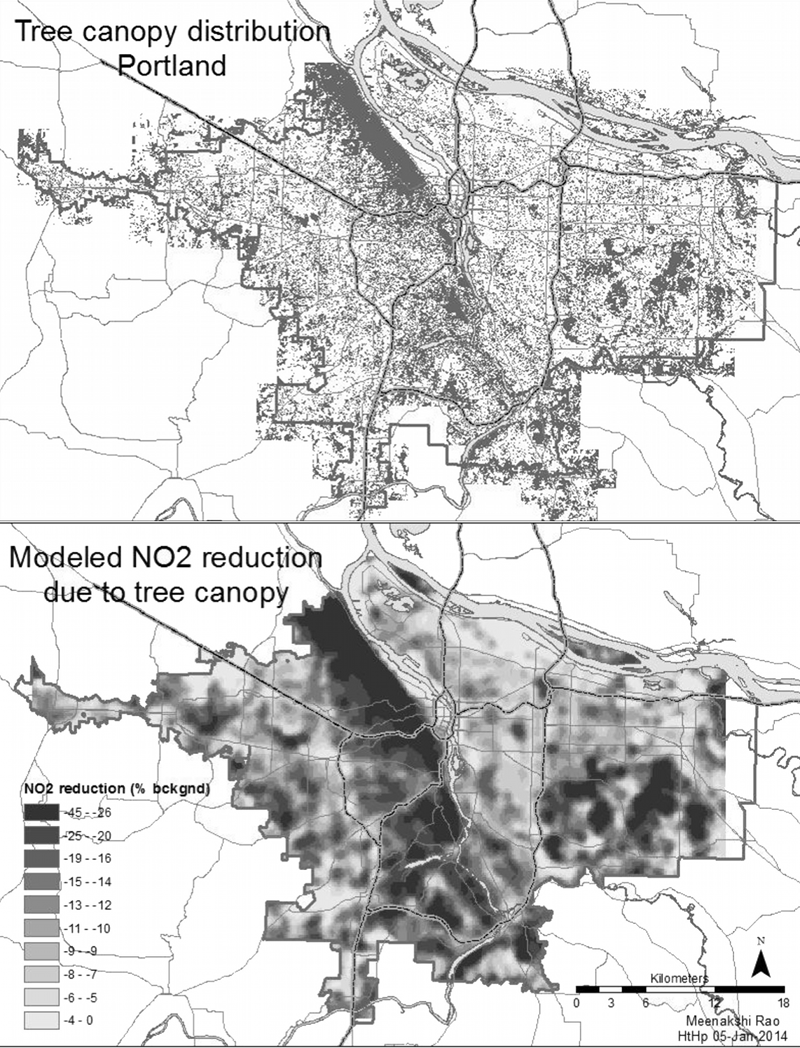
The researchers first developed a novel way to model highly localized pollution levels, noting that people living within 200 m (0.12 miles) of major roadways are at much higher risk for asthma and other respiratory problems. (Current methods of modeling air-pollution levels capture a much larger radius, typically greater than 10 km, or 6.2 miles.) By accurately predicting where pollutants concentrate, they argue, urban planners will be able to strategize about where mitigation is needed.

In the course of this work, the scientists discovered dramatic reductions in expected pollution levels in areas with high concentrations of trees. The team drew on epidemiological research to arrive at the $7 million projected savings for Portland but added that their work should be applicable everywhere.

“Due to the geographic variation in the distribution of air pollutants in a city, the health impacts are not uniform and tend to be increasingly borne by susceptible and socially disadvantaged urban populations,” they note. “Our study demonstrates the need to monitor or model air pollutants at a highly local scale in order to correctly assess the health impacts of urban air pollutants and to address social equity issues.”

Published December 31, 1969

(2014, September 16). Kids Breathe Easier When Trees Eat Smog. Retrieved from https://www.buildinggreen.com/departments/newsbrief

Add new comment

To post a comment, you need to register for a BuildingGreen Basic membership (free) or login to your existing profile.

Coal, Not Wind or Solar, Is Worst for Birds

News Brief

Coal, Not Wind or Solar, Is Worst for Birds

It might not have a “death ray,” but coal power kills millions of birds a year, a new report asserts.

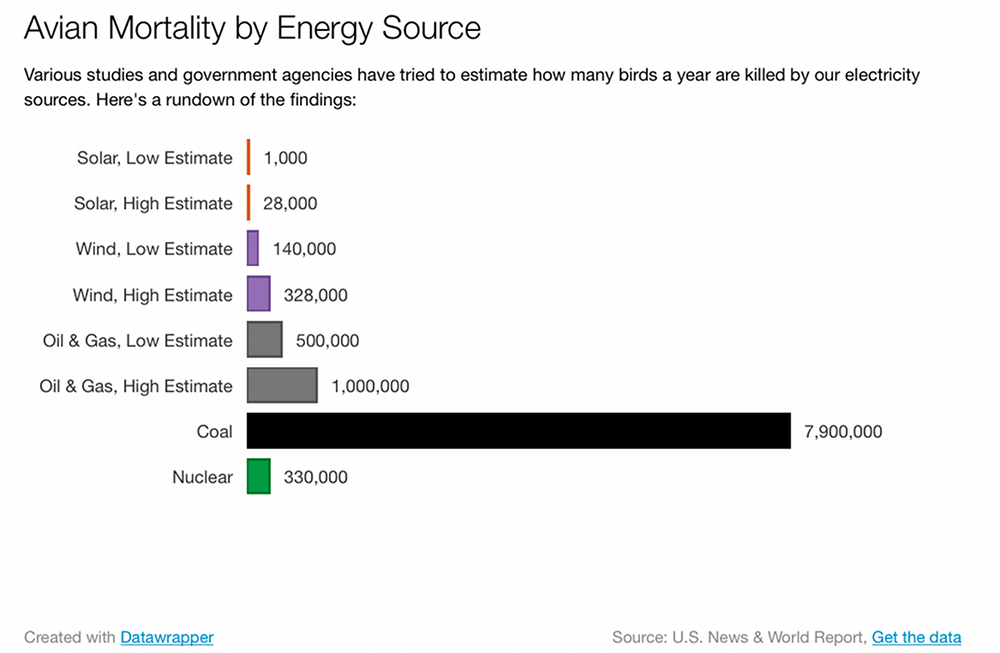
The thought of songbirds spontaneously combusting in midair horrifies even the staunchest supporters of solar power, yet all other ways of generating electricity harm many times more birds, a report claims in the wake of news that the largest solar farm in the U.S. may be killing thousands of birds a year.

“Even if nearly 30,000 birds a year are getting sent to their fiery doom, that’s a mere fraction compared to other U.S. energy sources,” writes Alan Neuhauser of U.S. News & World Report. Data from a variety of sources—some of which do not share methodology, Neuhauser cautions—suggest that the most devastating effects for birds come from climate change, making coal the worst among the energy sources considered (see graph). This conclusion is based on a 2009 study by Benjamin Sovacool that analyzed wind, nuclear, and fossil-fuel-powered plants and concluded, “Wind farms and nuclear power stations are responsible each for between 0.3 and 0.4 fatalities per GWh of electricity, while fossil-fueled power stations are responsible for about 5.2 fatalities per GWh.”

Meanwhile, cats remain the largest single known threat from humans (see More Proof that Housecats Are Birds’ Biggest Enemy), and glass buildings also have a greater impact than any energy source (see Design for the Birds: Protecting Birds from the Hazards of Glass).

Published December 31, 1969

(2014, September 12). Coal, Not Wind or Solar, Is Worst for Birds. Retrieved from https://www.buildinggreen.com/departments/newsbrief

Add new comment

To post a comment, you need to register for a BuildingGreen Basic membership (free) or login to your existing profile.

EPA Primer on Moisture Control Filled With Strategies, Checklists

News Brief

EPA Primer on Moisture Control Filled With Strategies, Checklists

A free resource outlines basic moisture-management practices for design, construction, and maintenance of both homes and commercial buildings. 

A report published by the U.S. Environmental Protection Agency offers basic guidance for controlling moisture in both commercial and residential buildings by compiling introductory principles into one 103-page report that is free to the public.

The report, “Moisture Control Guidance for Building Design, Construction and Maintenance,” begins with three basic strategies for moisture management: control liquid water, prevent excessive indoor humidity and water vapor migration, and select moisture-resistant materials for unavoidably wet locations (see How Water Moves Through Buildings). Chapters are then organized to separately address how to manage moisture during design, construction, and maintenance.

Architects are offered specific strategies for site drainage, foundations, wall and roof assemblies, plumbing systems, and HVAC systems, while a chapter on construction focuses on implementing what designers specify as well as controlling moisture at the work site.

The guide’s appendices also contain useful tools, such as a sample roof inspection checklist and a dampness and mold evaluation form. Together, these resources provide a well-rounded base to cover every stage of moisture management.

For more information:

U.S. Environmental Protection Agency

http://nepis.epa.gov/

Published December 31, 1969

(2014, September 2). EPA Primer on Moisture Control Filled With Strategies, Checklists . Retrieved from https://www.buildinggreen.com/departments/newsbrief

Add new comment

To post a comment, you need to register for a BuildingGreen Basic membership (free) or login to your existing profile.

Solar-PV Safety Training Offered to Firefighters

News Brief

Solar-PV Safety Training Offered to Firefighters

New workshops open to firefighters in New York cover how to safely navigate and disable roof-mounted solar systems.

Electrocution is seen as a growing hazard for firefighters as solar installations become more widespread, according to the National Fire Protection Association, and strategies to mitigate risks are complicated by the fact that panels can’t be powered down by a single switch (see Making Green Buildings Safe for Firefighters).

A new training program launched by the New York State Energy Research and Development Authority (NYSERDA) is designed to teach first responders how to fight fires on buildings with solar photovoltaic panels. A course offered by the NY-Sun PV Trainers Network will teach attendees how to safely disable a PV system and what precautions to take around battery backup systems. The curriculum covers current code requirements for roof-mounted systems and how those requirements ensure safe walking space and access to ventilation during a fire.

New York joins New Jersey and California as one of the few states providing formal training on this topic. For firefighters in other areas, the Solar Energy Industries Association lists fire-safety training resources on its website.

For more information:

NY-Sun PV Trainers Network

https://training.ny-sun.ny.gov/training-events

Published December 31, 1969

(2014, September 2). Solar-PV Safety Training Offered to Firefighters. Retrieved from https://www.buildinggreen.com/departments/newsbrief

Add new comment

To post a comment, you need to register for a BuildingGreen Basic membership (free) or login to your existing profile.

First Health Product Declaration Verified by NSF

News Brief

First Health Product Declaration Verified by NSF

The first HPD verified through NSF’s third-party program is for PVC-free, biobased corner guards from Alpar.

With more practitioners seeking transparency about building product ingredients, a new program aims to verify the claims made in health product declarations (HPDs—see Health Product Declaration Provides Building Product “Nutrition Label”). Alpar Architectural Products is the first company to successfully put one of its products, a biobased plastic corner guard containing no pigments, through NSF International’s HPD verification program.

A central part of the program is a “desk audit” that involves a documentation review by staff chemists, toxicologists, and biologists, according to NSF. Reviewers peruse submittals such as third-party lab reports, safety data sheets, material purchase confirmations, and disclosures from suppliers, ensuring the HPD complies with the requirements of the HPD Open Standard.

HPDs are typically self-produced by manufacturers, and LEED v4 offers points for products carrying HPDs whether or not they are “verified.” However, if an HPD verification program like NSF’s proves its value, projects could feel more assured about the quality of HPD data that informs design decisions, and these HPDs might get less scrutiny during a LEED review process. NSF is one of seven organizations that are pilot-testing the verification of HPDs with the Health Product Declaration Collaborative.

“Third-party verification through NSF International was a logical next step” after releasing its first HPD, said Lisa Britton, president and director of Alpar, in a press release. “We are looking to release our next verified HPD, which includes additional pigments, very soon.”

For more information:

NSF International

info.nsf.org

Published December 31, 1969

(2014, August 25). First Health Product Declaration Verified by NSF. Retrieved from https://www.buildinggreen.com/departments/newsbrief

Add new comment

To post a comment, you need to register for a BuildingGreen Basic membership (free) or login to your existing profile.

Architects Worldwide Agree to Zero-Carbon Buildings By 2050

News Brief

Architects Worldwide Agree to Zero-Carbon Buildings By 2050

Member organizations of the International Union of Architects have unanimously adopted the 2050 Imperative.

The International Union of Architects (UIA) recently adopted the 2050 Imperative committing its member organizations, including the American Institute of Architects (AIA), to plan for healthy, carbon-neutral cities and towns worldwide by the year 2050.

The 2050 Imperative was drafted by the organization Architecture 2030, promoter of the 2030 Challenge, which commits signatories to work toward net-zero-energy buildings in the U.S. Now with the architecture councils of Europe, Asia, the Americas, and Africa all agreeing to sign on to a global version, more than 1.3 million architects in 124 countries will have aligned goals. According to a recent presentation by 2030 Challenge founder, Ed Mazria, FAIA, the 2050 target could be achieved by implementing the 2030 Challenge worldwide for new buildings while reducing fossil-fuel consumption 50% in 2% to 3% of developed nations’ existing building stock annually.

While UIA members are not committed to taking that exact approach—detailed more specifically in the report “Roadmap to Zero Emissions”—they did commit to the principle of engaging in research and setting targets toward the 2050 goal. The Imperative states, “Our responsibility is to influence ethical and socially responsible development throughout the world: to plan and design sustainable, resilient, carbon-neutral and healthy built environments that protect and enhance natural resources and wildlife habitats, provide clean air and water, generate onsite renewable energy, and advance more livable buildings and communities.”

The declaration will be presented at the United Nations Framework Convention on Climate Change (UNFCCC) conference, which has a similar aim to phase out CO2 emissions from the power and industrial sectors by 2050.

For more information:

Architecture 2030

architecture2030.org/enews

Published December 31, 1969

(2014, August 20). Architects Worldwide Agree to Zero-Carbon Buildings By 2050. Retrieved from https://www.buildinggreen.com/departments/newsbrief

Add new comment

To post a comment, you need to register for a BuildingGreen Basic membership (free) or login to your existing profile.

Local Energy Profiles Now Easier with DOE SLED Tool

News Brief

Local Energy Profiles Now Easier with DOE SLED Tool

Punch in a zip code and get instant data on the local electrical grid, potential for renewables, utility costs, and more.

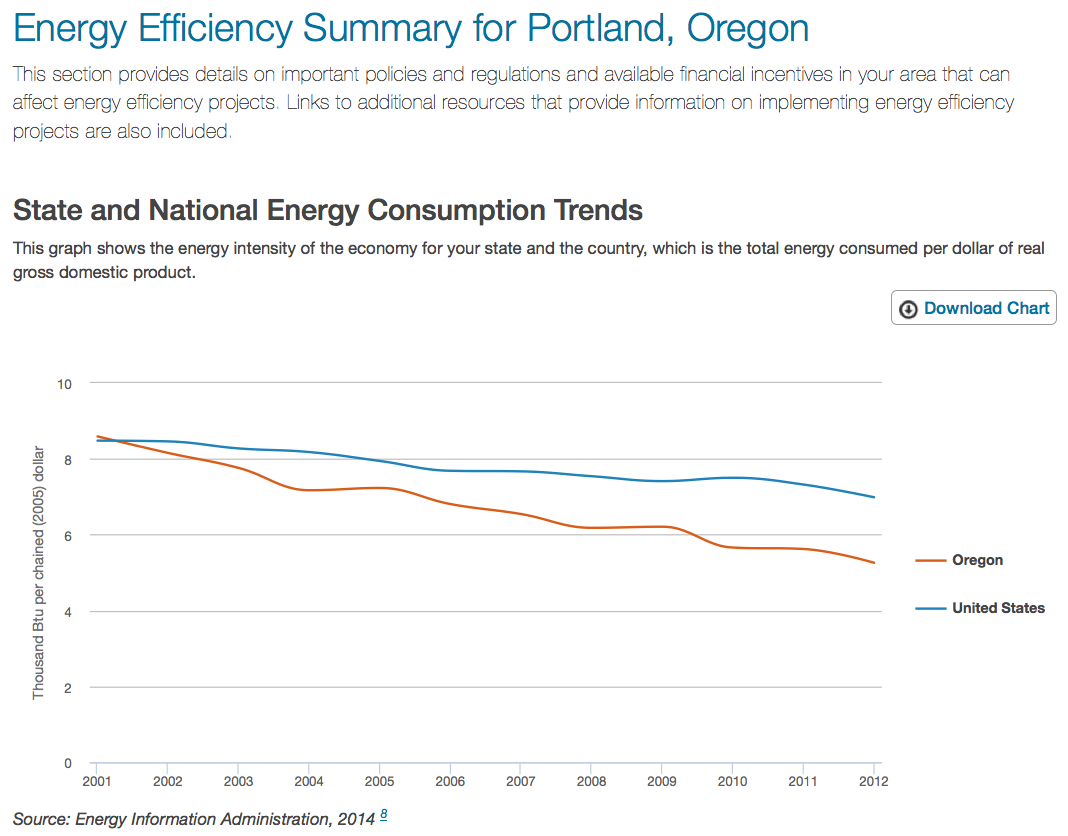
A new tool from the U.S. Department of Energy (DOE) provides local energy profiles to aid in planning, development, and renewable-energy projects in the U.S. The tool collects state and municipal data in a central location to help streamline research on a variety of energy metrics.

Users type in a zip code or city name, and the SLED tool (short for State and Local Energy Data) returns results on the following:

  • Electricity generation, including fuel sources, demand by sector, and utility rate trends compared with the national average
  • Energy-efficiency data, including consumption trends over time and efficiency policies and incentives
  • Renewable energy, including generation potential for hydro, solar, wind, and geothermal as well as policies and incentives for renewable-energy projects
  • Transportation fuel sources and costs, and maps of alternative fuel stations
  • Resources on community planning

“This tool can save decision-makers time, energy, and money through the aggregation of a lot of different datasets,” notes Jennifer DeCesaro, director of DOE’s Technology-to-Market Office, in a promotional video about SLED. “You can do in five minutes with this tool what it might take you hours to do by searching the Web.”

For more information:

U.S. Department of Energy

apps1.eere.energy.gov/sled

Published December 31, 1969

(2014, August 14). Local Energy Profiles Now Easier with DOE SLED Tool. Retrieved from https://www.buildinggreen.com/departments/newsbrief

Add new comment

To post a comment, you need to register for a BuildingGreen Basic membership (free) or login to your existing profile.

“Sun, Wind & Light” Adopts Net-Zero Focus

News Brief

“Sun, Wind & Light” Adopts Net-Zero Focus

This leading textbook emphasizes preliminary design strategies to reduce energy loads with a new intent of preparing architects for net-zero design.

The third edition of the seminal text Sun, Wind & Light by Mark Dekay and G.Z. Brown still speaks to the target audience of “architectural designers who are not energy experts” that it did in the first 1985 edition, but it now takes the leap to net-zero. Driven by the call of the Architecture 2030 challenge, this primer on the fundamental design decisions that affect energy use has been completely redesigned with a “hierarchy of strategies” to help architects minimize heating and cooling loads before relying on photovoltaic or wind-generation systems. The updated resource relies on three new methods:

  • Mapping design strategies to reveal gaps and identify a hierarchal structure; these maps are provided in Part 1
  • Identifying “strategy bundles” to reveal synergistic interrelationships among the issues and chosen approaches; the book explores daylighting, passive cooling, passive solar, and comfortable outdoor microclimates as some fundamental bundles that arise at the building scale
  • Creating a design decision chart, which uses questions like “Can spaces with similar heating, cooling, ventilation, and lighting requirements be grouped together?” to select design strategies and link them together in bundles

A companion electronic resource offers a searchable version of the second edition that is also sequenced to move from large- to small-scale strategies.

For more information:

Sun, Wind & Light: Architectural Design Strategies, 3rd edition

John Wiley & Sons Inc.

August 7, 2014 $57

Published December 31, 1969

(2014, August 14). “Sun, Wind & Light” Adopts Net-Zero Focus. Retrieved from https://www.buildinggreen.com/departments/newsbrief

Add new comment

To post a comment, you need to register for a BuildingGreen Basic membership (free) or login to your existing profile.

Obscure Channel Allows Industry to Weaken Environmental Regulations

News Brief

Obscure Channel Allows Industry to Weaken Environmental Regulations

A new report argues that the White House’s little-known Office of Information and Regulatory Affairs is a lobbyist’s dream.

Industry lobbyists have outsized and clandestine influence on federal regulations through an obscure White House office with little public accountability, according to a special report to ProPublica written by Heather Rogers.

The Office of Information and Regulatory Affairs (OIRA) was initially intended to add checks and balances to the process of developing environmental and other regulations, says Rogers, but she argues that instead it has become a place for lobbyists to substantively change or even eliminate these regulations without public knowledge or input.

Environmental regulations, including some affecting building materials, have been targeted successfully. For example, “prompted by evidence that formaldehyde fumes were sickening Hurricane Katrina survivors living in FEMA trailers, Congress passed a law in 2010 calling for tighter limits on the chemical,” writes Rogers. “While the rule was at OIRA, industry representatives met five times with officials from the office,” she continues, and “during OIRA’s review, the scientific findings were challenged … and were ultimately changed.”

The medical costs of asthma due to formaldehyde exposure were removed from the economic analysis, making it more favorable to industry, which had argued the regulations were too expensive for the amount of good they would do. Yet OIRA gave no scientific reasons for the change, concludes Rogers.

The report cites a number of other environmental regulations that were similarly influenced, including limits on occupational exposure to silica dust and on coal-ash dumping from power plants.

Although some White House officials have denied that the office lacks transparency, investigations by the Government Accountability Office (GAO) in 2003 and 2009 concluded otherwise; GAO recommended in 2009 that all agencies should publish changes made to rules during OIRA reviews—a recommendation that has not been implemented, though in April 2014, OIRA began publishing a searchable database of meetings held with parties outside the administration.

For more information:

ProPublica

propublica.org

Published December 31, 1969

(2014, August 13). Obscure Channel Allows Industry to Weaken Environmental Regulations. Retrieved from https://www.buildinggreen.com/departments/newsbrief

Add new comment

To post a comment, you need to register for a BuildingGreen Basic membership (free) or login to your existing profile.